
Edgew.
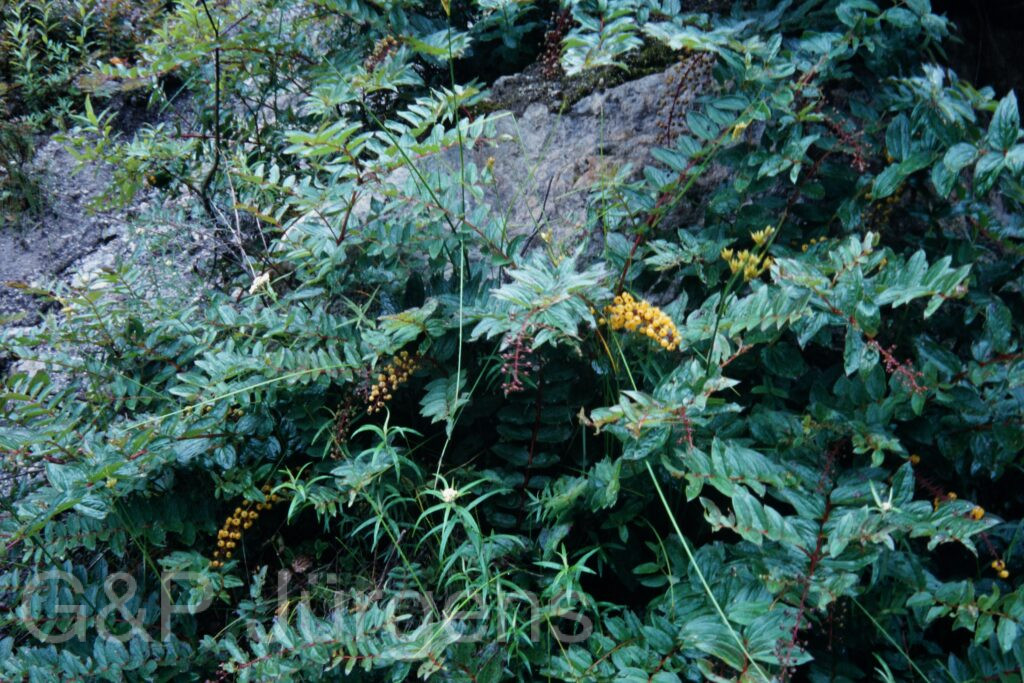
Description
Zanthoxylum oxyphyllum Edgew. is an aromatic shrub or small tree of the Rutaceae, distributed along the Himalaya from northern India and Nepal through Bhutan to southwestern China and Myanmar (GBIF: c. 372 occurrences). It grows in temperate to subalpine forests, on open slopes, forest margins and in shrubberies, typically between about 1,800 and 3,500 m. The photographed plant from Lachen in the upper Tista Valley of Sikkim, at around 3,500 m and recorded in August, represents the upper elevational range of the species in the eastern Himalaya, where it occurs in cool, moist montane scrub.
The plant is a deciduous, prickly shrub or small tree bearing recurved spines on the stems and often on the rachis and midrib of the leaves, as is typical of the genus. The leaves are alternate, imparipinnate, with several pairs of opposite, lanceolate to ovate-lanceolate leaflets that are crenate and gland-dotted, releasing a pungent citrus aroma when crushed owing to abundant translucent oil cavities. The plant is functionally dioecious, with small greenish or yellowish unisexual flowers borne in axillary or terminal cymose panicles. The fruit is a small reddish follicle that splits to expose a single shiny black seed, and the carpels, like the foliage, are richly pellucid-punctate.
Zanthoxylum oxyphyllum belongs to the pantropical genus Zanthoxylum, whose species are noted for their pungent, numbing fruits (the Sichuan-pepper group) and their alkaloid- and essential-oil chemistry. The fruits and bark are used locally as a spice and in traditional medicine. The species is widespread and not regarded as threatened.
Author: Edgew. · Sources: POWO (Kew), Flora of China Vol. 11, Flora of Bhutan Vol. 2, Flora of Nepal, GBIF, Hartley: A revision of the Malesian species of Zanthoxylum