Celastraceae

Wall.

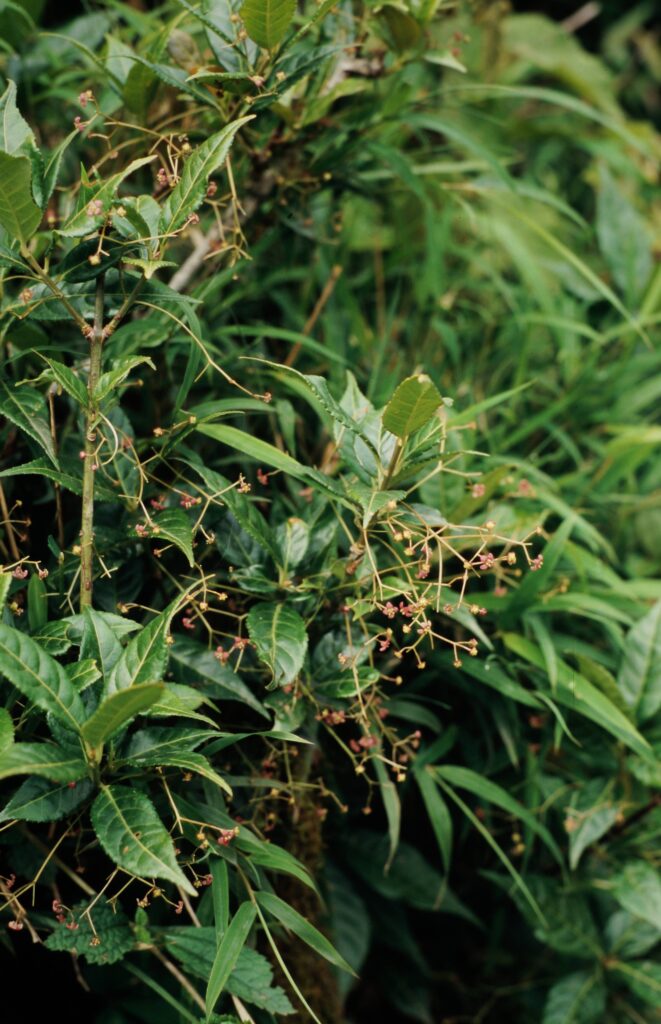
Sikkim 2006 184 ergebnis
India West-Bengal, Samadan 2300m, May
BhutanPG2011 82 ergebnis scaled
Bhutan Menchuang 2850m, June

Description

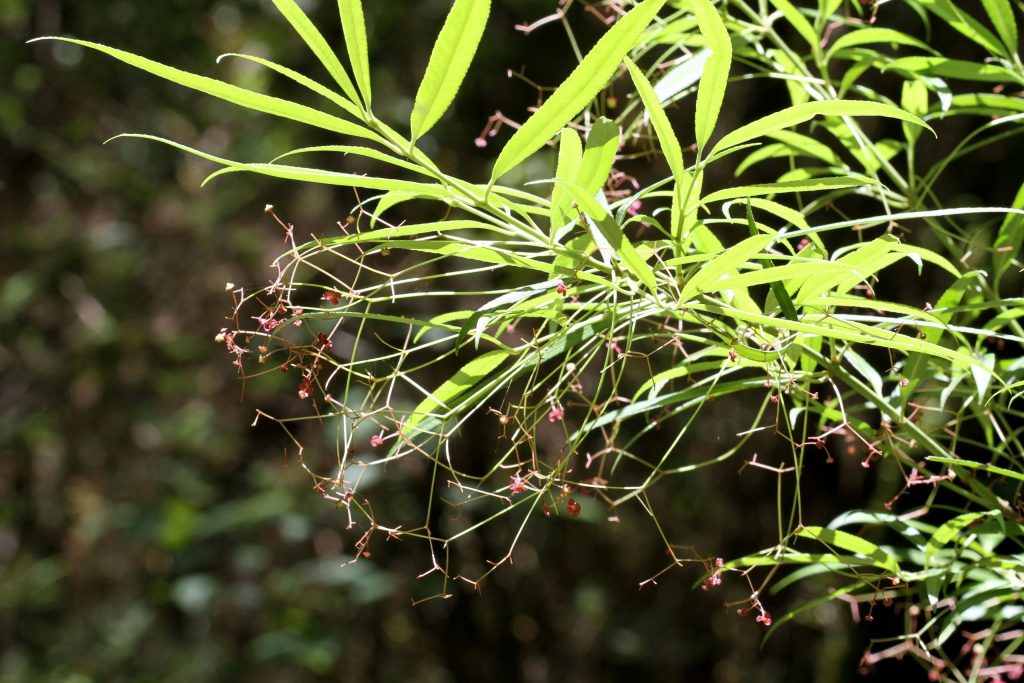
Euonymus frigidus is a Himalayan spindle tree distributed from central Nepal through northeast India, Sikkim, Bhutan, and northern Myanmar to southwest China (Yunnan, Sichuan, Xizang). GBIF records over 1,570 occurrences, with the majority from China and the eastern Himalayas. The species inhabits cool-temperate and subalpine broadleaved and mixed forests, often growing along forest margins, stream gullies, and shaded slopes at elevations of 1,800–3,200 m. Collections from Samadan in West Bengal at 2,300 m and from Menchuang in Bhutan at 2,850 m illustrate its typical occurrence in the mid-elevation broadleaved forest zone of the eastern Himalayan slopes.
Euonymus frigidus is a large deciduous shrub or small tree, reaching 3–8 m in height, with smooth, greyish-green bark on younger branches. Leaves are opposite, elliptic to oblong-lanceolate, 6–14 cm long, acuminate at the apex, cuneate at the base, with finely crenate-serrate margins, glabrous on both surfaces, and turning reddish-purple in autumn. The inflorescence is an axillary, dichasial cyme bearing 7–15 flowers on slender peduncles. Flowers are tetramerous, small, 6–8 mm in diameter, with greenish-yellow to purplish petals and a conspicuous four-lobed disc. The fruit is a deeply four-lobed capsule, pink to crimson at maturity, splitting to reveal four seeds each enclosed in a bright orange aril — a striking ornamental feature.
The specific epithet 'frigidus' alludes to the cold-temperate habitats in which this species predominantly occurs. Euonymus frigidus is distinguished from the closely related E. hamiltonianus by its generally larger leaves, more deeply lobed capsules, and preference for higher elevations. The conspicuous arillate fruits are an important food source for frugivorous birds, including minivets and laughingthrushes, which serve as effective dispersal agents. The species is occasionally cultivated as an ornamental in European and North American gardens for its vivid autumn colour and decorative fruit.

Author: Wall. · Sources: POWO (Kew), GBIF, Flora of China Vol. 11, Flora of Bhutan Vol. 2, Grierson & Long: Flora of Bhutan (1991)
Franch

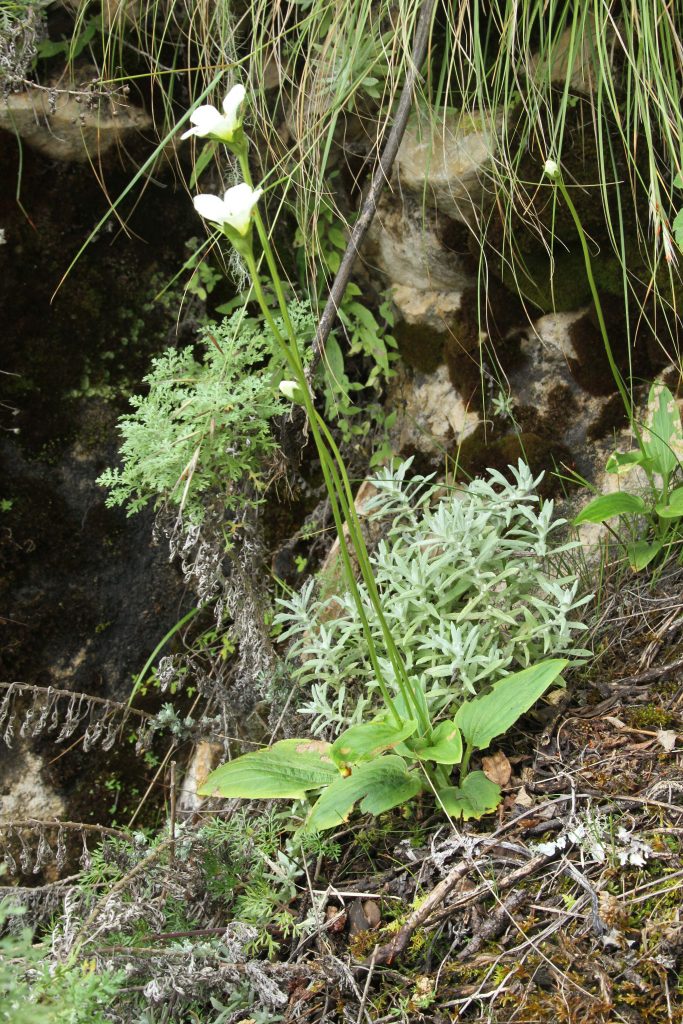
BhutanPG2011 548
Bhutan Ludlow-Sherriff-Trail Dem-Tso, 4650m June

Description

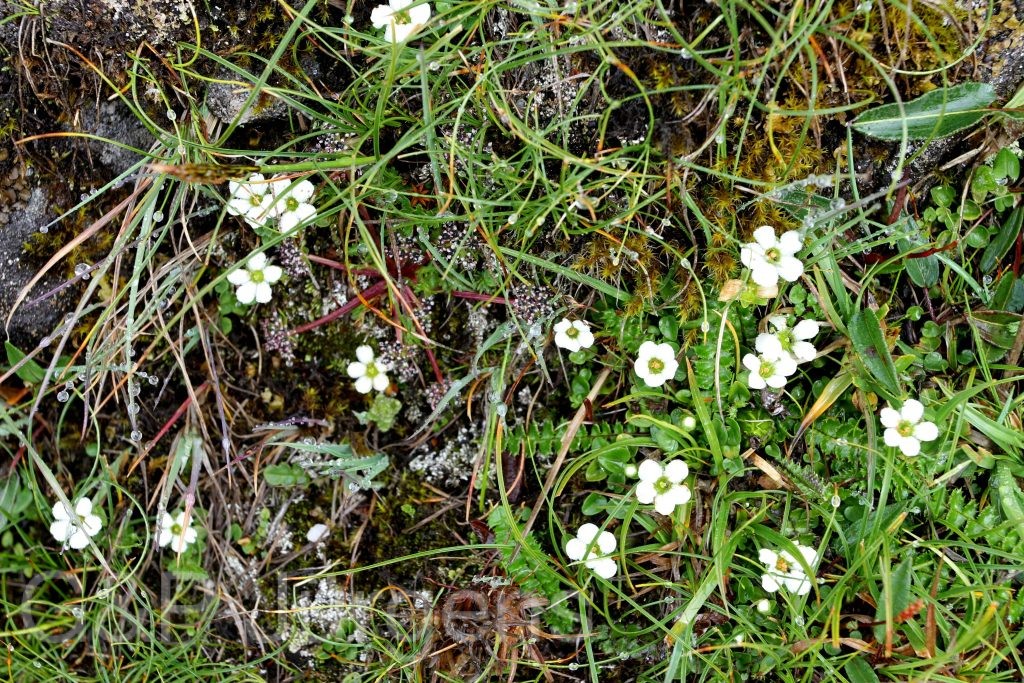
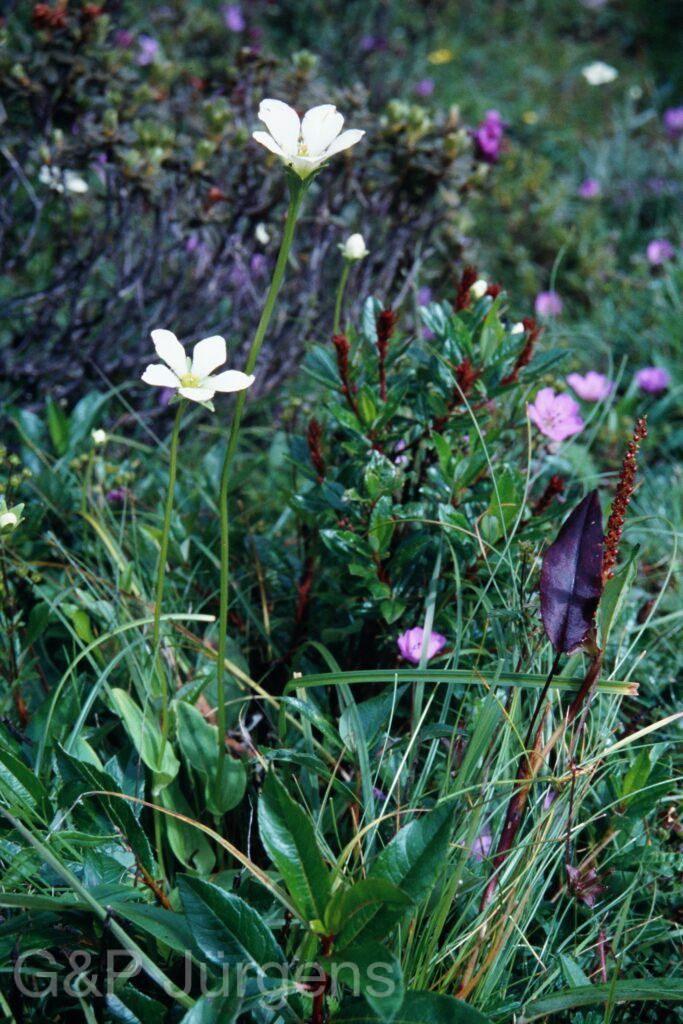
Parnassia delavayi is an alpine perennial herb of the eastern Himalaya and southwestern China, recorded by GBIF from China, Bhutan and India across roughly 1128 occurrences. It is a plant of cold, moist alpine habitats, growing in wet meadows, marshy turf, streamsides, seepage zones and damp grassy slopes within the alpine belt. The photographed individual was found in Bhutan along the Ludlow-Sherriff Trail near Dem-Tso at 4650 m in June, a high glacial-lake margin that exemplifies the species' affinity for saturated, peaty alpine ground.

It forms tufted perennials arising from a short rhizome, with basal leaves that are long-petiolate and cordate-ovate to reniform with an entire margin. The flowering stem is erect and bears a single, sessile or clasping cauline leaf below the solitary terminal flower. Each flower has five free, white petals, often delicately veined, alternating with five green sepals. Characteristic of the grass-of-Parnassus group are the conspicuous fimbriate staminodes positioned opposite the petals and dissected into gland-tipped filaments, which alternate with five fertile stamens surrounding a superior ovary; the fruit is a loculicidal capsule containing many small winged seeds.

GBIF accepts the name. Though long placed in Saxifragaceae or its own family Parnassiaceae, Parnassia is now embedded within Celastraceae on molecular grounds, the family label given here reflecting that modern circumscription. The elaborate fringed staminodes function as nectar-mimicking attractants for fly and small-bee pollinators. With a wide montane range in remote alpine terrain, P. delavayi faces no significant conservation threat.

Author: Franch · Sources: POWO (Kew), GBIF, Flora of China, Flora of Bhutan, monograph of Parnassia

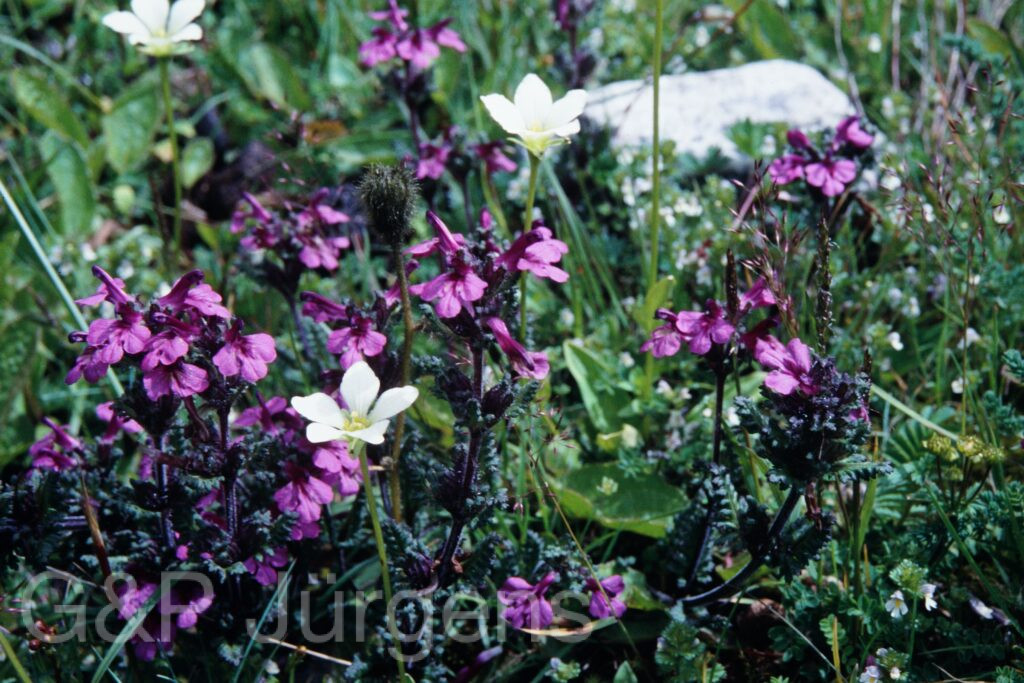
Wall. ex Royle

Sikkim2003 258 P353
Sikkim Dzongri 4200m August
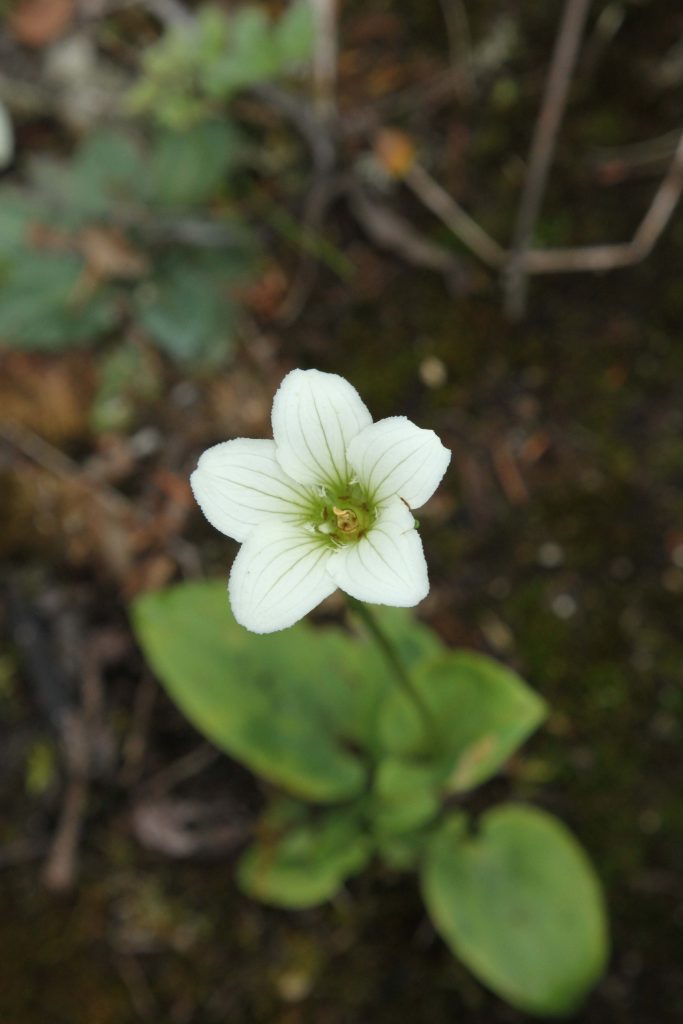
Sikkim2003 261 P360
Sikkim Dzongri 4200m August

Description

Parnassia nubicola Wall. ex Royle is a perennial herb of moist alpine habitats distributed along the Himalaya and into adjoining Central Asia, recorded from China, India, Nepal, Pakistan, Afghanistan and Bhutan, with around 182 georeferenced occurrences clustered in the high Sino-Himalayan ranges. It favours wet alpine meadows, marshy turf, seepage slopes, streamsides and the moist margins of snowmelt flushes, where soils remain saturated through the growing season. The photographed plants from Dzongri in Sikkim at about 4,200 m in August and from the Shele-La in Bhutan at about 4,000 m in September show its preference for the upper subalpine to alpine zone, where it flowers in late summer.

It grows from a short rhizome as a rosette of long-petioled basal leaves with ovate to cordate, entire blades. The flowering stems are erect and bear usually a single clasping, sessile cauline leaf below the solitary terminal flower. Each flower has five green sepals and five white petals conspicuously veined with green or yellowish lines. Between the fertile stamens lie five fringed staminodes divided into numerous gland-tipped filaments, a hallmark of the genus; the superior ovary ripens into a capsule splitting into four valves to release many small seeds.

The family attribution to Celastraceae follows recent molecular classifications, in which Parnassia (formerly placed in Saxifragaceae or its own Parnassiaceae) is treated within an expanded Celastraceae. The conspicuous nectar-secreting staminodes are associated with generalist insect pollination. Widespread and locally common across its broad range, P. nubicola is not considered threatened, though wetland alpine populations are sensitive to drainage, trampling and grazing.

Author: Wall. ex Royle · Sources: POWO (Kew), Flora of China Vol. 8, Flora of Bhutan Vol. 1, GBIF, Simmons: Celastraceae (in Kubitzki, 2004)