
Wall.
Description
Euonymus frigidus is a Himalayan spindle tree distributed from central Nepal through northeast India, Sikkim, Bhutan, and northern Myanmar to southwest China (Yunnan, Sichuan, Xizang). GBIF records over 1,570 occurrences, with the majority from China and the eastern Himalayas. The species inhabits cool-temperate and subalpine broadleaved and mixed forests, often growing along forest margins, stream gullies, and shaded slopes at elevations of 1,800–3,200 m. Collections from Samadan in West Bengal at 2,300 m and from Menchuang in Bhutan at 2,850 m illustrate its typical occurrence in the mid-elevation broadleaved forest zone of the eastern Himalayan slopes.
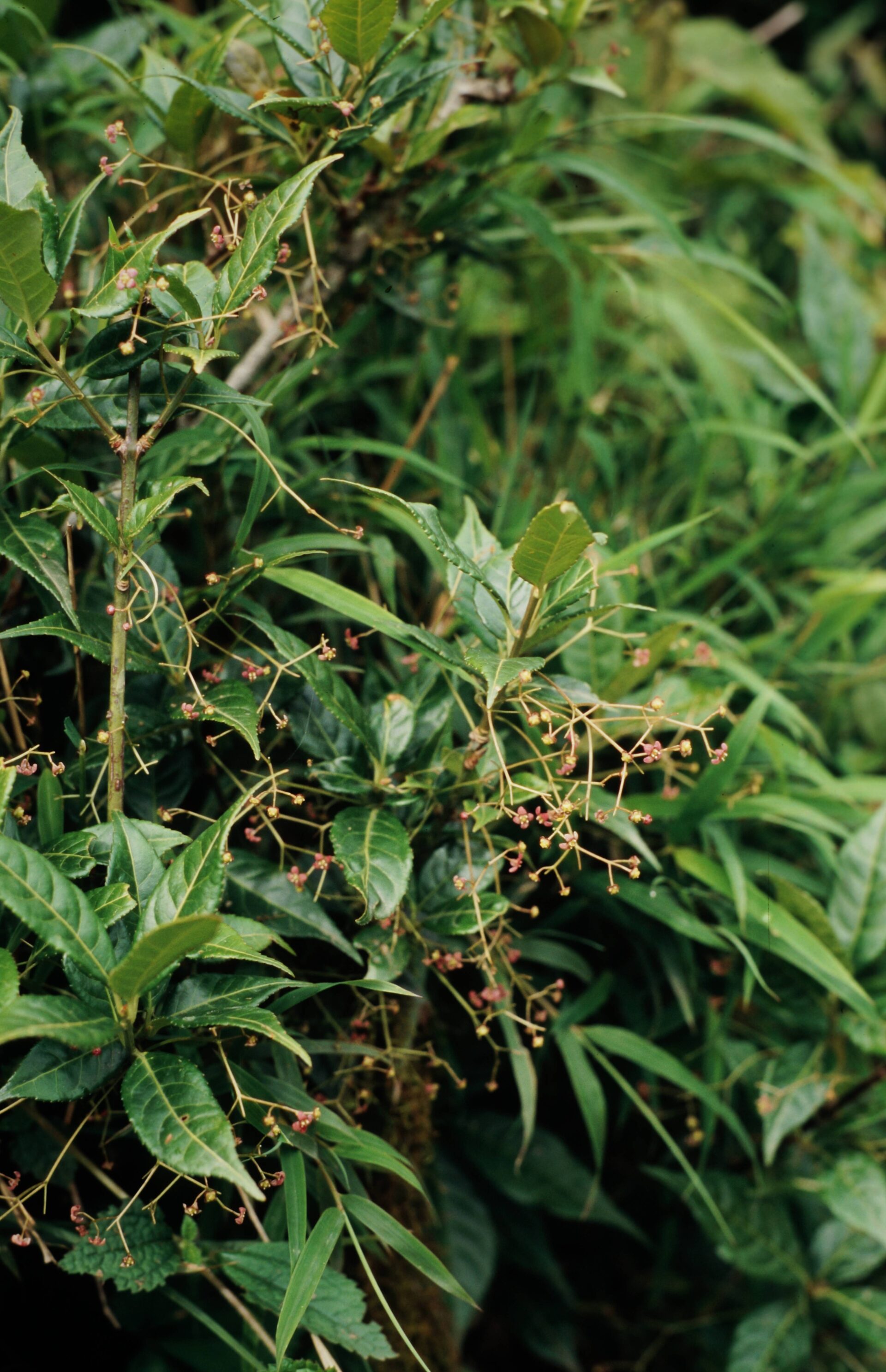
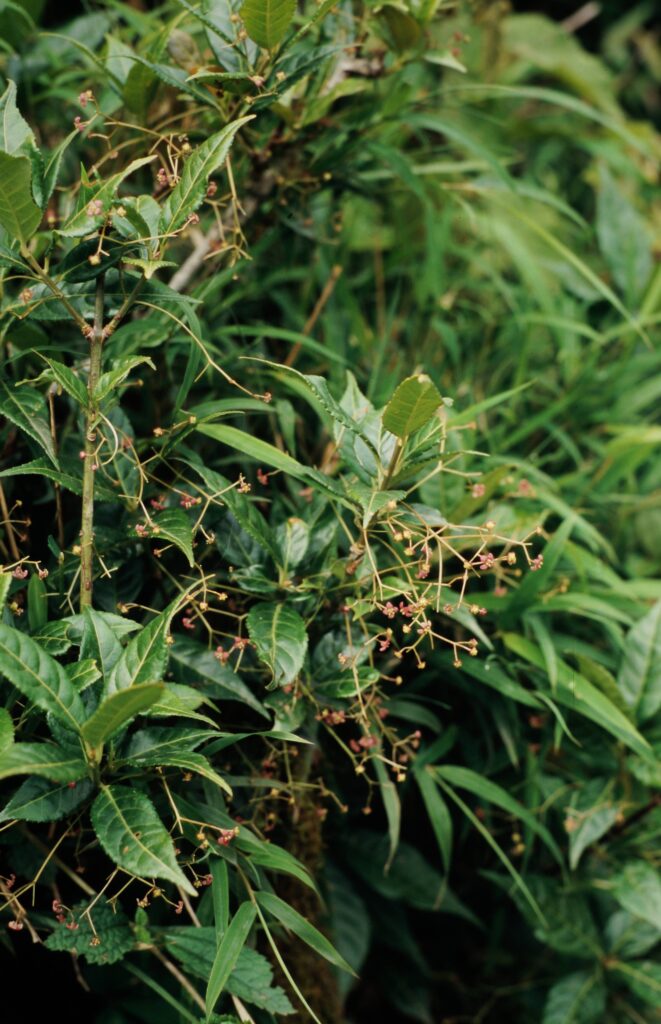
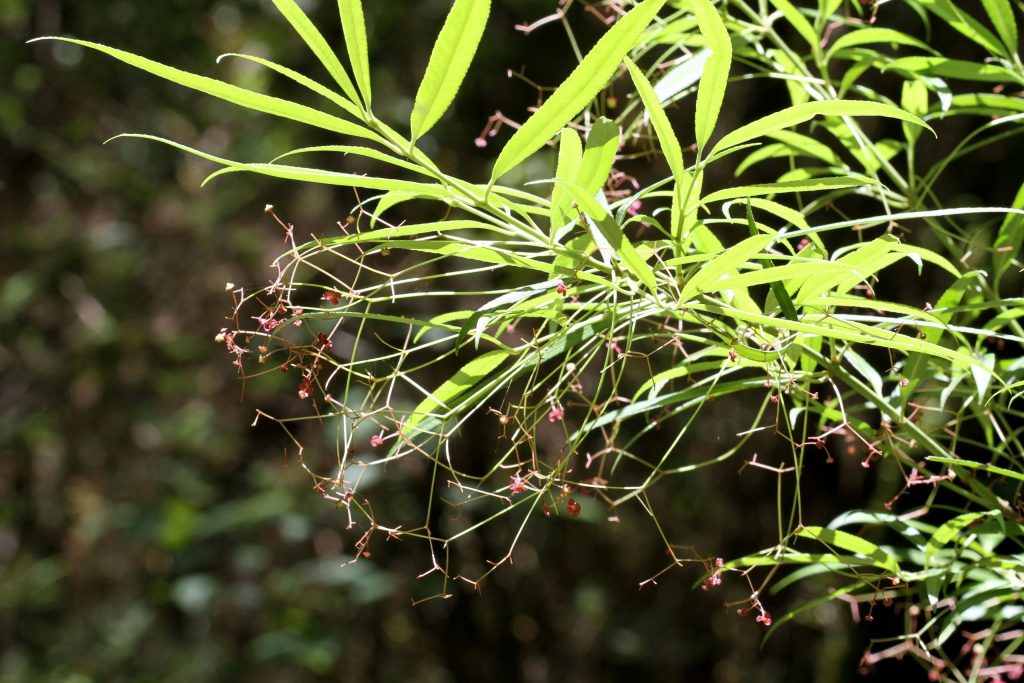
Euonymus frigidus is a large deciduous shrub or small tree, reaching 3–8 m in height, with smooth, greyish-green bark on younger branches. Leaves are opposite, elliptic to oblong-lanceolate, 6–14 cm long, acuminate at the apex, cuneate at the base, with finely crenate-serrate margins, glabrous on both surfaces, and turning reddish-purple in autumn. The inflorescence is an axillary, dichasial cyme bearing 7–15 flowers on slender peduncles. Flowers are tetramerous, small, 6–8 mm in diameter, with greenish-yellow to purplish petals and a conspicuous four-lobed disc. The fruit is a deeply four-lobed capsule, pink to crimson at maturity, splitting to reveal four seeds each enclosed in a bright orange aril — a striking ornamental feature.
The specific epithet 'frigidus' alludes to the cold-temperate habitats in which this species predominantly occurs. Euonymus frigidus is distinguished from the closely related E. hamiltonianus by its generally larger leaves, more deeply lobed capsules, and preference for higher elevations. The conspicuous arillate fruits are an important food source for frugivorous birds, including minivets and laughingthrushes, which serve as effective dispersal agents. The species is occasionally cultivated as an ornamental in European and North American gardens for its vivid autumn colour and decorative fruit.
Author: Wall. · Sources: POWO (Kew), GBIF, Flora of China Vol. 11, Flora of Bhutan Vol. 2, Grierson & Long: Flora of Bhutan (1991)