Polygonaceae

(Hook.f.) H.Hara

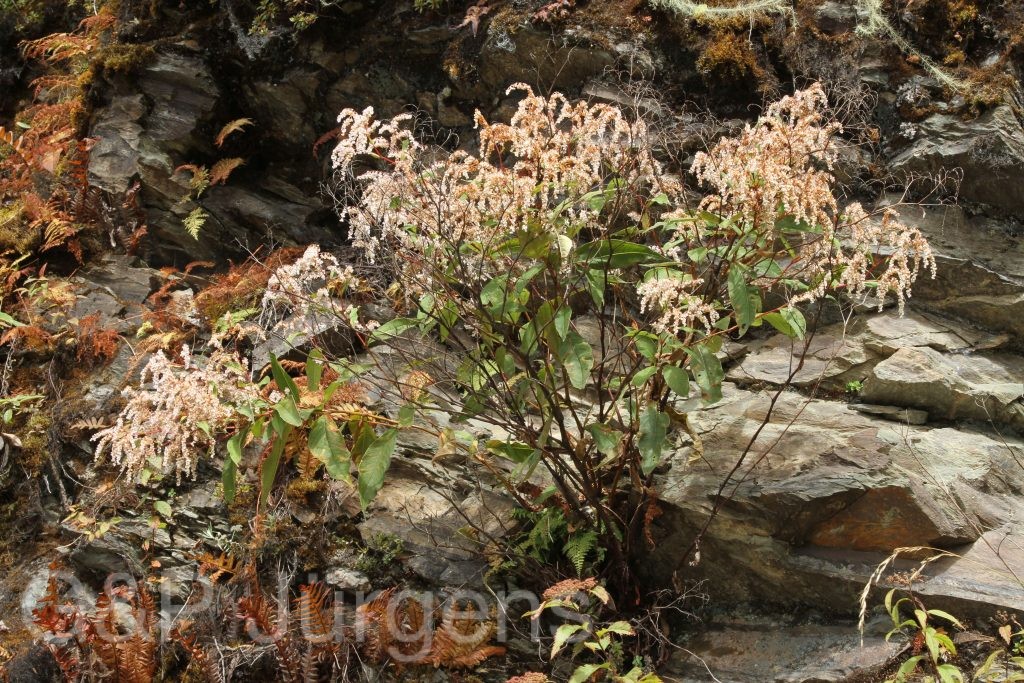
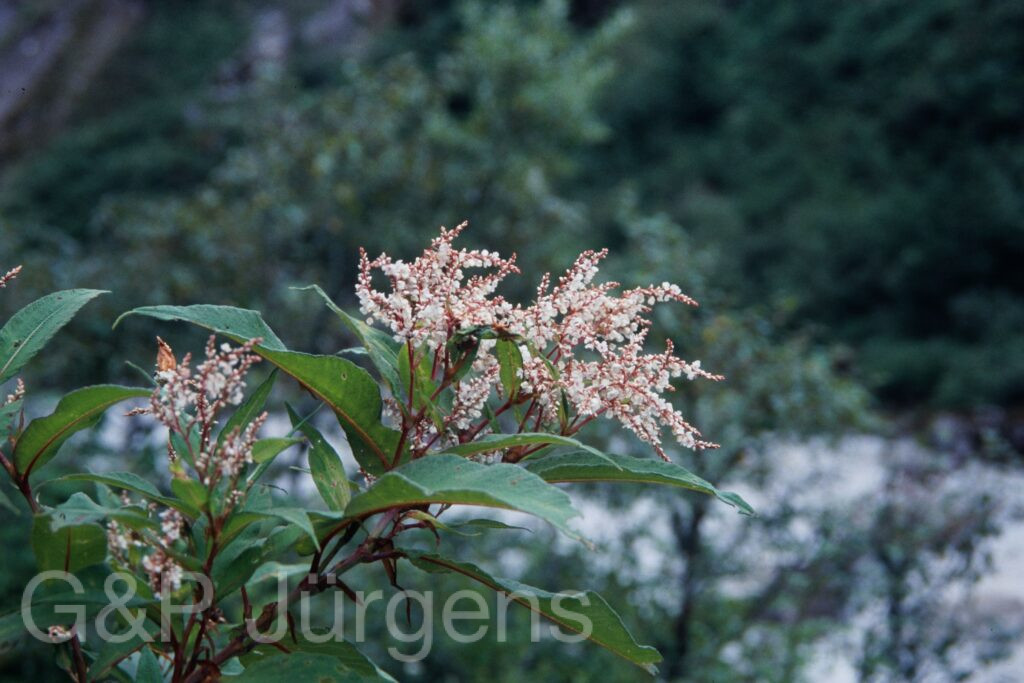
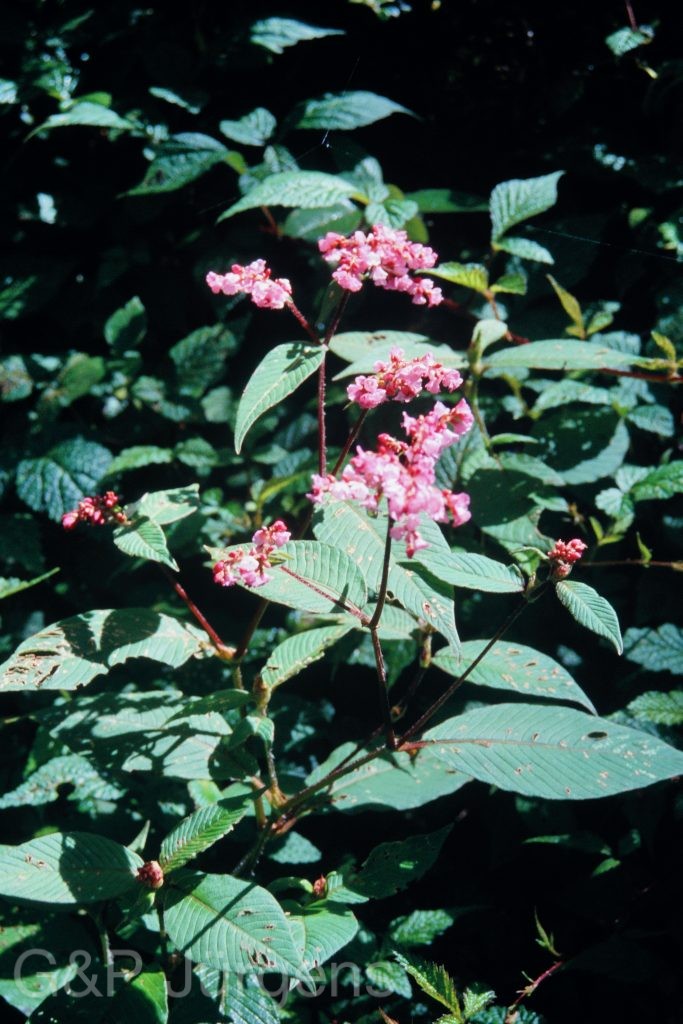
Sikkim2003 70 P95
Sikkim Choka 2900m, August

Description

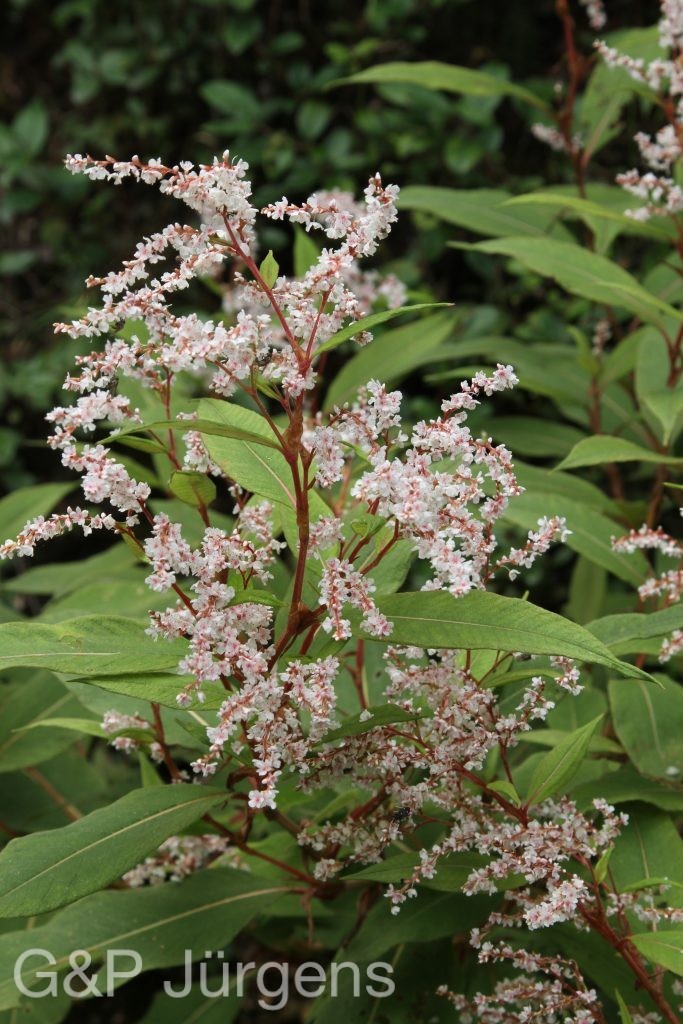
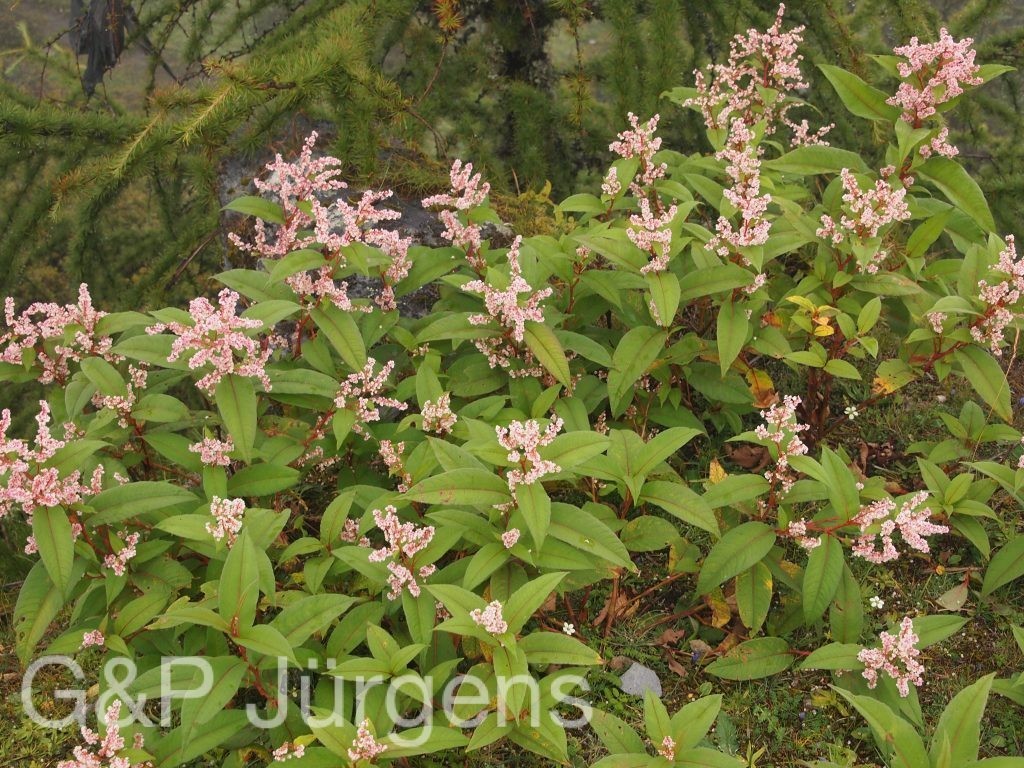
Aconogonum campanulatum, treated by GBIF as a synonym of the accepted Aconogonon campanulatum, is a Sino-Himalayan perennial herb distributed from Nepal and northern India through Sikkim and Bhutan into Myanmar and south-western China. Its 372 GBIF records lie mostly within this native range, with scattered European, North and South American and New Zealand points reflecting cultivated and herbarium material. It grows in subalpine and alpine meadows, forest clearings, shrubberies and along streamsides and banks, commonly between about 2700 and 4000 m. The plant photographed at Choka in Sikkim at 2900 m in August captures it flowering in moist, herb-rich montane vegetation during the monsoon.

It is a robust, branching perennial arising from a woody rootstock, with erect leafy stems. The leaves are alternate, ovate to ovate-lanceolate, often somewhat cordate to rounded at the base and acuminate at the apex, frequently white-tomentose beneath, with membranous sheathing ochreae at the nodes. The flowers are borne in lax, branched, paniculate inflorescences; each has a five-parted, campanulate, white to pinkish perianth (the source of the epithet), with eight stamens and a trifid style. The fruit is a small, trigonous, shining brown nut.

The species belongs to Aconogonon (often spelled Aconogonum), a segregate of the broadly defined Polygonum embracing the alpine knotweeds, and the accepted name is Aconogonon campanulatum. Its woody rootstock and tall leafy habit suit the tall-herb communities of moist Himalayan slopes. Widely distributed and locally abundant, it is of no conservation concern and forms a conspicuous element of subalpine meadow vegetation.

Author: (Hook.f.) H.Hara · Sources: POWO (Kew), GBIF, Flora of Bhutan, Flora of China, Annotated Checklist of the Flowering Plants of Nepal
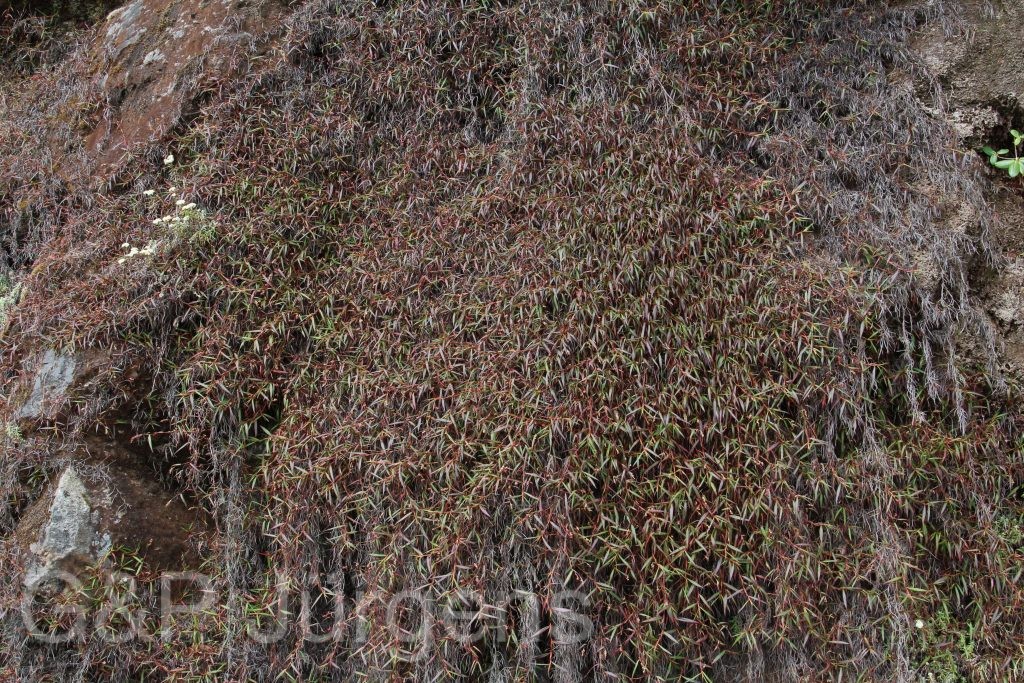
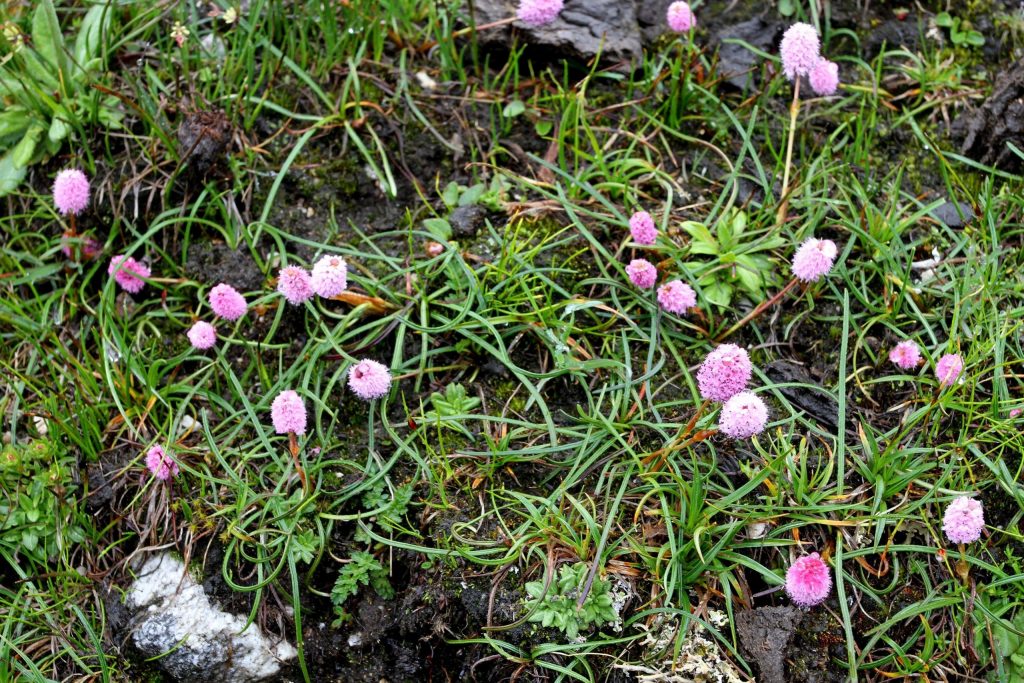
Bistorta emodi

by GP Jürgens

(Meisn.) H.Hara

Bhutan2015 385
BH15
BhutanPG2011 569 01 scaled
Bhutan Ludlow-Sherriff-TrailMiluthang, 4350m July

Description

Bistorta emodi (Meisn.) H.Hara is an alpine knotweed of the Himalaya and adjacent China, recorded from about 363 collections in China, Nepal, India, Bhutan and Myanmar, with scattered extralimital reports. It grows in moist alpine meadows, dwarf-shrub heath, streamsides, seepages and damp rocky slopes in the alpine and upper subalpine zone, broadly between about 3500 and 4800 m. The plant photographed on the Ludlow-Sherriff trail at Miluthang in Bhutan at 4350 m in July occupies the cool, moisture-retentive high pastures that are characteristic of the species during the monsoon flowering period.

This is a perennial herb arising from a stout, often contorted, woody rhizome. The stems are erect and simple, sheathed at the nodes by tubular, membranous ochreae diagnostic of the family. Basal and lower leaves are long-petioled with ovate to lanceolate blades, often cordate or truncate at the base, the upper leaves smaller and sessile. The inflorescence is a dense, terminal, cylindrical to oblong spike of small flowers, the perianth pink to reddish or white, five-parted, with eight stamens; the lower part of the spike sometimes bears bulbils. The fruit is a small, trigonous, dark, shining achene enclosed in the persistent perianth.

The species belongs to Bistorta, segregated from Polygonum sensu lato (under which it appears as Polygonum emodi) and supported by molecular phylogenetics as a distinct lineage within Polygonaceae. Its rhizomes store carbohydrates that fuel rapid flowering in the short alpine summer, and the nectariferous spikes attract diverse insects. Widespread and often locally abundant in high Himalayan pasture, B. emodi is not of conservation concern, though it forms an important component of grazed alpine grassland.

Author: (Meisn.) H.Hara · Sources: POWO (Kew), GBIF, Flora of China, Flora of Bhutan, Flora of Nepal, revision of Bistorta / Polygonaceae

(D.Don) Soják

Bh09 76 P130 2
Bhutan Jili-La 3600m, June

Description

Bistorta macrophylla is a perennial herb widely distributed across the Himalaya and the Sino-Himalayan highlands, centred on China, Nepal, India and Bhutan and with scattered records reflecting its broad range and frequent cultivation (gbif_countries: CN, NP, IN, US, BT, ZZ, GB, MM, NZ, TH, JP, NO, RU); GBIF lists some 1887 occurrences, making it one of the better-documented Himalayan knotweeds. It thrives in alpine and subalpine meadows, open grassy slopes, damp turf and the margins of forest clearings, often forming conspicuous colonies. The illustrated record is from Jili-La in Bhutan at about 3600 m in June, typical of its early-summer flowering in moist high-mountain grassland.

The plant arises from a thick, contorted, blackish rhizome and produces erect, simple, unbranched flowering stems. The basal and lower leaves are large, long-petiolate, narrowly oblong to lanceolate, with the blade often decurrent on the petiole and a whitish, papery undersurface; the cauline leaves are smaller and increasingly sessile, sheathing the stem with the membranous ocreae characteristic of the family. The inflorescence is a dense, terminal, cylindrical spike of small flowers with a pink to rose-purple perianth of five tepals, sometimes with bulbils replacing lower flowers. The fruit is a small, trigonous, dark achene.

Formerly included in a broad Polygonum or Persicaria, the species is now placed in the segregate genus Bistorta, supported by molecular phylogenetics of Polygonaceae. Its stout, starchy rhizomes are gathered locally as food and in folk medicine, and it is a familiar component of Himalayan alpine pasture. Common and widespread, B. macrophylla is of no conservation concern.

Author: (D.Don) Soják · Sources: POWO (Kew), GBIF, Flora of Nepal, Flora of China, Annotated Checklist of the Flowering Plants of Nepal, Polygonaceae account in The Families and Genera of Vascular Plants

H.Lév.

Nepal 99 35 ergebnis
West-Nepal Nyor Gaad 2700m, June

Description

Bistorta milletii is a Sino-Himalayan knotweed distributed through China, Nepal, India and Bhutan, with GBIF recording 185 occurrences along this temperate to subalpine arc. It grows in open grassy slopes, moist meadows, forest margins and rocky banks, broadly between about 2500 and 4000 m. The illustrated plant was photographed in West Nepal at Nyor Gaad at 2700 m in June, a representative mid-montane meadow station where the species flowers through the early summer. It commonly forms patches in damp turf alongside other alpine and subalpine herbs.

The plant is a rhizomatous perennial herb arising from a stout, often contorted rhizome that anchors it in the sward. Basal leaves are long-petiolate with ovate-lanceolate to narrowly elliptic blades, the base cuneate to subcordate and the lower surface frequently pale; the membranous, tubular ochreae sheathing the stem are diagnostic of the family. The flowering stem is simple and erect, terminating in a dense, cylindrical, spike-like raceme. The small flowers have a five-parted, petaloid perianth, deep pink to red, with eight exserted stamens and a superior ovary bearing three styles. The fruit is a small, trigonous, dark brown achene enclosed in the persistent perianth.

The species belongs to genus Bistorta, segregated from Polygonum sensu lato and supported as a distinct lineage by molecular work; the input file's alternate web slug references the related B. affinis. POWO and GBIF accept the name B. milletii. As a meadow component with starch-rich rhizomes, members of the genus are locally grazed and occasionally used as famine food.

Author: H.Lév. · Sources: POWO (Kew), GBIF, Flora of China, Flora of Bhutan, Annotated Checklist of the Flowering Plants of Nepal, A Systematic Revision of Bistorta (Polygonaceae)

Greene

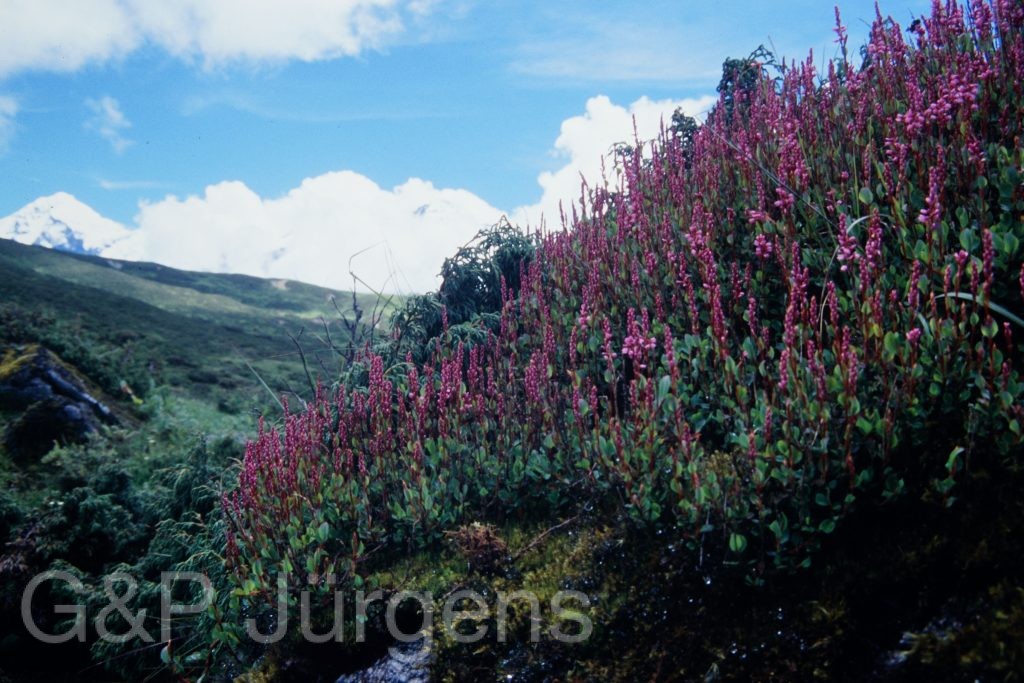
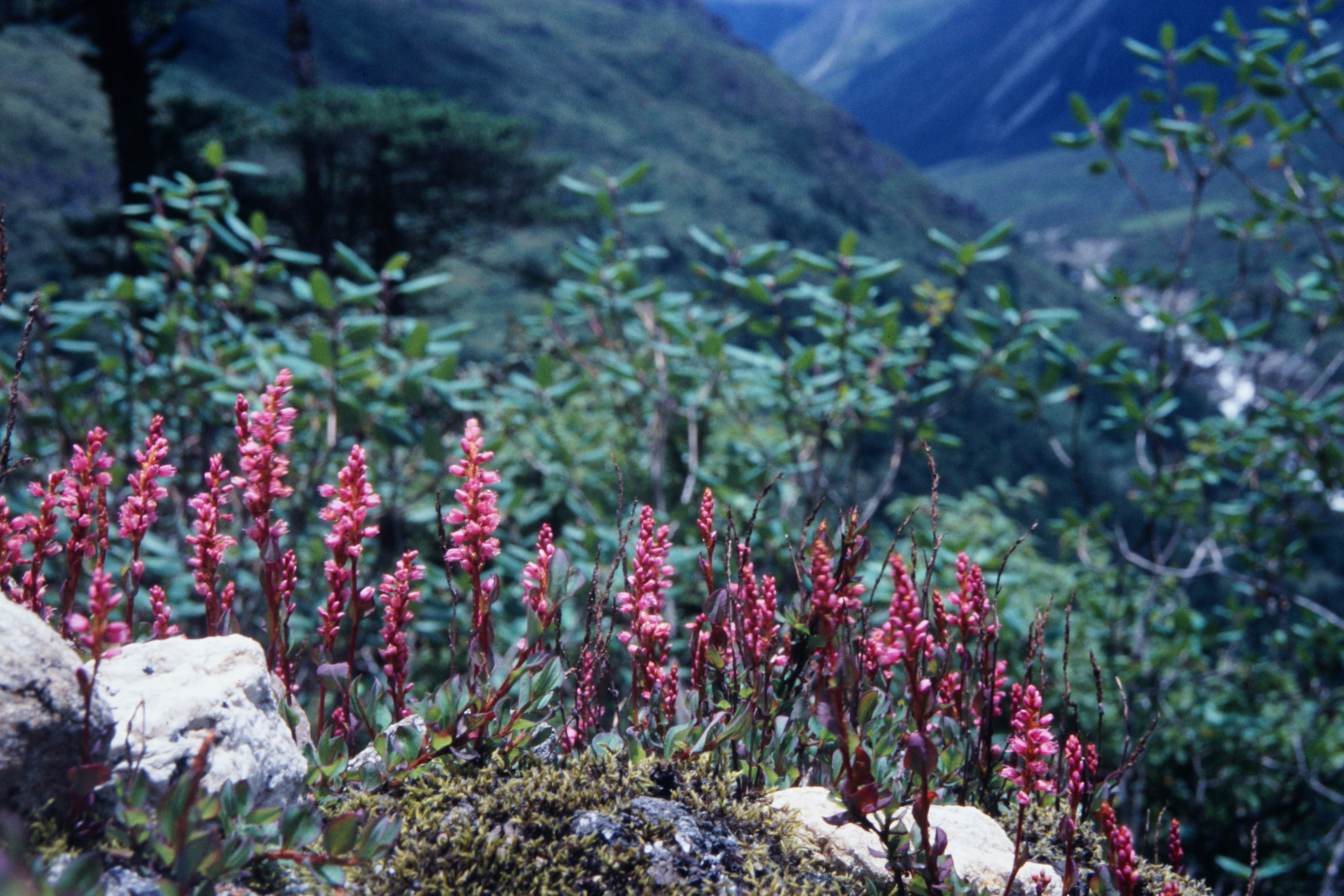
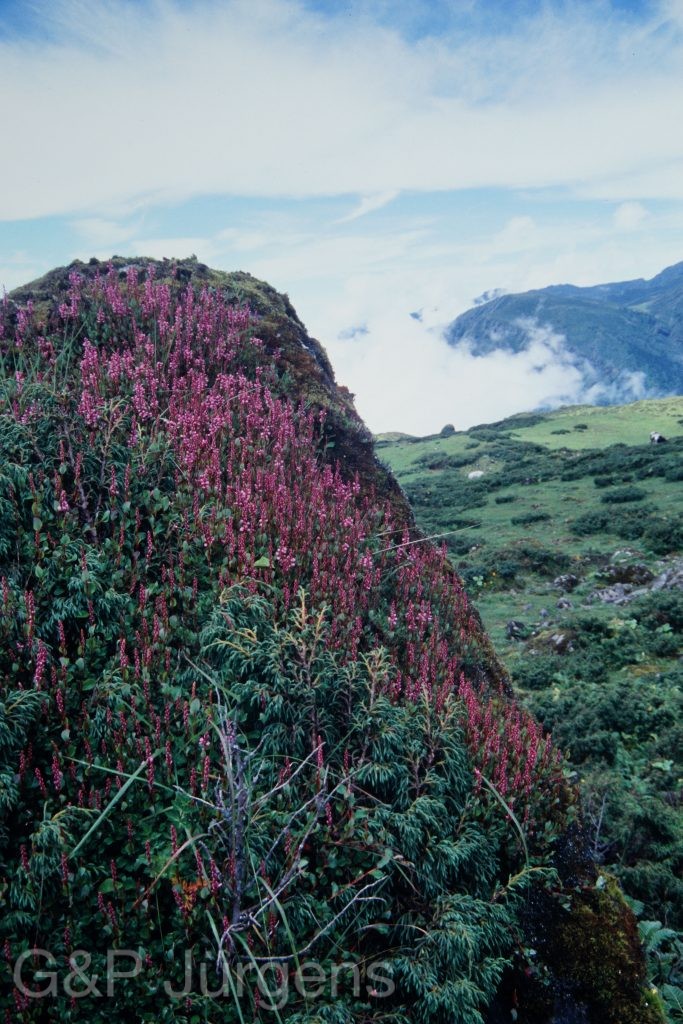
Sikkim2003 117 G157
Sikkim below Dzongri 4100m 08.2003
Sikkim2003 208 P291
Sikkim below Dzongri 4100m 08.2003
Sikkim2003 118 G158
Sikkim below Dzongri 4100m 08.2003

Description

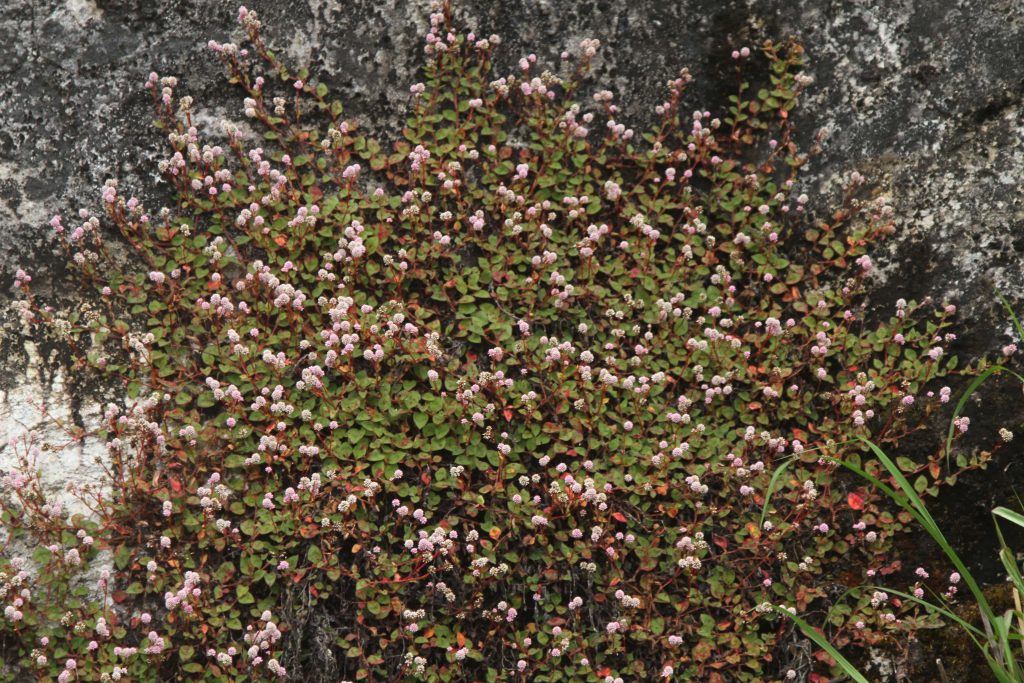
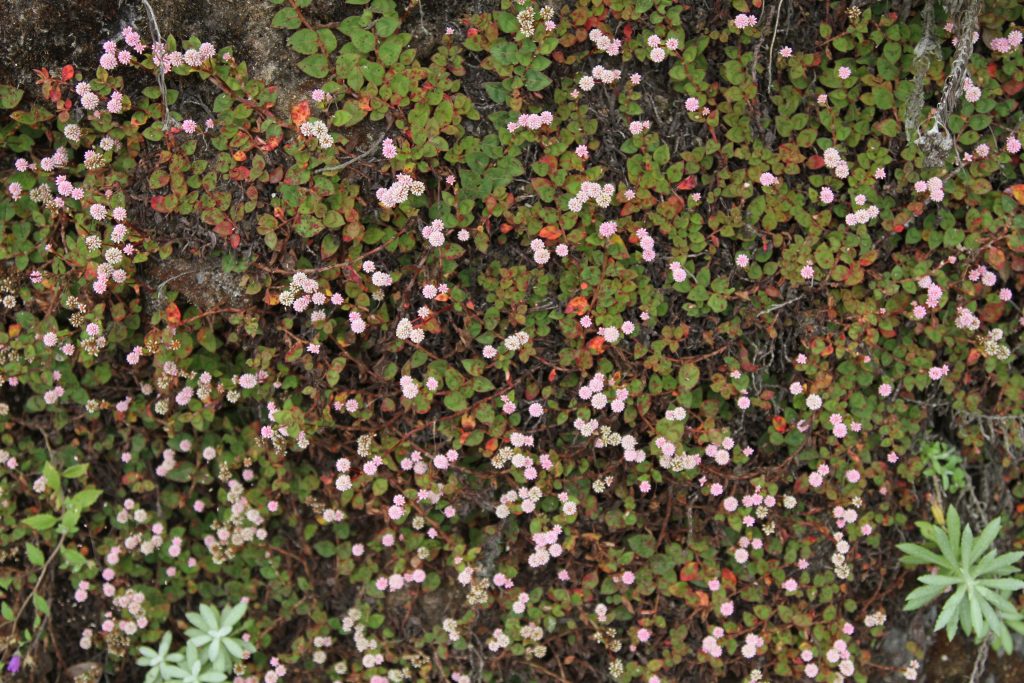
Bistorta vacciniifolia is a Sino-Himalayan alpine perennial distributed along the high mountain arc from Pakistan and northern India through Nepal, Sikkim and Bhutan into south-western China. The 525 GBIF records concentrate in this native range, with scattered occurrences in the Netherlands, Great Britain, New Zealand, Belgium, Norway and the United States representing rock-garden cultivation. It grows on open alpine slopes, rocky banks, moraines and the margins of dwarf-shrub heath, typically between about 3000 and 4500 m. The plant photographed below Dzongri in Sikkim at 4100 m in August captures it in flower during the late-monsoon alpine season on such stony, well-drained ground.

It is a low, mat- or cushion-forming herb arising from a stout, woody, often branched rhizome. The numerous slender, ascending stems bear small, leathery, ovate to elliptic leaves resembling those of Vaccinium, glabrous and shining above, paler beneath, with revolute margins, and sheathing membranous ochreae at the nodes. The inflorescence is a short, dense, terminal spike of bright rose-pink to deep red flowers, each with a five-lobed perianth, eight stamens and exserted styles. The fruit is a small, trigonous, dark brown nut enclosed by the persistent perianth.

Formerly placed in a broadly circumscribed Polygonum and still encountered under Persicaria, the species is now treated within Bistorta, the bistort knotweeds. Its cushion habit, woody rhizome and leathery evergreen leaves are adaptations to wind-exposed, frost-prone alpine ridges. Widespread and locally common across its range, it is of no conservation concern, though it remains an attractive component of high Himalayan moraine and heath communities.

Author: Greene · Sources: POWO (Kew), GBIF, Flora of Bhutan, Flora of China, Annotated Checklist of the Flowering Plants of Nepal
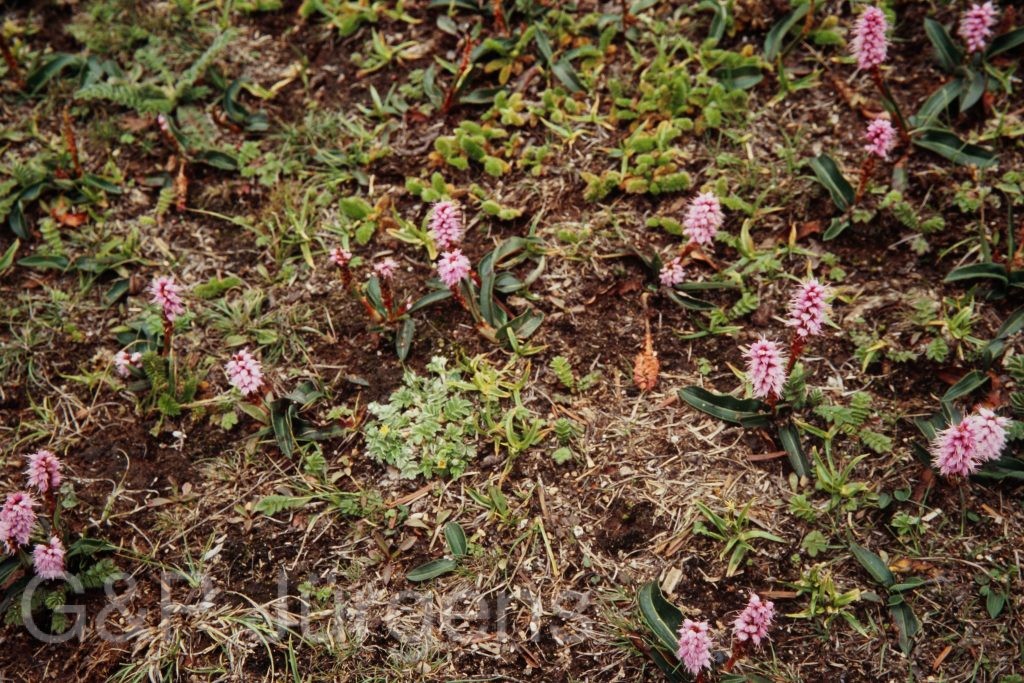
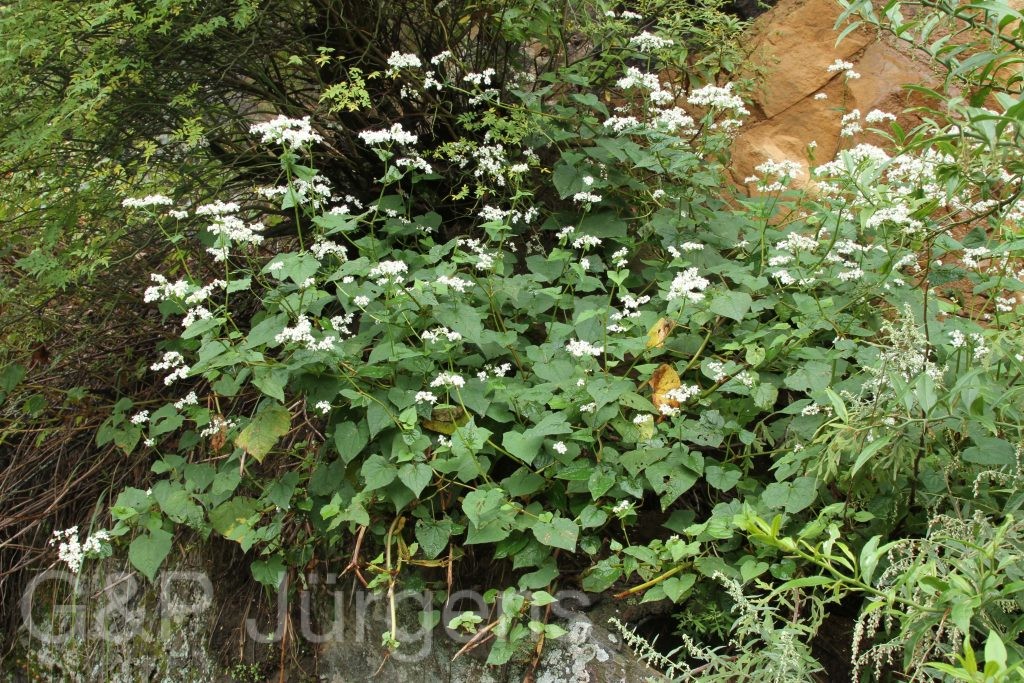
Moench

Bhutan2012 155
Bhutan Haar-Valley, 3100m September

Description

Fagopyrum esculentum, common buckwheat, is a domesticated annual of South-East Asian and Sino-Himalayan origin now cultivated and naturalised across the temperate world, accounting for its more than 72,000 GBIF occurrences in France, the Netherlands, Germany, Russia, China, Korea, Japan, the United States and Canada among many others. In the Himalaya it is a traditional mountain crop grown on terraced fields and as an escape on disturbed ground at middle to high elevations. The record from the Haa Valley of western Bhutan at 3100 m in September captures it in flower and early fruit at the close of a typical subalpine growing season.

It is an erect, glabrous annual 30-90 cm tall with reddish, somewhat fleshy stems and characteristic membranous ochreae sheathing the nodes. The leaves are alternate, broadly triangular-cordate to hastate, the lower ones petiolate and the upper sessile and clasping. The flowers are small, borne in dense axillary and terminal corymbose racemes, with a five-parted white to pinkish perianth, eight nectary-bearing stamens and a tristylous heterostylous breeding system promoting outcrossing. The fruit is a sharply three-angled, smooth brown achene (the buckwheat "grain") much exceeding the persistent perianth.

Within Polygonaceae the genus Fagopyrum is distinguished by its trigonous achenes and heterostyly; F. esculentum is the principal cultivated species, complemented by Tartary buckwheat F. tataricum. It is insect-pollinated, valued as a nectar source and pseudocereal, and is of agricultural rather than conservation interest, persisting widely as a weedy escape from cultivation.

Author: Moench · Sources: POWO (Kew), GBIF, Flora of China, Flora of Bhutan, Flora Europaea, Ohnishi monograph of Fagopyrum

(Hook.f.) Ronse Decr.

Bhutan2012 20
Bhutan Shele-La, 3200m September
Bhutan2012 91
Bhutan Shele-La, 3200m September

Description

Persicaria campanulata is a clump-forming perennial of the eastern Himalaya and western China, also widely naturalised in temperate gardens elsewhere. GBIF records show its native range across China, Nepal and Bhutan, together with introduced populations in Ireland, Britain, Denmark and New Zealand, totalling around 66 occurrences. It grows on damp, shaded banks, woodland margins, streamsides and moist montane meadows, favouring cool, humid sites with reliable moisture. The photographed plant from the Shele-La in Bhutan at 3200 m, recorded in September, is characteristic of its occurrence in the upper temperate forest and subalpine zone, where it flowers into the late summer and autumn. GBIF lists the name as a synonym (the species having previously been placed in Aconogonon and Polygonum), but Persicaria campanulata is the currently accepted combination.

It is a rhizomatous, spreading herb with erect to ascending, branched stems. The leaves are ovate to elliptic-lanceolate, acuminate, often softly tomentose and pale beneath, with the membranous, tubular ochreae sheathing the nodes characteristic of the family. The flowers are small and bell-shaped, fragrant, borne in dense, branched terminal panicles; the campanulate perianth, from which the epithet derives, is pink to white with five lobes, enclosing eight stamens and a three-styled ovary. The fruit is a small, trigonous, brown achene.

The genus Persicaria comprises knotweeds segregated from a broadly defined Polygonum, distinguished by their fringed ochreae and spicate or paniculate inflorescences. P. campanulata is valued horticulturally for its long autumn flowering, but the same vigorous rhizomatous habit that makes it ornamental has allowed it to escape and naturalise, becoming locally invasive in damp ground in parts of the British Isles and New Zealand.

Author: (Hook.f.) Ronse Decr. · Sources: POWO (Kew), GBIF, Flora of Bhutan, Flora of China (Polygonaceae), Polygonaceae monograph (Brandbyge)

(Buch.-Ham. ex D.Don) H.Gross

Bhutan2012 949
Bhutan Tumching-La 2900m, October
Bhutan2012 950
Bhutan Tumching-La 2900m, October

Description

Persicaria capitata (Buch.-Ham. ex D.Don) H.Gross is a mat-forming perennial native to the Himalaya and southern China that has become widely naturalised as an ornamental and weed. GBIF documents nearly 23,000 occurrences, with native records from India, Nepal, China and Taiwan and extensive introduced populations across Portugal, Spain, Italy, the Netherlands, Great Britain, the United States, Mexico, Brazil, Colombia, Ecuador, Costa Rica, Australia, New Zealand, South Africa, Japan and Réunion. In its native range it grows on rocky banks, walls, gravelly slopes and disturbed mid-montane ground. The Bhutanese plant photographed at the Tumching-La, at about 2900 m in October, reflects its occurrence in the cool temperate zone of the eastern Himalaya.

The plant is a low, creeping herb that roots at the nodes to form dense mats; the slender, often reddish stems bear membranous ochreae at the swollen nodes. The leaves are ovate to elliptic, frequently marked with a dark V-shaped band and sometimes tinged purple. The flowers are aggregated into small, dense, globose heads borne on slender peduncles; the perianth is pink, five-lobed and persists in fruit. The fruit is a small trigonous achene enclosed by the perianth.

Widely grown as a ground-cover ornamental, P. capitata escapes readily and is recorded as an environmental weed in parts of the Mediterranean, Macaronesia, Australasia and the Americas. Its capacity to root at the nodes and spread vegetatively, combined with prolific seed production, underlies its colonising success. The species is not of conservation concern; instead it exemplifies how a Himalayan native can attain a near-cosmopolitan distribution through horticultural dispersal and subsequent naturalisation.

Author: (Buch.-Ham. ex D.Don) H.Gross · Sources: POWO (Kew), GBIF, Flora of China, Flora of Bhutan, Flora of Nepal, Hara & Williams Polygonaceae treatments

(L.) H. Gross

Bhutan2015 92
Bhutan Galephug, 600m, October

Description

Persicaria chinensis (L.) H. Gross is a widespread, often weedy perennial of warm-temperate to subtropical Asia, now naturalised well beyond its native range. GBIF records over 12,500 occurrences spanning China, Taiwan, Japan, India, Nepal, Thailand, Myanmar, the Malesian archipelago and the Philippines, with introduced populations in Australia, New Zealand, Réunion, the United States and Jamaica. It favours moist, disturbed ground, forest margins, roadside banks, streamsides and clearings from the lowlands to mid-montane elevations. The Bhutanese plant photographed at Galephug, at about 600 m in October, reflects its abundance in the humid foothill belt of the eastern Himalaya.

The plant is a sprawling to scrambling herb with branched, often reddish stems that are swollen at the nodes and sheathed by membranous ochreae characteristic of the family. The leaves are ovate to ovate-lanceolate, frequently with a dark chevron-shaped marking, and taper to an acute apex. The inflorescence comprises numerous small, capitate clusters of flowers; the perianth is white to pinkish and five-lobed, becoming fleshy and bluish-black in fruit. The fruit is a trigonous achene enclosed by the persistent, juicy perianth, which gives the fruiting heads a berry-like appearance.

Segregated by some authors as Polygonum chinense, the taxon is morphologically variable, and several varieties and forms have been recognised across its vast range. Its fleshy fruiting perianth promotes endozoochorous dispersal by birds, contributing to its colonising success and to its status as an invasive in several introduced territories. The species is of no conservation concern; rather, its broad ecological amplitude and ready establishment on disturbed soils make it one of the more conspicuous and adaptable knotweeds of monsoonal Asia.

Author: (L.) H. Gross · Sources: POWO (Kew), GBIF, Flora of China, Flora of Bhutan, Flora of Nepal, Hara & Williams Polygonaceae treatments

Greuter & Burdet

Bhutan2015 483
Bhutan Pele-La 3100m, October
Sikkim2003 410 G570
Sikkim Zemu Valley 3400m August

Description

Persicaria wallichii (the accepted name under which this taxon is listed, the binomial here being treated as a synonym in GBIF) is a robust perennial knotweed native to the Himalaya and adjacent mountains of China and Myanmar, where it occupies open hillsides, forest margins, riverbanks and disturbed ground in the temperate and subalpine zones. From its Himalayan homeland it has spread widely as an introduced and frequently invasive plant, the GBIF dataset recording it across much of Europe as well as North and South America and New Zealand, totalling well over a thousand occurrences. The illustrated plants from Pele-La in Bhutan at 3100 m, flowering in October, and from the Zemu Valley in Sikkim at 3400 m in August, exemplify its native montane setting.

The plant forms tall, spreading clumps from a vigorous, far-creeping rhizome, with erect to ascending stems that are reddish-tinged and somewhat woody at the base. The leaves are large, ovate-lanceolate to triangular, acuminate, cordate to truncate at the base, often white-tomentose beneath, and subtended by membranous, brownish ochreae sheathing the swollen nodes. The numerous small flowers are borne in much-branched, lax panicles of slender spike-like racemes; each flower has a white to pinkish perianth of five tepals enclosing eight stamens and a trifid style. The fruit is a small, glossy, three-angled (trigonous) achene enclosed by the persistent perianth.

Formerly placed in Polygonum and Aconogonon (reflected in the synonymy and field labels), the species sits within a much-revised section of Persicaria. Its dense rhizomatous growth allows it to form persistent thickets, and outside its native range it behaves as an aggressive colonist of riverbanks and waste ground, prompting management concern in several countries; within the Himalaya it remains a common and ecologically benign component of moist montane vegetation.

Author: Greuter & Burdet · Sources: POWO (Kew), GBIF, Flora of Bhutan, Flora of China (Polygonaceae), Annotated Checklist of the Flowering Plants of Nepal
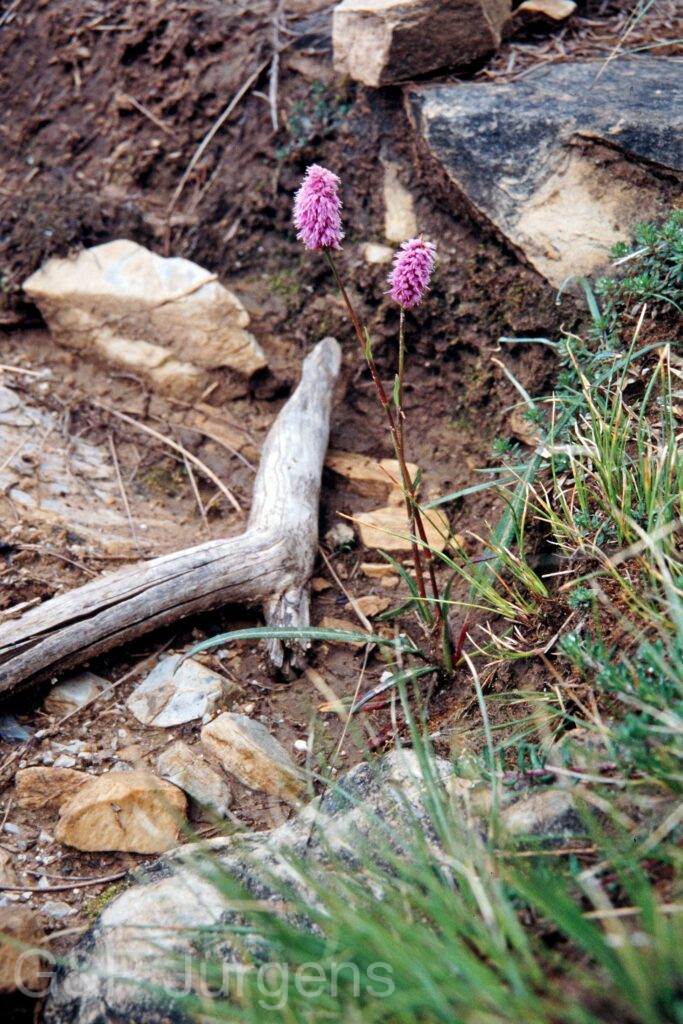
  • 1
  • 2