
D.Don

Description
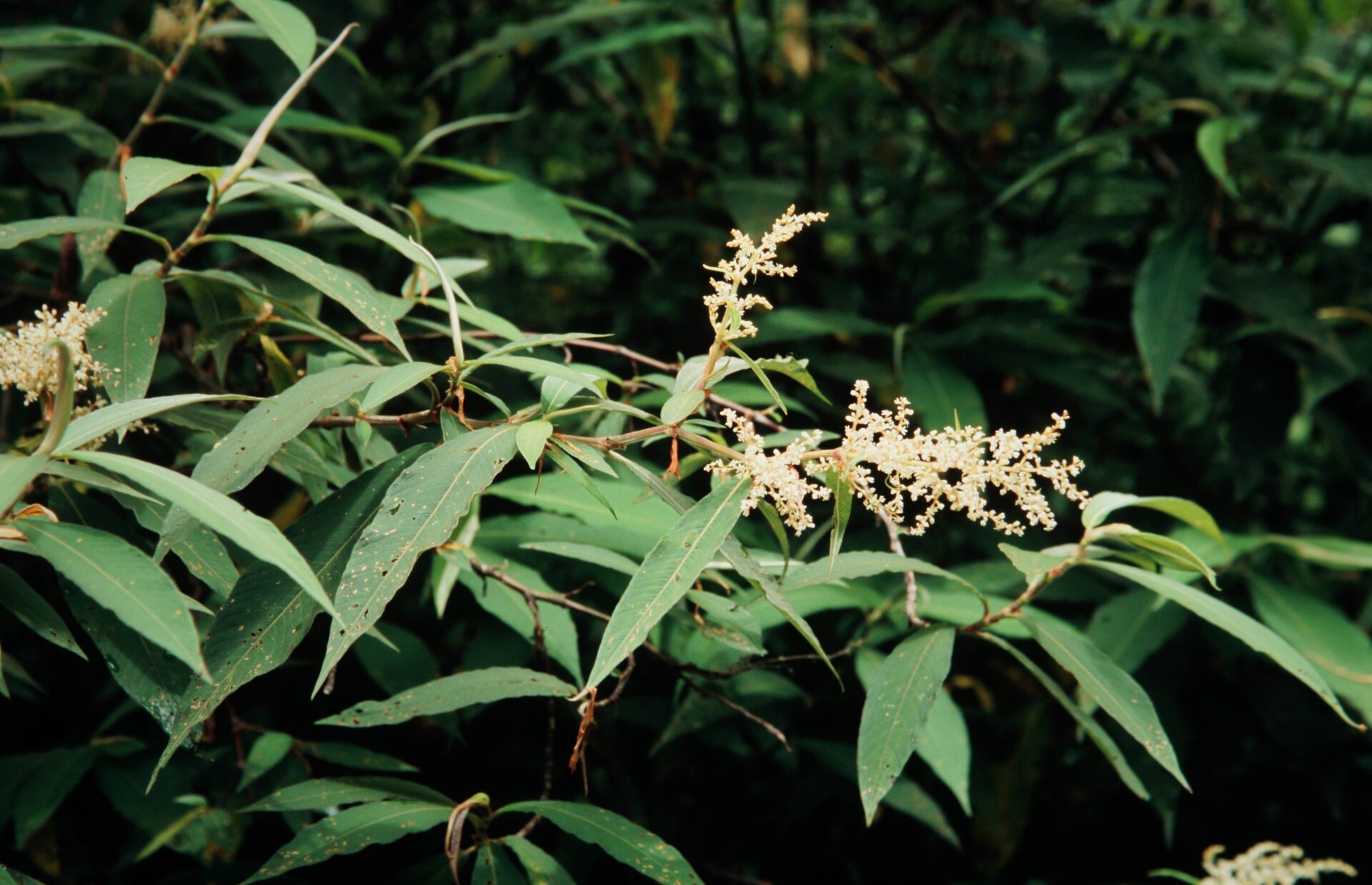
Polygonum molle D.Don is a robust perennial knotweed of the Himalaya and adjacent uplands. Under current circumscription the name is treated as a synonym, the accepted genus being Koenigia, into which many former Asian Polygonum and Aconogonon species have been transferred following molecular phylogenetic studies. The taxon occurs from Pakistan and Nepal eastward through Sikkim and Bhutan into southwest China, with the broad GBIF country list reflecting the wide aggregate concept of the genus and numerous cultivated or naturalised records across Europe and North America. It was recorded in West Bengal at Ruigi-Chu at 2,100 m in May, growing in moist temperate forest clearings, stream banks, and shrubby slopes between about 1,500 and 3,000 m.
The plant forms stout, erect, much-branched stems up to 1–2 m tall arising from a woody rootstock, the nodes sheathed by membranous, often brownish ochreae. The leaves are large, ovate to ovate-lanceolate, acuminate, with a softly pubescent (hence "molle") and somewhat velvety lower surface. Numerous small whitish to greenish flowers are borne in much-branched, paniculate inflorescences of slender racemes; each flower has a five-parted perianth that persists around the trigonous, glossy achene at maturity.
The transfer to Koenigia reflects a substantial reorganisation of tribe Persicarieae, in which the traditional broad Polygonum proved polyphyletic. Plants of this group are pioneer colonisers of disturbed temperate habitats and contribute to slope stabilisation. Robust and widespread, the species is of no conservation concern, though its taxonomy at species rank remains in flux pending fuller sampling.
Author: D.Don · Sources: POWO (Kew), Flora of China Vol. 5, Flora of Bhutan Vol. 1, GBIF, Schuster et al.: Phylogeny of Polygoneae (Taxon, 2011)