(Wall.) Bogner & Mayo
Description
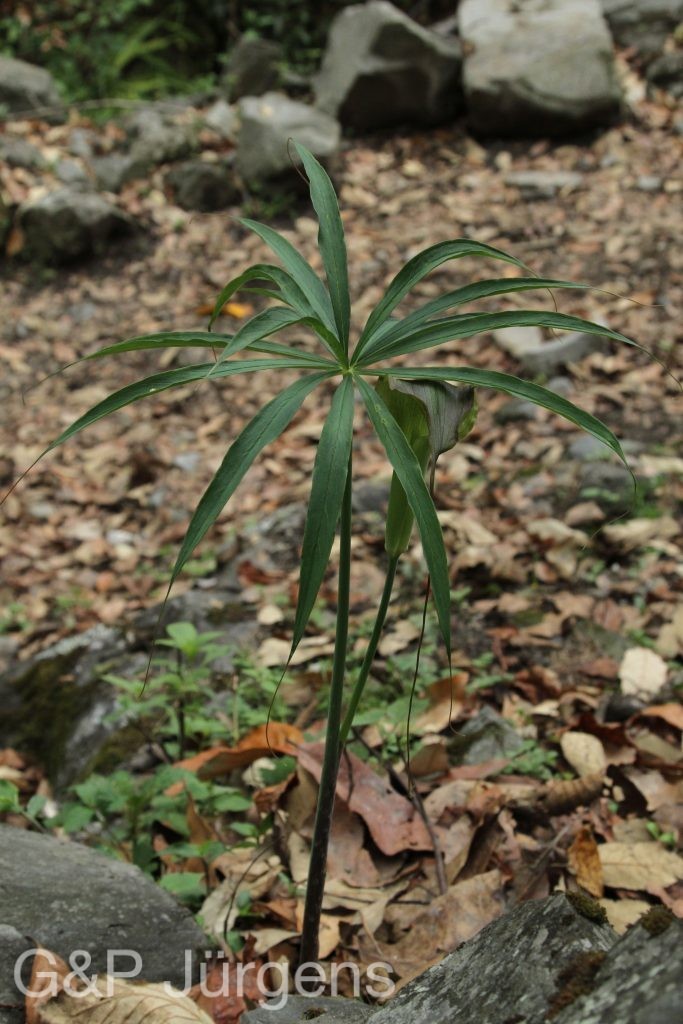
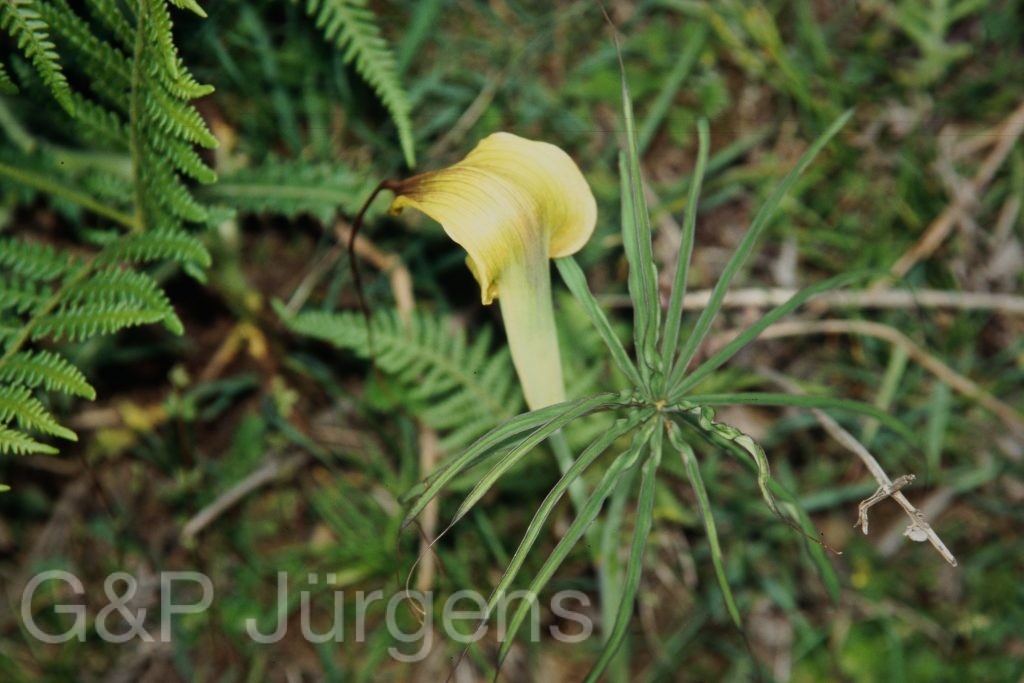
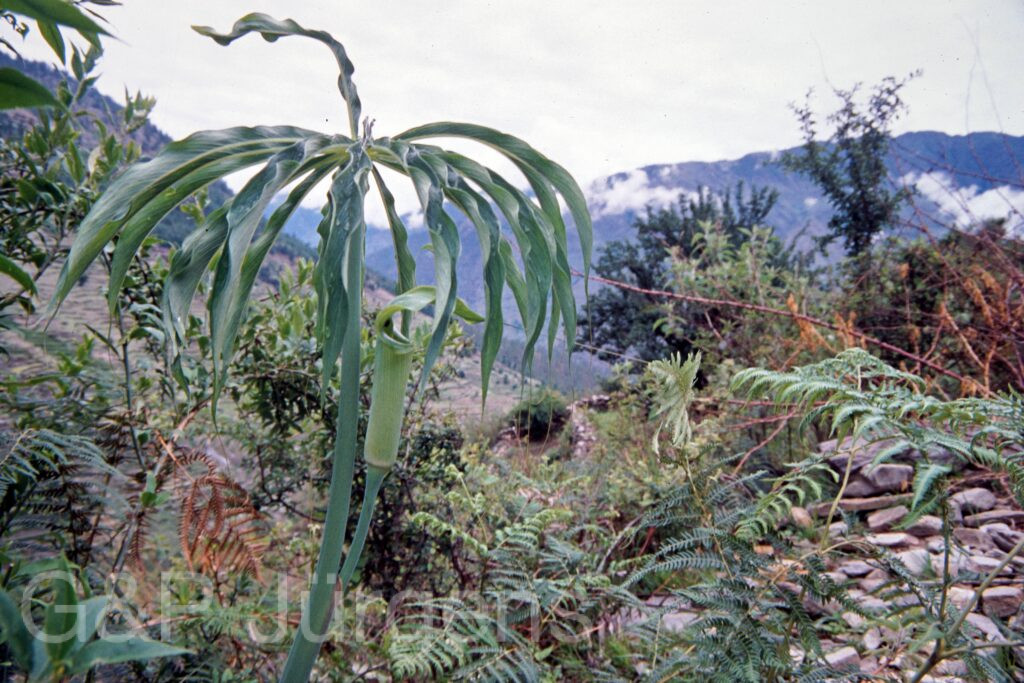
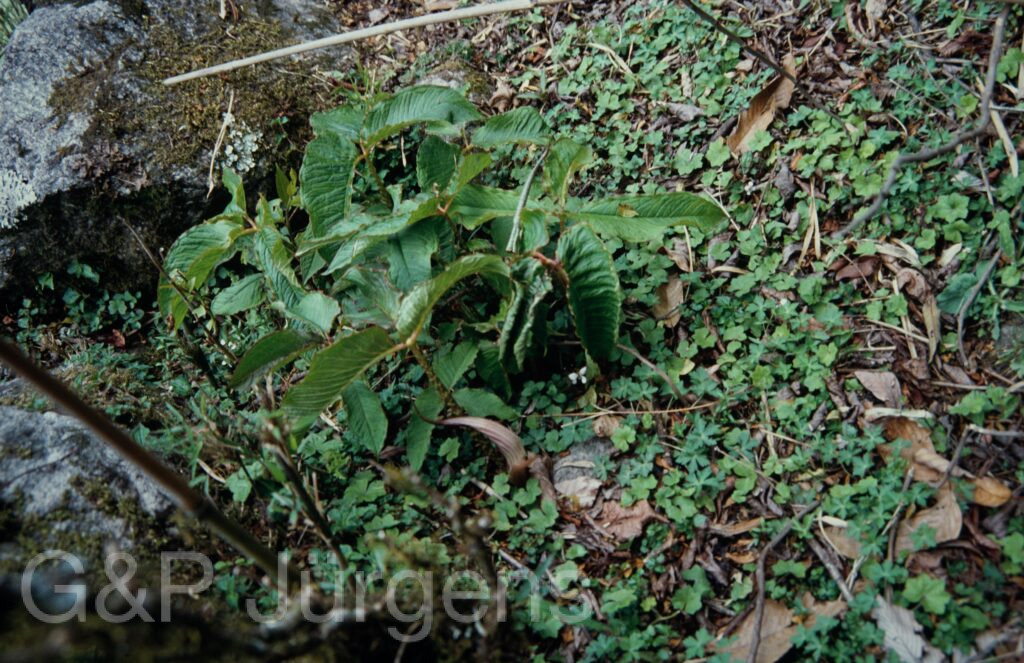
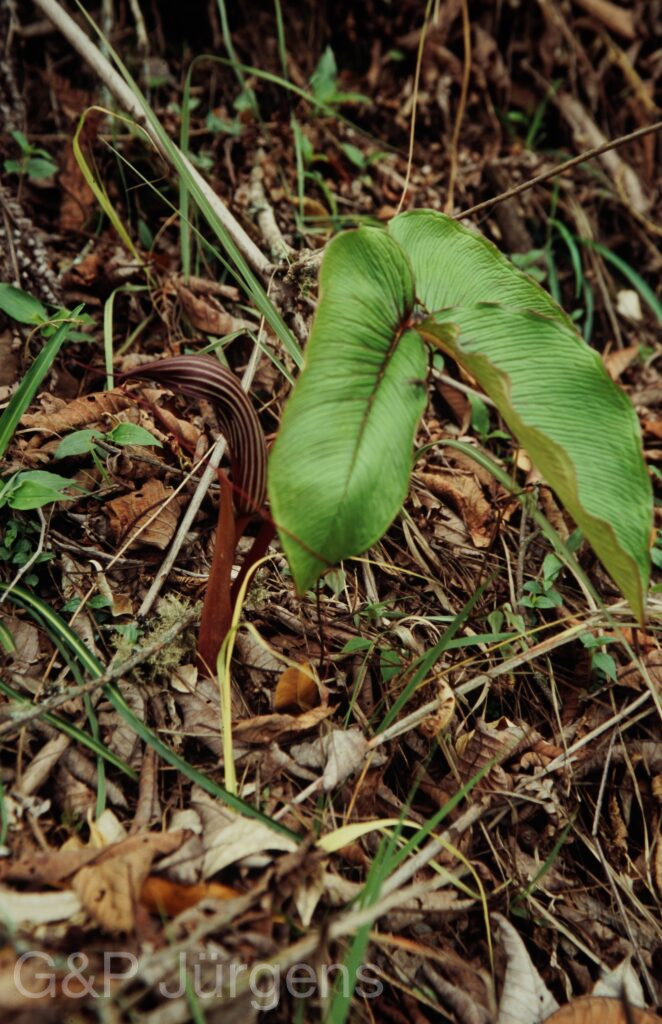
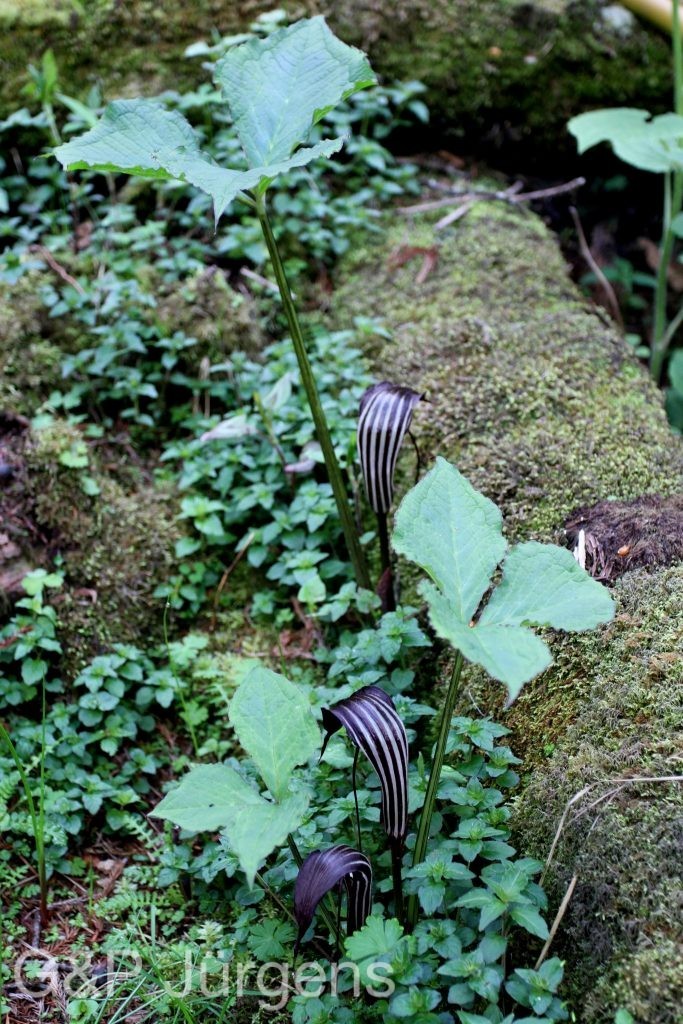
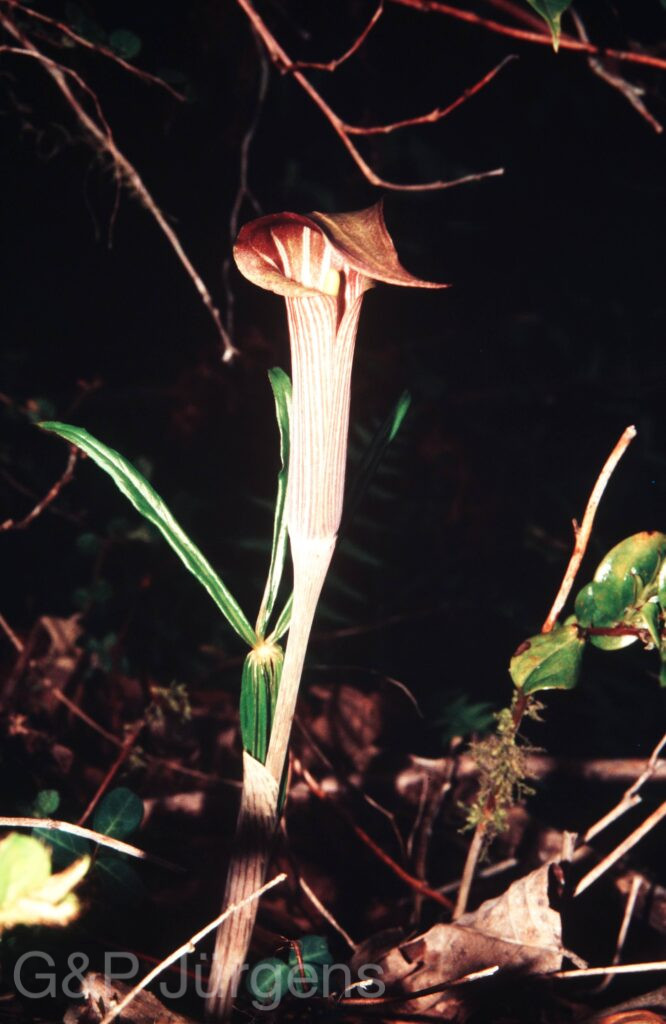
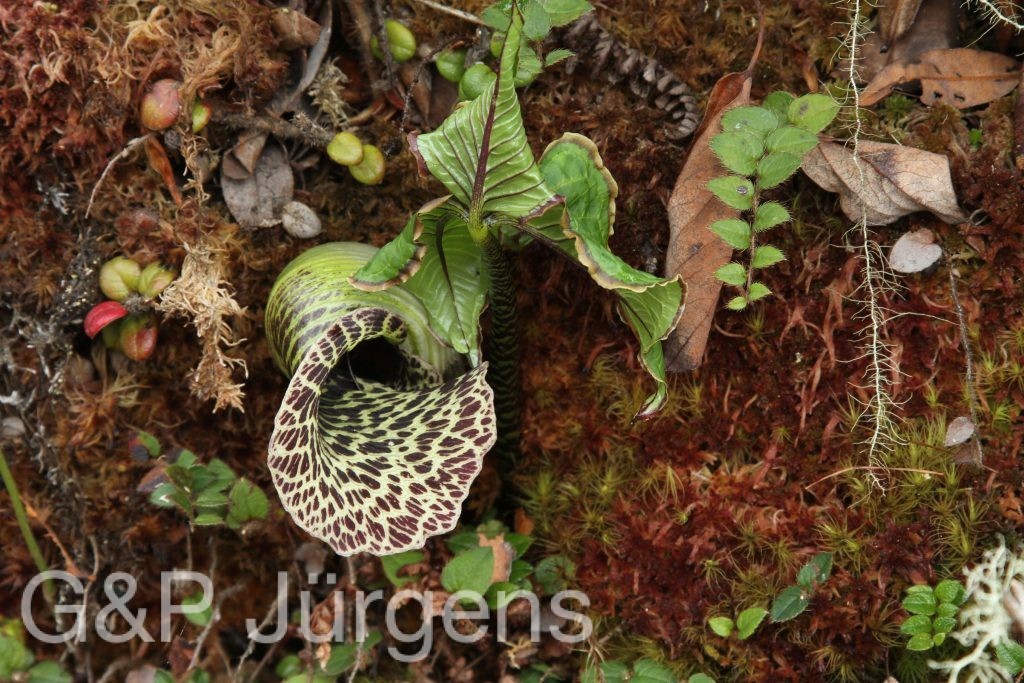
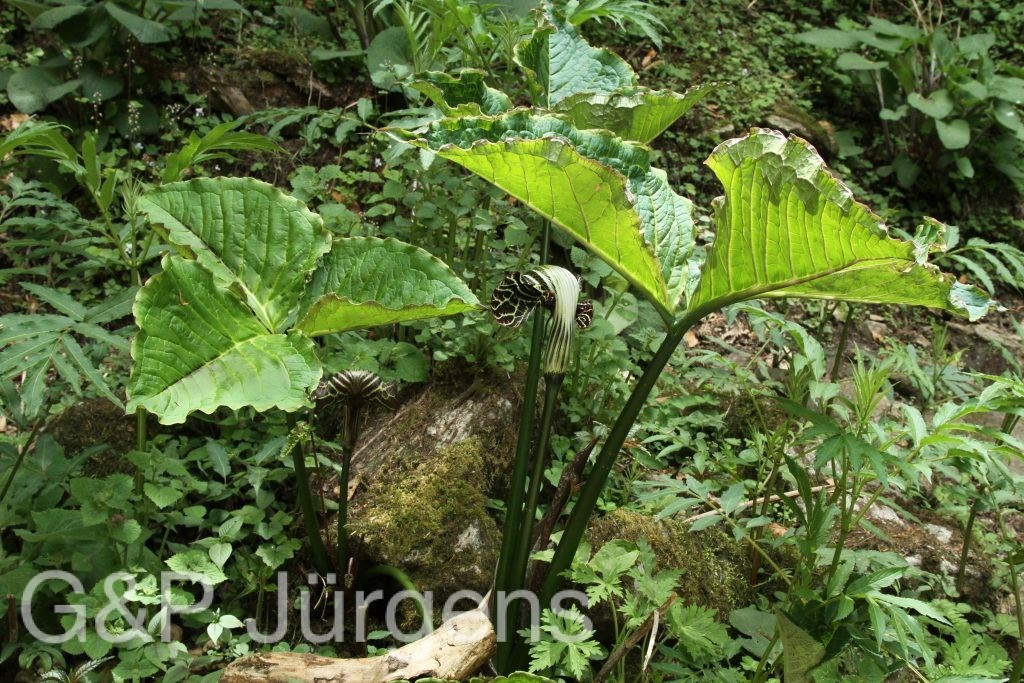
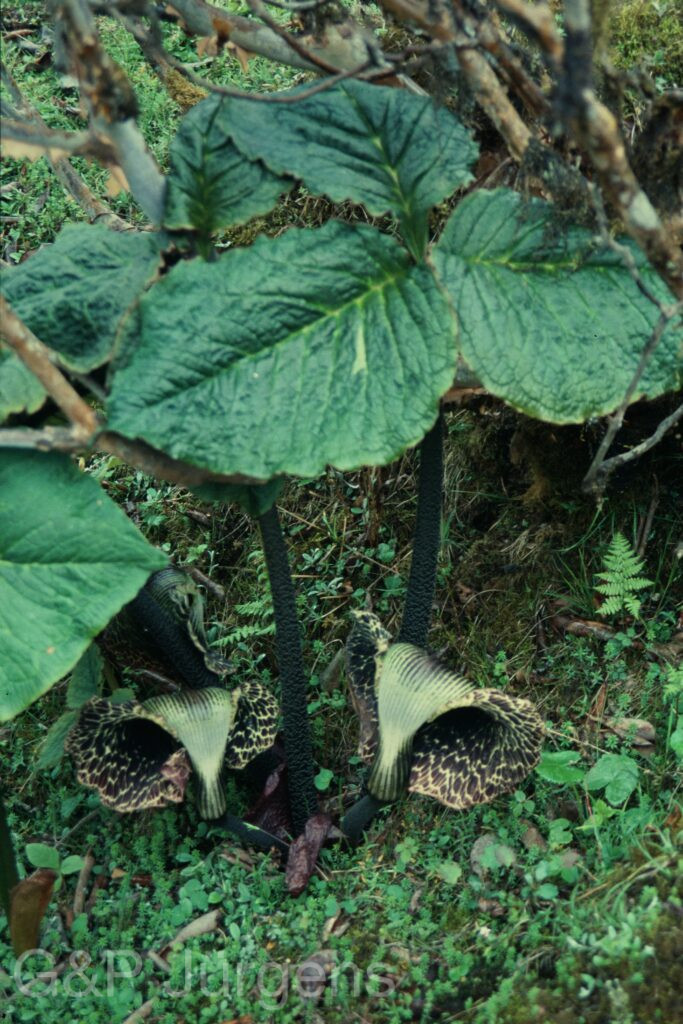
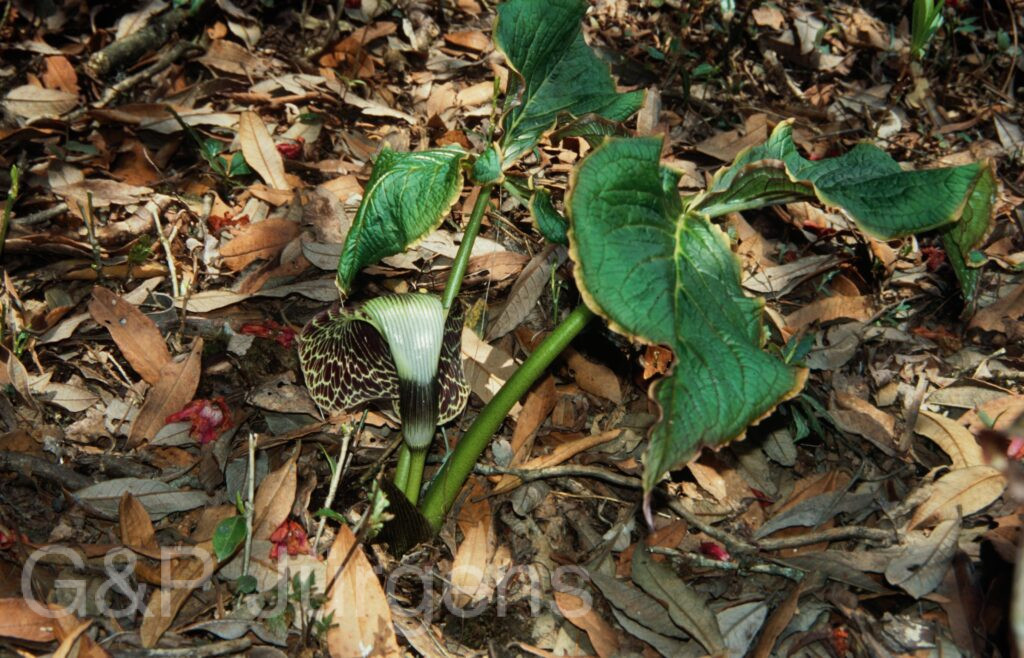
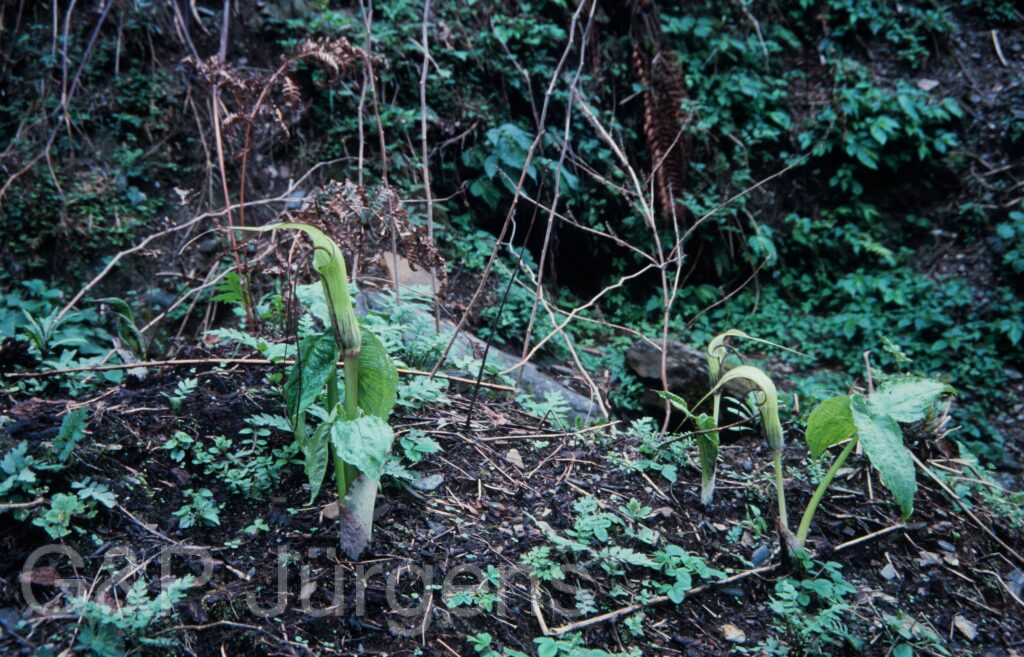
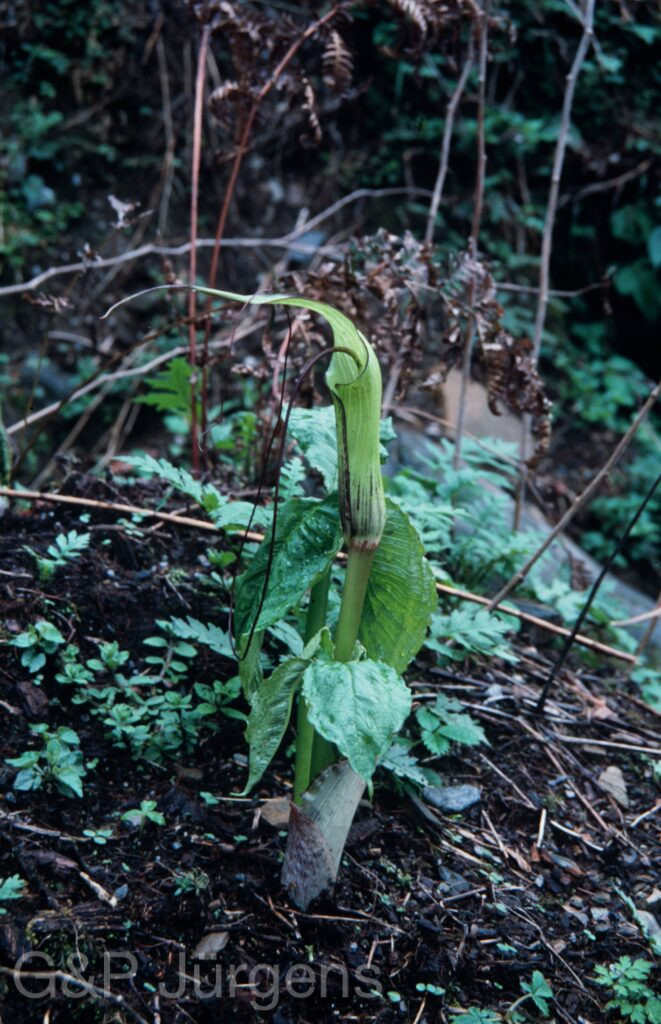
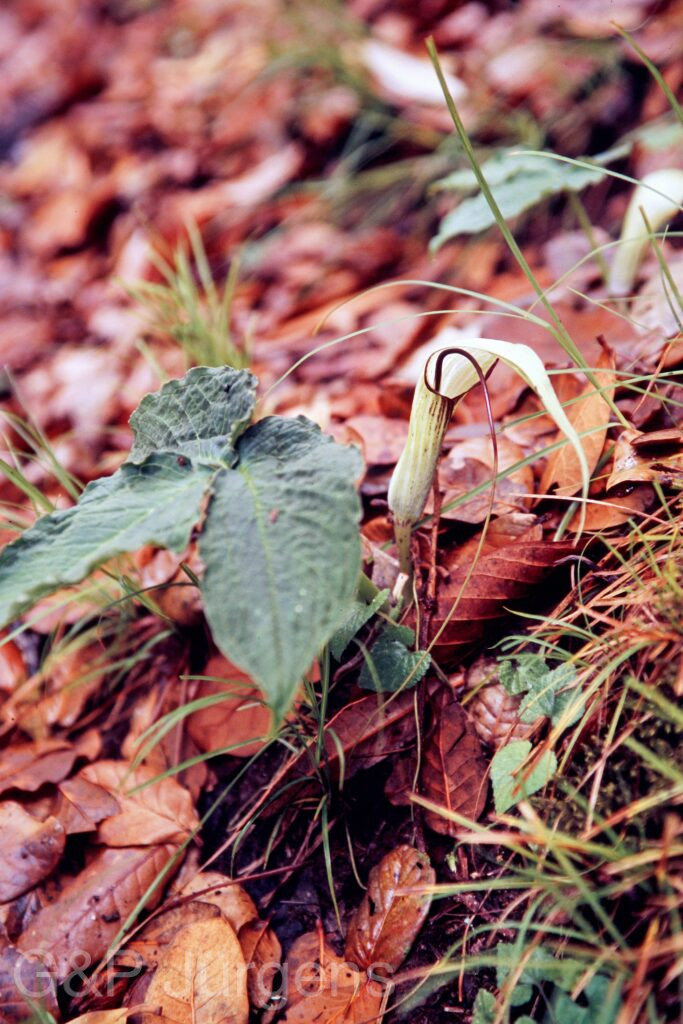
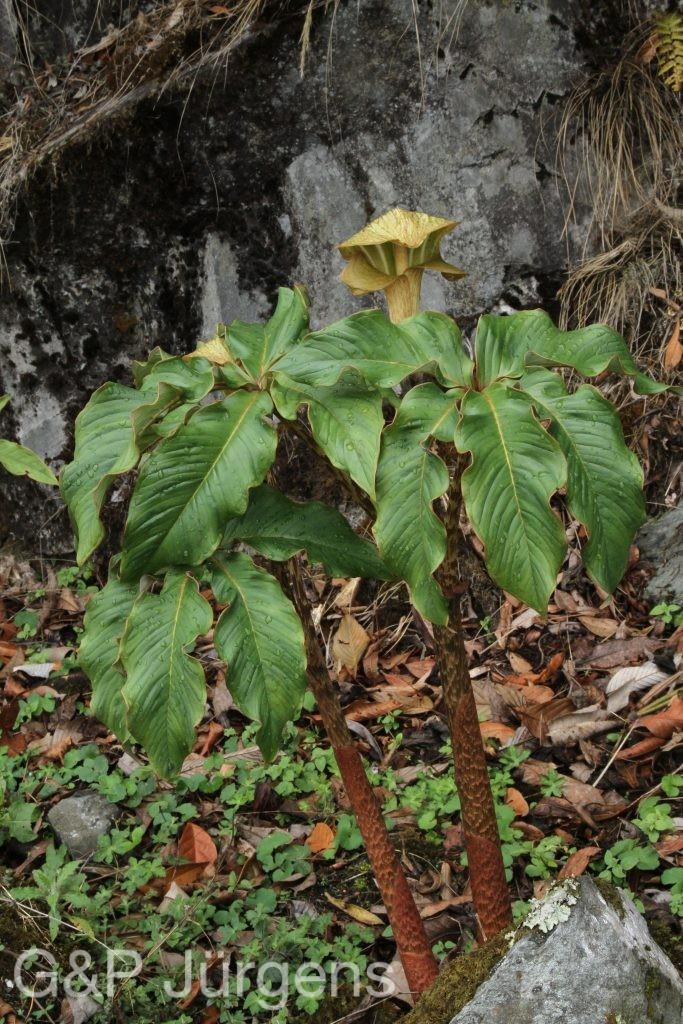
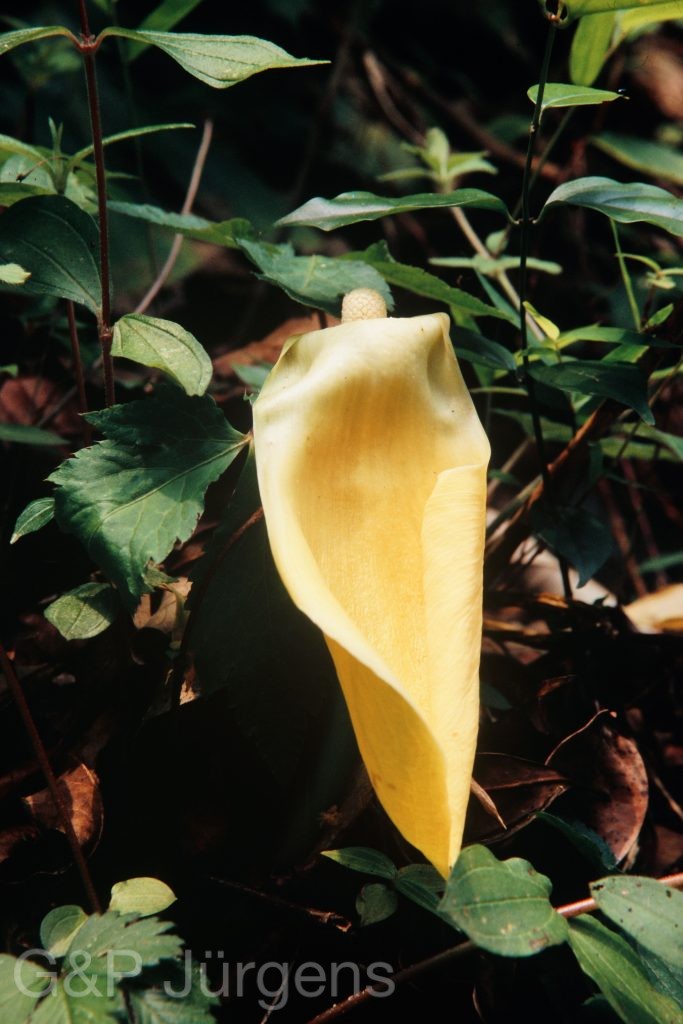
Amorphophallus napalensis is a tuberous aroid of the subtropical Himalaya and adjacent Southeast Asia, recorded from India, Nepal, Thailand, Bhutan, Myanmar and Bangladesh across some 80 GBIF occurrences. The photographed plant was found along the Punaka-Chu in Bhutan at about 1500 m in April. It grows in moist broad-leaved forest, on shaded slopes, ravines and forest floors, typically between roughly 500 and 1800 m, emerging with the pre-monsoon and monsoon rains from a dormant underground tuber.
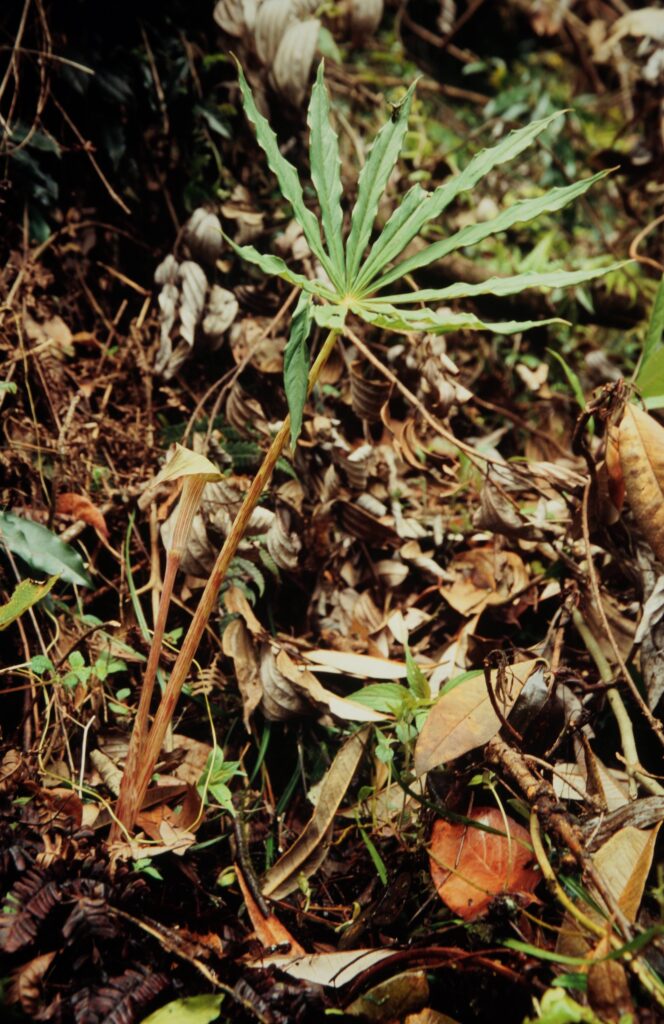
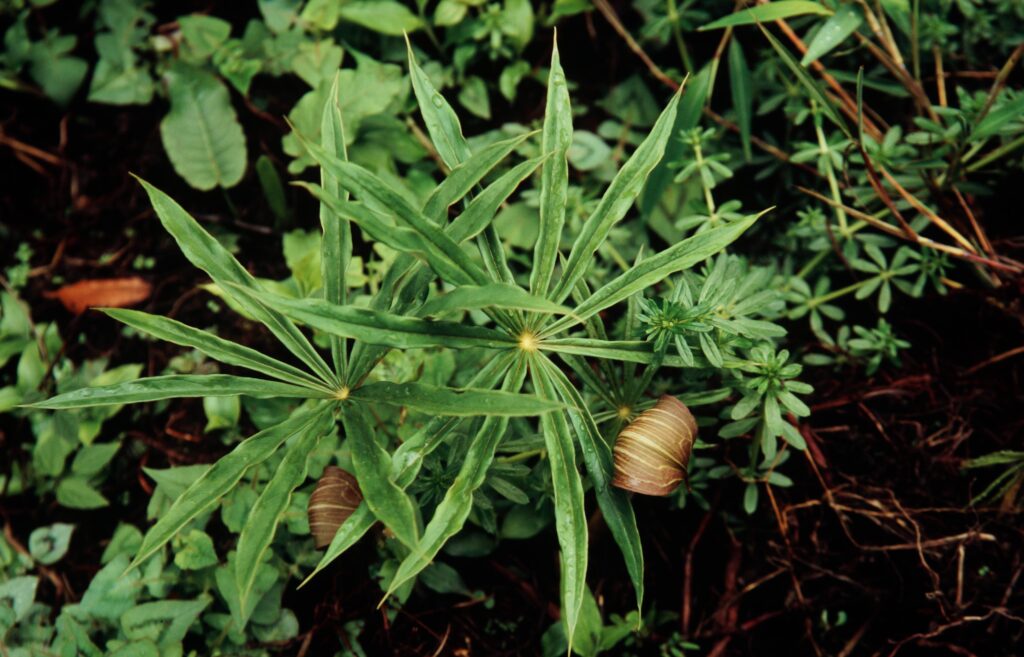
The plant arises from a depressed-globose subterranean tuber and produces, in season, a single large solitary leaf with a long mottled petiole and a blade divided into numerous segments giving an umbrella-like, much-dissected appearance. The inflorescence, typical of the genus, is a spadix subtended by a spathe; the spadix bears a basal zone of female flowers below a zone of male flowers, topped by a sterile appendix. At anthesis the inflorescence emits a fetid odour and may generate heat (thermogenesis) to attract carrion-feeding flies and beetles, which effect pollination. The infructescence ripens into a cluster of fleshy berries.
Amorphophallus is a large palaeotropical genus notable for these protogynous, often malodorous inflorescences and their fly-and-beetle (sapromyophilous) pollination, with the berries subsequently dispersed by birds. The seasonal solitary leaf and dormant tuber adapt the species to the marked wet-dry rhythm of the monsoon forest. A. napalensis is widespread and not regarded as threatened, though, like many forest aroids, it depends on the maintenance of shaded, humid woodland habitat.
Author: (Wall.) Bogner & Mayo · Sources: POWO (Kew), GBIF, Flora of China, Flora of Bhutan, Flora of Nepal, Hetterscheid & Ittenbach – Revision of the Genus Amorphophallus