
(Wall.) Schott
Description
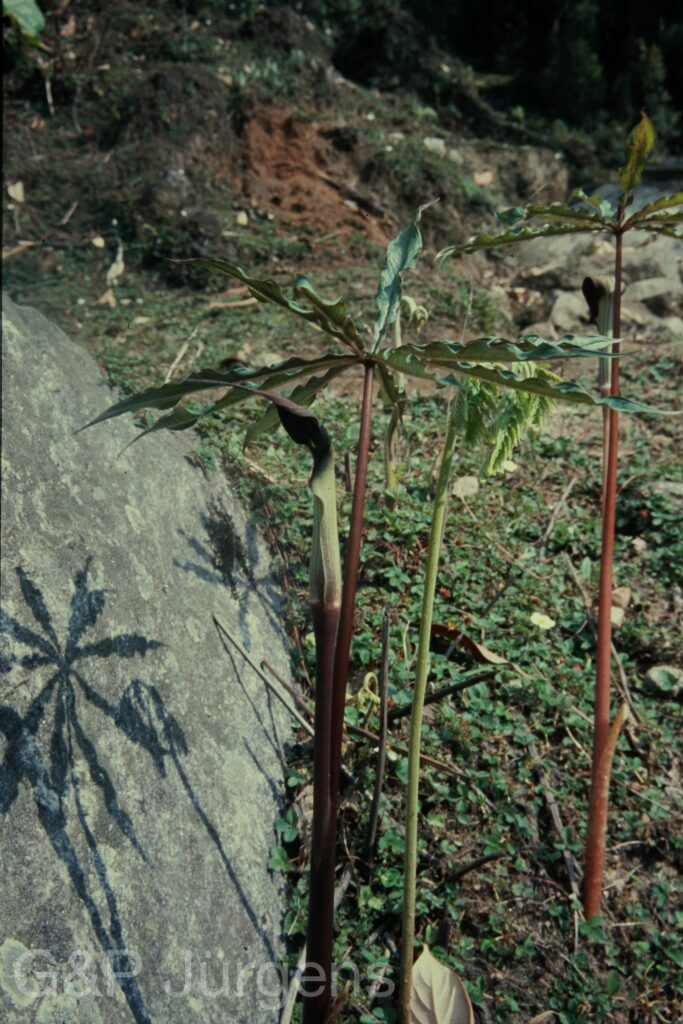
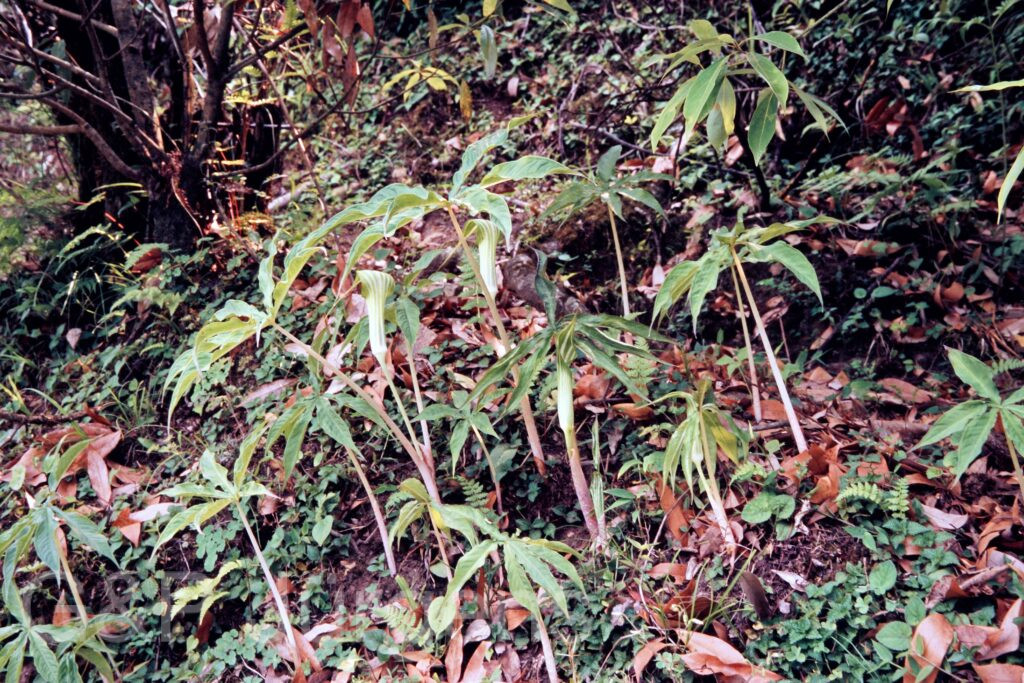
Arisaema echinatum is a tuberous aroid of the Himalaya, distributed through China, Nepal, India and Bhutan, with about 44 georeferenced records spread along the temperate to subalpine Himalayan belt. It grows in moist, shaded forest, among rhododendron and conifer scrub and on humus-rich banks, generally between 2400 and 3500 m. The cited collections from Kokchurong in Sikkim (3400 m, May) and from Trijugi Narayan in Garhwal (2450 m, June) bracket its altitudinal range and show its emergence and flowering through the late spring and early monsoon as the soil warms.
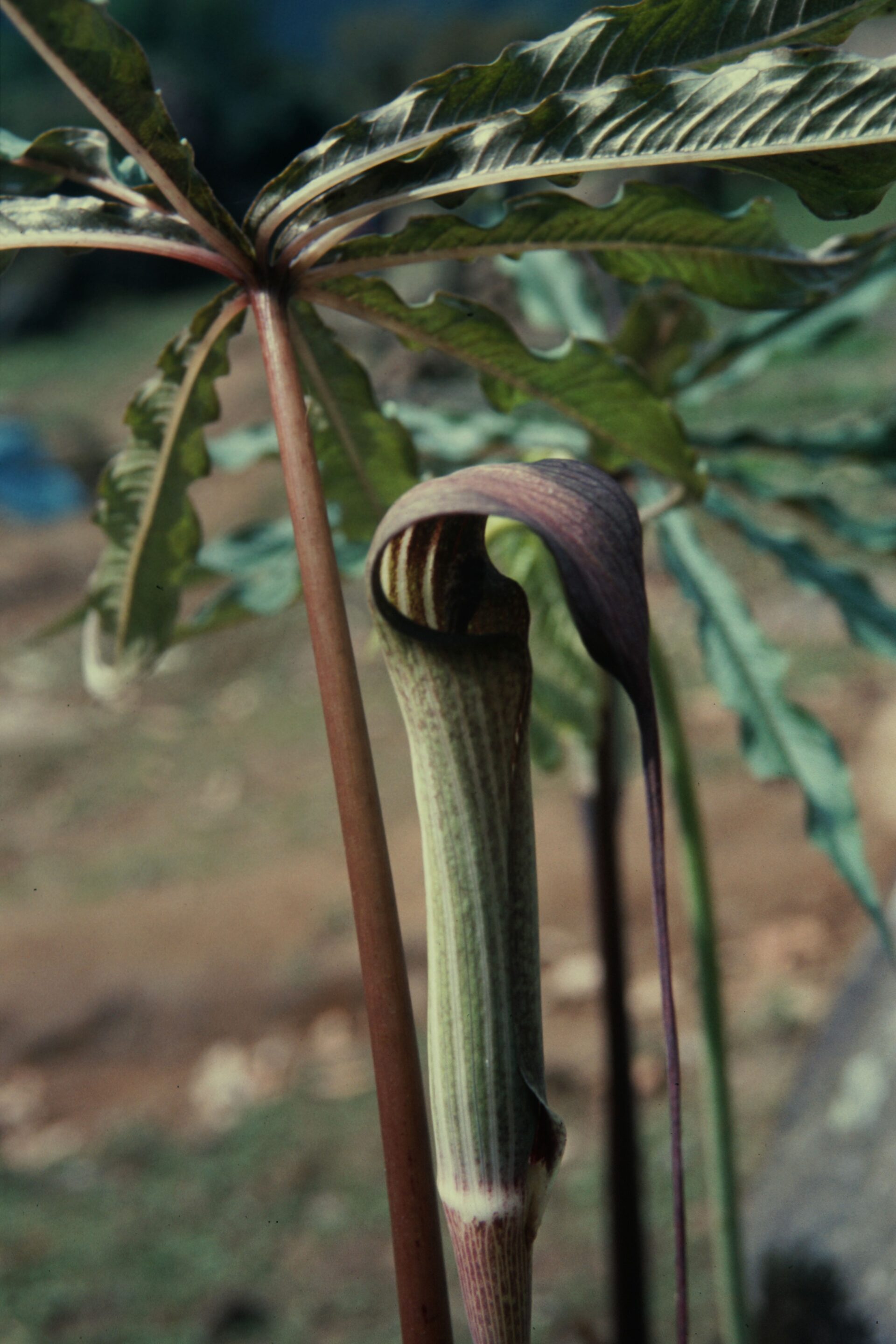
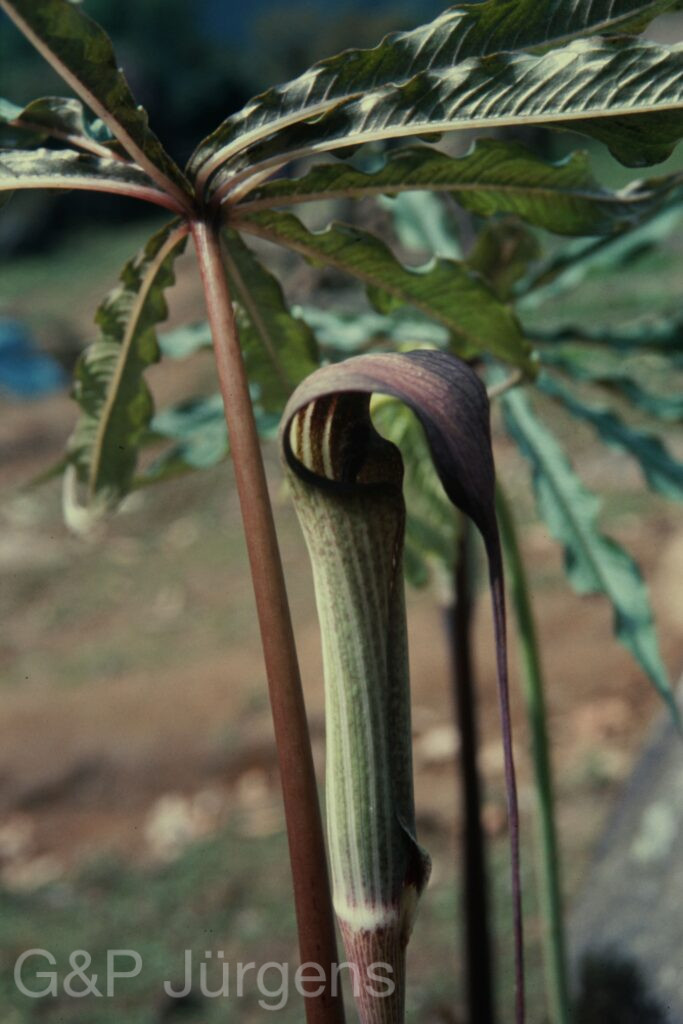
The plant arises from a depressed-globose tuber and usually bears one or two pedately compound leaves, each divided into several oblong-elliptic, acuminate leaflets borne on a long sheathing petiole. The inflorescence comprises a spathe with a cylindrical tube and an incurved, acuminate limb, enclosing the spadix; the diagnostic feature is the sterile appendix of the spadix, which is roughened or echinate with projecting papillae or processes, giving the species its name. As in most Arisaema the plants are sequentially hermaphrodite, shifting sex with size. The infructescence is a dense head of crowded scarlet berries.
Arisaema echinatum, transferred to the genus by Schott from Wallich's basionym, belongs to the taxonomically intricate Himalayan section of the genus, where appendix morphology is a key diagnostic. Pollination is by small flies and fungus gnats lured into and temporarily trapped by the spathe, and the bright berries are bird-dispersed. With a restricted montane range and few records, it is potentially sensitive to forest loss, though it has not been formally assessed for conservation.
Author: (Wall.) Schott · Sources: POWO (Kew), GBIF, Flora of China, Flora of Bhutan, Annotated Checklist of the Flowering Plants of Nepal, Gusman & Gusman The Genus Arisaema