
Hara & H.Ohashi
Description
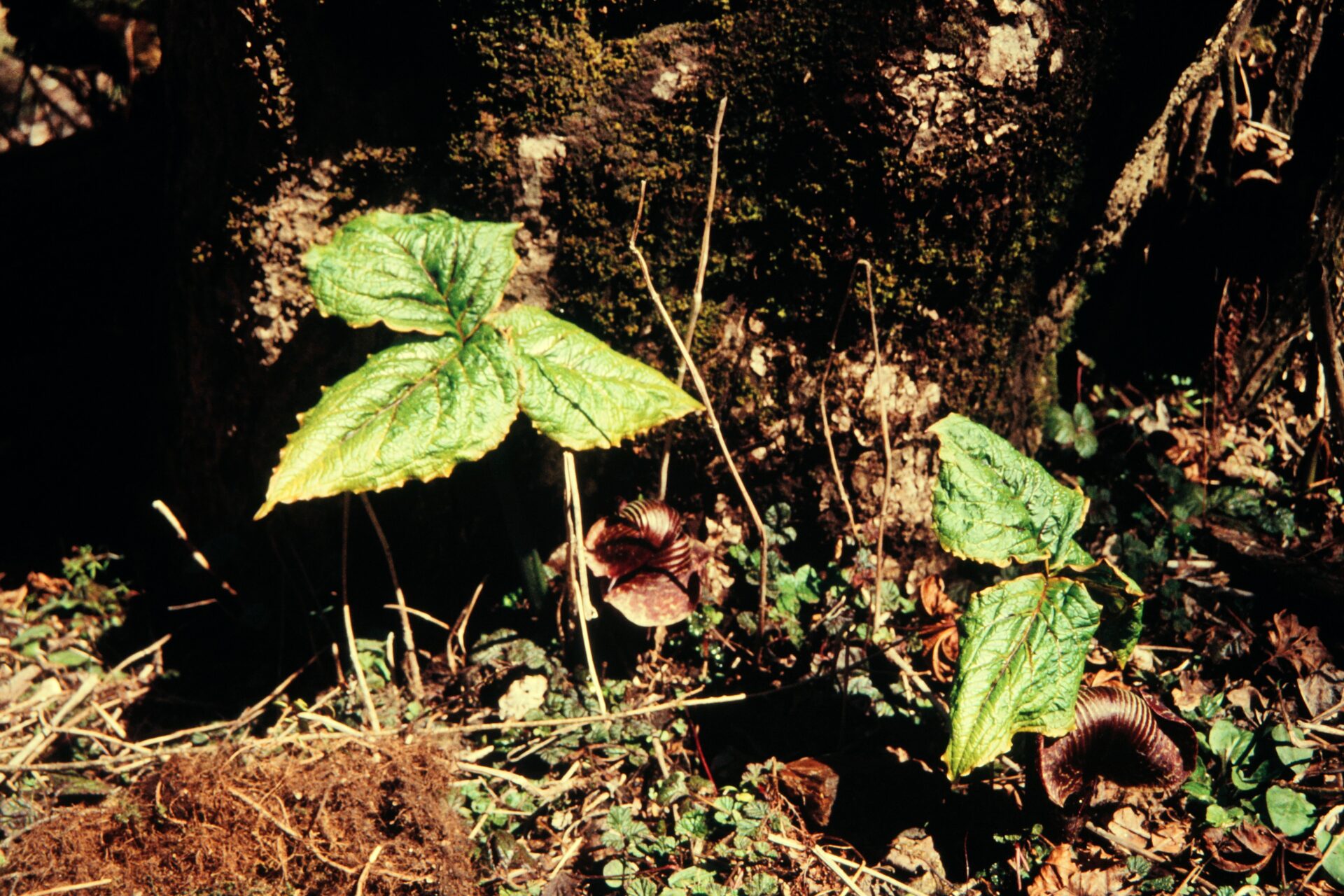
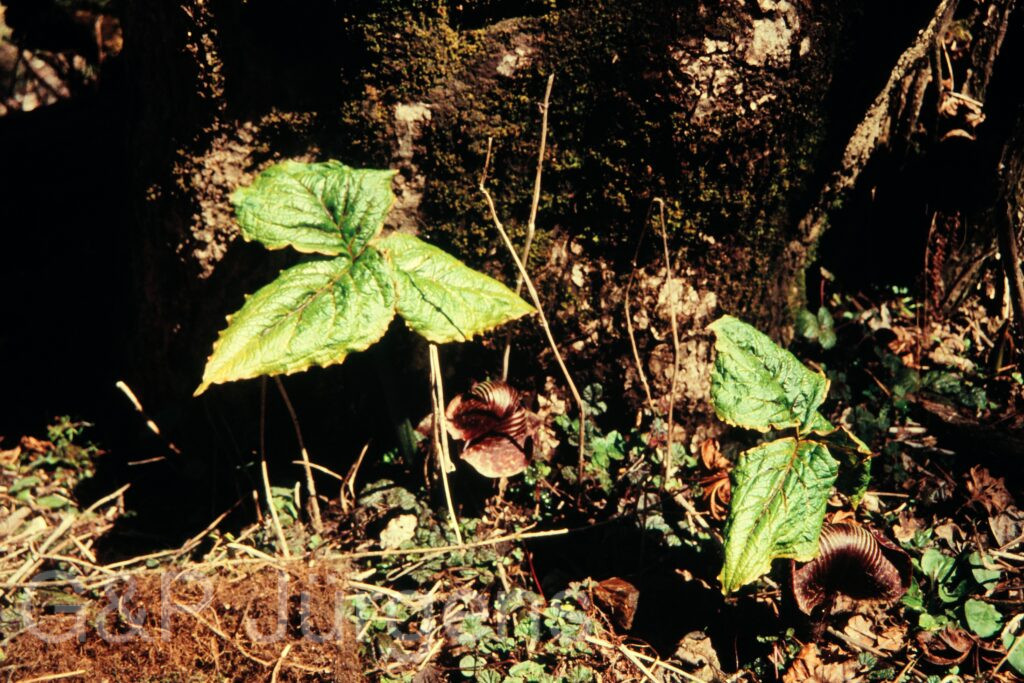
Arisaema vexillatum is a narrowly distributed tuberous aroid of the eastern Himalaya and adjacent China, known from only China and Nepal with a sparse total of about 11 georeferenced records, reflecting both genuine rarity and limited collecting. It grows in cool-temperate to subalpine forest and shrubberies, in moist, humus-rich soils sheltered by rhododendron and conifer cover. The type material and the photographed plant come from the upper Arun drainage of eastern Nepal below Thudam at around 3450 m, flowering in May as the snow recedes, indicating a strongly montane ecology dependent on persistent soil moisture.
The plant arises from a depressed, subglobose tuber and produces typically a single leaf with a long sheathing petiole. The leaf blade is pedately divided into several oblong-lanceolate, acuminate leaflets arranged in a radiate fashion. The inflorescence is a spathe enclosing the spadix, the spathe tube cylindrical and the limb arching forward; the spadix appendix is slender and the plant is generally monoecious-dioecious depending on tuber size, a sex-lability typical of the genus. The fruiting spadix develops into a dense, club-shaped syncarp of bright red, few-seeded berries.
Arisaema vexillatum belongs to a difficult complex of eastern Himalayan species and was described by Hara and H. Ohashi from Nepalese collections. Like most Arisaema it depends on fungus-gnat and small-fly visitors trapped within the spathe for pollination. Its limited known range and montane habitat suggest vulnerability to habitat disturbance, though its conservation status remains formally unassessed and additional fieldwork would likely clarify its true distribution.
Author: Hara & H.Ohashi · Sources: POWO (Kew), GBIF, Flora of China, Annotated Checklist of the Flowering Plants of Nepal, Gusman & Gusman The Genus Arisaema