
(Wall.) Schott
Description
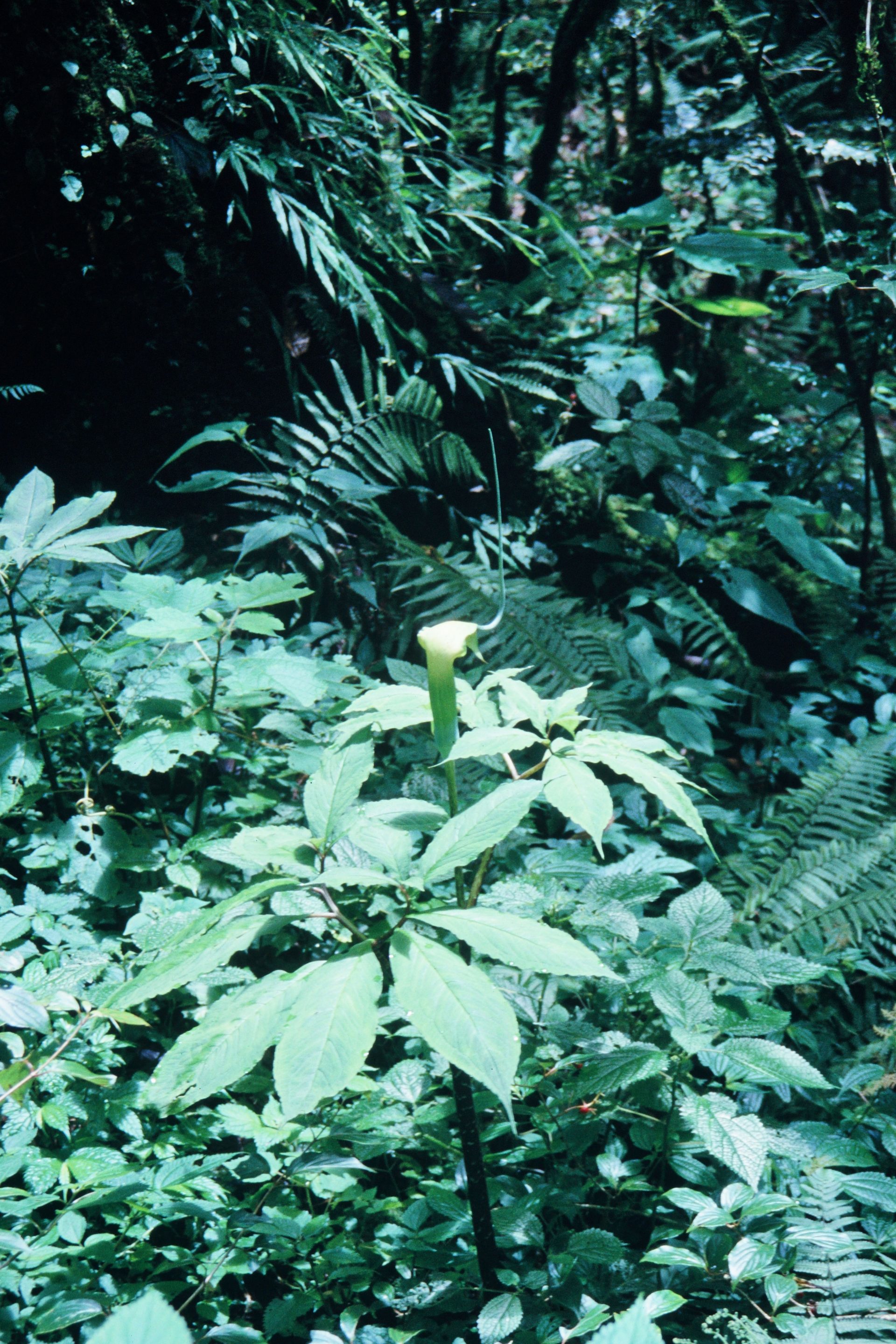
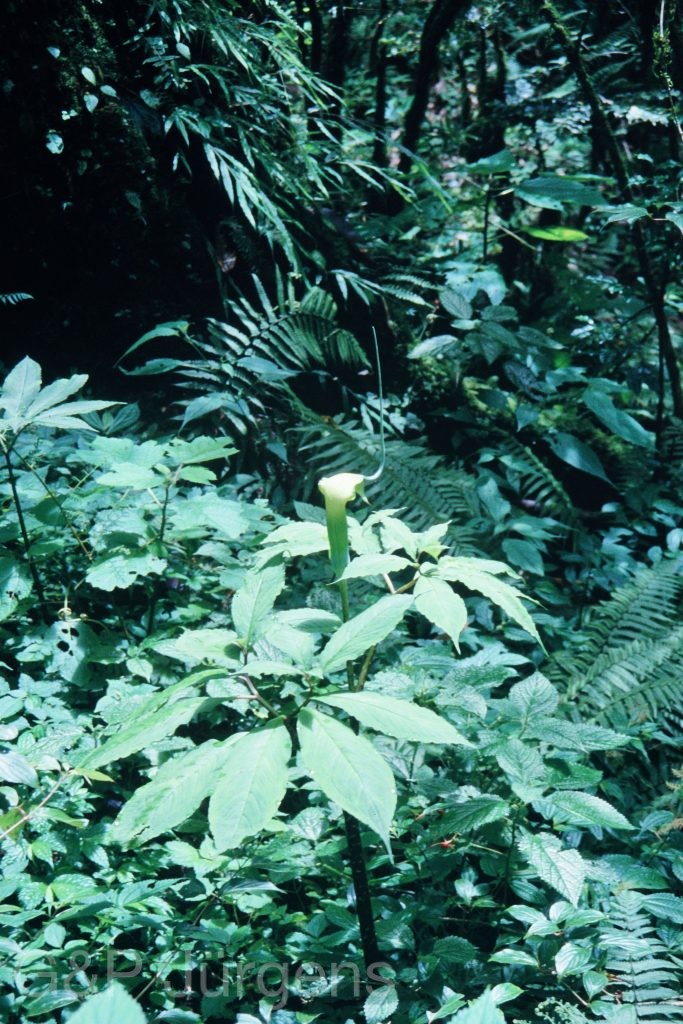
Arisaema tortuosum, the whipcord cobra lily, is a wide-ranging Himalayan and peninsular Indian aroid recorded from India, Nepal, China, Bhutan, Sri Lanka, Myanmar, Malaysia and Indonesia, with some 780 georeferenced occurrences and a number of records from cultivation in Europe and North America. It grows in moist forest, scrub, grassy clearings and shaded banks across a wide elevational span. The population photographed above Yoksam in western Sikkim at about 2500 m in August illustrates its montane forest habitat, in leaf and inflorescence during the monsoon on humus-rich soils.
The plant arises from a depressed, tuberous corm and produces one or two large, long-petiolate leaves divided into numerous radiating or pedately arranged leaflets. The inflorescence is a spathe enclosing a spadix, the latter prolonged into a remarkably long, erect or sinuous flagelliform appendage that gives the species its name and tortuosum epithet. Flowers are unisexual and borne at the spadix base, the species being protogynous and capable of size-dependent sex change between female, monoecious and male states. Pollinated fungus-gnats are trapped within the chamber. The fruit is a dense cluster of red berries borne on the swelling infructescence.
Arisaema is a large genus of considerable horticultural interest, and A. tortuosum is one of its most widespread and variable members, with several recognised varieties differing in leaflet number and spadix coloration. Its sequential hermaphroditism, in which individuals switch sex according to accumulated resources, is a celebrated example of size-dependent gender lability. Common across its extensive range, it is of least conservation concern.
Author: (Wall.) Schott · Sources: POWO (Kew), GBIF, Flora of Bhutan, Flora of Nepal, Flora of China, Gusman & Gusman's The Genus Arisaema