Symplocaceae

Miq.

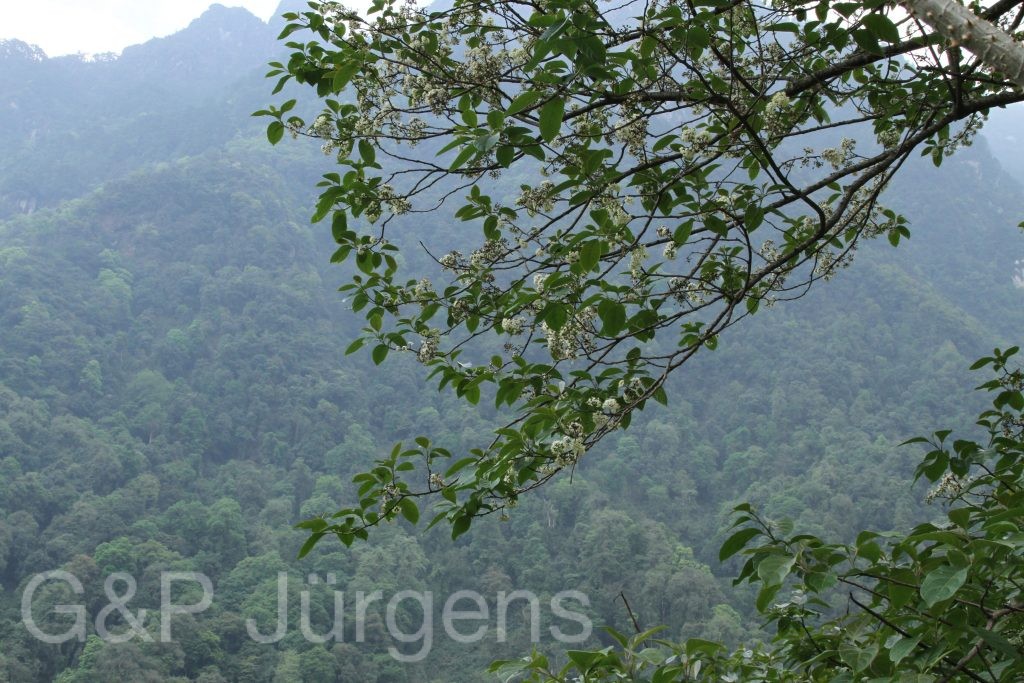
Bhutan2015 532
Bhutan Punaka 1400m, October
Bhutan2015 533
Bhutan Punaka 1400m, October

Description

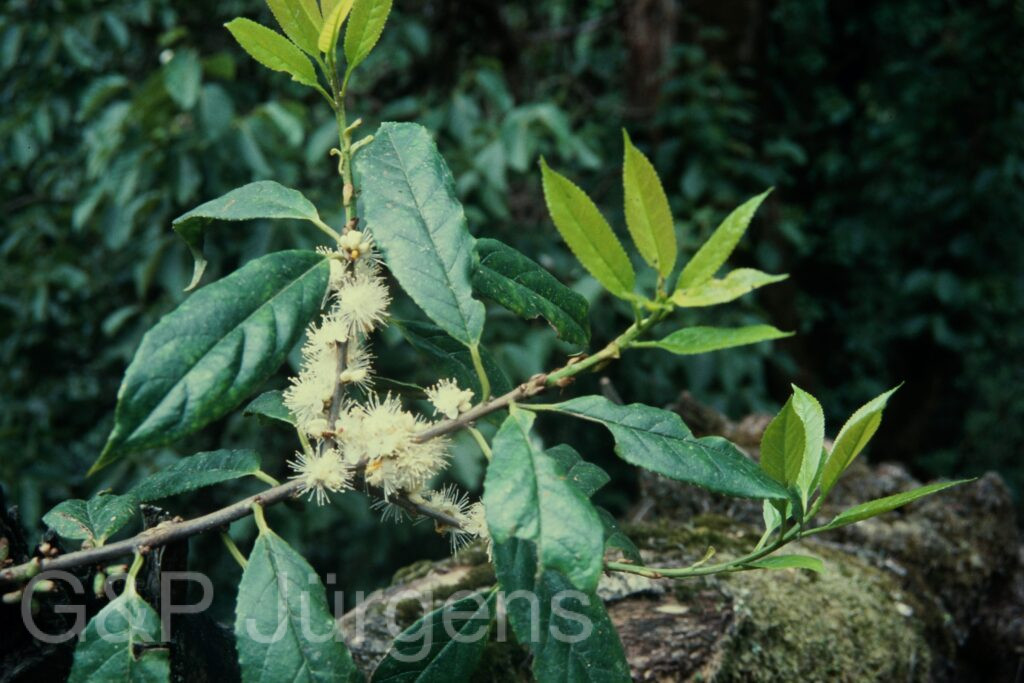
Symplocos acuminata Miq. is an evergreen shrub or small tree of the Symplocaceae, widely distributed across tropical and subtropical Asia. Its substantial GBIF record (over 4,100 occurrences) spans China, Taiwan, India, the Himalaya, Indochina, Sri Lanka, Japan, and the Malesian archipelago, reflecting a broad Indo-Malayan range. The species was recorded near Punakha in Bhutan at 1,400 m in October; it characteristically inhabits broad-leaved evergreen and mixed mesophytic forests, forest margins, and secondary woodland from the lowlands up to around 2,000 m, favouring moist, well-drained slopes.

The plant forms a much-branched crown with coriaceous, alternate leaves that are elliptic to oblong-lanceolate and conspicuously acuminate at the apex, the margins finely serrate and the surfaces glabrous. The flowers are small, white, and fragrant, with numerous stamens arranged in fascicles, borne in short axillary racemes or spikes. The ovary is inferior, developing into an ovoid to ellipsoid drupe that ripens dark blue-black, crowned by the persistent calyx and attractive to frugivorous birds, which act as the principal dispersal agents.

Symplocos is the sole genus of its family and is taxonomically complex, with acuminata representing part of a variable, widely circumscribed species aggregate that has accumulated numerous synonyms across its vast range. Members of the genus are notable for accumulating aluminium, and several have historically been used as natural mordants in dyeing. Given its wide distribution and tolerance of disturbed forest, the species is not considered threatened.

Author: Miq. · Sources: POWO (Kew), Flora of China Vol. 15, Flora of Bhutan Vol. 2, GBIF, Nooteboom: Symplocaceae (Flora Malesiana, 1977)
King ex C.B. Clarke

Bhutan2014 793
Bhutan
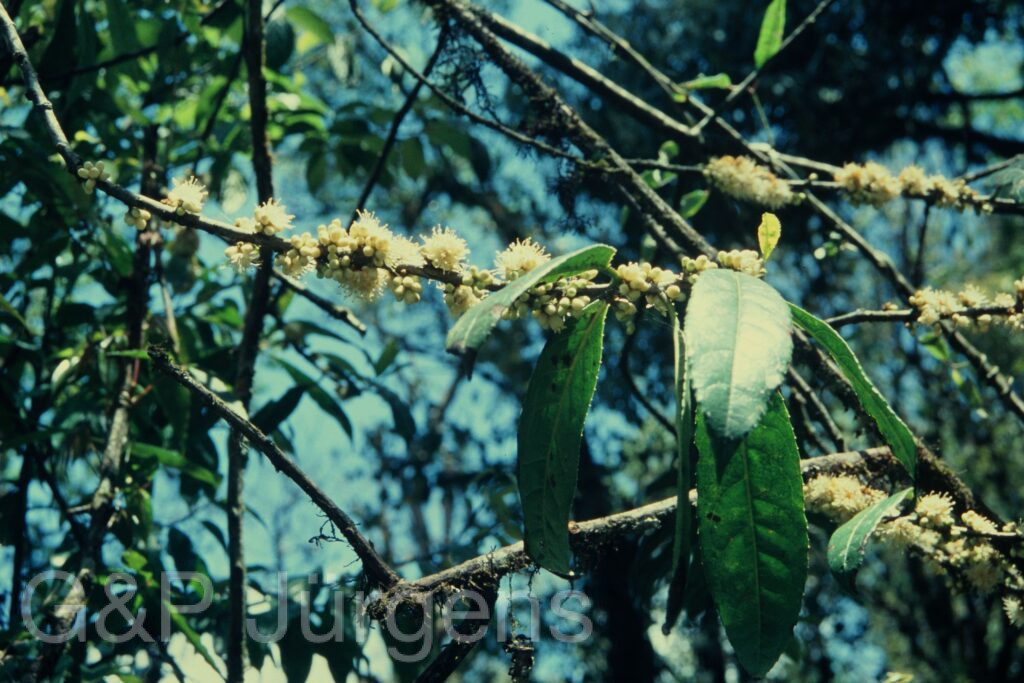
Sikkim2004 94 P164
Sikkim West-Bengal, Bersay 2700m April
Sikkim2004 329 P530
Sikkim West-Bengal, Bersay 2700m April

Description

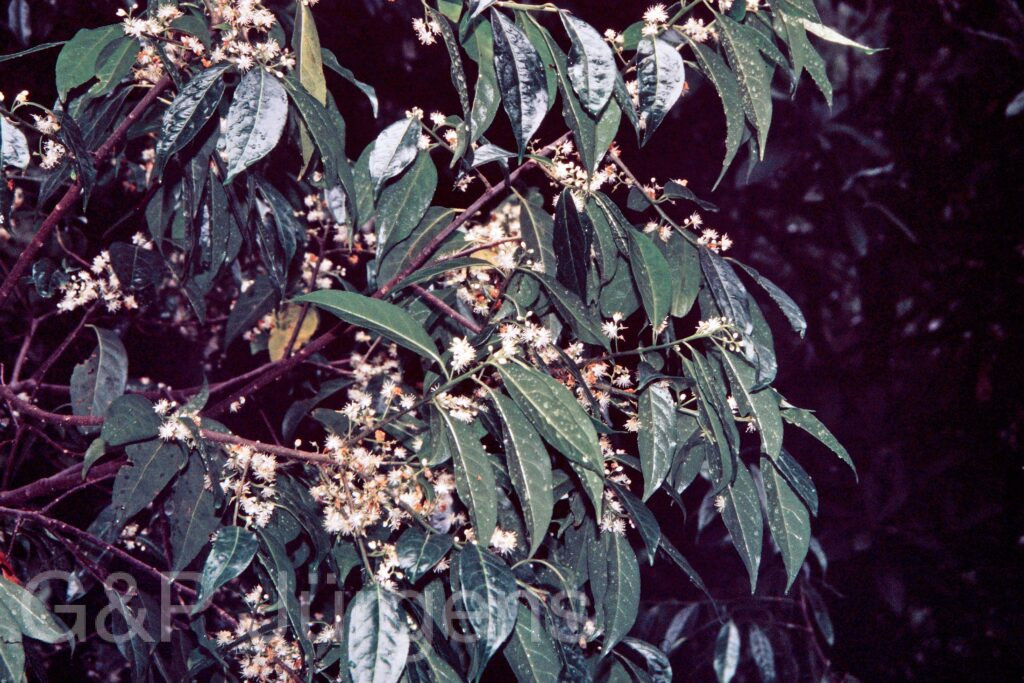
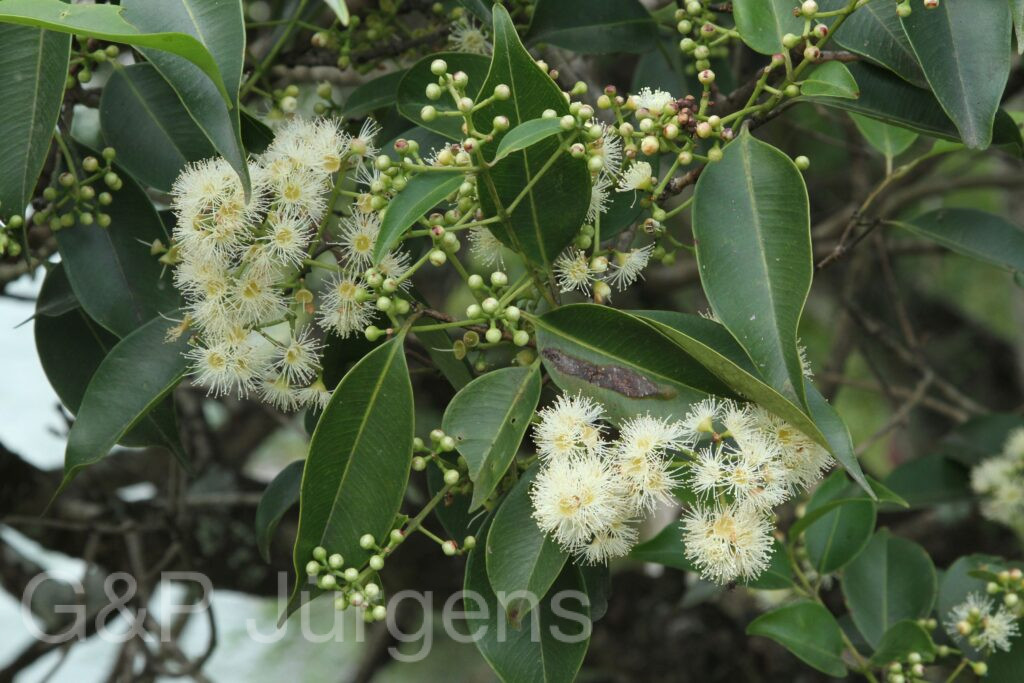
Symplocos glomerata is an Asian tree distributed from the Himalaya and northern India through Bhutan, Nepal and Myanmar into southern China, Taiwan, Indochina and the Malesian region. Its 572 GBIF records span this broad range, indicating a widespread but locally distributed species of evergreen and mixed montane forest. It grows in broadleaved and laurel-dominated forests, on slopes and ridges, typically in the warm-temperate to lower-subtropical montane belt. The plant photographed at Bersay in the Sikkim-West Bengal border region at about 2700 m in April illustrates its occurrence in the moist mid-elevation forests of the Eastern Himalaya, flowering in early spring.

It is a small evergreen tree or shrub with leathery, alternate leaves that are elliptic to oblong, with serrate to crenate margins and a glabrous, glossy upper surface. The flowers are borne in dense, sessile, glomerate clusters in the leaf axils, as the epithet glomerata indicates; each is small, white and fragrant, with a five-lobed corolla and numerous stamens united at the base in fascicles, a characteristic of the genus. The fruit is a small, ovoid to cylindric drupe crowned by the persistent calyx lobes.

Symplocos is the sole genus of the Symplocaceae, distinguished by its polyandrous flowers and aluminium-accumulating tissues; several species, including this one, have been used to yield yellow dyes and mordants. S. glomerata varies considerably across its wide range and has accumulated numerous synonyms and infraspecific names. Widely distributed and ecologically tolerant, it is not regarded as threatened and is a common constituent of Asian montane forest.

Author: King ex C.B. Clarke · Sources: POWO (Kew), GBIF, Flora of Bhutan, Flora of China, Nooteboom Symplocaceae monograph

Wall. ex G. Don

Garh 07 237 ergebnis
India Garhwal Barron Chatti 2450m, June

Description

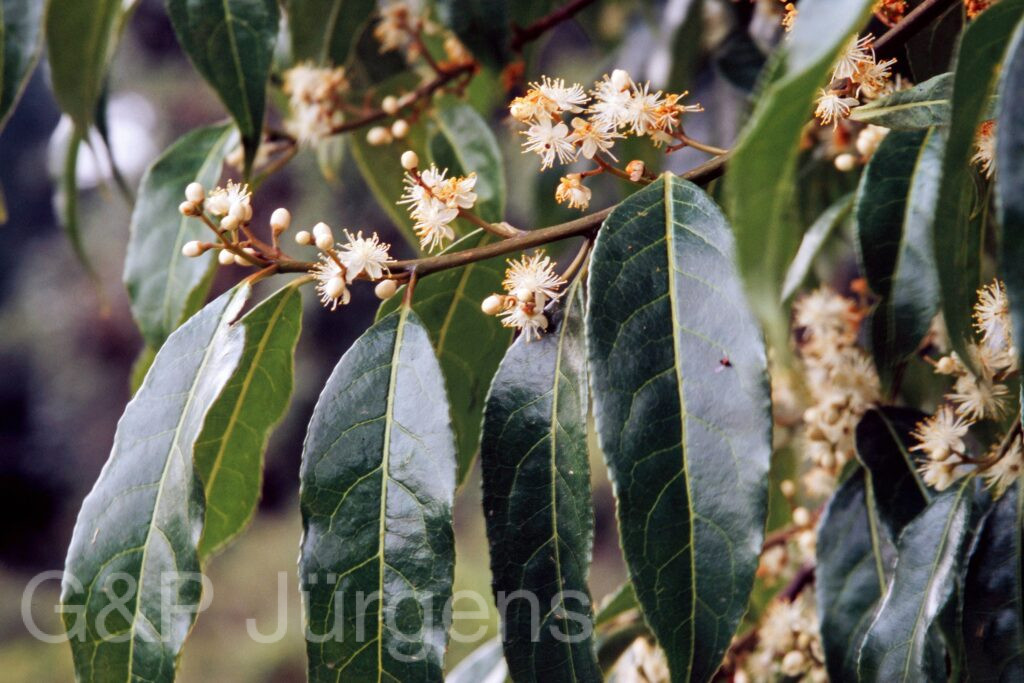
Symplocos ramosissima is an evergreen shrub or small tree widely distributed through the Sino-Himalayan and Indochinese region, with GBIF recording around 1472 occurrences across China, Nepal, India, Myanmar, Bhutan, Bangladesh, Vietnam, Sri Lanka and Taiwan. It is a characteristic component of moist broad-leaved evergreen and mixed temperate forests, occurring on humid slopes, ridge forests and forest margins generally between 1500 and 3000 m. The individual photographed at Barron Chatti in Garhwal, India, at about 2450 m in June sits within this mid-montane band, where the species forms part of the dense understorey and lower-canopy layer of laurel-oak and rhododendron-rich forests on the southern Himalayan flank.

Morphologically it is a much-branched evergreen with glabrous or finely pubescent young twigs and alternate, simple, coriaceous leaves; the blades are elliptic to lanceolate, with a serrate to crenate-serrate margin and an acuminate apex. The flowers are small, white, fragrant and borne in short axillary spikes or racemes, each with a persistent calyx, a rotate to shortly campanulate corolla of five lobes and numerous stamens fused into fascicles at the base, the pollination biology favouring small generalist insects. The fruit is a small ovoid to cylindric drupe, blue-black to purplish when ripe, crowned by the persistent calyx lobes and containing a hard stone, dispersed largely by frugivorous birds.

The family Symplocaceae comprises the single large genus Symplocos, a taxonomically intricate group well represented in the Himalaya and East Asia. The genus is notable for accumulating aluminium and for the yellow dye historically obtained from the bark and leaves of several species, which were used as mordants in traditional textile dyeing. As a common and ecologically wide-ranging forest element, S. ramosissima is not considered threatened, though its dependence on intact mid-elevation evergreen forest links its local persistence to the conservation of those increasingly fragmented montane habitats.

Author: Wall. ex G. Don · Sources: POWO (Kew), GBIF, Flora of China Vol. 15, Flora of Bhutan Vol. 2, Flora of Nepal, Nooteboom Revision of Symplocaceae of the Old World