
Wall. ex G. Don
Description
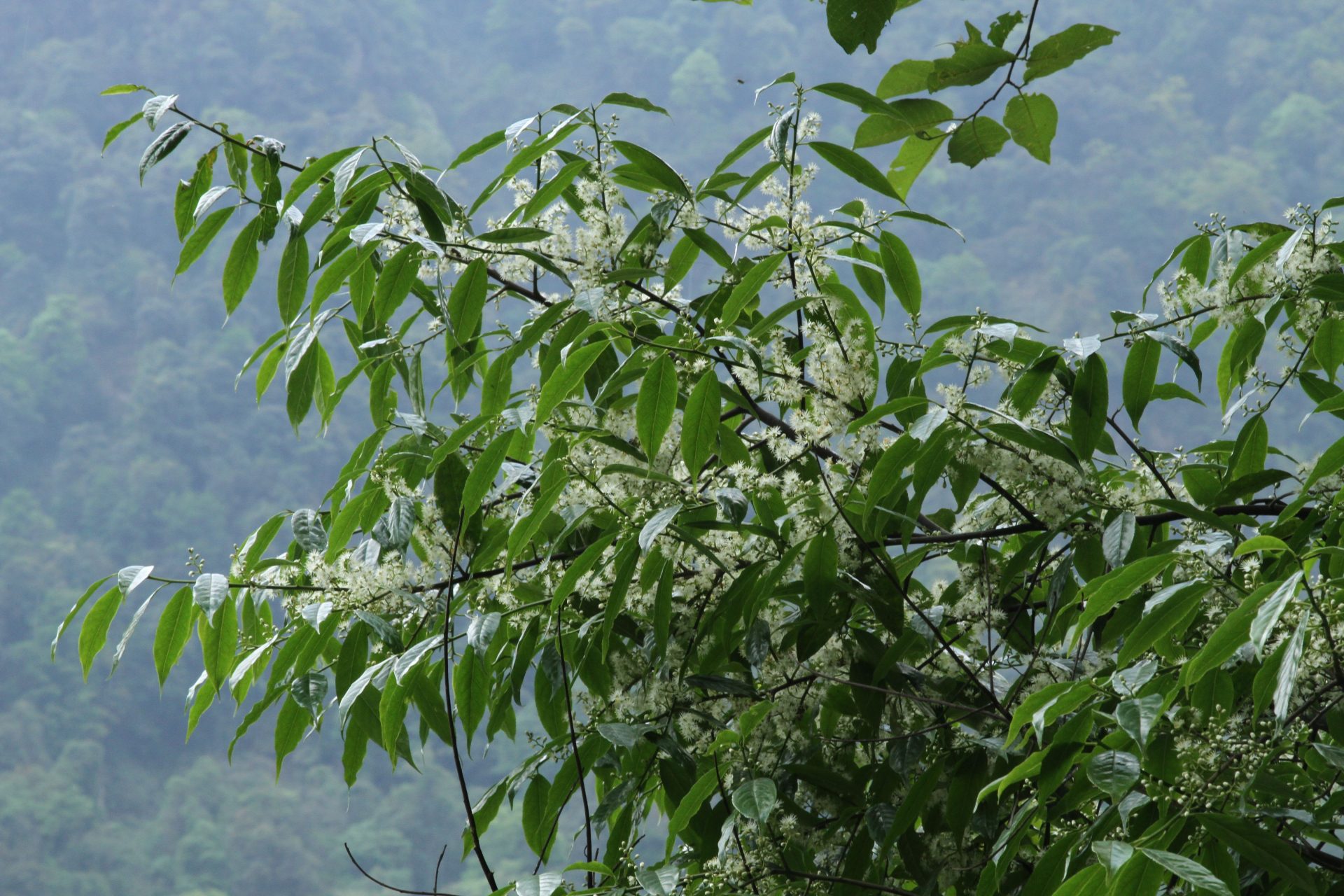
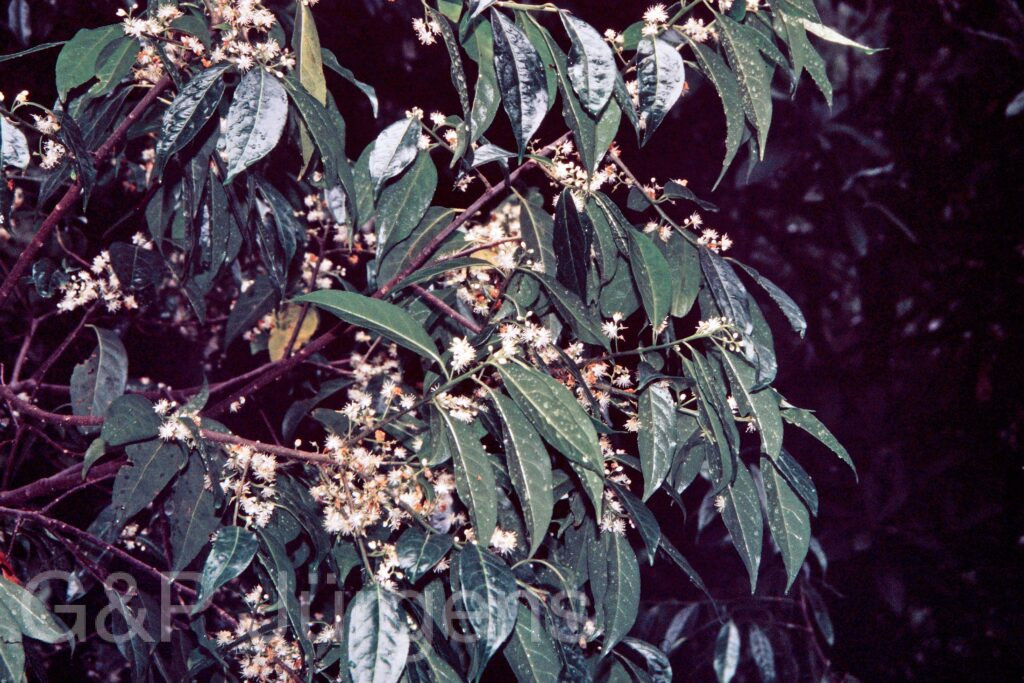
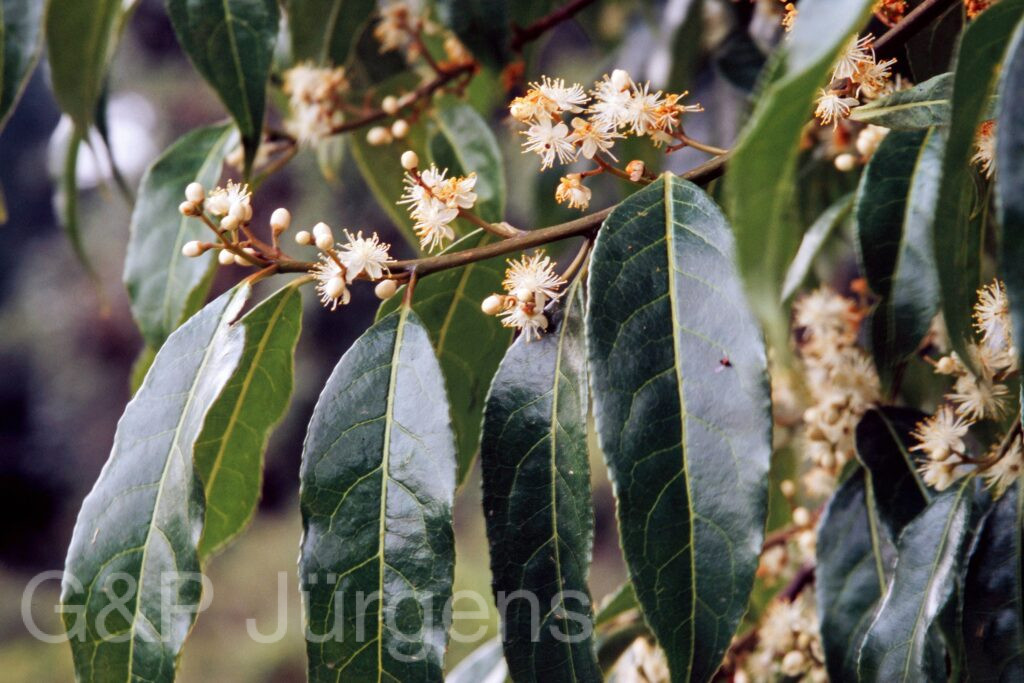
Symplocos ramosissima is an evergreen shrub or small tree widely distributed through the Sino-Himalayan and Indochinese region, with GBIF recording around 1472 occurrences across China, Nepal, India, Myanmar, Bhutan, Bangladesh, Vietnam, Sri Lanka and Taiwan. It is a characteristic component of moist broad-leaved evergreen and mixed temperate forests, occurring on humid slopes, ridge forests and forest margins generally between 1500 and 3000 m. The individual photographed at Barron Chatti in Garhwal, India, at about 2450 m in June sits within this mid-montane band, where the species forms part of the dense understorey and lower-canopy layer of laurel-oak and rhododendron-rich forests on the southern Himalayan flank.
Morphologically it is a much-branched evergreen with glabrous or finely pubescent young twigs and alternate, simple, coriaceous leaves; the blades are elliptic to lanceolate, with a serrate to crenate-serrate margin and an acuminate apex. The flowers are small, white, fragrant and borne in short axillary spikes or racemes, each with a persistent calyx, a rotate to shortly campanulate corolla of five lobes and numerous stamens fused into fascicles at the base, the pollination biology favouring small generalist insects. The fruit is a small ovoid to cylindric drupe, blue-black to purplish when ripe, crowned by the persistent calyx lobes and containing a hard stone, dispersed largely by frugivorous birds.
The family Symplocaceae comprises the single large genus Symplocos, a taxonomically intricate group well represented in the Himalaya and East Asia. The genus is notable for accumulating aluminium and for the yellow dye historically obtained from the bark and leaves of several species, which were used as mordants in traditional textile dyeing. As a common and ecologically wide-ranging forest element, S. ramosissima is not considered threatened, though its dependence on intact mid-elevation evergreen forest links its local persistence to the conservation of those increasingly fragmented montane habitats.
Author: Wall. ex G. Don · Sources: POWO (Kew), GBIF, Flora of China Vol. 15, Flora of Bhutan Vol. 2, Flora of Nepal, Nooteboom Revision of Symplocaceae of the Old World