
Miq.
Description
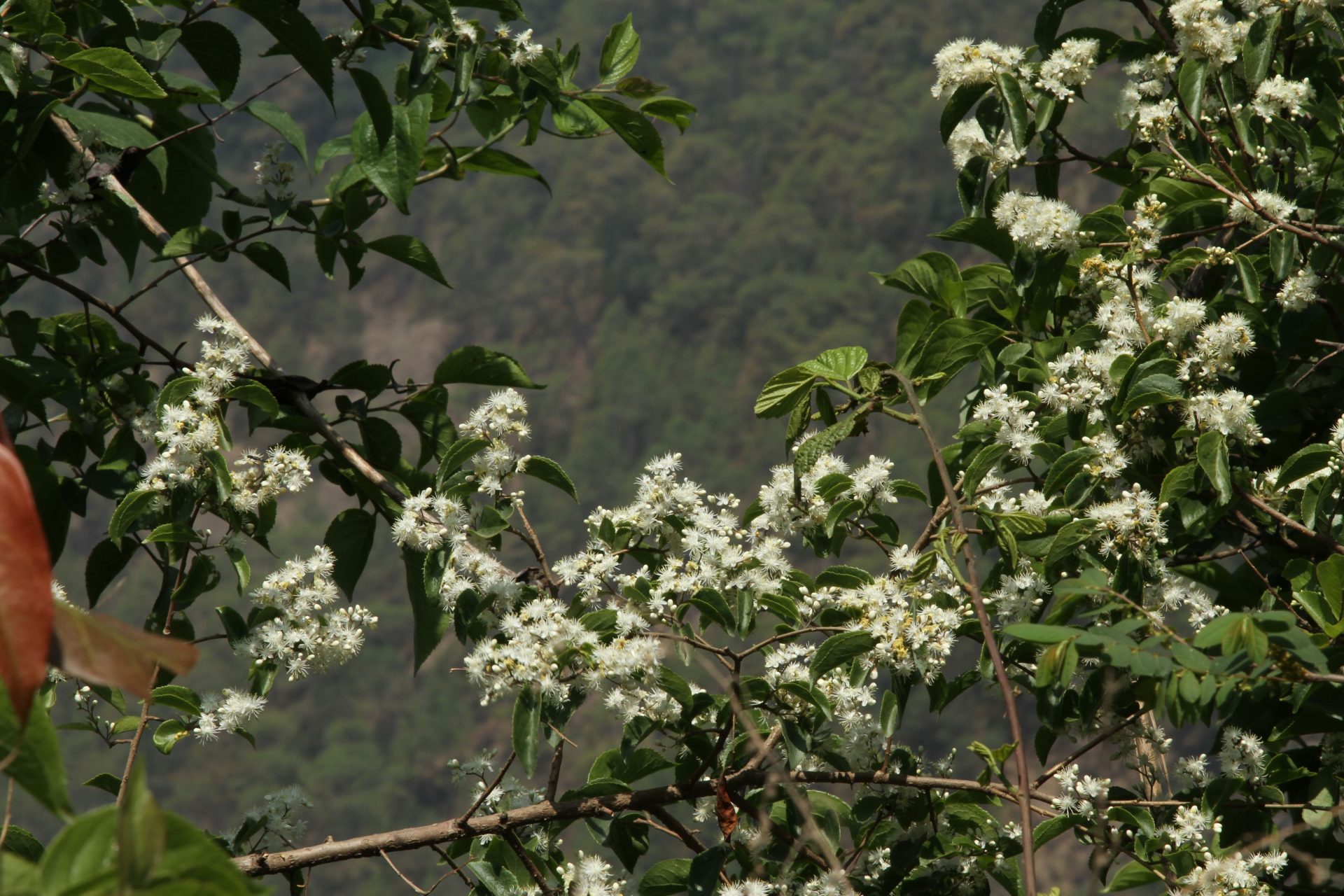
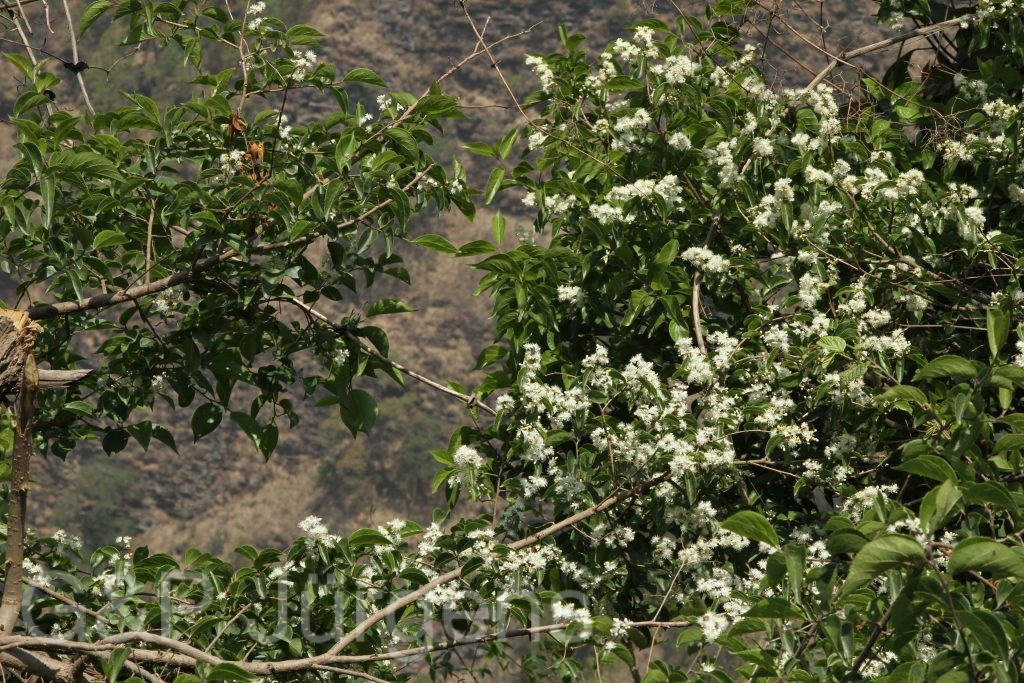
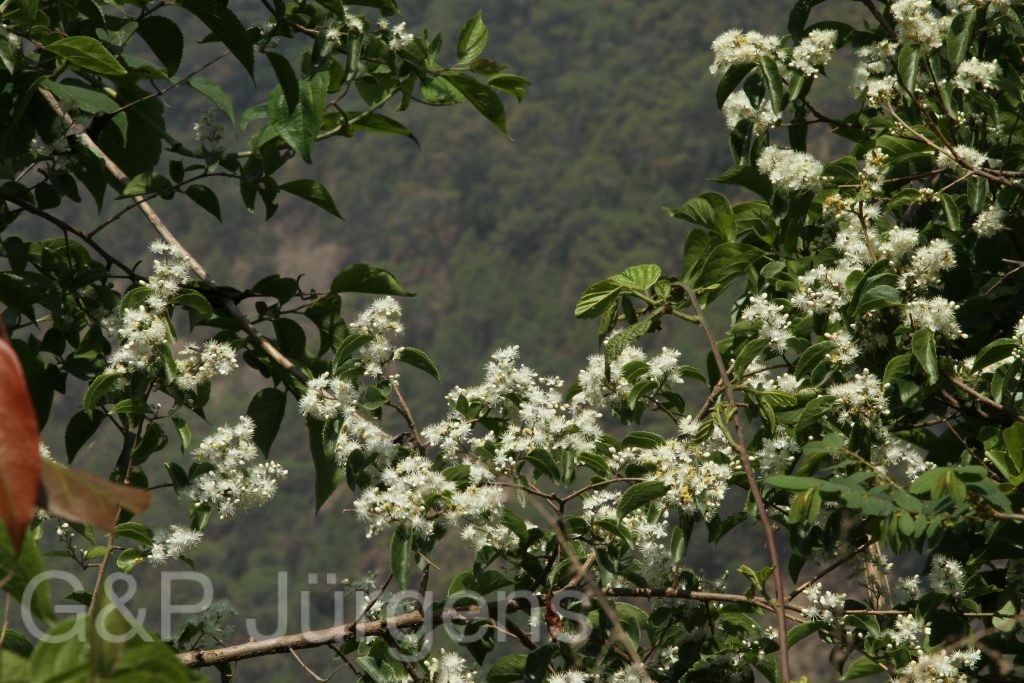
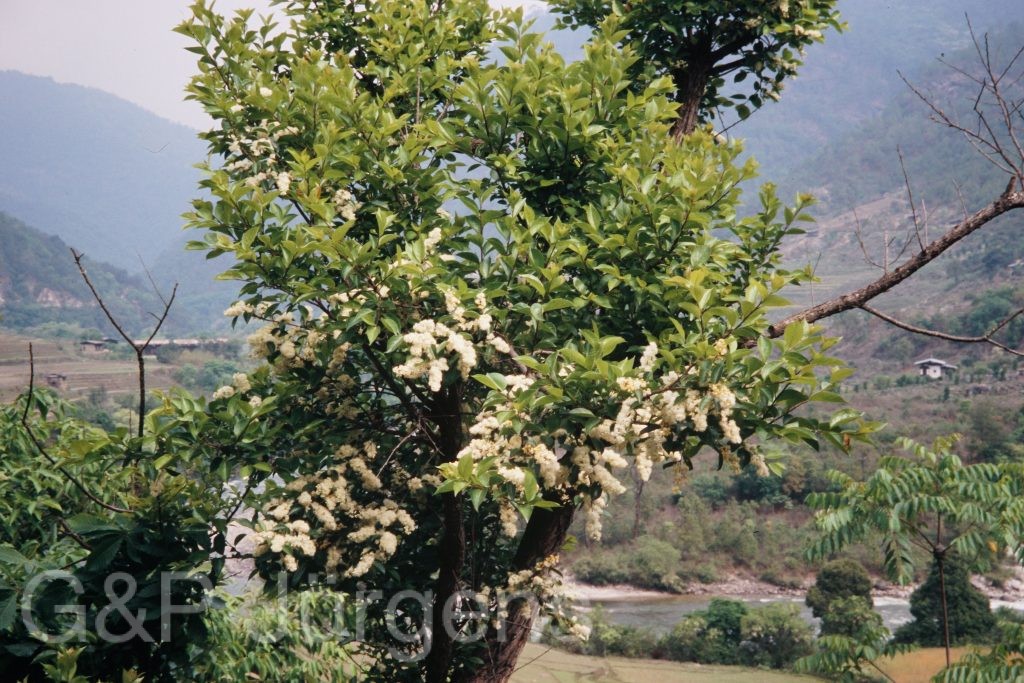
Symplocos paniculata is a widely distributed eastern Asian shrub or small tree ranging from the Himalaya (Nepal, Bhutan, northeast India) across China, Taiwan, Korea and Japan, with extensive cultivated and naturalised records elsewhere; GBIF documents 9858 occurrences spanning these and many other countries. In the Himalaya it grows in temperate broad-leaved and mixed forests, forest margins, scrub and open hillsides, generally between about 1500 and 2800 m. The photographed plants from Phobjika in Bhutan at 2250 m in May and from Punakha at 2400 m in April show it flowering in spring, when the white, fragrant blossoms appear ahead of full leaf expansion in the temperate Bhutanese valleys.
It is a deciduous shrub or small tree with grey, often lenticellate bark and finely pubescent young twigs. The alternate leaves are elliptic to obovate, acuminate, with a serrulate to crenate-serrate margin and pinnate venation. The fragrant white flowers are borne in terminal and axillary panicles; each flower has a five-lobed calyx, a deeply five-parted corolla and numerous stamens that are basally connate into fascicles, giving the inflorescence a feathery appearance. The fruit is a small ovoid to ellipsoid drupe ripening blue-black to deep blue, crowned by the persistent calyx and containing a single hard stone.
The species belongs to Symplocos, the sole genus of the family Symplocaceae, a group of Old and New World woody plants noted for accumulating aluminium and historically valued as mordant ("sapphire-berry") plants whose bark and leaves were used in dyeing. The blue, lipid-rich drupes are dispersed by frugivorous birds. Common, ecologically tolerant and widely planted as an ornamental, S. paniculata is of least conservation concern across its extensive natural range.
Author: Miq. · Sources: POWO (Kew), GBIF, Flora of China Vol. 15, Flora of Bhutan Vol. 2, Flora of Nepal, Revision of the Asiatic Symplocaceae (Nooteboom)