Ranunculaceae

Stapf

Sikkim2003 256 P351
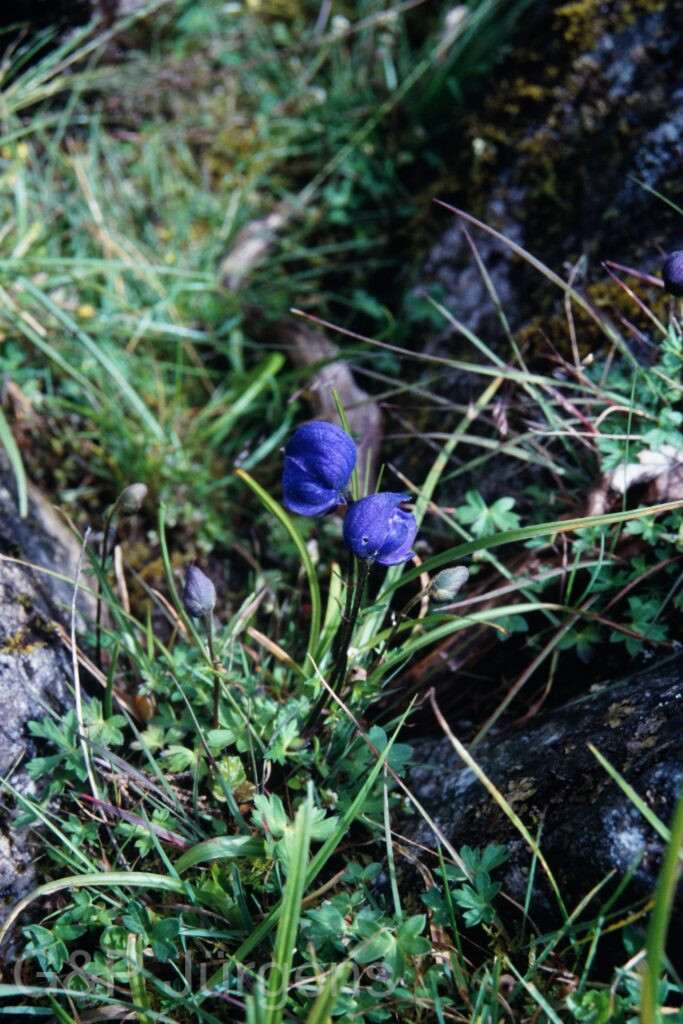
Sikkim Dzongri 4200m August

Description

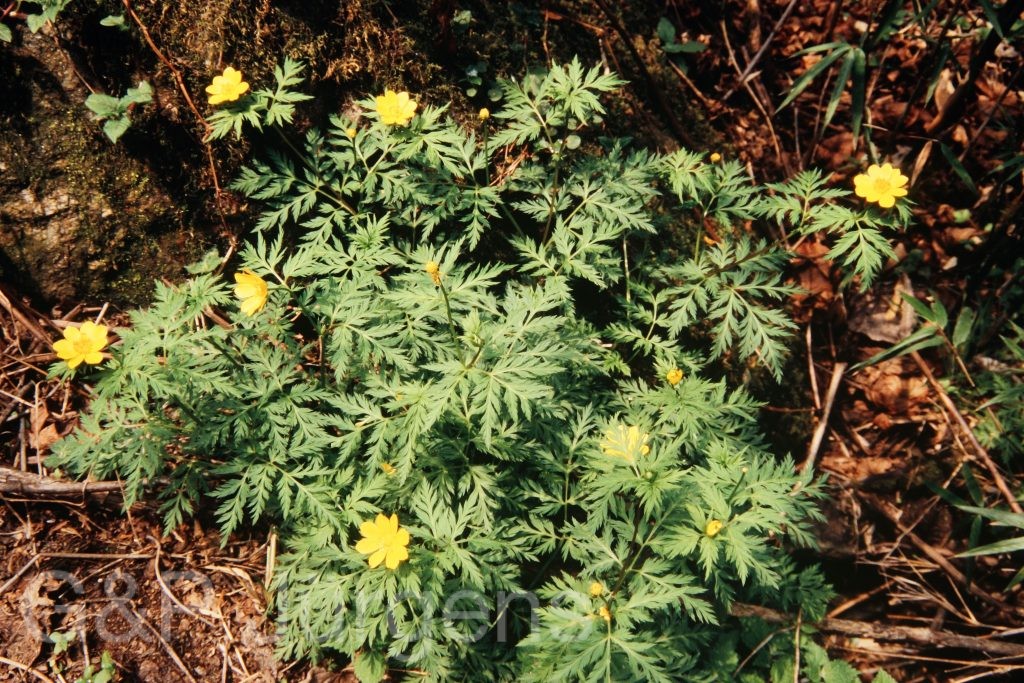
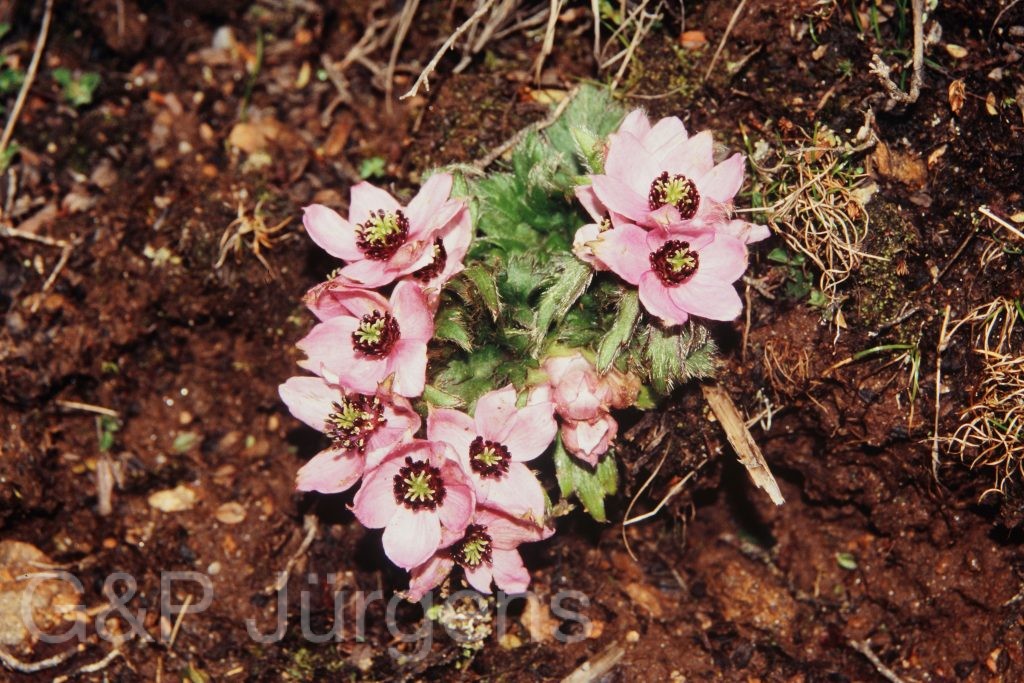
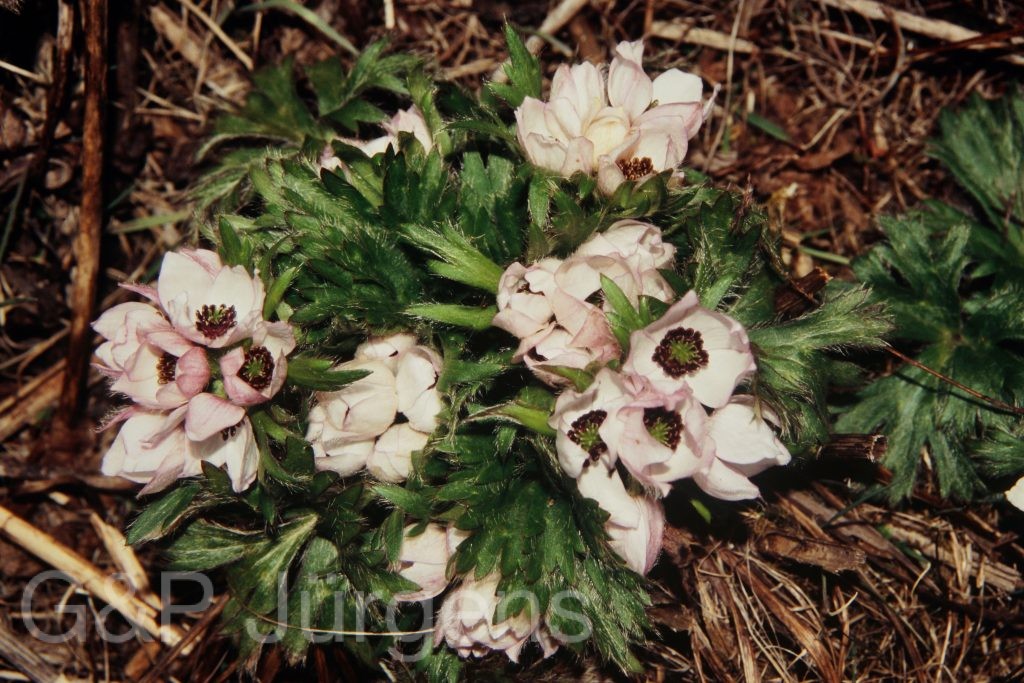
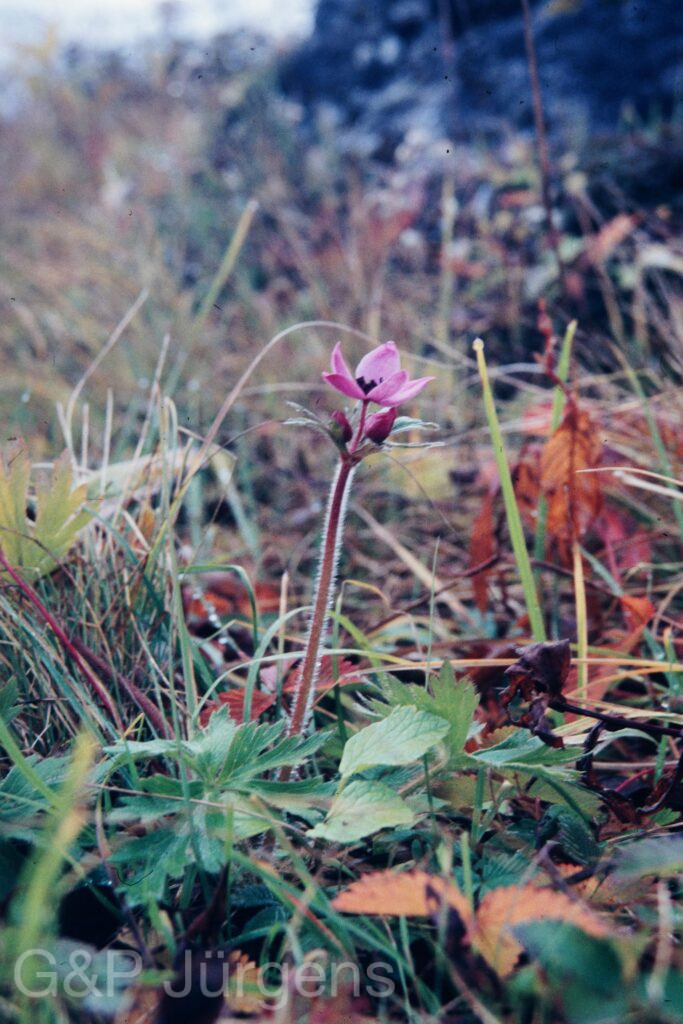
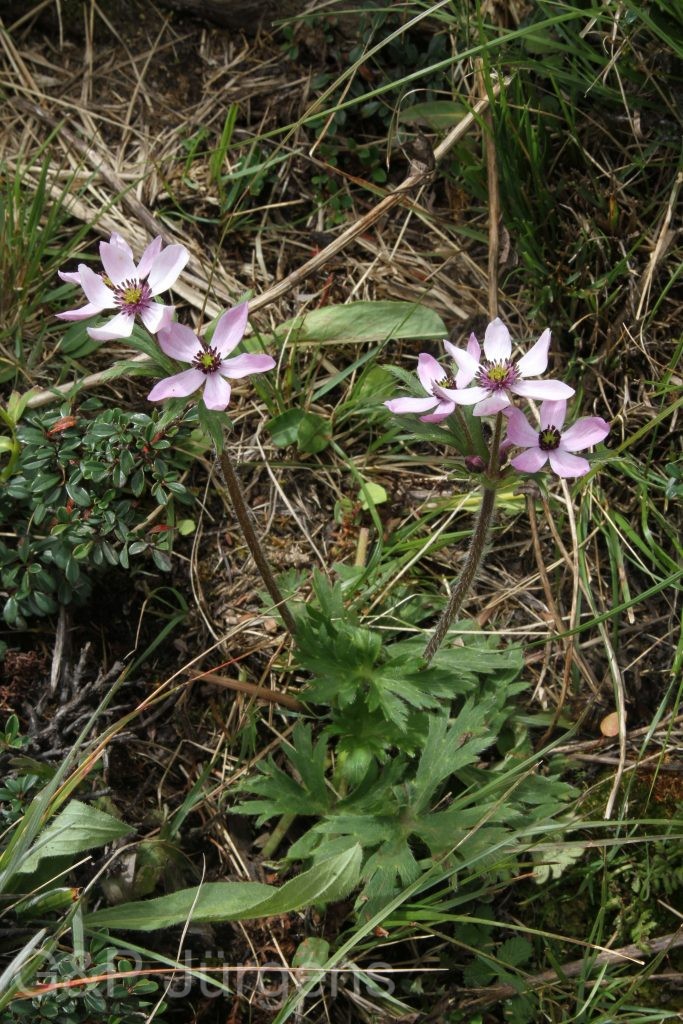
Aconitum naviculare is a high-alpine monkshood of the eastern and central Himalaya, ranging from Nepal through Sikkim and northern India into Bhutan, south-western China (Xizang) and northern Myanmar; its modest tally of around 110 georeferenced occurrences (CN, NP, BT, IN, MM) reflects its specialised montane niche. It occupies open alpine meadows, screes, moist turf and rocky slopes at high elevation, typically between about 3500 and 4800 m. The plant photographed at Dzongri in Sikkim at 4200 m in August, flowering at the height of the monsoon-influenced alpine summer, exemplifies its cold, exposed habitat near the upper limit of vascular plant growth.

It is a small perennial herb arising from a slender tuberous rootstock, with an erect or somewhat flexuous stem usually under 30 cm. The leaves are palmately divided into narrow, deeply cut segments. The flowers are few and borne in a lax terminal raceme; as in all Aconitum the five petaloid sepals are zygomorphic, the uppermost forming the characteristic helmet or hood (galea), here narrowly boat-shaped (navicular, whence the epithet), bluish-purple and often paler within. Two long-clawed nectariferous petals are concealed beneath the hood, with numerous stamens and three to five free carpels ripening into a cluster of follicles containing winged seeds.

Aconitum naviculare belongs to subgenus Aconitum and is a noted constituent of Himalayan alpine flora, valued and harvested in Tibetan and folk medicine as "Bonga" for its diterpenoid alkaloids, which render the whole plant highly toxic. Such harvesting, combined with its restricted high-altitude range, raises local conservation concern, although it remains frequent within intact alpine grassland.

Author: Stapf · Sources: POWO (Kew), GBIF, Flora of China, Flora of Bhutan, Flora of Nepal, Stapf's monograph of the Asiatic species of Aconitum

L.

Bhutan2012 41
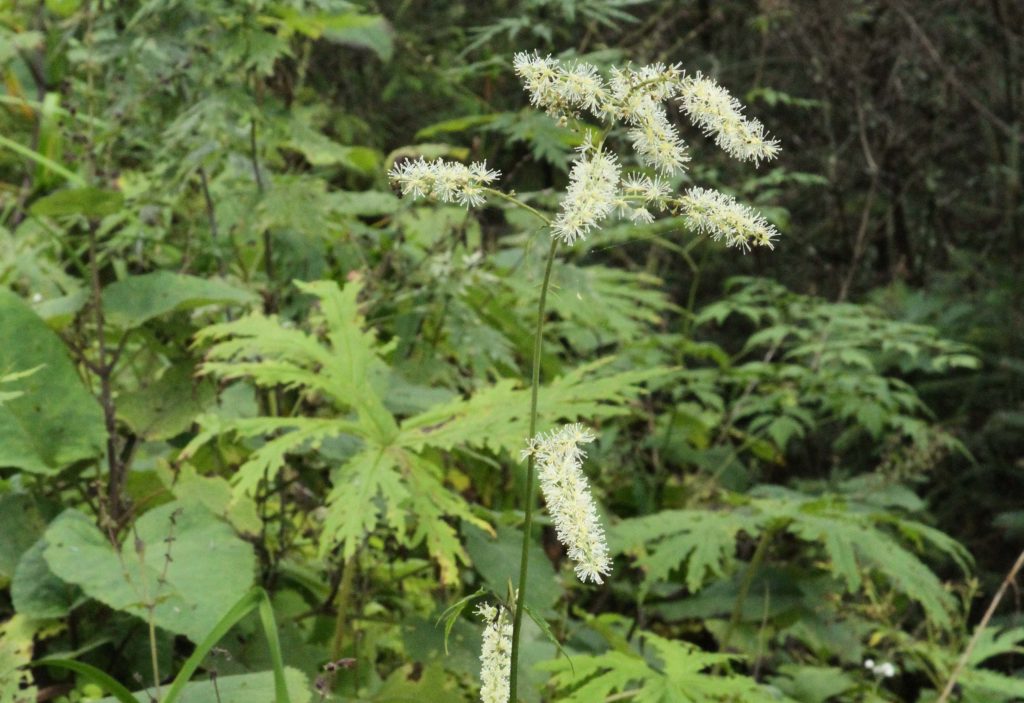
Bhutan Shele-La, 3600m September
Bhutan2012 42
Bhutan Shele-La, 3600m September

Description

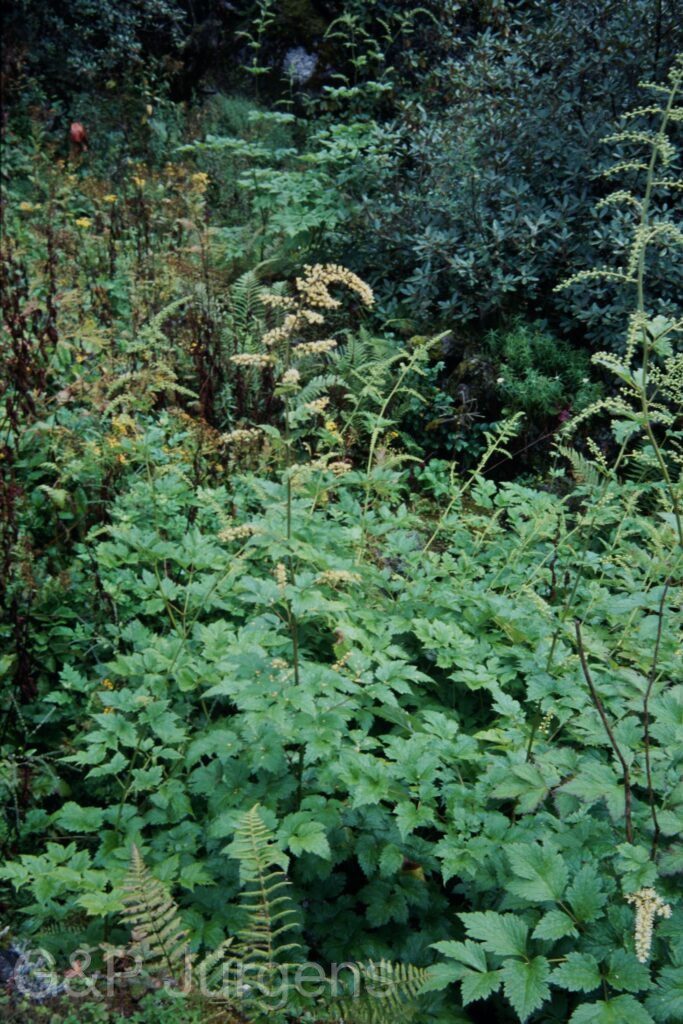
Actaea cimicifuga, the type of the long-segregated genus Cimicifuga and now treated within Actaea, is a temperate Eurasian herb with a vast range spanning Russia, China, Korea, Mongolia, Japan, Nepal, India, Bhutan and parts of central and eastern Europe, reflected in some 2565 georeferenced records. It grows in cool montane and subalpine woodland, forest margins, scrub and tall-herb meadows, in the Himalaya generally between about 2500 and 3800 m. The recorded plant from Shele-La in Bhutan at 3600 m, flowering in September, illustrates its preference for moist, shaded high-montane situations where it blooms late in the season.

It is a tall, erect perennial from a stout woody rhizome, reaching well over a metre. The leaves are large and ternately to bipinnately compound, with ovate, sharply toothed and lobed leaflets. The inflorescence is an elongate, branched panicle of slender racemes bearing many small, short-stalked flowers; the petaloid sepals fall early, the petals are reduced and staminode-like, and the numerous white stamens give the spikes a feathery aspect. The fruit is a cluster of dry, dehiscent, several-seeded follicles, distinguishing it from the berry-fruited typical species of Actaea.

The follicular fruit and tall paniculate habit underlie the historic recognition of Cimicifuga, now subsumed into Actaea on molecular grounds, making the species a focus of generic-circumscription debate. The plant has a strong, unpleasant odour repellent to insects, the source of the name "bugbane," and it has a long history of medicinal use. Widespread and locally common, it is of no conservation concern.

Author: L. · Sources: POWO (Kew), GBIF, Flora of China, Flora of Bhutan, Compton's revision of Cimicifuga and Actaea

Actaea elata

by GP Jürgens

Prantl

Sikkim2003 477 P662
Sikkim Lachung Valley 3300m, August

Description

Actaea elata Prantl is a tall woodland perennial of cool-temperate forests. The GBIF record (CN, IN and several extralimital codes including US, CA, RU, CO and ZZ, totalling 844 occurrences) reflects a mixture of Asian native material and considerable confusion with the North American A. elata (Nutt.) Prantl, a name applied on both continents; in the Himalayan context the plant occupies shaded, humus-rich Abies–Betula and mixed broad-leaved forest, streamsides and tall-herb communities. The illustrated specimen from the Lachung Valley in northern Sikkim at 3300 m, in August, sits squarely within this moist montane forest zone, flowering and fruiting during the late monsoon.

The species grows from a stout rhizome, producing erect stems to well over a metre. The leaves are large, alternate and 2–3-ternately compound, the ultimate leaflets ovate, acuminate and sharply serrate to incised. Flowers are borne in elongate terminal and axillary racemes; they are small, white and apetalous in effect, the petaloid sepals soon caducous and the conspicuous part being the numerous slender white stamens, giving a fluffy aspect typical of baneberries. The pistils mature into several-seeded follicles or, in the strict baneberry sense, fleshy berries, the dispersal unit varying with the taxonomic circumscription applied.

Actaea, here treated to include the segregate Cimicifuga, belongs to subfamily Ranunculoideae; the inclusion of Cimicifuga within Actaea is supported by molecular phylogenetics. As in many Ranunculaceae the plants contain bioactive triterpene glycosides, conferring toxicity and underpinning medicinal use. The taxon is widespread and not threatened, though the transcontinental nomenclatural overlap means GBIF distributional data require critical evaluation.

Author: Prantl · Sources: POWO (Kew), GBIF, Flora of China (Ranunculaceae), Flora of Bhutan, Compton & Culham monograph of Actaea s.l. (incl. Cimicifuga)

Franch.

Bh2008 15 P25
Bhutan Thimphu-Chu, 2800m April
Bh2008 304 G469
Bhutan Thimphu-Chu, 2800m April
Bh2008 305 G471
Bhutan Ura 3400m, April

Description

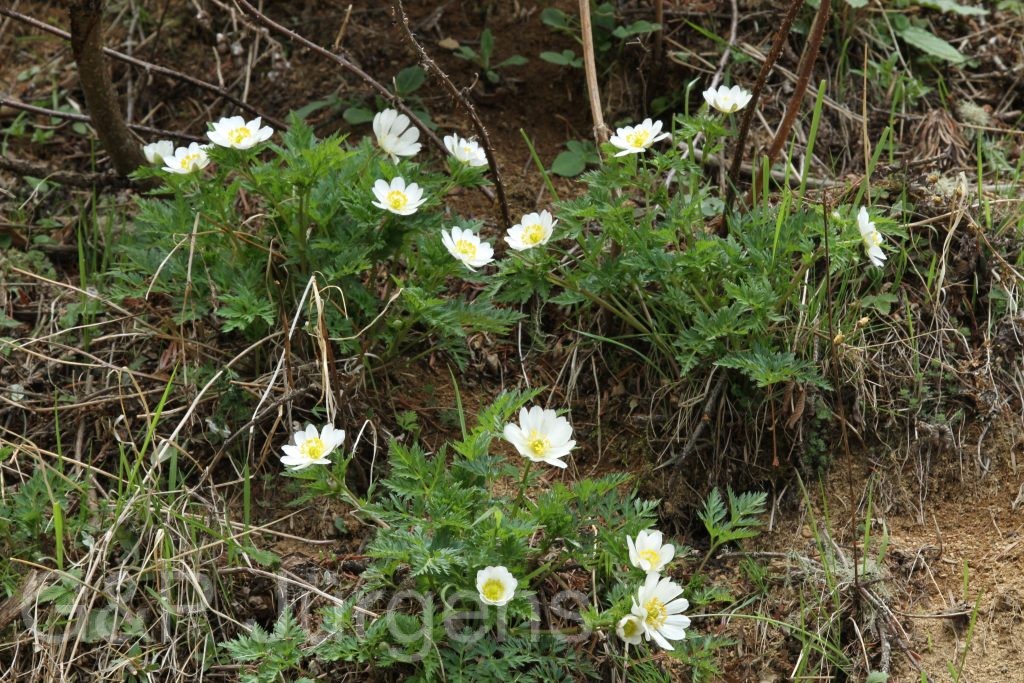
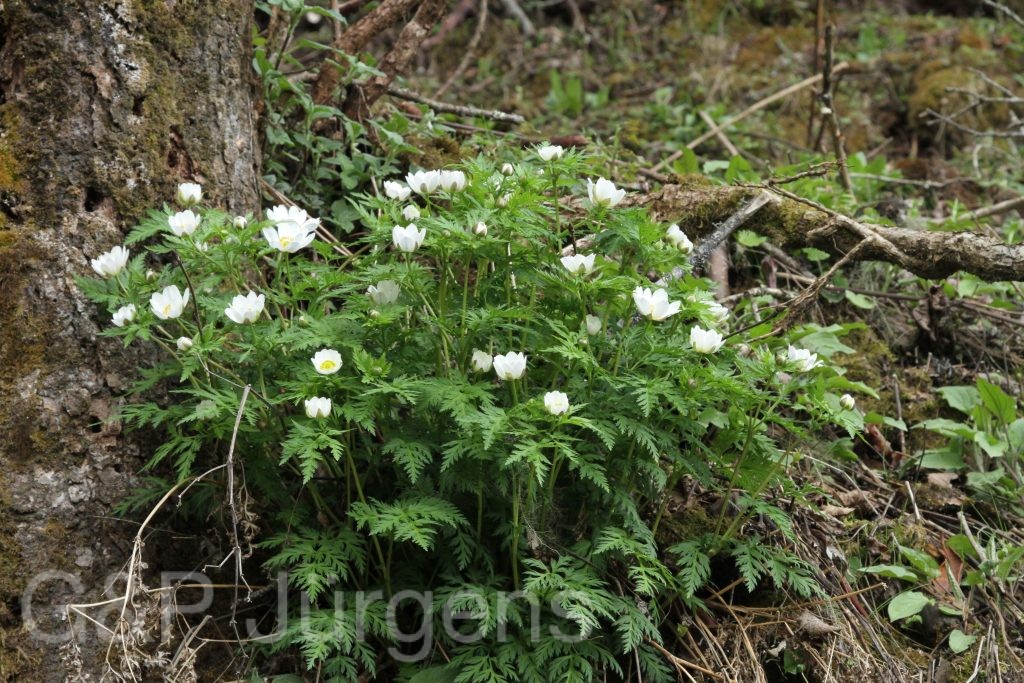
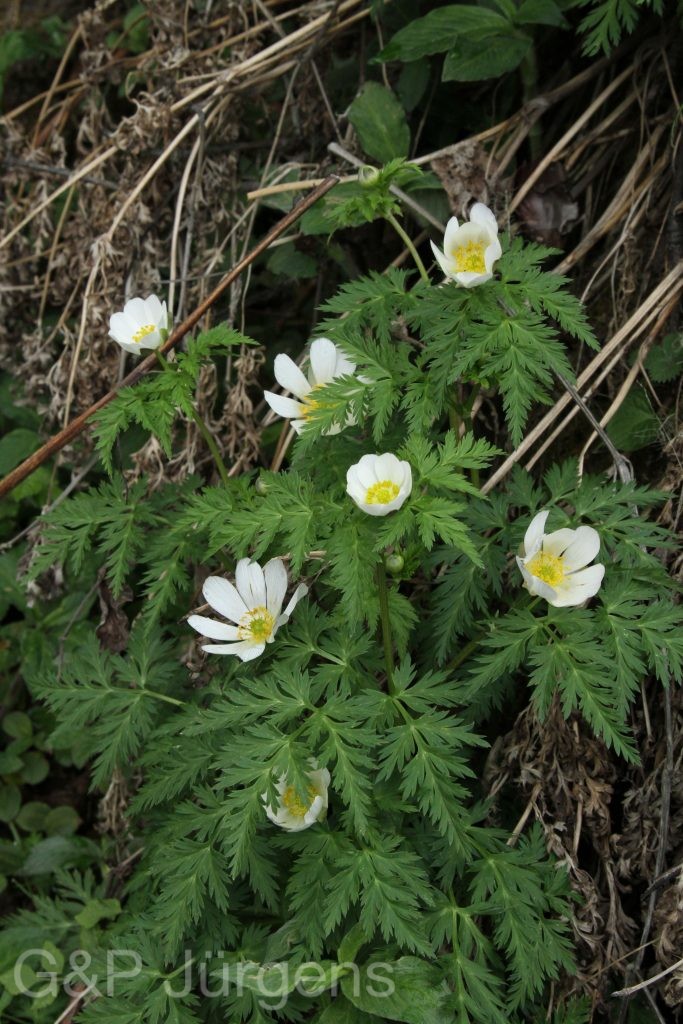
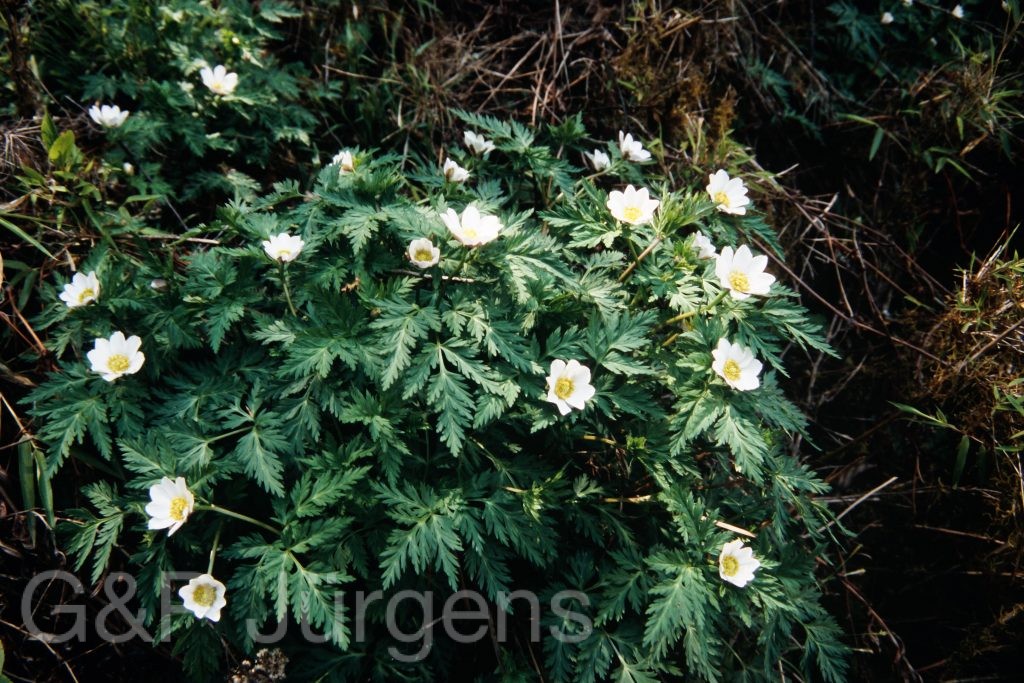
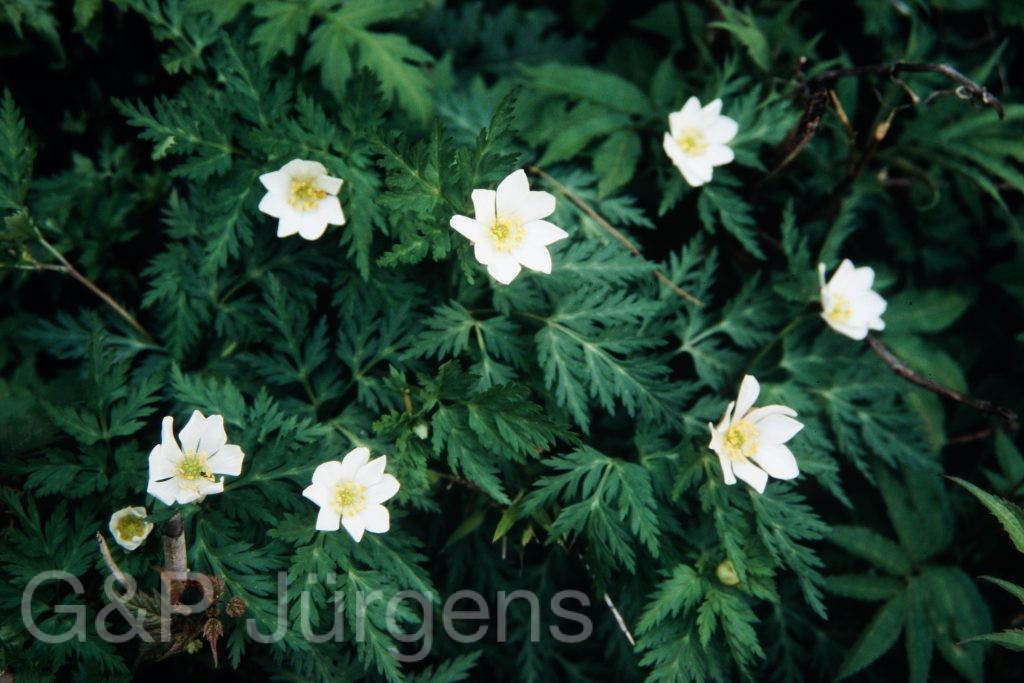
Adonis davidii is a perennial herb of the eastern Himalaya and southwestern China, with GBIF records (462 occurrences) concentrated in China and Bhutan. It grows in cool, shaded habitats: coniferous and mixed forest understorey, forest margins, shrubberies and damp meadows, generally between 2500 and 4000 m. The Bhutanese gatherings figured here span this range, from Thimphu-Chu at 2800 m and Ura at 3400 m in April to Chele-La at 4000 m in May, illustrating its early-spring to early-summer flowering as snow retreats and its preference for moist, humus-rich montane soils in partial shade.

The plant arises from a short, thickened rhizome bearing fibrous roots, producing erect or ascending stems 15-50 cm tall that are usually simple or sparingly branched. The leaves are alternate, sessile or shortly petiolate, and several times ternately or pinnately dissected into narrow, linear-lanceolate ultimate segments, giving a finely divided, fern-like aspect. The solitary terminal flowers are white, often tinged blue, lilac or pink, with numerous spreading petaloid sepals (the true perianth) surrounding a central cluster of yellow stamens and free carpels. The fruit is an aggregate of numerous obovoid, wrinkled achenes, each tipped by a short persistent style.

Adonis (Ranunculaceae) is a chiefly Eurasian genus distinguished by its many free achenes and showy perianth; like many congeners A. davidii contains cardioactive compounds and should be regarded as toxic. Within the genus it belongs to the white-flowered perennial assemblage centred on China. It is not currently considered threatened, being locally frequent across an extensive forest range, though it depends on intact montane forest cover and is therefore sensitive to logging and habitat fragmentation.

Author: Franch. · Sources: POWO (Kew), GBIF, Flora of China, Flora of Bhutan, Monograph of the Genus Adonis (Ranunculaceae)

Simonov.

Sikkim2004 168 P284
Sikkim/India Singalila 4200m May

Description

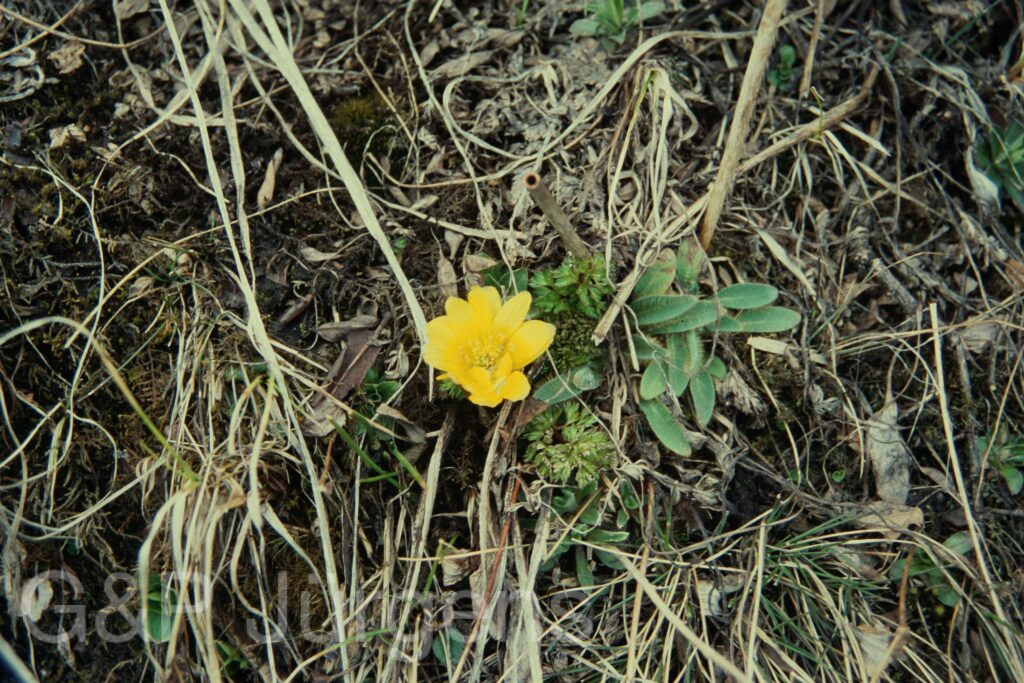
Adonis nepalensis is an alpine perennial herb of the central and eastern Himalaya, recorded from Nepal, India and Bhutan (the additional scattered GBIF records from Hungary and Morocco almost certainly representing cultivated or misattributed material), with a small total of 28 occurrences in GBIF. It is a plant of high open habitats, growing in alpine meadows, grassy and rocky slopes and the margins of dwarf scrub near and above the treeline. The photographed plant was collected on the Singalila ridge on the Sikkim/India border at about 4200 m in May, a high-altitude spring-flowering station typical of the species, which blooms soon after snowmelt.

The plant grows from a short, stout rootstock and produces erect, leafy stems. The leaves are alternate and finely dissected, repeatedly divided into narrow, linear ultimate segments, giving them a feathery aspect characteristic of the genus. The flowers are solitary and terminal, fairly large and showy, with numerous spreading petals that are yellow (the usual colour in the Himalayan species), subtended by a green, dissected involucre of leaf-like bracts; the numerous stamens and free carpels are borne on a slightly elongate receptacle. The fruit is a head of small, dry, one-seeded achenes.

Adonis belongs to the Ranunculaceae and, like many genera of the family, contains cardiac glycosides and other toxic compounds. Adonis nepalensis is the principal Himalayan representative, distinguished by its alpine habit and yellow flowers, and is a relatively narrow-ranged montane species. Its high-elevation, snowmelt-dependent populations make it of biogeographic interest as part of the specialised Himalayan alpine flora and potentially sensitive to warming and to the disturbance of fragile alpine turf.

Author: Simonov. · Sources: POWO (Kew), GBIF, Flora of Bhutan, Annotated Checklist of the Flowering Plants of Nepal, Ranunculaceae of the Himalaya

(Hook.f. & Thomson) Holub

Bh09 114 G203
Bhutan Chele-La, 3500m June
Bh09 159 G282
Bhutan Chele-La, 4000m June
Nepal 95 173 P282 ergebnis
Nepal Rupien La 3850m October
Bhutan2012 273
Bhutan Dochu-La 3500m, September

Description

An alpine anemone of the Himalaya and the Tibetan Plateau, recorded from China, Myanmar, Nepal, Bhutan, India and Pakistan, with around 1600 GBIF occurrences. It is a plant of open alpine meadows, grassy slopes, rocky pastures and scrub margins, generally between about 3000 and 4500 m. The featured collections come from several high passes, including Bhutan's Chele-La at 3500 to 4000 m in June, the Dochu-La at 3500 m in September, and Nepal's Rupien La at 3850 m in October, illustrating a long flowering and fruiting season across windswept high-elevation habitats.

The species is a tufted perennial arising from a stout, often woody rootstock crowned with fibrous leaf remnants. The basal leaves are long-petiolate and palmately three- to five-divided, the segments further lobed and toothed and clothed, like the petioles, in spreading hairs. The scape bears a whorl of stalked, leaf-like involucral bracts beneath the inflorescence, which carries one to several flowers. Each flower lacks true petals; the showy perianth consists of five or more white, sometimes bluish- or pinkish-tinged tepals surrounding numerous stamens and a head of many free, hairy carpels. The fruit is an aggregate of compressed, beaked achenes adapted to wind and animal dispersal.

Formerly placed in Anemone, the species is now referred to the segregate genus Anemonastrum, accepted by POWO and GBIF, reflecting molecular and morphological re-circumscription of the windflowers; the basionym honours Hooker and Thomson. Ecologically it is a conspicuous element of summer-flowering alpine turf, offering pollen and nectar to high-altitude insects. Widespread and often locally abundant throughout the Himalaya, it is not of conservation concern, though its grassland habitats are subject to grazing and climatic shifts.

Author: (Hook.f. & Thomson) Holub · Sources: POWO (Kew), GBIF, Flora of Bhutan, Flora of China, Ziman et al. revision of Anemonastrum

(D.Don) Holub

Nepal 2001 432 ergebnis ergebnis
Nepal (Gorkha) Laprak 1900m, May

Description

Anemonastrum elongatum is a perennial herb of the temperate and subalpine Himalaya and adjacent Sino-Himalayan ranges, distributed from Nepal and India eastward through China and southward to Myanmar, with peripheral records in Sri Lanka and beyond (gbif_countries: NP, IN, CN, CA, LK, MM, ZZ); GBIF documents some 113 occurrences. It favours moist forest margins, shaded banks, grassy slopes and streamsides, ranging from warm-temperate woodland into the lower subalpine zone. The illustrated collections span a broad elevational gradient, from Laprak in Gorkha at about 1900 m to Nasem Pati in Helambu near 3550 m, both flowering in May at the onset of the monsoon.

The plant arises from a stout, ascending rhizome and produces erect, hairy stems bearing long-petiolate basal leaves that are palmately three- to five-lobed, the lobes coarsely toothed and clothed in appressed hairs. An involucre of similar but shorter-stalked leaves subtends the inflorescence, which is an elongate, few- to several-flowered cyme borne on slender, villous peduncles. The flowers lack true petals; the showy perianth consists of white to faintly tinged sepals surrounding numerous yellow stamens and a central cluster of carpels. The fruit is an aggregate of compressed, laterally winged achenes tipped with a short persistent style.

Long placed in a broadly circumscribed Anemone, the species is now referred to the segregate genus Anemonastrum, reflecting molecular and morphological recognition of natural lineages within tribe Anemoneae. Its elongating fruiting axis, evoked by the epithet, distinguishes it from allied taxa. Widespread and locally common, it is of no conservation concern, and its broad ecological amplitude makes it a characteristic component of Himalayan herb communities.

Author: (D.Don) Holub · Sources: POWO (Kew), GBIF, Flora of Nepal, Flora of China, Annotated Checklist of the Flowering Plants of Nepal, Tamura's monograph of Ranunculaceae

(D.Don) Mosyakin

Bhutan2014 516
Bhutan Yatong-La 3200m, May
Nepal 99 82 ergebnis
Bhutan Bhulbhule 3150m, June

Description

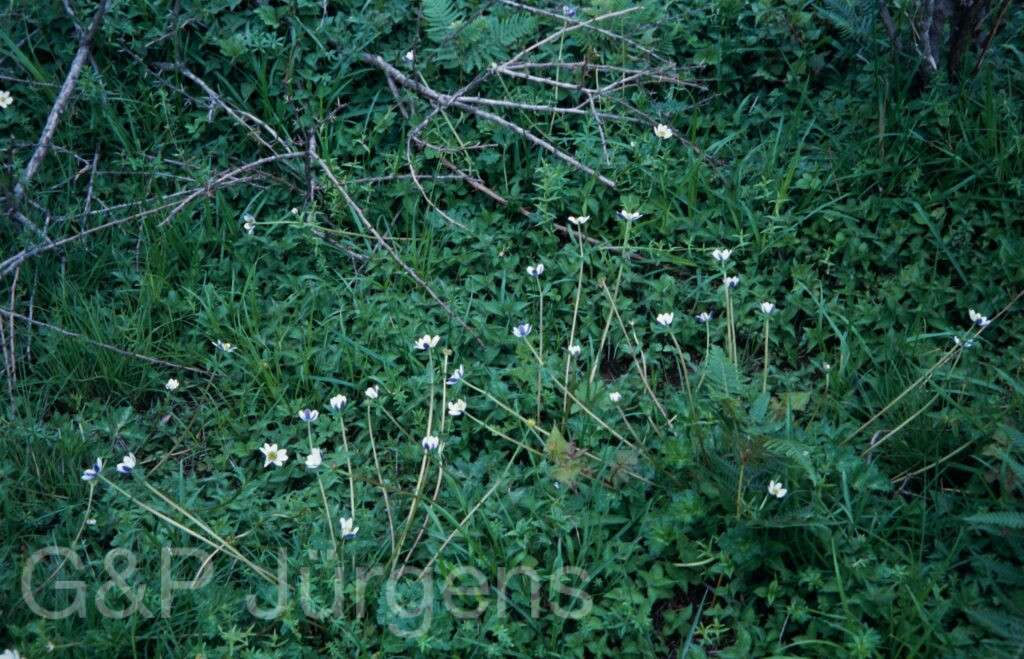
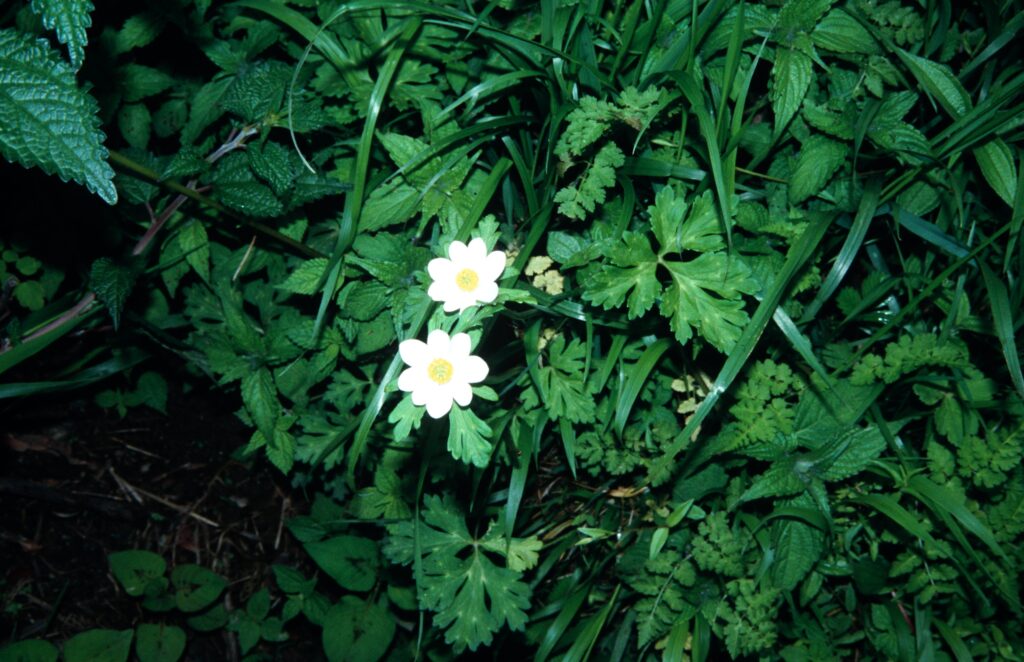
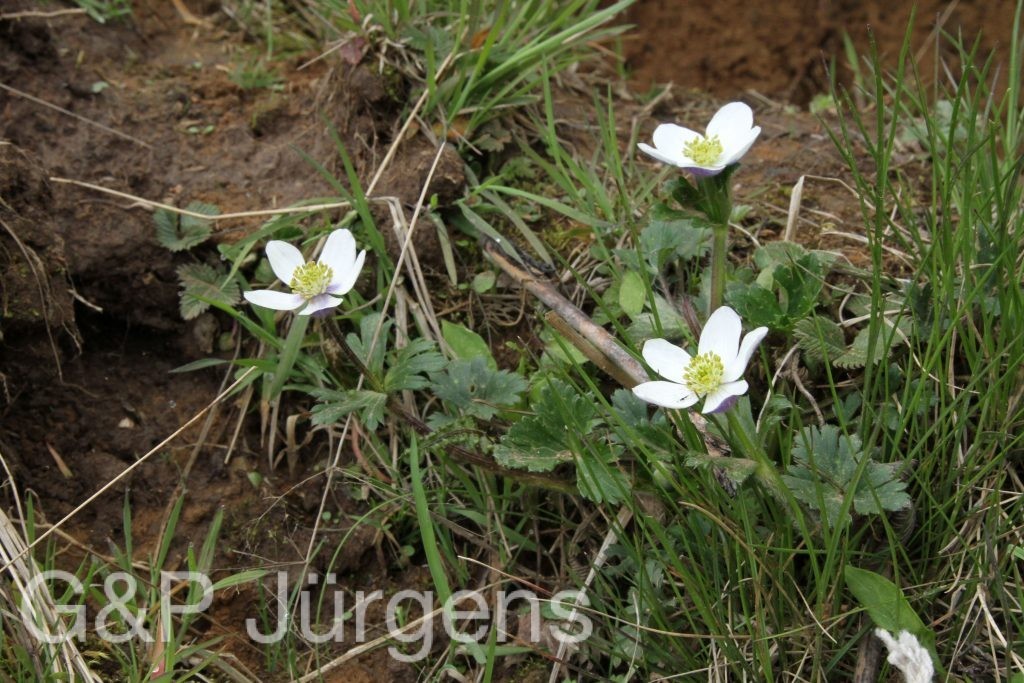
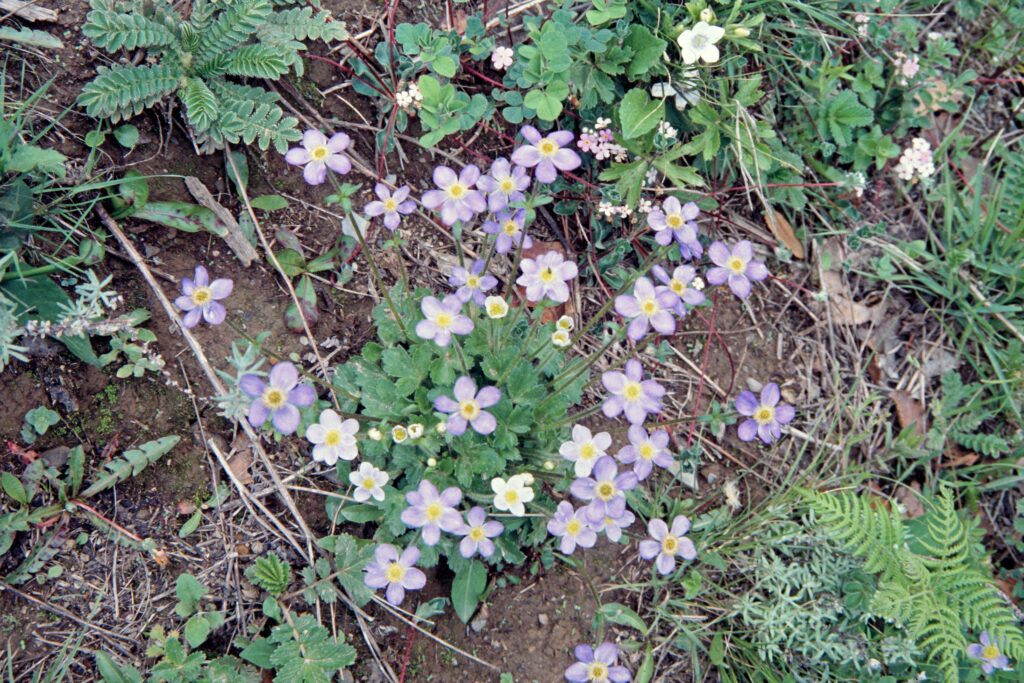
Anemonastrum obtusilobum, long known as Anemone obtusiloba, is a widespread Himalayan and Central Asian alpine herb recorded from China, India, Nepal, Pakistan, Bhutan, Myanmar, Afghanistan, Kazakhstan and Kyrgyzstan, with a substantial 825 occurrences in GBIF. It is a plant of open alpine and subalpine meadows, grassy slopes, forest clearings and stony turf, typically between 2500 and 4500 m. The localities cited, Yatong-La at 3200 m in May and Bhulbhule at 3150 m in June in Bhutan, are characteristic of the moist, herb-rich montane grassland where it carpets slopes in spring and early summer.

The species is a tufted perennial herb from a stout, often branched rootstock clothed with the fibrous remains of old leaf bases. The basal leaves are long-petiolate and palmately three-lobed, the lobes broad and obtusely toothed (hence obtusilobum), softly hairy and somewhat fleshy. The flowering scape bears an involucre of leaf-like bracts and one to several flowers; each flower lacks petals but has five to eight petaloid sepals that are white, cream, yellow or violet-blue, surrounding numerous yellow stamens and a cluster of free carpels. The fruit is a head of compressed, glabrous achenes each tipped with a short style.

The segregate genus Anemonastrum was resurrected on molecular grounds from the broadly circumscribed Anemone, grouping the herbaceous, palmately lobed-leaved species with basal involucres; A. obtusilobum is a polymorphic species varying greatly in flower colour and stature across its range, prompting recognition of several varieties. Its insect-pollinated flowers and dry achenes, dispersed by wind and animals, suit the open alpine environment. The species is common and of least conservation concern, though it remains a useful indicator of intact Himalayan alpine meadow communities.

Author: (D.Don) Mosyakin · Sources: POWO (Kew), GBIF, Flora of China, Flora of Bhutan, Annotated Checklist of the Flowering Plants of Nepal

(D.Don) Holub

Bh09 32 G59
Bhutan above Paro 3200m, June
Garh 07 464 ergebnis
India Garhwal Khiar Kutti 3900m, June

Description

Anemonastrum polyanthes (formerly Anemone polyanthes) is a robust alpine herb distributed across the Himalaya and into western China, with GBIF holding around 362 occurrences from India, China, Nepal, Pakistan, Bhutan, Afghanistan and Myanmar. It grows in subalpine and alpine meadows, open slopes, forest clearings and grazed pastures, typically between 3000 and 4300 m, flowering with the onset of the summer monsoon. The cited collections from above Paro in Bhutan at 3200 m and from Khiar Kutti in Garhwal, India, at 3900 m, both in June, capture its broad altitudinal spread across damp, herb-rich high-meadow turf.

It is a perennial arising from a stout rootstock, with all principal leaves basal, long-petiolate and palmately three- to five-partite, the segments deeply cut and toothed, hairy on both surfaces. The flowering stem bears a whorl of leaf-like, sessile involucral bracts subtending an umbel-like cyme of several flowers, as the epithet polyanthes implies. Each flower lacks petals; the five to eight petaloid sepals are white, sometimes flushed pinkish or bluish outside, surrounding numerous yellow stamens and a domed cluster of carpels. The fruits are flattened, glabrous, ovate achenes with a short hooked beak, aggregated into a rounded head.

The segregate genus Anemonastrum, raised from Anemone on molecular and morphological grounds, accommodates this group of umbellate-flowered, multi-flowered montane species. Like other Ranunculaceae it contains acrid protoanemonin, deterring grazing livestock so that it often persists conspicuously in over-grazed alpine pasture. Widespread and frequently common throughout the Himalayan arc, it is of Least Concern and serves as a prominent component of summer-flowering high-altitude meadow communities.

Author: (D.Don) Holub · Sources: POWO (Kew), GBIF, Flora of Bhutan, Flora of Pakistan, Annotated Checklist of the Flowering Plants of Nepal, Hand-Mazzetti and Tamura treatments of Anemone

(Wall. ex Hook.f. & Thomson) Mosyakin

BhutanPG2011 219 scaled
Bhutan Jule-Tso, 4300m June
BhutanPG2011 344
Bhutan Jule-Tso, 4300m June

Description

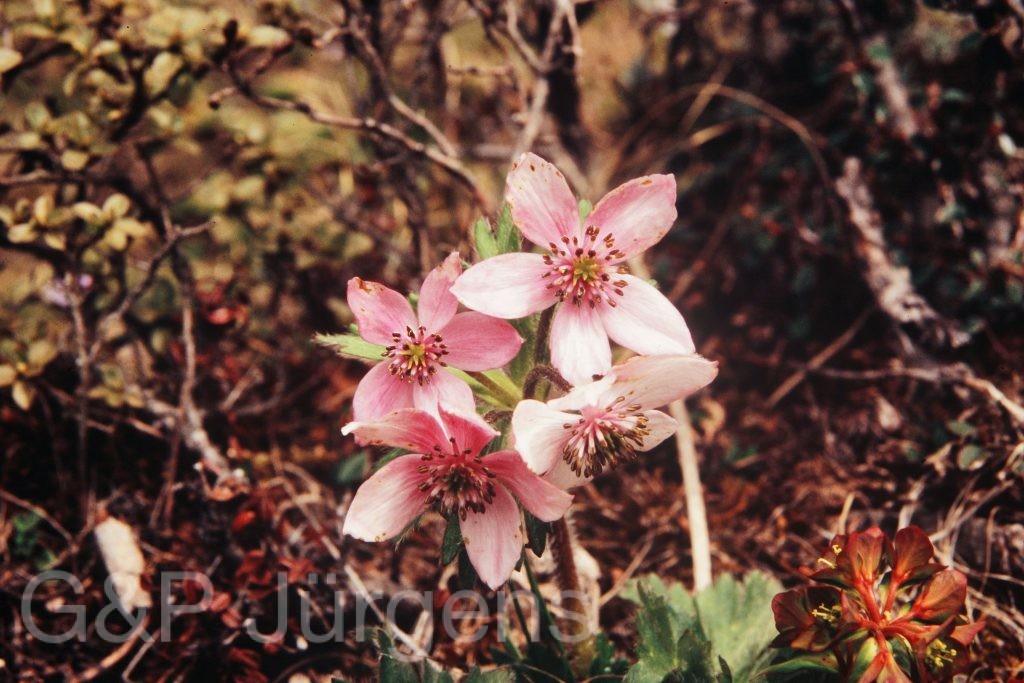
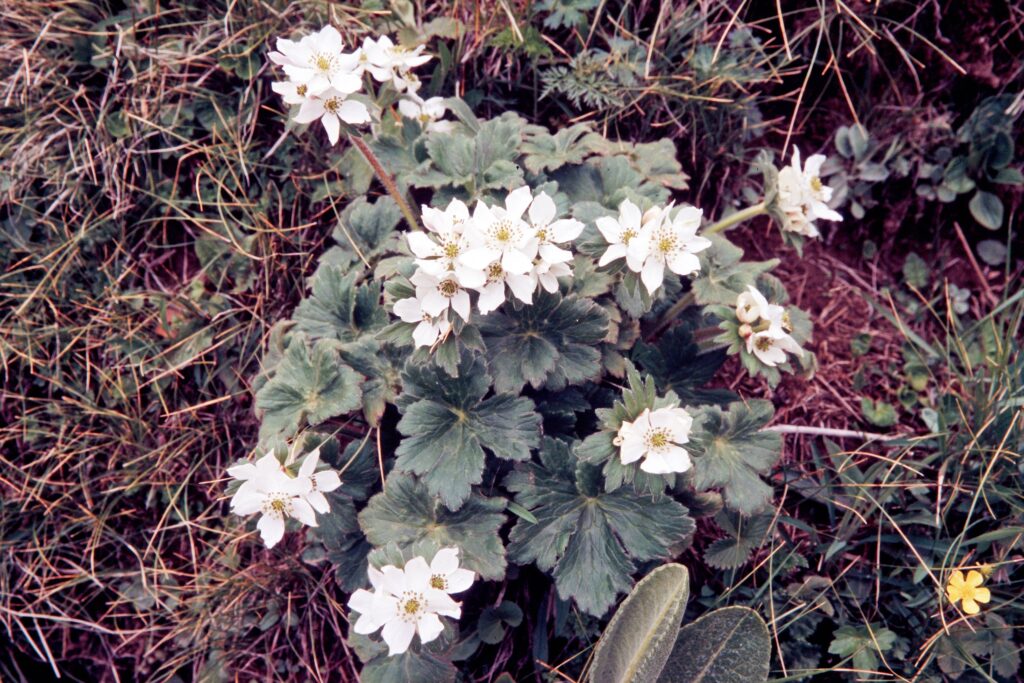
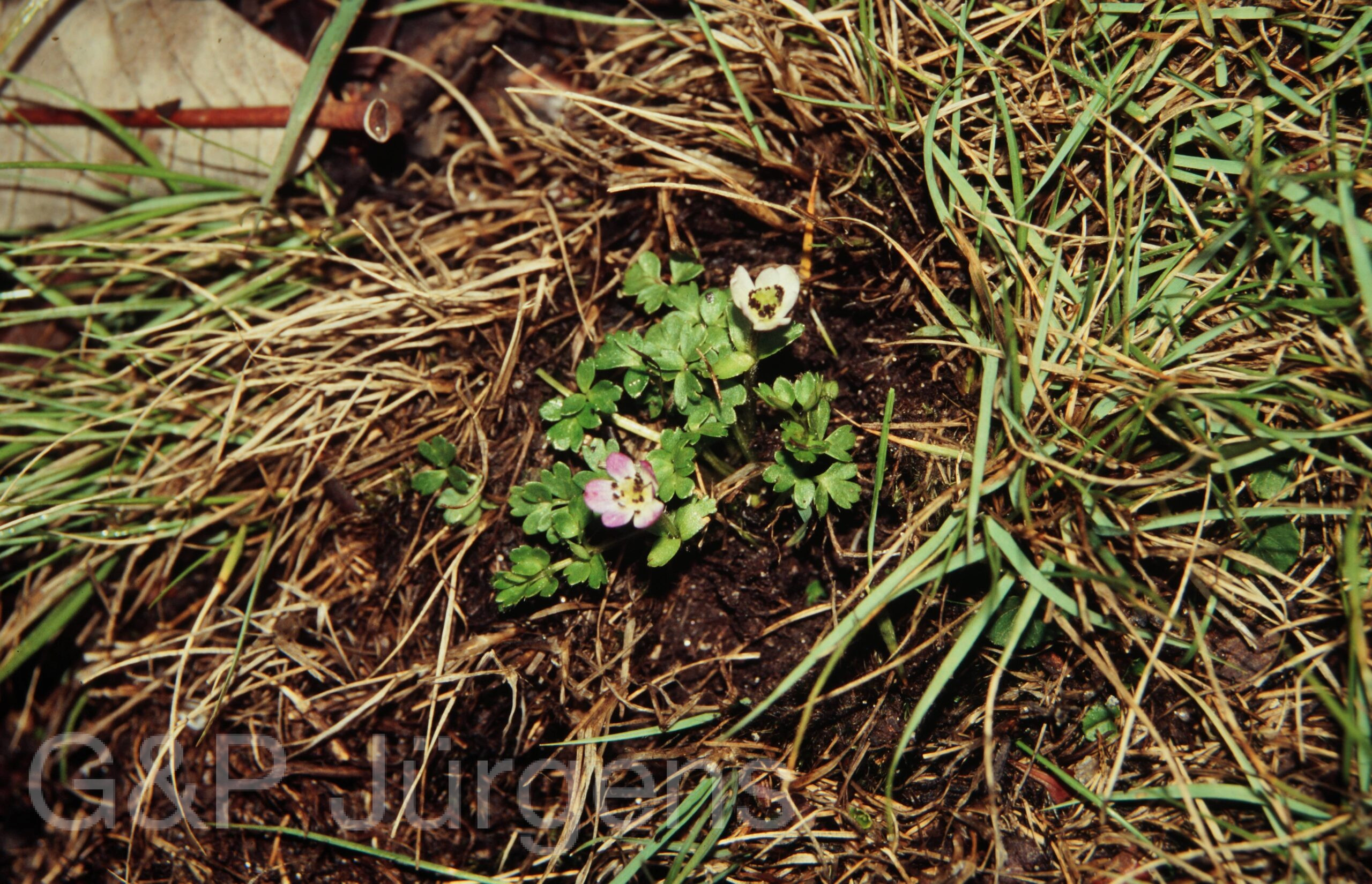
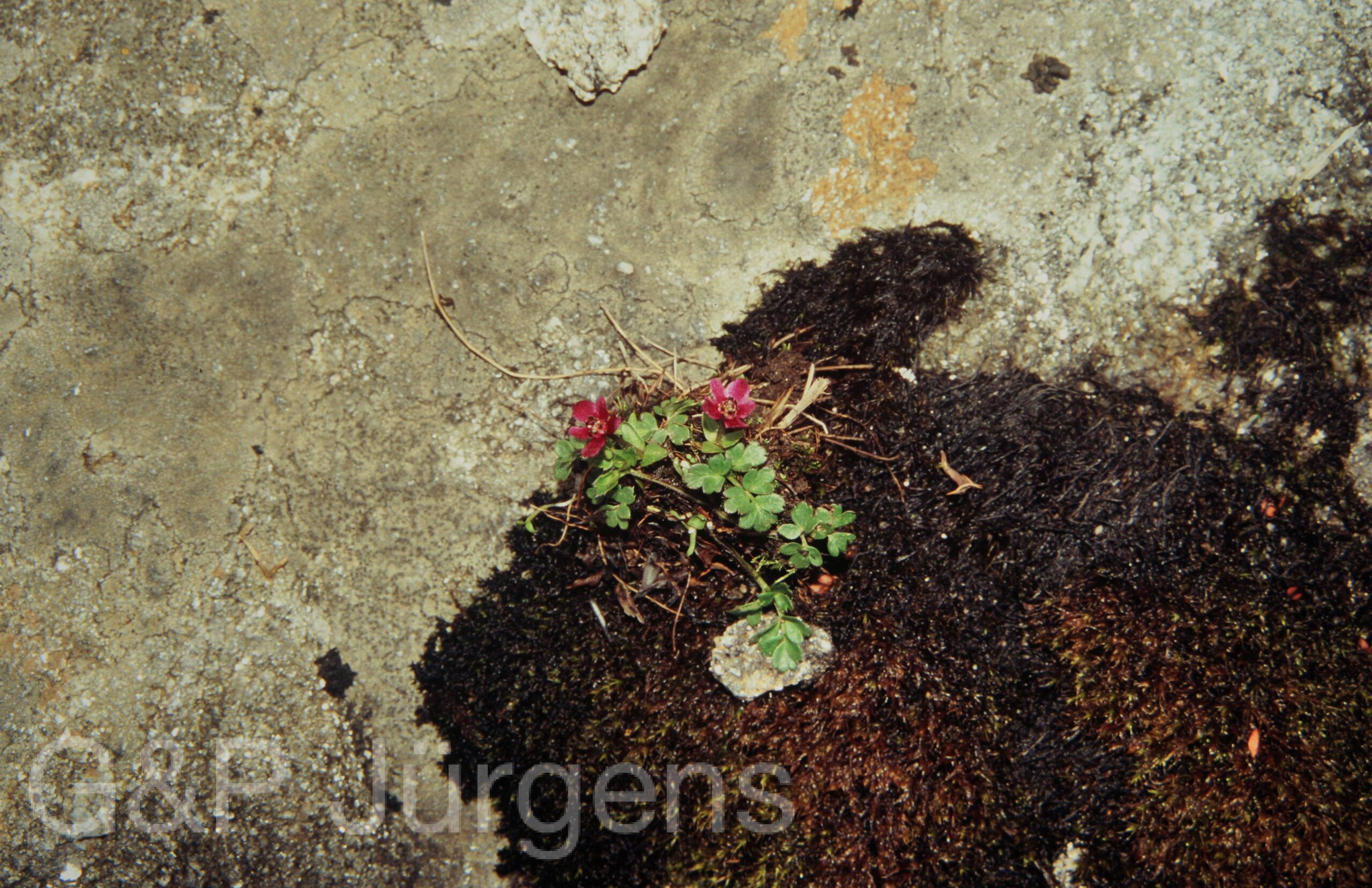
Anemonastrum rupestre (Wall. ex Hook.f. & Thomson) Mosyakin is an alpine perennial of the Himalaya and adjacent mountains, recorded from Nepal, China, India, Bhutan and Myanmar, with about 223 occurrences in GBIF. It inhabits open alpine meadows, rocky slopes, screes and grassy ledges, mostly between 3,000 and 4,500 m. The photographed plants span this range: one from Helambu, Koktrok, in central Nepal at 3,100 m flowering in May, and another from Jule-Tso in Bhutan at 4,300 m in June, illustrating its broad altitudinal occupation of the subalpine to alpine zone.

It is a tufted perennial herb arising from a stout rhizome, with the leaves largely basal and long-petiolate; the lamina is palmately divided into lobed and toothed segments. The flowering scape bears an involucre of leaf-like bracts subtending a few-flowered umbel-like cyme. The flowers lack true petals; the showy perianth consists of several white (sometimes pinkish or bluish-tinged) petaloid sepals surrounding numerous stamens and a head of free carpels. The fruit is an aggregate of laterally compressed, glabrous to pubescent achenes with a short persistent style.

The species was traditionally placed in Anemone, but molecular and morphological studies have led to its transfer to the segregate genus Anemonastrum (Ranunculaceae), characterised by basal leaves, bracteate scapes and compressed achenes. This taxonomic realignment reflects the modern reclassification of the Anemone alliance. As a widespread high-altitude element of the Sino-Himalayan flora occupying extensive natural habitat, it is not of conservation concern, though it remains subject to grazing pressure across its alpine pastures.

Author: (Wall. ex Hook.f. & Thomson) Mosyakin · Sources: POWO (Kew), GBIF, Flora of China, Flora of Bhutan, Annotated Checklist of the Flowering Plants of Nepal, Mosyakin reclassification of Anemone s.l., Ziman & Ehrendorfer studies of Anemone