
L.

Description
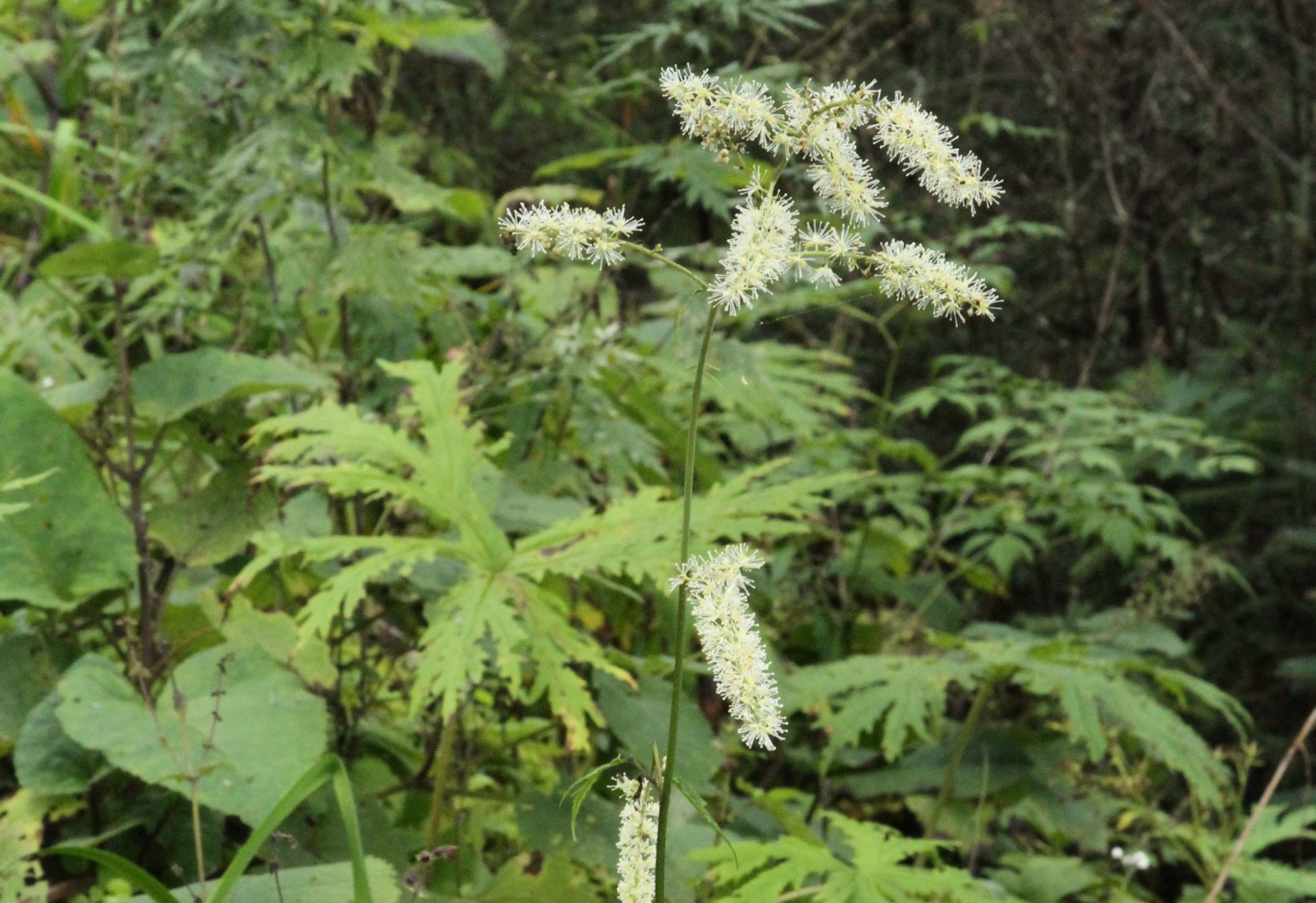
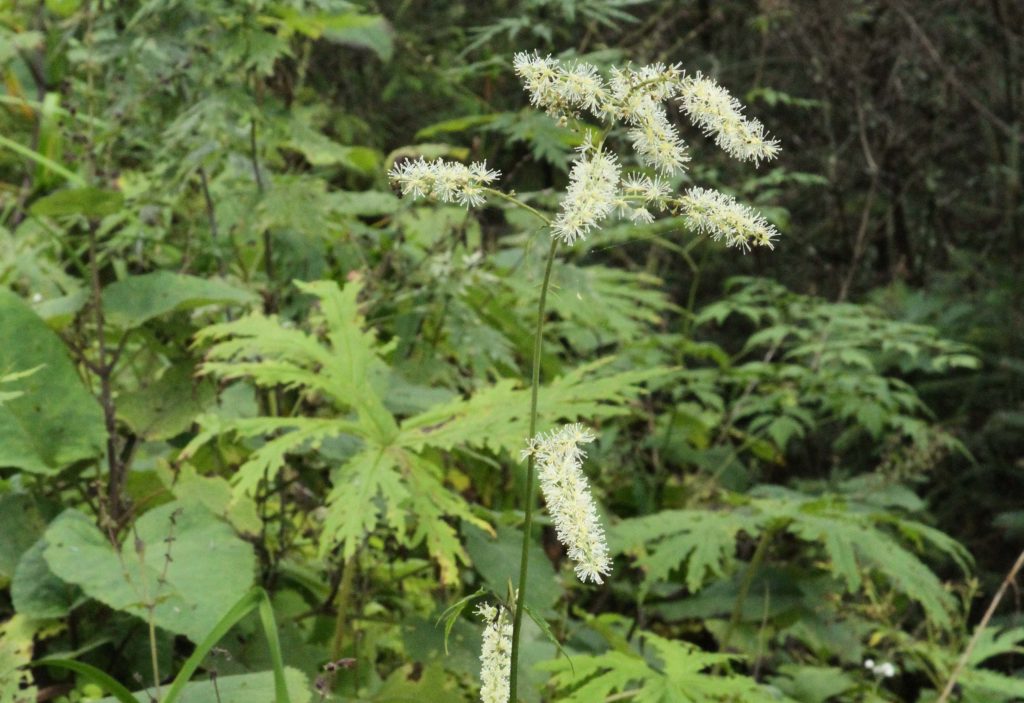
Actaea cimicifuga, the type of the long-segregated genus Cimicifuga and now treated within Actaea, is a temperate Eurasian herb with a vast range spanning Russia, China, Korea, Mongolia, Japan, Nepal, India, Bhutan and parts of central and eastern Europe, reflected in some 2565 georeferenced records. It grows in cool montane and subalpine woodland, forest margins, scrub and tall-herb meadows, in the Himalaya generally between about 2500 and 3800 m. The recorded plant from Shele-La in Bhutan at 3600 m, flowering in September, illustrates its preference for moist, shaded high-montane situations where it blooms late in the season.
It is a tall, erect perennial from a stout woody rhizome, reaching well over a metre. The leaves are large and ternately to bipinnately compound, with ovate, sharply toothed and lobed leaflets. The inflorescence is an elongate, branched panicle of slender racemes bearing many small, short-stalked flowers; the petaloid sepals fall early, the petals are reduced and staminode-like, and the numerous white stamens give the spikes a feathery aspect. The fruit is a cluster of dry, dehiscent, several-seeded follicles, distinguishing it from the berry-fruited typical species of Actaea.
The follicular fruit and tall paniculate habit underlie the historic recognition of Cimicifuga, now subsumed into Actaea on molecular grounds, making the species a focus of generic-circumscription debate. The plant has a strong, unpleasant odour repellent to insects, the source of the name "bugbane," and it has a long history of medicinal use. Widespread and locally common, it is of no conservation concern.
Author: L. · Sources: POWO (Kew), GBIF, Flora of China, Flora of Bhutan, Compton's revision of Cimicifuga and Actaea