Lamiaceae

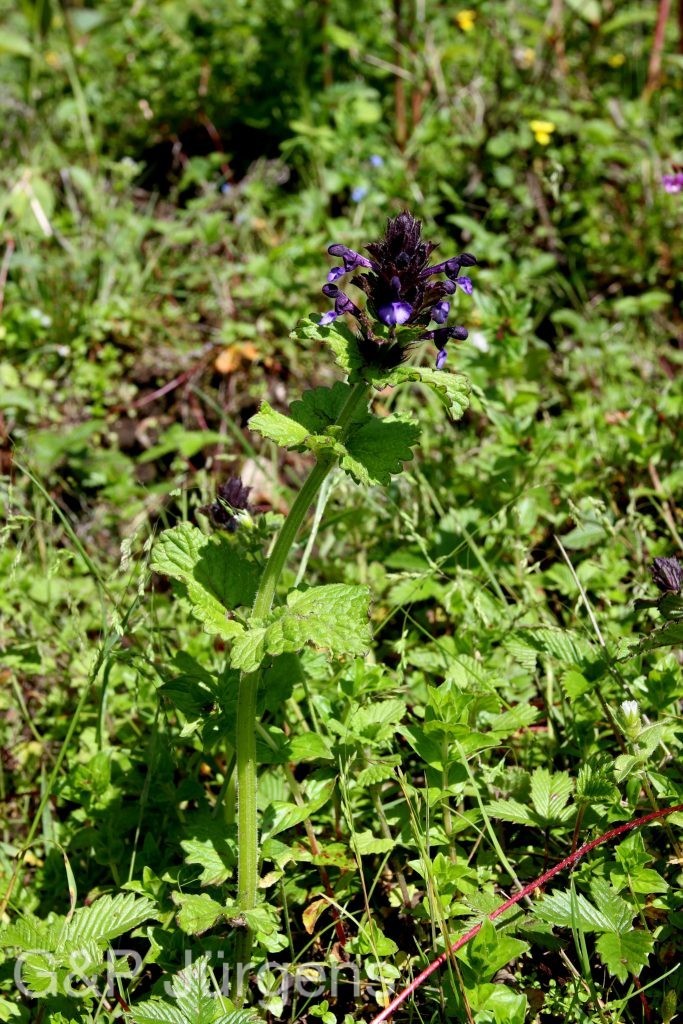
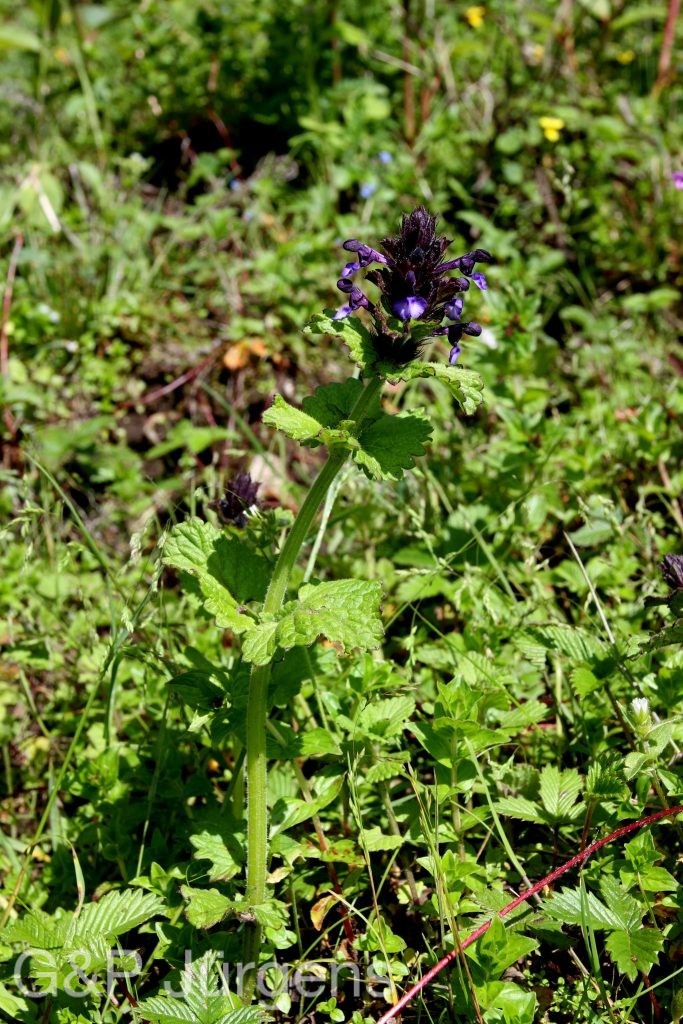
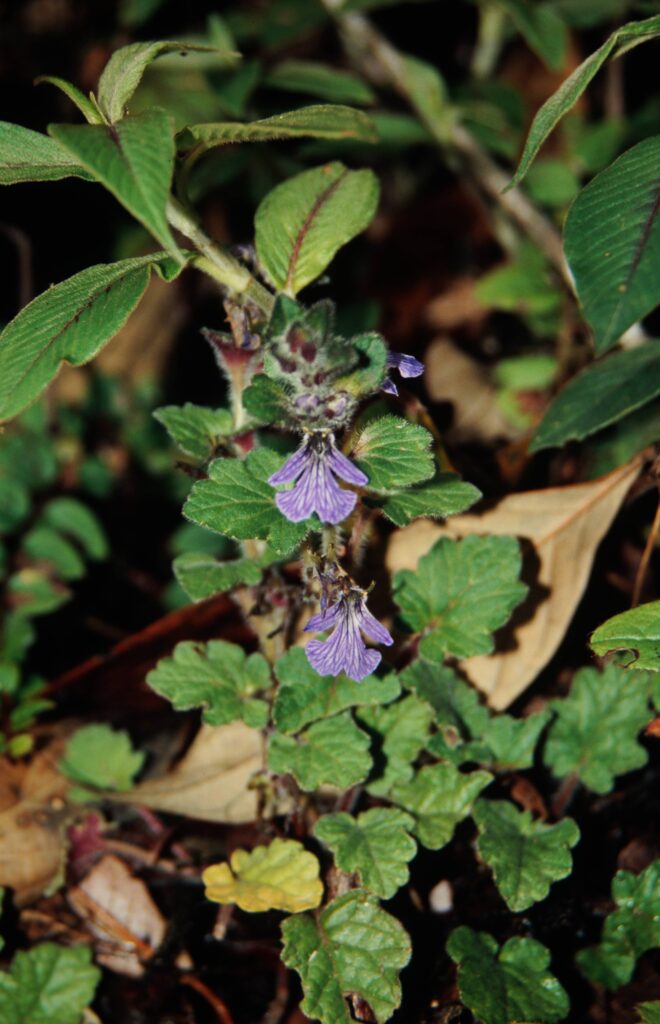
Ajuga lobata 

by G & P Jürgens

D.Don

Sikkim 2006 23 ergebnis
India West-Bengal Tonglu 3100m, May

Description

Ajuga lobata is an eastern Himalayan and Sino-Himalayan element distributed across Nepal, northern India, Bhutan, northern Myanmar and adjacent south-western China, with some 172 georeferenced occurrences documented. It is a plant of cool-temperate forest margins, mossy banks and open grassy slopes within the upper-montane to subalpine belt, typically between about 2400 and 3500 m. The population photographed at Tonglu (3100 m) on the Singalila ridge of West Bengal in May, flowering as the monsoon approaches, is characteristic: it favours humus-rich, freely draining soils in light shade beneath Rhododendron and oak.

It is a low, perennial, somewhat creeping herb arising from a slender rootstock, the quadrangular stems frequently decumbent at the base and rooting at the lower nodes before ascending. The leaves are opposite, ovate to obovate, the lamina conspicuously lobed or coarsely crenate-dentate, narrowed into a winged petiole and often tinged purplish beneath. Flowers are borne in axillary verticillasters forming a leafy terminal spike; the corolla is bluish to violet, two-lipped with a strongly reduced upper lip and a prominent, spreading three-lobed lower lip, the four didynamous stamens exserted. The fruit comprises four reticulate-rugose nutlets seated in the persistent campanulate calyx.

Within Ajuga (Ajugoideae) the species is distinguished by its markedly lobed leaves, a feature echoed in the epithet. Its montane distribution makes it a useful indicator of intact temperate forest ecosystems, and like many bugles it is visited by bees and serves as a minor nectar source. No conservation concern is presently recognised given its broad range, though it is locally restricted to suitable forest habitat.

Author: D.Don · Sources: POWO (Kew), GBIF, Flora of China Vol. 17, Flora of Bhutan Vol. 2, Flora of Nepal, A Revision of the Genus Ajuga (Labiatae)
Ajuga lupulina

by G & P Jürgens

Maxim.

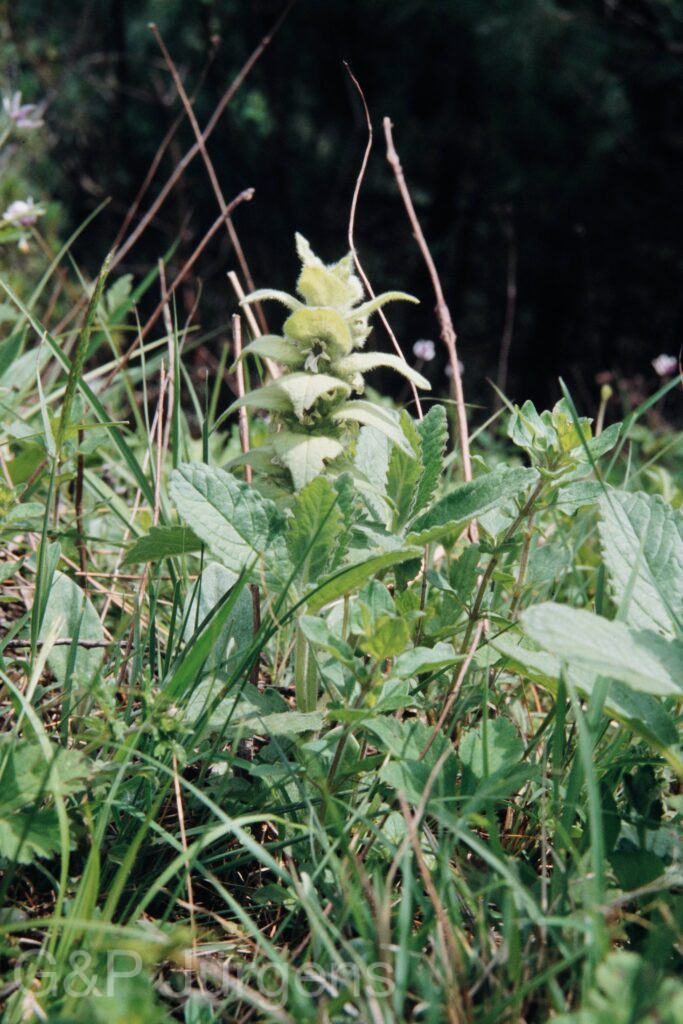
Nepal 99 387 ergebnis
West-Nepal Sallibagar-Khola 3100m, June

Description

Ajuga lupulina is a robust perennial herb of the Sino-Himalayan region, distributed across China, Nepal and India and extending into Mongolia; GBIF logs about 1205 occurrences with its centre in the Tibetan Plateau borderlands and the high Himalaya. It grows on open alpine and subalpine slopes, gravelly pastures, riverbanks and stony meadows, generally between about 2500 and 4300 m. The photographed plant was found in West Nepal at Sallibagar Khola at roughly 3100 m in June, a typical setting for this conspicuous species among the early-summer flora of the western Himalayan valleys.

The species is an erect perennial arising from a stout rootstock, with quadrangular stems that are villous, especially at the nodes. The leaves are opposite, oblong-lanceolate to elliptic, toothed and softly hairy. The plant is most readily recognised by its dense, elongate, spike-like terminal inflorescence in which large, broadly ovate, often pale or purplish-tinged floral bracts overlap conspicuously and conceal the flowers, giving a hop-like aspect that explains the epithet lupulina. The flowers have a bilabiate corolla with a much-reduced upper lip and a conspicuous trilobed pale yellowish to whitish lower lip; the four stamens are didynamous and exserted. The fruit comprises four reticulate nutlets enclosed by the persistent calyx.

Ajuga lupulina Maxim. is widespread and common across its broad Sino-Himalayan range and of no conservation concern. It is valued in traditional Tibetan and Chinese herbal medicine, and the genus is known for neo-clerodane diterpenoids and ecdysteroids. Its large imbricate bracts make it one of the most recognisable Himalayan bugles and a useful field marker of alpine pastures.

Author: Maxim. · Sources: POWO (Kew), GBIF, Flora of China, Flora of Nepal, taxonomic revisions of Ajuga (Lamiaceae)

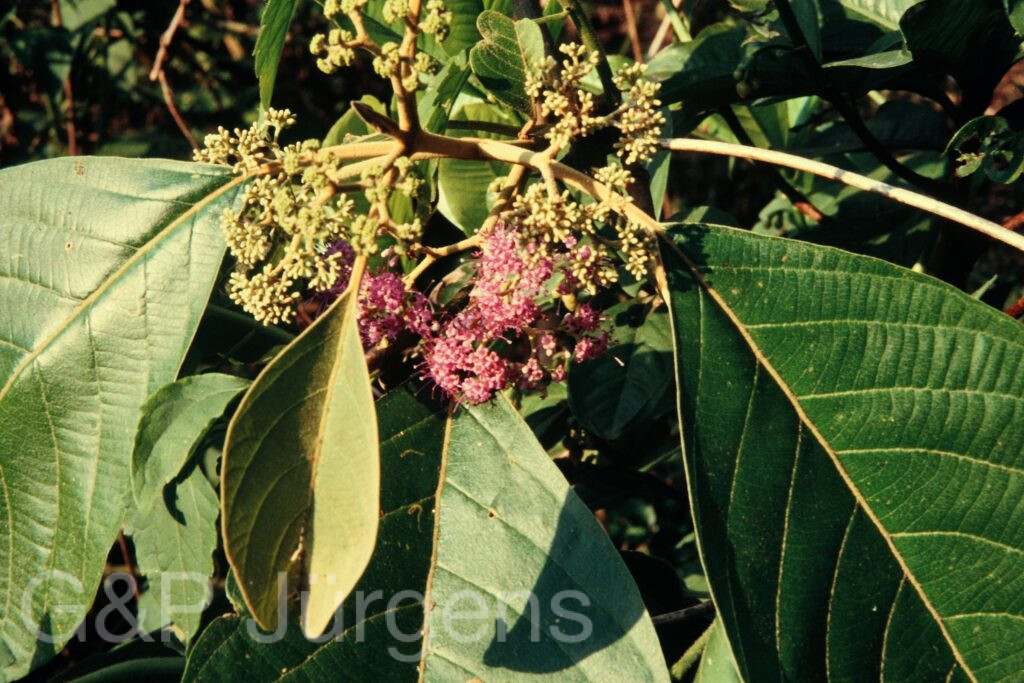
Roxb.

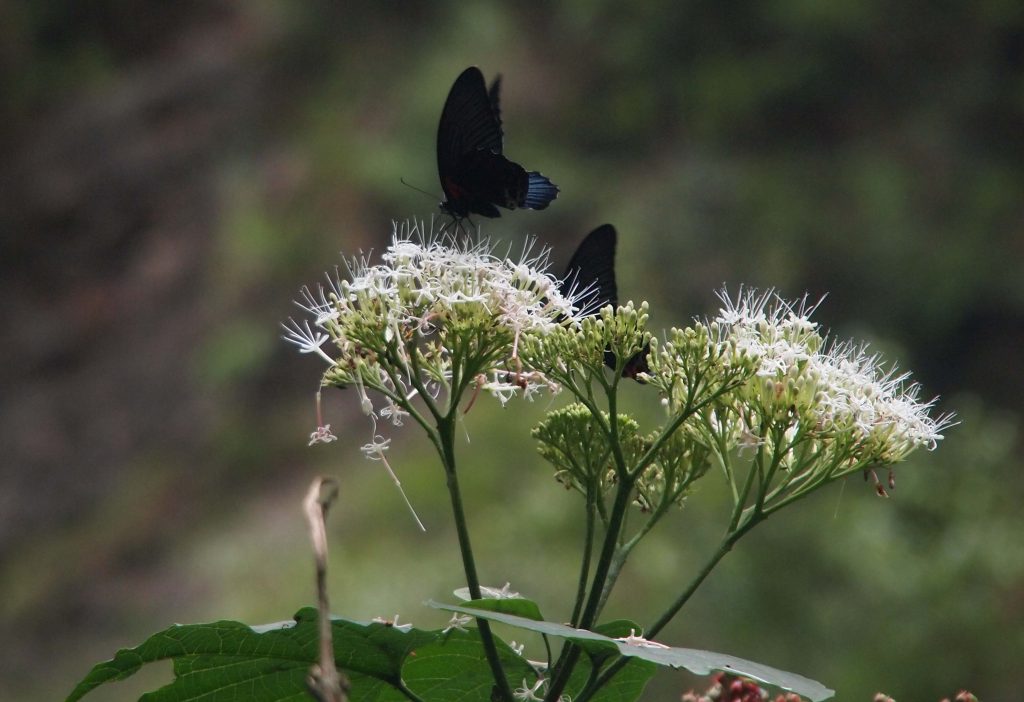
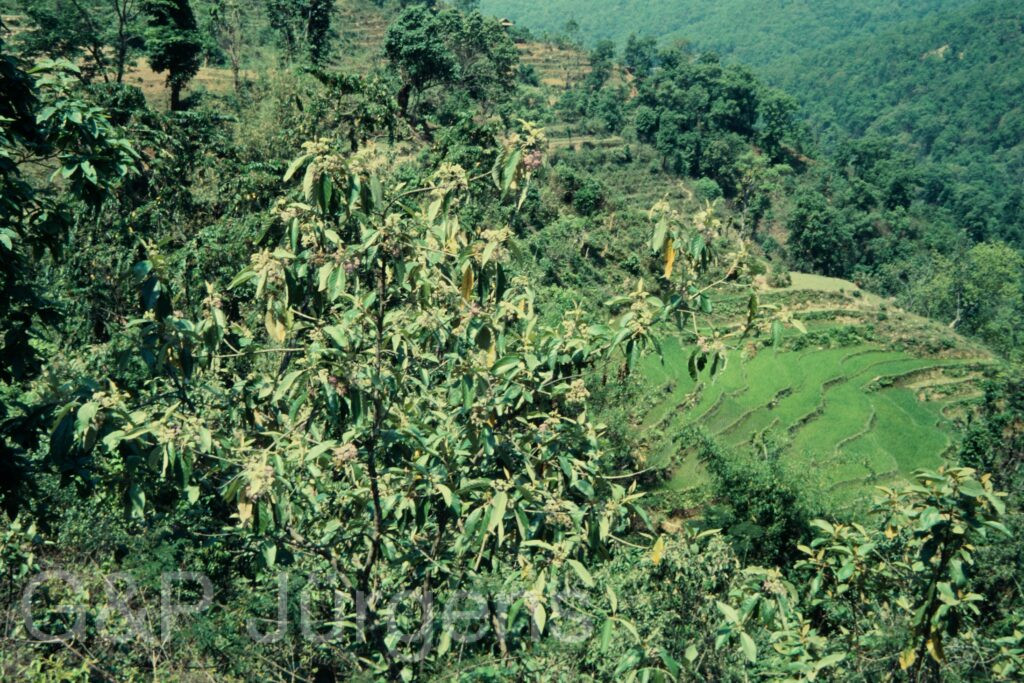
Nepal 97 566 P1099
Nepal Sabha-Khola 550m May
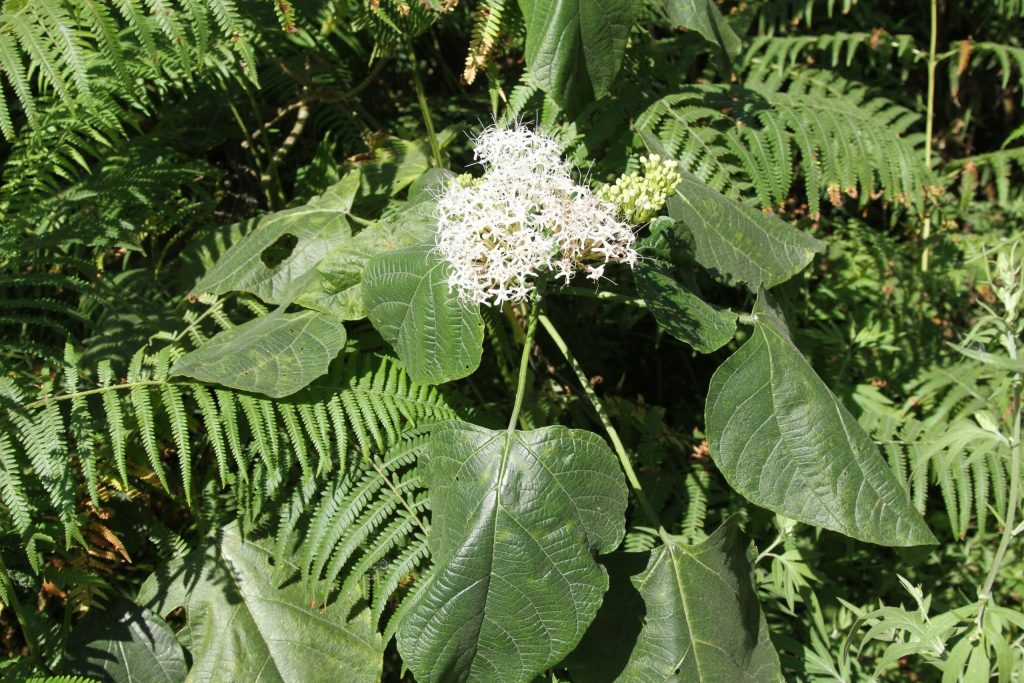
Nepal 97 567 P1100
Nepal Sabha-Khola 550m May

Description

Callicarpa arborea is a tree of the Indo-Malesian tropics, distributed from the Himalayan foothills of Nepal, India, Bhutan and Bangladesh through Myanmar, Thailand, Indochina and southern China to the Malay Peninsula, the Indonesian archipelago, the Philippines and New Guinea; GBIF records nearly 1,200 occurrences. It is a characteristic component of secondary and disturbed lowland and lower-montane forest, forest margins and regrowth on cleared land, generally from near sea level to about 1,500 m. The plant photographed along the Sabha Khola in eastern Nepal at 550 m in May illustrates its occurrence in warm, humid subtropical foothill forest at the western limit of its range.

It is a small to medium-sized evergreen tree reaching 5-15 m, with young branchlets, petioles and inflorescences densely covered in a stellate, rusty- to grey-tomentose indumentum. The leaves are large, opposite, elliptic to oblong-lanceolate, 12-25 cm long, acuminate and entire, dark green and glabrescent above but conspicuously whitish- or brownish-tomentose beneath. The flowers are small and numerous, borne in dense, branched axillary cymes; the corolla is pinkish to purple, tubular with four short spreading lobes, and the four stamens are exserted. The fruit is a small globose drupe, ripening purplish to black and crowned by the persistent calyx, containing four pyrenes.

Callicarpa (now placed in Lamiaceae following the dismemberment of the traditional Verbenaceae) comprises some 140 species of pantropical and warm-temperate shrubs and trees, of which C. arborea is one of the largest and most arborescent. Its abundant insect-pollinated flowers and bird-dispersed drupes make it an effective coloniser of disturbed ground, and it is frequently encountered in successional forest. The tomentose foliage and bark have a long history of local medicinal and minor timber use across South and Southeast Asia. Widespread, common and ecologically adaptable, it is not regarded as threatened.

Author: Roxb. · Sources: POWO (Kew), GBIF, Flora of China, Flora of Bhutan, Annotated Checklist of the Flowering Plants of Nepal, revision of Callicarpa (Lamiaceae)

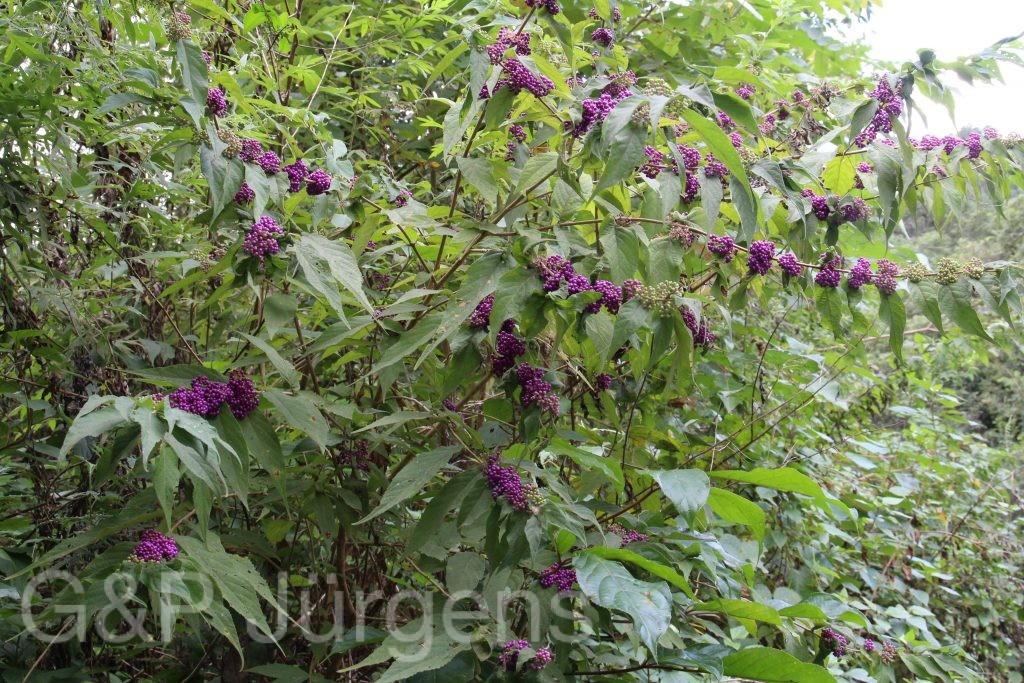
Lindl.

Bhutan2015 644
Bhutan Mo-Chu 1600m, October
Bhutan2015 642
Bhutan Mo-Chu 1600m, October

Description

Callicarpa rubella is a widespread subtropical shrub ranging from the Himalaya and southern China across mainland and insular South-East Asia, with GBIF records from China, India, Bhutan, Myanmar, Thailand, Laos, Vietnam, Malaysia, Indonesia, Taiwan, Hong Kong, Bangladesh and Japan, alongside scattered introduced or cultivated occurrences elsewhere. Its 2863 georeferenced records reflect a common, much-collected species of warm-temperate to subtropical forest. The Bhutanese material from the Mo-Chu valley at 1600 m in October is typical, the species growing in forest margins, secondary scrub, clearings and along streams at roughly 200-2000 m, often as an early successional component of disturbed broadleaf woodland.

It is an erect shrub whose young branchlets, petioles and inflorescences are densely clothed in reddish-brown stellate, gland-dotted and sometimes glandular hairs. The opposite leaves are oblong to obovate-oblong, acuminate, serrate to serrulate, cordate or auriculate at the base, and stellate-pubescent beneath with conspicuous yellowish to reddish glands. The flowers are borne in dense axillary cymes; the small calyx is cupular and the rose-pink to reddish-purple corolla is shortly four-lobed, with four exserted stamens and a slender style. The fruit is a small globose drupe, purplish at maturity, containing four pyrenes.

The placement here under Lamiaceae follows current circumscription, in which Callicarpa and the former Verbenaceae beautyberries are referred to the mint family on molecular grounds. Within Callicarpa, C. rubella is distinguished by its reddish stellate-glandular indumentum and auriculate leaf bases. The colourful drupes are dispersed by birds, and the species is locally used in traditional medicine and occasionally grown as an ornamental. Given its vast range and tolerance of disturbance it is of least conservation concern.

Author: Lindl. · Sources: POWO (Kew), GBIF, Flora of China, Flora of Bhutan, Revision of Callicarpa (Verbenaceae/Lamiaceae) monograph

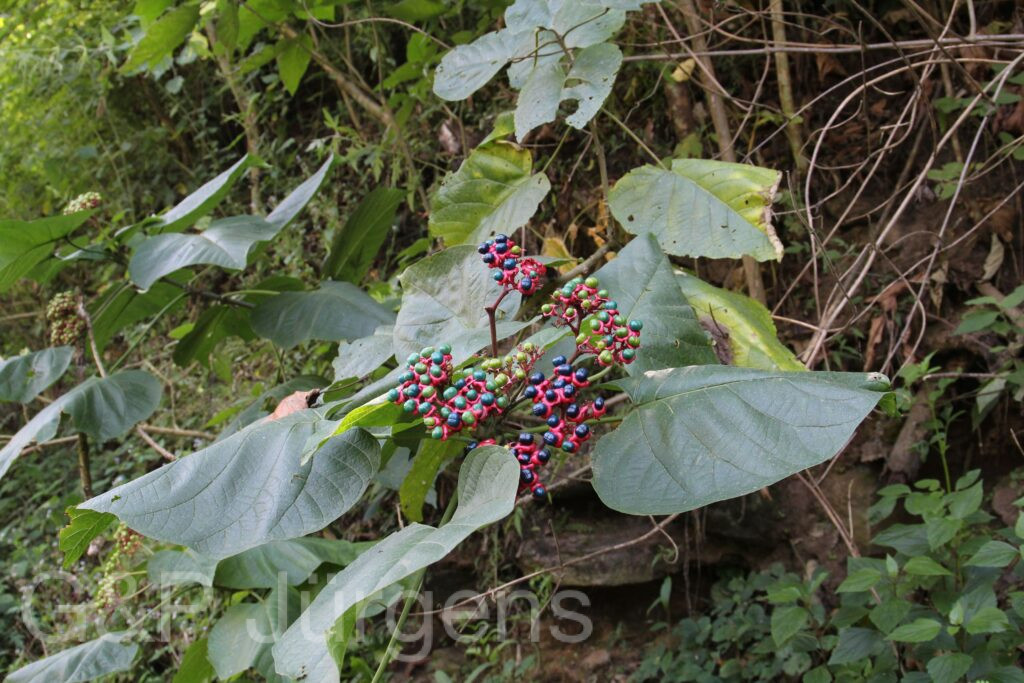
Walp.

Bhutan2015 316
Bhutan Trongsa 1900m, October
Bhutan2012 751
Bhutan Zemgang 1200m, October
Bhutan2012 752
Bhutan Zemgang 1200m, October
Bhutan2015 149 scaled
Bhutan Zhemgang 800m, October

Description

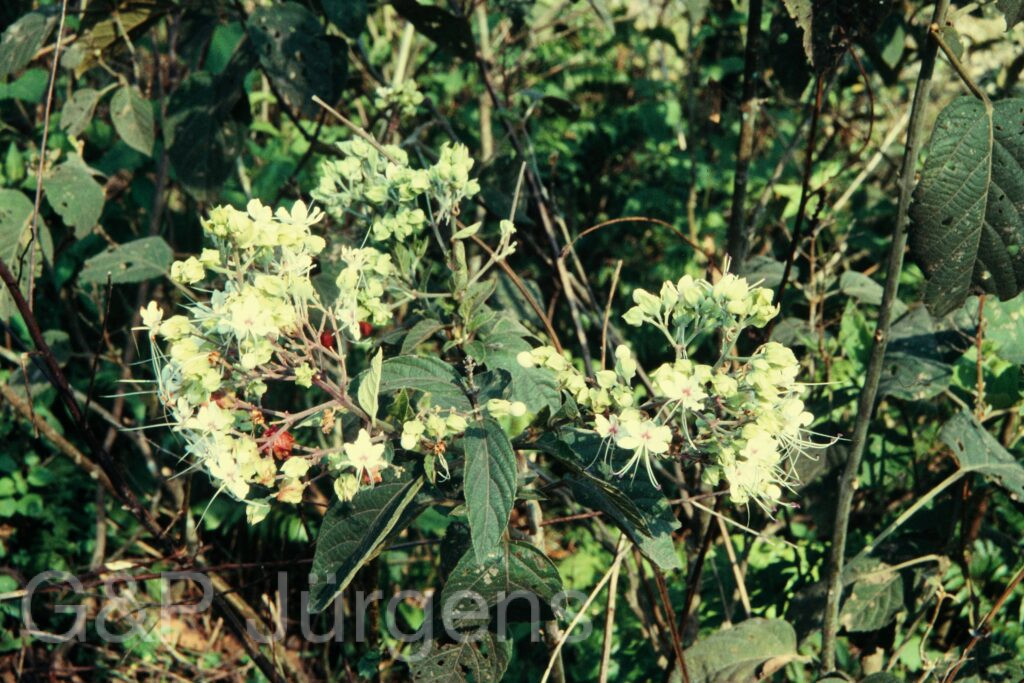
Clerodendrum colebrookianum is a shrub of the Indo-Himalayan and Southeast Asian region, recorded from Nepal, NE India, Bhutan, Bangladesh, Myanmar, southern China and southward through Thailand, Laos, Vietnam, Malaysia and Indonesia; the GBIF dataset (299 occurrences) also includes outlying records. It is a plant of warm-temperate to subtropical broad-leaved forest, forest margins, secondary scrub and disturbed roadsides, frequently following human settlement. In Bhutan it has been collected across a broad altitudinal span, from around 800 m in Zhemgang up to about 1,900 m near Trongsa, with autumn (October) collections capturing it in flower and early fruit.

It is an erect shrub 1–3 m tall with quadrangular, finely pubescent young branchlets. The leaves are opposite, broadly ovate to cordate, 8–20 cm long, acuminate at the apex, entire or shallowly toothed, with a soft indumentum beneath and a strong odour when crushed. The inflorescence is a broad, terminal, flat-topped corymbose cyme; flowers are white, the calyx campanulate and 5-lobed, the corolla with a slender tube and five spreading lobes, and four long-exserted stamens and a bifid style projecting well beyond the limb. The fruit is a fleshy drupe splitting into four pyrenes seated on the persistent, reddening calyx.

Though GBIF flags the name as a synonym, the accepted name is Clerodendrum colebrookianum, here treated as correct. Formerly placed in Verbenaceae, the genus is now referred to Lamiaceae following molecular phylogenetic revision. The species is a well-known leafy vegetable and ethnomedicinal plant across NE India and adjacent regions, valued in folk treatment of hypertension, and is widespread and unthreatened.

Author: Walp. · Sources: POWO (Kew), Flora of China Vol. 17, Flora of Bhutan Vol. 2, GBIF, Harley et al.: Labiatae in The Families and Genera of Vascular Plants (2004)

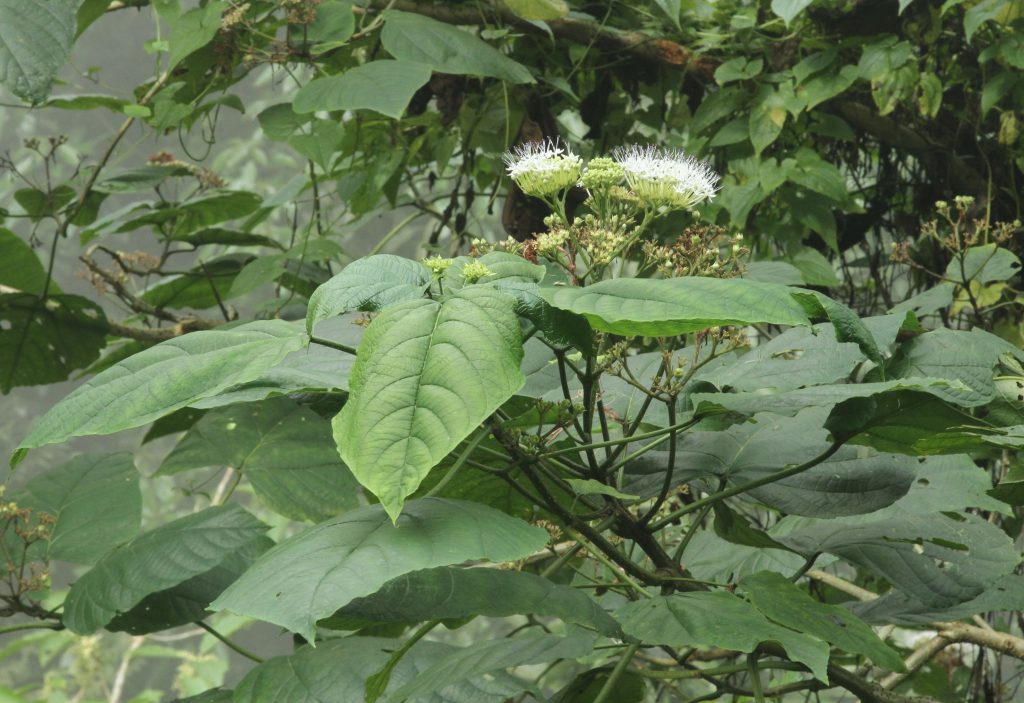
L.

Nepal 97 545 P1067
Nepal Sabha-Khola 520m,May
Nepal 97 543 P1063

Nepal Sabha-Khola 520m, May

Description

Clerodendrum infortunatum is a common shrub of the lowland and foothill regions of tropical southern and southeastern Asia. GBIF records document a wide range across India, Thailand, Sri Lanka, Indonesia, Malaysia, Nepal, Bangladesh, the Philippines, China, Bhutan and Myanmar, with naturalised or cultivated occurrences in Brazil, Mexico, Singapore and elsewhere, amounting to over 2200 records. It is a plant of forest margins, clearings, wastelands, roadsides and disturbed secondary scrub, often forming dense thickets in the warm humid lowlands. The photographed material from the Sabha-Khola valley in Nepal at 520 m, flowering in May, is typical of its occurrence in the subtropical foothill belt, where it blooms in the pre-monsoon period.

It is an erect, soft-wooded shrub usually under 2 m, with quadrangular young stems and large, broadly ovate to cordate leaves that are opposite, softly pubescent and emit a characteristic unpleasant smell when crushed. The flowers are borne in large, lax, terminal panicled cymes; each has an inflated, often reddish calyx and a white to pinkish-tinged, salverform corolla with a slender tube and five spreading lobes, the four stamens and style long-exserted. The fruit is a fleshy drupe seated on the persistent, accrescent calyx, splitting at maturity into four nutlet-like pyrenes.

Formerly placed in the Verbenaceae, Clerodendrum is now treated within the Lamiaceae following molecular phylogenetic reclassification. C. infortunatum is well known in traditional medicine across South Asia, where its leaves and roots are used against fevers and skin and digestive ailments. Ecologically it is a pioneer of disturbed ground, its exserted flowers attracting butterflies and other long-tongued pollinators, and its drupes dispersed by birds.

Author: L. · Sources: POWO (Kew), GBIF, Flora of Nepal, Flora of China (Lamiaceae), Revision of Clerodendrum (Steane & Mabberley)

Wall.

Bhutan2012 13
Bhutan Paro, 2300m September
Nepal 95 95 P164 ergebnis
Nepal Barphak 2000m October
Garw 2005 209 ergebnis ergebnis
India Garhwal Pana 2800m, September

Description

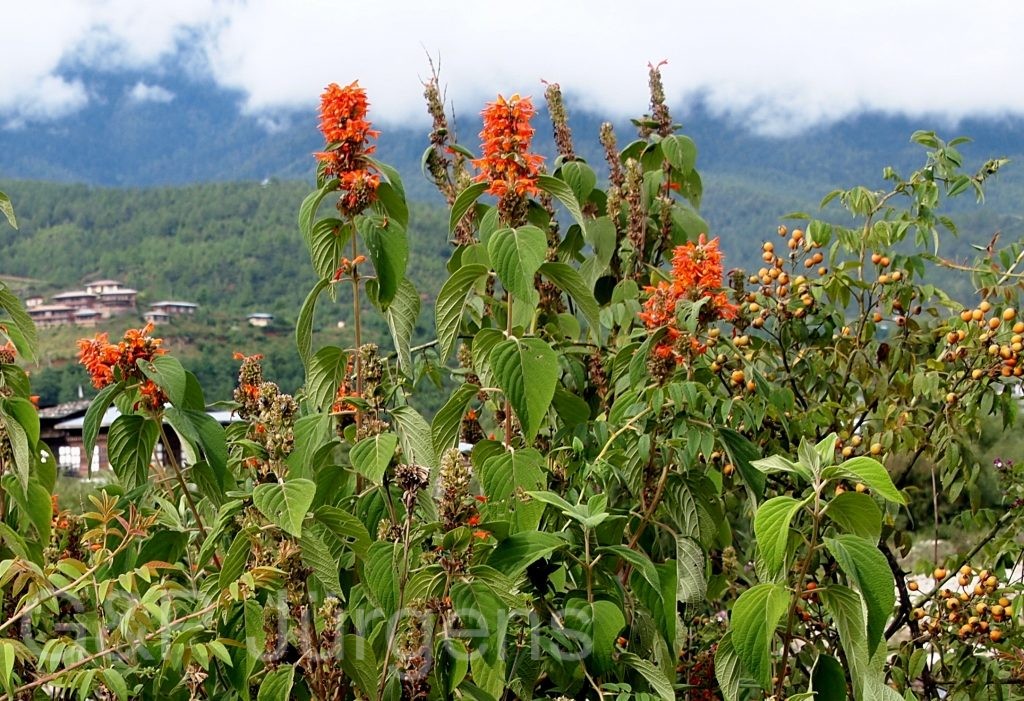
Colquhounia coccinea is a showy shrubby mint of the Himalaya and southwestern China. GBIF records it from China, Nepal, India, Bhutan, Thailand and Myanmar, with cultivated and introduced occurrences in Australia, Europe and North America, totalling around 670 records. It grows in open forest, scrub, thickets and along hill slopes and roadsides in the warm temperate zone, generally between 1500 and 3000 m. The populations illustrated were photographed at Paro in Bhutan (2300 m), Barphak in Nepal (2000 m) and Pana in Garhwal, India (2800 m), flowering in September and October, its characteristic autumn flowering season in the Himalayan foothills.

It is a robust, sprawling or semi-scandent shrub up to 2-3 m, the stems and foliage clothed in stellate or felted indumentum. The opposite leaves are ovate to lanceolate, acuminate, crenate-serrate and rugose, greyish-tomentose beneath. The flowers are borne in dense axillary cymose clusters; the curved, tubular, two-lipped corolla is brilliant scarlet to orange-red, well exserted from the calyx, with four didynamous stamens. The fruit is unusual among Lamiaceae in that the nutlets are winged, an adaptation favouring wind dispersal from the often steep slopes the plant occupies.

Colquhounia is a small Sino-Himalayan genus of subfamily Lamioideae, and the winged nutlets and tubular red corollas distinguish it within the family. The vivid scarlet, nectar-rich tubular flowers are adapted to bird pollination, notably by sunbirds, an uncommon strategy in the predominantly bee-pollinated mints. Long valued as an ornamental and frost-tender garden shrub, the species is widespread and locally common, and is not of conservation concern.

Author: Wall. · Sources: POWO (Kew), GBIF, Flora of China, Flora of Bhutan, Annotated Checklist of the Flowering Plants of Nepal, Phylogeny and classification of subfamily Lamioideae (Lamiaceae)

Sealy

BhutanPG2011 790 01 01
Bhutan Chele-La, 3800m July
BhutanPG2011 791 01 01
Bhutan Chele-La, 3800m July

Description

Dracocephalum wallichii is a Himalayan dragonhead recorded from India, China (Xizang), Nepal and Bhutan, with GBIF holding around 175 occurrences across the high eastern and central ranges. It is a plant of the alpine zone, growing on open stony slopes, gravelly meadows, scree and grassy banks typically between about 3500 and 4500 m. The photographed material from the Chele-La in western Bhutan at 3800 m, flowering in July, is characteristic: at this high pass the species blooms in the brief summer window after snowmelt, exploiting well-drained, sunny ground among the alpine turf and rock where competition from taller vegetation is limited.

It is a perennial herb with a woody rootstock giving rise to several erect or ascending quadrangular stems. The leaves are opposite, oblong to narrowly ovate, the margin crenate to incised, and often somewhat aromatic, as is general in the genus. The inflorescence is a dense, head-like to interrupted terminal spike of verticillasters subtended by conspicuous, often spine-toothed and ciliate floral bracts that are a notable feature of the species. Each flower has a tubular, two-lipped calyx and a strongly two-lipped corolla coloured blue to violet-purple, the hooded upper lip arching over the four didynamous stamens and the lower lip spreading and three-lobed as a landing platform for bees. The fruit comprises four smooth nutlets enclosed in the persistent calyx.

The species was described by Sealy and honours Nathaniel Wallich, an early collector of Himalayan plants. Dracocephalum is a genus of the temperate northern hemisphere centred on central Asia, well represented in alpine and steppe habitats; D. wallichii is one of its few truly Himalayan-alpine members and is distinguished by its bracteal armature and dense spike. Pollinated chiefly by bumblebees, it is a typical short-season alpine perennial, and being widespread in remote high terrain it is of no immediate conservation concern.

Author: Sealy · Sources: POWO (Kew), GBIF, Flora of China, Flora of Bhutan, Annotated Checklist of the Flowering Plants of Nepal, Budantsev revision of the genus Dracocephalum

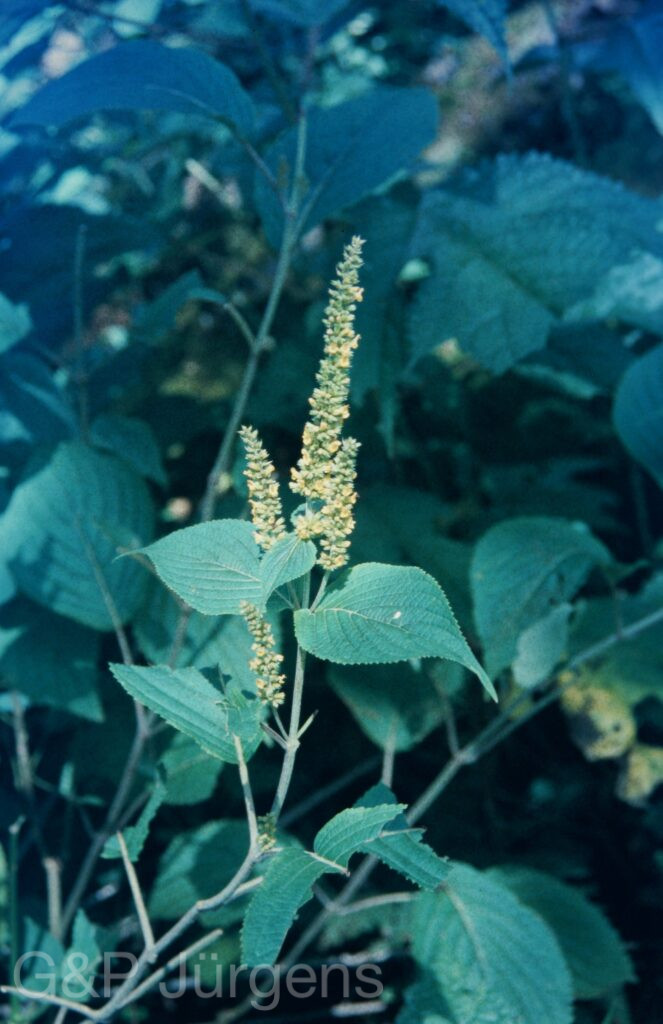
Benth.

Garw 2005 221 ergebnis ergebnis
India Garhwal Simkarok 2700m, September

Description

Elsholtzia flava is a Sino-Himalayan element distributed across the temperate to subtropical mountains of southern and eastern Asia, with verified records from China, Nepal, India, Bhutan and Japan; GBIF aggregates some 558 occurrences, several of them at the eastern margin of the genus's range. In the western Himalaya it ascends to around 2700 m, as documented by the photographed material from Simkarok in Indian Garhwal collected in September, the late-monsoon flowering season. It is a plant of open slopes, forest margins, clearings and disturbed ground on moist, humus-rich soils, behaving as a robust ruderal sub-shrub that exploits gaps in the upper temperate broadleaf belt.

The species is a coarse, aromatic perennial or shrubby herb reaching 1-2 m, with erect, branched, quadrangular and finely pubescent stems woody at the base. The leaves are opposite, petiolate, broadly ovate to ovate-lanceolate, acuminate at the apex and crenate-serrate along the margins, glandular-punctate beneath and exuding the characteristic mint scent of the genus. Small flowers are crowded into dense, secund, cylindrical spike-like verticillasters; the campanulate calyx is five-toothed and the corolla pale yellow ("flava"), two-lipped, with four didynamous exserted stamens. The fruit comprises four smooth, ovoid-oblong nutlets enclosed in the persistent calyx.

Elsholtzia (Lamiaceae, tribe Elsholtzieae) is centred on eastern Asia and includes many late-flowering, nectar-rich, bee-pollinated species important to autumn foragers. E. flava is locally common and not regarded as threatened, its tolerance of disturbance favouring persistence; its terpenoid-rich essential oils link it to congeners long used in folk medicine and as aromatic herbs across the Himalayan and Chinese highlands.

Author: Benth. · Sources: POWO (Kew), GBIF, Flora of China, Flora of Bhutan, Flora of Pakistan, Press et al. Annotated Checklist of the Flowering Plants of Nepal, Harley et al. Labiatae (Kubitzki, The Families and Genera of Vascular Plants)

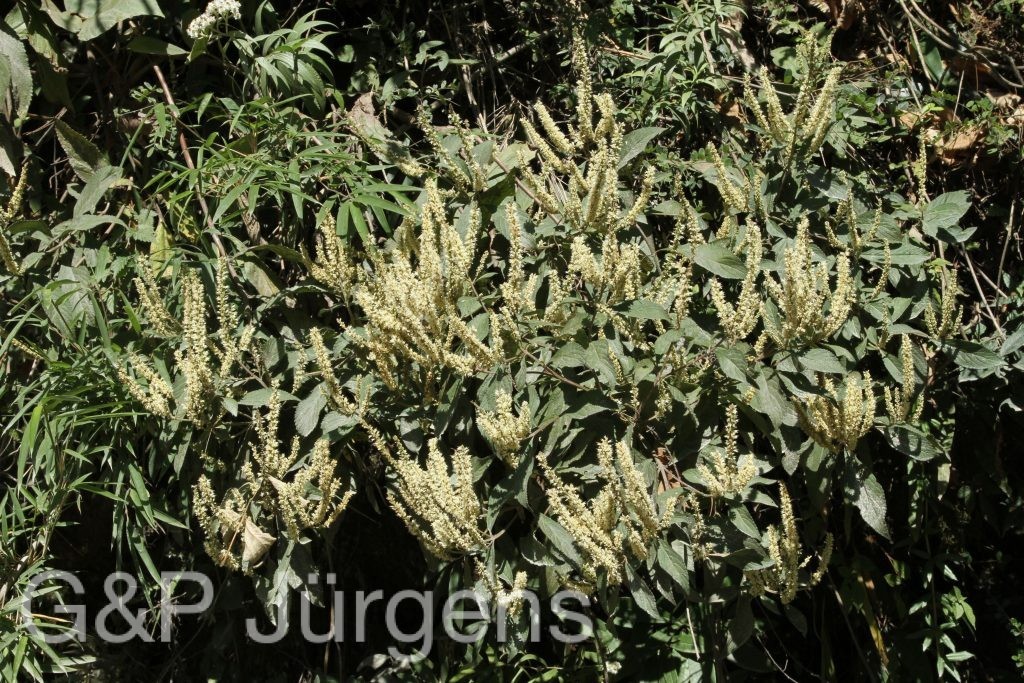
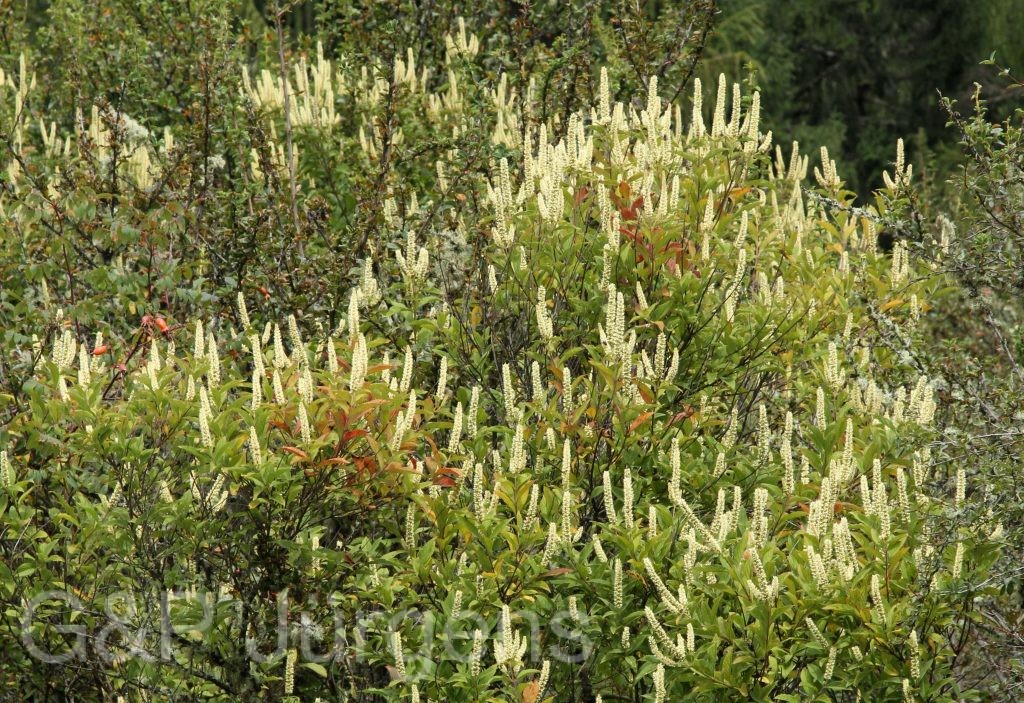
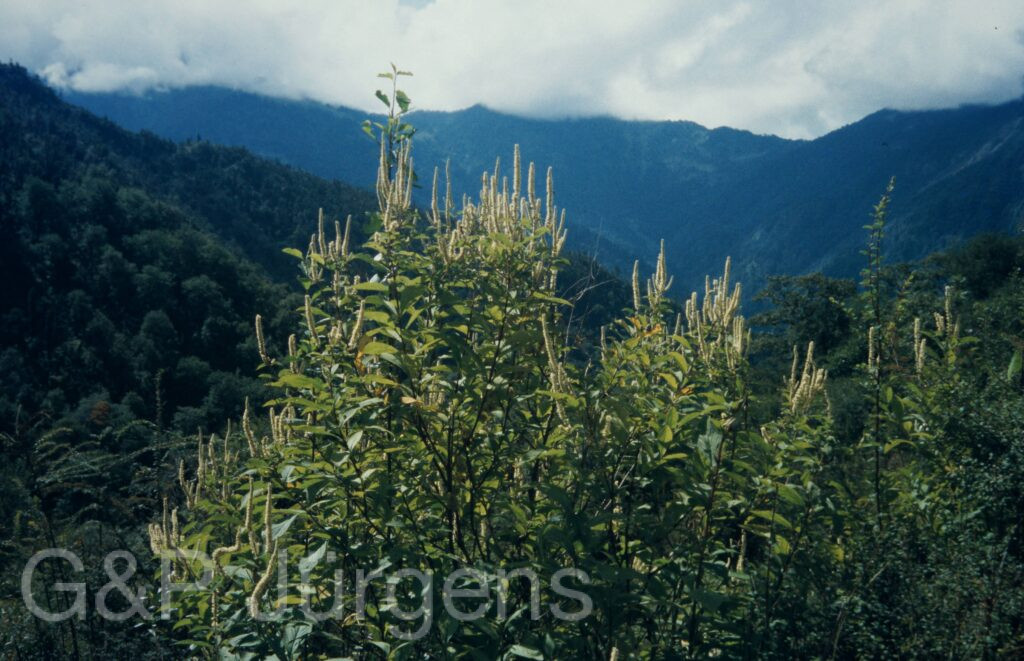
Rehder

Bhutan2015 463
  Bhutan Jakar 2100m, October
Bhutan2012 104
Bhutan Shele-La, 3600m September
Garw 2005 203 ergebnis ergebnis
India Garhwal Pana 2750m, September
Bhutan2015 607
Bhutan Gasa 1950m, October

Description

Elsholtzia fruticosa is a widespread shrubby mint of the Himalaya and south-western China, recorded by GBIF (1928 occurrences) from China, Nepal, India, Bhutan, Pakistan, Malaysia and Myanmar. It is a plant of open, disturbed and sunny situations, colonising forest margins, scrub, roadsides, terraced field edges, river banks and clearings, broadly between 1500 and 3600 m. The cited collections span a wide elevational and seasonal range, from Bhutan's Gasa (1950 m) and Jakar (2100 m), through Garhwal in India (Pana, 2750 m), up to the Shele-La pass at 3600 m, flowering from September into October, reflecting its autumn-blooming habit across the central and eastern Himalaya.

The species is an aromatic, much-branched shrub or subshrub reaching 1-3 m, with quadrangular, pubescent stems woody at the base. The opposite leaves are lanceolate to elliptic, serrate, pinnately veined, often greyish-tomentose beneath and dotted with aromatic glands. The small flowers are crowded into dense, cylindrical, spike-like terminal and axillary thyrses, frequently secund, with the whitish to pale-yellow flowers turned to one side of the axis. Each flower has a campanulate calyx and a bilabiate corolla; the four stamens are exserted, giving the inflorescence a feathery aspect. The fruit comprises four small, smooth nutlets (mericarps) enclosed within the persistent calyx.

Described under the combination by Rehder, the species belongs to genus Elsholtzia (subfamily Nepetoideae, tribe Elsholtzieae), a group of aromatic herbs and shrubs centred on temperate Asia. Its essential-oil-rich foliage is used in local traditional medicine and as a minor source of nectar for late-season pollinators. As a vigorous, pioneer-like colonist of disturbed ground with a very broad range, it is of least conservation concern and is locally abundant rather than rare.

Author: Rehder · Sources: POWO (Kew), GBIF, Flora of China, Flora of Bhutan, A Revision of the Genus Elsholtzia (Lamiaceae)