
Lindl.

Description
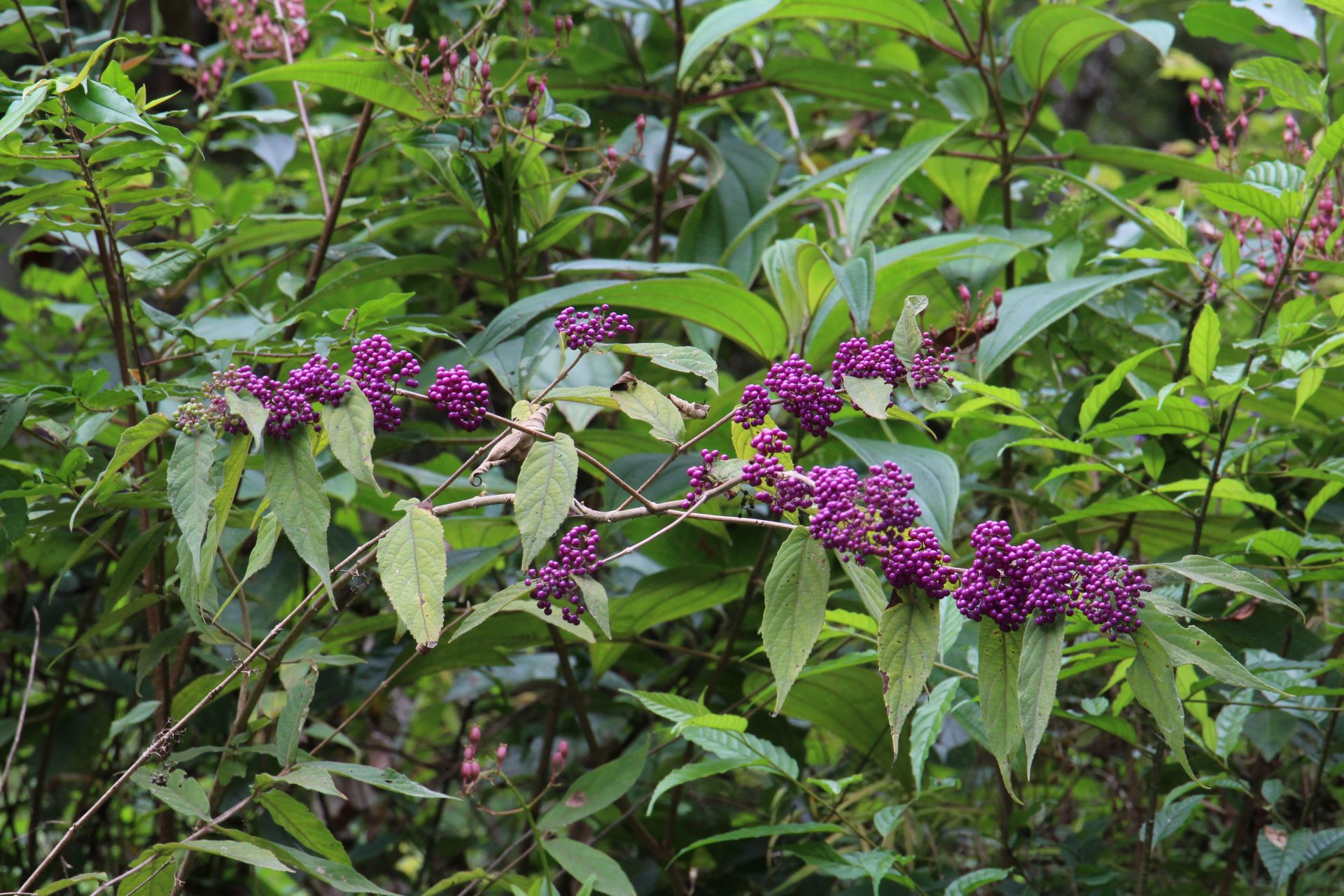
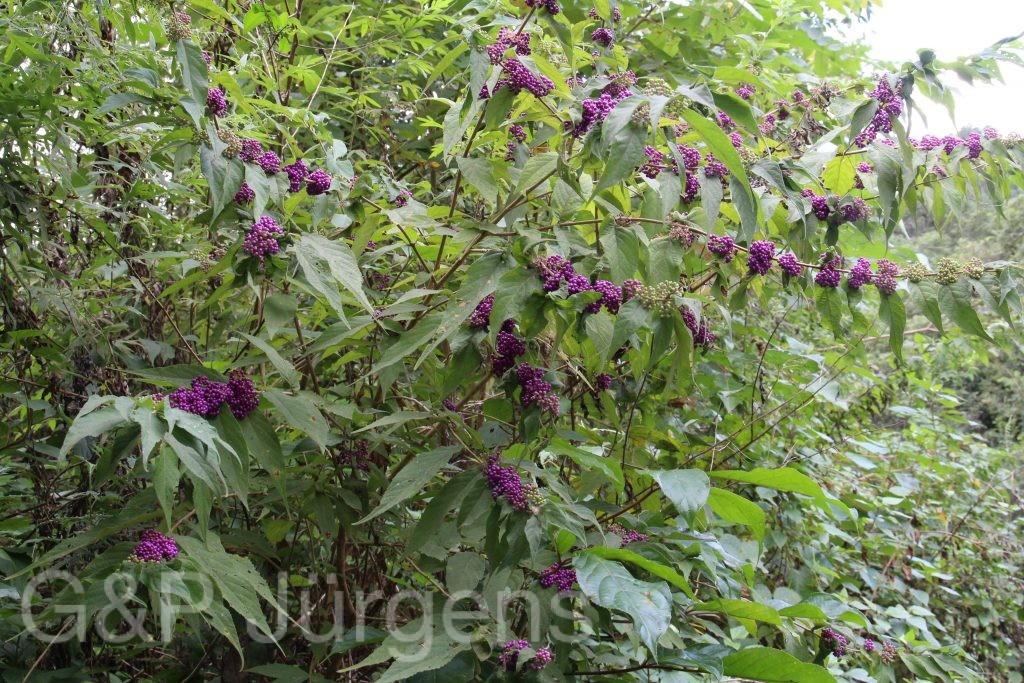
Callicarpa rubella is a widespread subtropical shrub ranging from the Himalaya and southern China across mainland and insular South-East Asia, with GBIF records from China, India, Bhutan, Myanmar, Thailand, Laos, Vietnam, Malaysia, Indonesia, Taiwan, Hong Kong, Bangladesh and Japan, alongside scattered introduced or cultivated occurrences elsewhere. Its 2863 georeferenced records reflect a common, much-collected species of warm-temperate to subtropical forest. The Bhutanese material from the Mo-Chu valley at 1600 m in October is typical, the species growing in forest margins, secondary scrub, clearings and along streams at roughly 200-2000 m, often as an early successional component of disturbed broadleaf woodland.
It is an erect shrub whose young branchlets, petioles and inflorescences are densely clothed in reddish-brown stellate, gland-dotted and sometimes glandular hairs. The opposite leaves are oblong to obovate-oblong, acuminate, serrate to serrulate, cordate or auriculate at the base, and stellate-pubescent beneath with conspicuous yellowish to reddish glands. The flowers are borne in dense axillary cymes; the small calyx is cupular and the rose-pink to reddish-purple corolla is shortly four-lobed, with four exserted stamens and a slender style. The fruit is a small globose drupe, purplish at maturity, containing four pyrenes.
The placement here under Lamiaceae follows current circumscription, in which Callicarpa and the former Verbenaceae beautyberries are referred to the mint family on molecular grounds. Within Callicarpa, C. rubella is distinguished by its reddish stellate-glandular indumentum and auriculate leaf bases. The colourful drupes are dispersed by birds, and the species is locally used in traditional medicine and occasionally grown as an ornamental. Given its vast range and tolerance of disturbance it is of least conservation concern.
Author: Lindl. · Sources: POWO (Kew), GBIF, Flora of China, Flora of Bhutan, Revision of Callicarpa (Verbenaceae/Lamiaceae) monograph