
Bennet & Raizada
Description
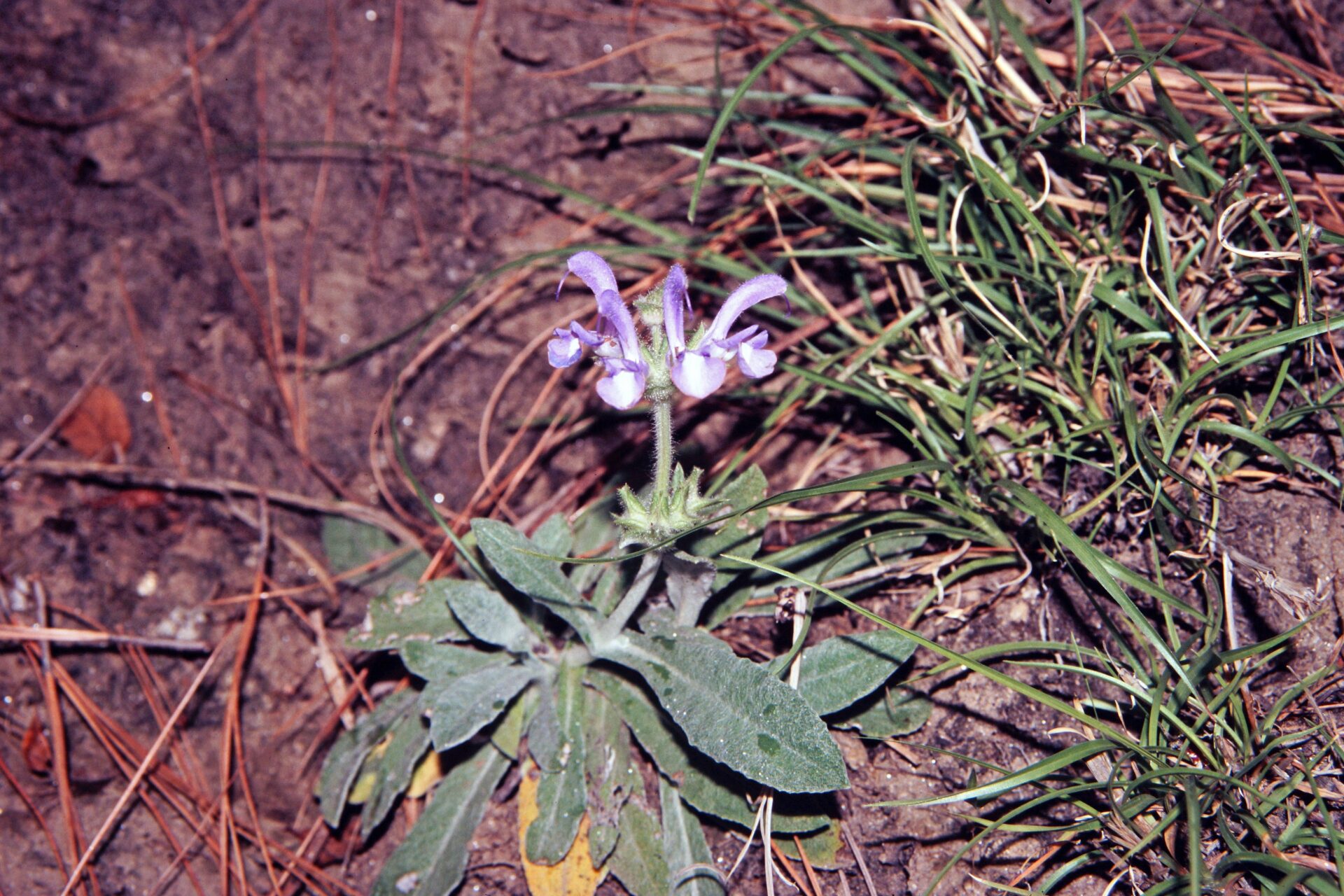
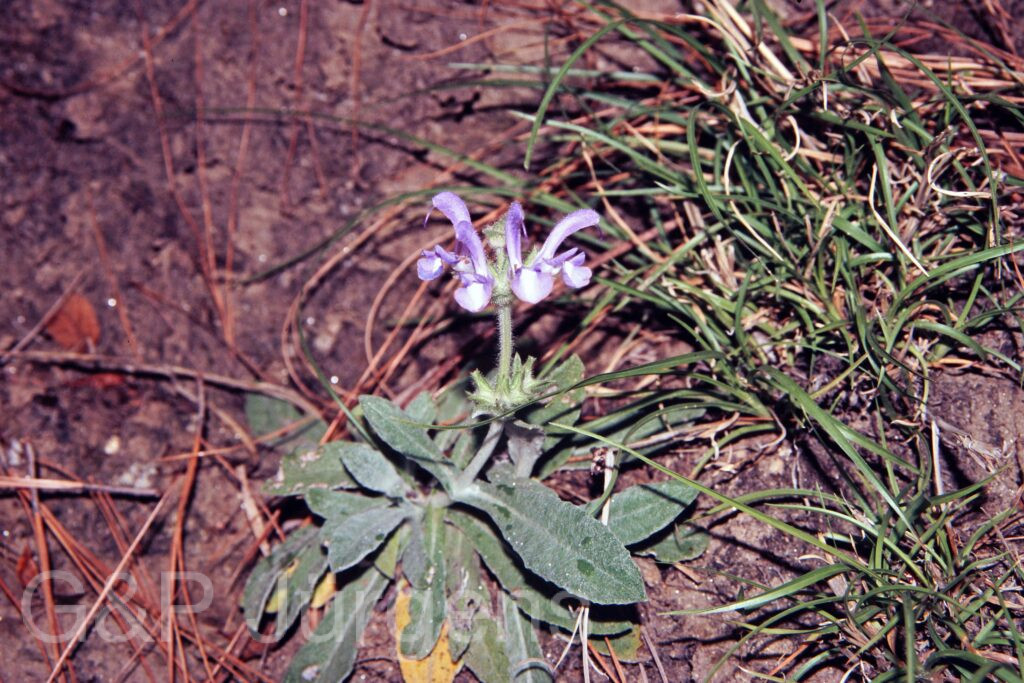
Salvia mukerjeei is a Himalayan endemic distributed along the southern flank of the western and central ranges, with georeferenced records spanning Pakistan, northern India and Nepal (GBIF documents 91 occurrences across these three countries). It favours shaded banks, forest margins and disturbed slopes in the warm-temperate to lower montane belt; the illustrated material was gathered in India, Garhwal, at Uniana near the Mandakini valley at about 1350 m in June, a setting typical of the moist mid-elevation gorges where the species recurs. Within this zone it grows on humus-rich soils beneath broad-leaved canopy and along streamsides flushed by the early monsoon.
The plant is an erect herb arising from a fibrous-rooted base, the quadrangular stems clothed in spreading eglandular and shorter glandular hairs. Leaves are opposite, petiolate and ovate to broadly cordate, with a crenate-serrate margin, an acuminate apex and a rugose, prominently veined lamina pubescent on both faces. The inflorescence is a lax terminal raceme of distant verticillasters, each subtended by deciduous bracts. Flowers show the characteristic bilabiate calyx and a two-lipped corolla with a hooded upper lip and spreading lower lip; the two fertile stamens bear the elongated connective lever diagnostic of the genus. The fruit comprises four smooth nutlets enclosed in the persistent calyx.
Described from Garhwal collections, the species honours the botanist Mukerjee and belongs to a complex of Asian Salvia centred on the Himalaya. POWO and GBIF treat the name as the accepted taxon. Its restricted range and dependence on undisturbed shaded habitats make it sensitive to forest clearance, though no formal IUCN assessment has been published.
Author: Bennet & Raizada · Sources: POWO (Kew), GBIF, Flora of Pakistan, Flora of British India, A Revision of Salvia in Asia (Lamiaceae monograph), Annotated Checklist of the Flowering Plants of Nepal