
(Willd.) Sm.
Description
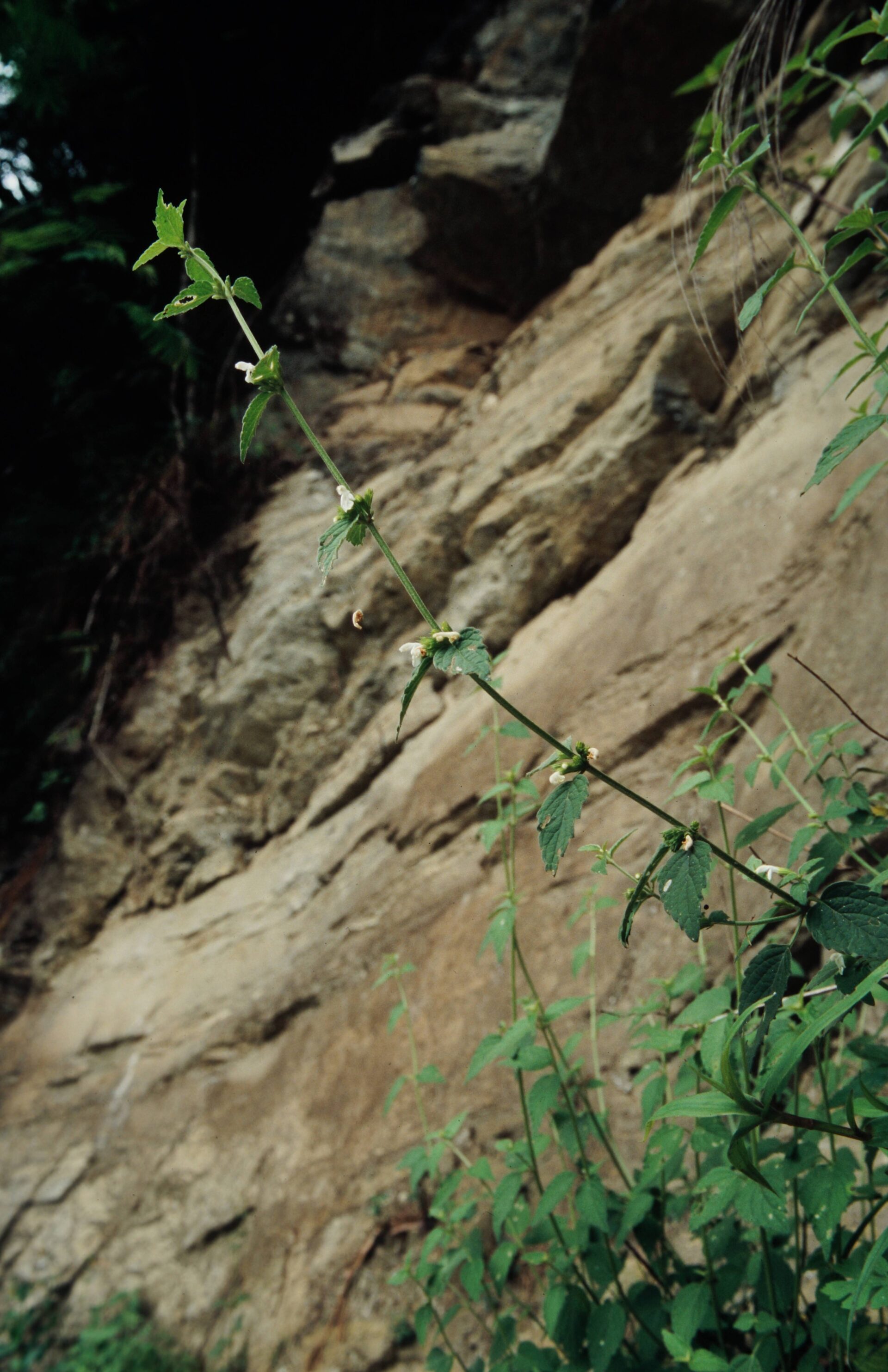
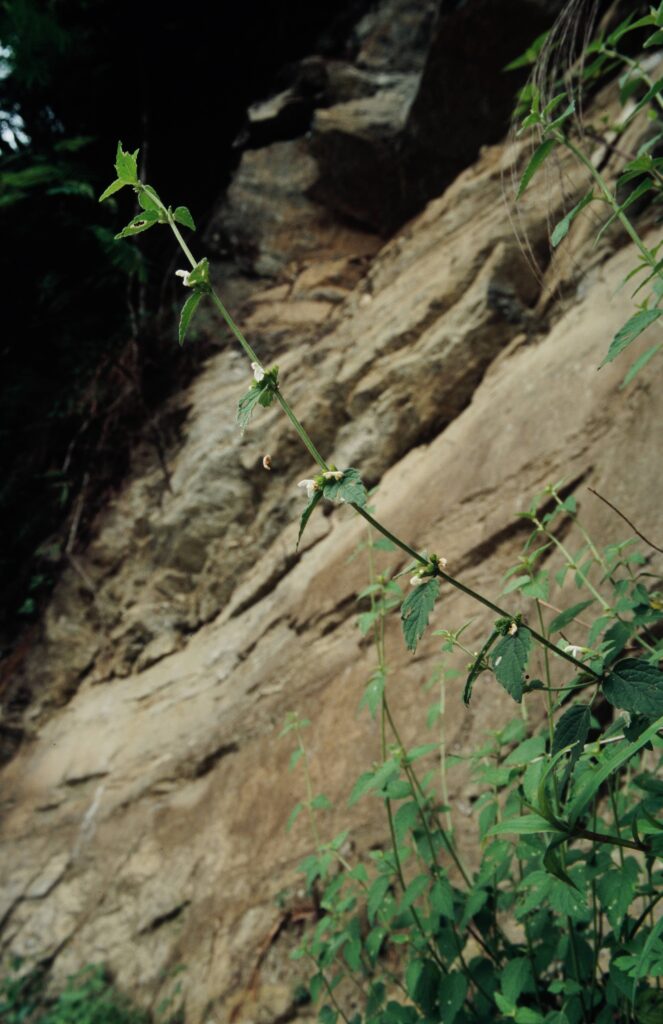
Leucas decemdentata is one of the most widely distributed members of its genus, ranging across tropical and subtropical Asia and out into the western Pacific. GBIF records, totalling more than 1,600 occurrences, document its presence in India, Nepal, Pakistan and Myanmar through China, Taiwan and Japan to Thailand, the Philippines, Indonesia, Timor-Leste and Papua New Guinea, and onward to Australia, Fiji, Tonga, Samoa, the Cook Islands and French Polynesia, as well as Christmas Island. In the eastern Himalaya it is a plant of warm-temperate to subtropical situations, frequenting open hillsides, roadside banks, cultivated margins, fallow fields and other disturbed ground. The photographed plant from Lingza in West Bengal, India, at about 1300 m and flowering in May, is typical of its lower montane occurrence, where it behaves as a weedy ruderal of sunny, well-drained slopes.
The species is an erect or ascending annual to short-lived perennial herb, usually 30-100 cm tall, with quadrangular stems that are retrorsely hairy along the angles. Leaves are opposite and decussate, ovate to lanceolate, with a crenate-serrate margin, an acute apex and a cuneate to attenuate base, the lamina sparsely pubescent and borne on short petioles. The white flowers are crowded into dense, globose, axillary verticillasters subtended by linear bracts. Each flower has a tubular, ten-toothed calyx with subequal spinescent teeth and a strongly two-lipped corolla, the upper lip arched and densely white-villous, the lower lip three-lobed with a larger middle lobe; the four didynamous stamens lie beneath the hood. The fruit comprises four smooth, trigonous nutlets enclosed in the persistent calyx.
The ten conspicuous calyx teeth give the species its epithet decemdentata and are a useful diagnostic character within the large, taxonomically intricate genus Leucas. Long included with the white-flowered, capitate-inflorescenced "thumbergia group" of species, it has frequently been confused with L. ciliata, L. mollissima and other allies, and several Asian names have been treated as synonyms. Ecologically it is a pioneer of open, disturbed habitats and a minor melliferous plant visited by bees and other insects. It carries no conservation concern, being abundant and adaptable across an enormous geographic range, and like many Leucas species it is used locally in folk medicine for fevers and skin complaints.
Author: (Willd.) Sm. · Sources: POWO (Kew), GBIF, Flora of China Vol. 17, Flora of Bhutan Vol. 2, Flora of Nepal, Flora of Pakistan, Revision of the genus Leucas (Lamiaceae) by Ryding