
(D.Don) Hand.-Mazz.
Description
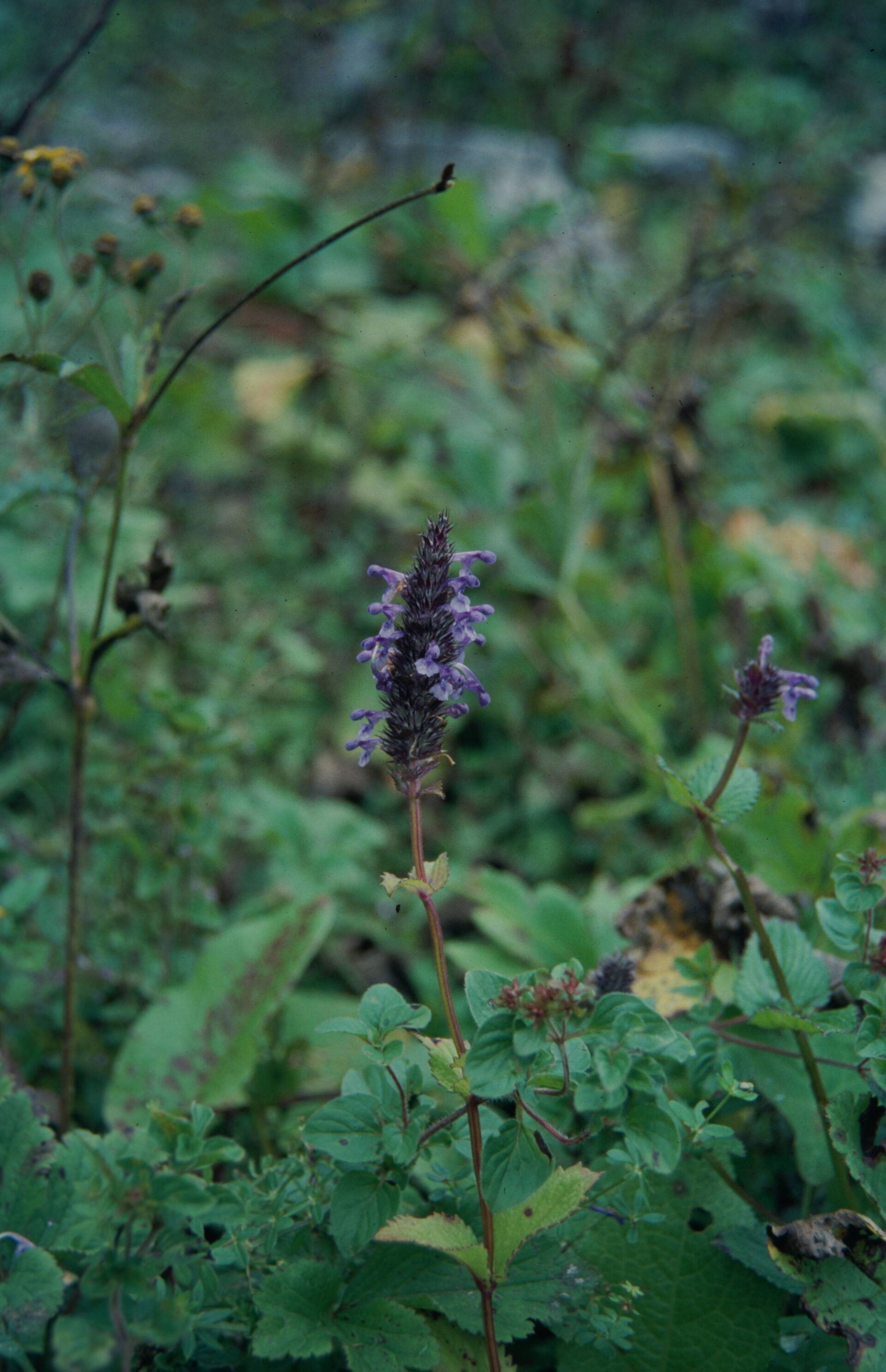
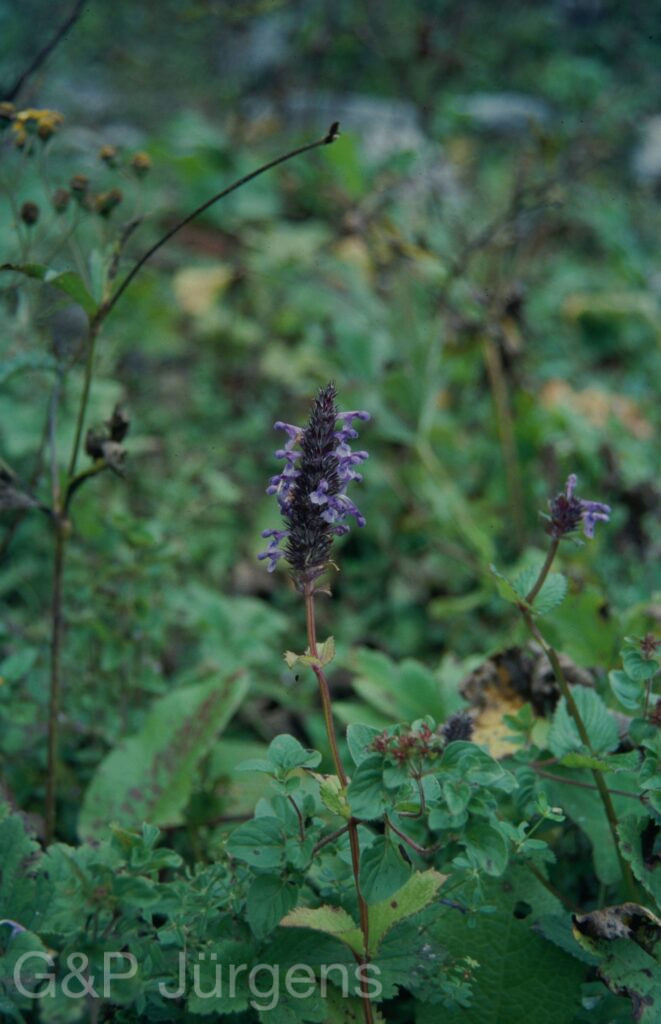
Nepeta laevigata is a perennial herb widely distributed across the temperate and subalpine Himalaya, ranging from Afghanistan and Pakistan eastwards through northern India and Nepal into south-western China, with a documented occurrence base of some 846 records (additional points from Germany, Norway and the United States reflecting cultivated or vouchered specimens). It favours open grassy slopes, forest margins, alpine meadows and disturbed ground between roughly 2400 and 3600 m. The plant illustrated here was photographed in India's Garhwal, in the celebrated Valley of Flowers at about 2950 m in September, where it flowers in the post-monsoon season among the rich herbaceous turf.
The species forms erect, quadrangular stems arising from a woody rootstock, typically 30-90 cm tall and often branched above. The leaves are opposite, ovate to ovate-lanceolate, crenate-serrate at the margin, cordate or truncate at the base and borne on distinct petioles, the surfaces glabrous to thinly pubescent and gland-dotted. The inflorescence is a slender terminal raceme or spike of well-spaced verticillasters subtended by small bracts; the flowers are bilabiate, the calyx tubular and bluntly toothed, the corolla white to pale violet with a hooded upper lip and a broad, often spotted lower lip. The fruit comprises four smooth nutlets enclosed in the persistent calyx.
Membership in Lamiaceae, subfamily Nepetoideae, is confirmed by the aromatic foliage, square stems and characteristic verticillate cymes. Like many catmints, N. laevigata is strongly insect-pollinated, its nectar-rich corollas visited by bees and bumblebees. The species is common across much of its montane range and is not regarded as threatened; it functions as a typical component of Himalayan meadow and forest-edge communities, where its volatile terpenoid oils may deter generalist herbivores.
Author: (D.Don) Hand.-Mazz. · Sources: POWO (Kew), GBIF, Flora of China, Flora of Pakistan, Flora of Bhutan, Annotated Checklist of the Flowering Plants of Nepal, Budantsev revision of Nepeta