Begoniaceae

K.Koch

Bhutan2015 146
Bhutan Galephug 700m, October

Description

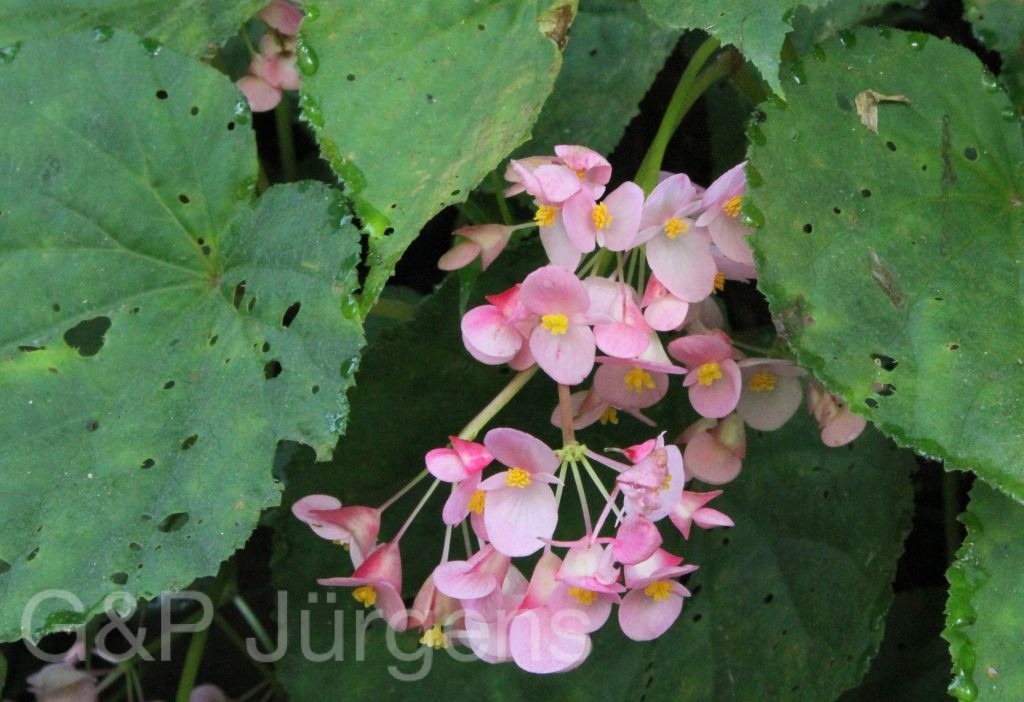
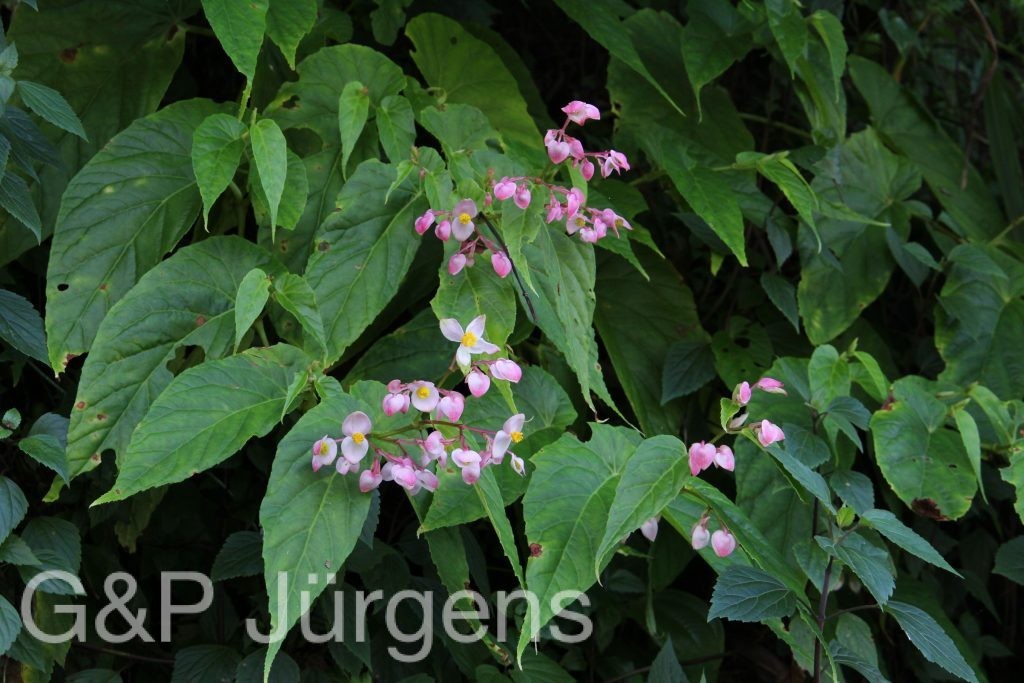
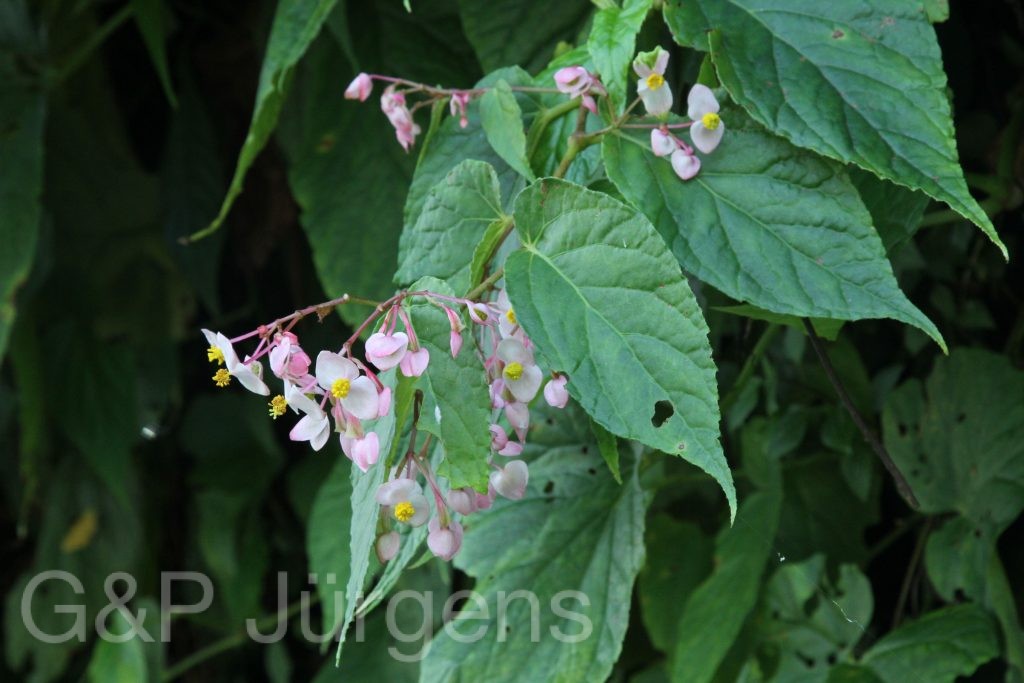
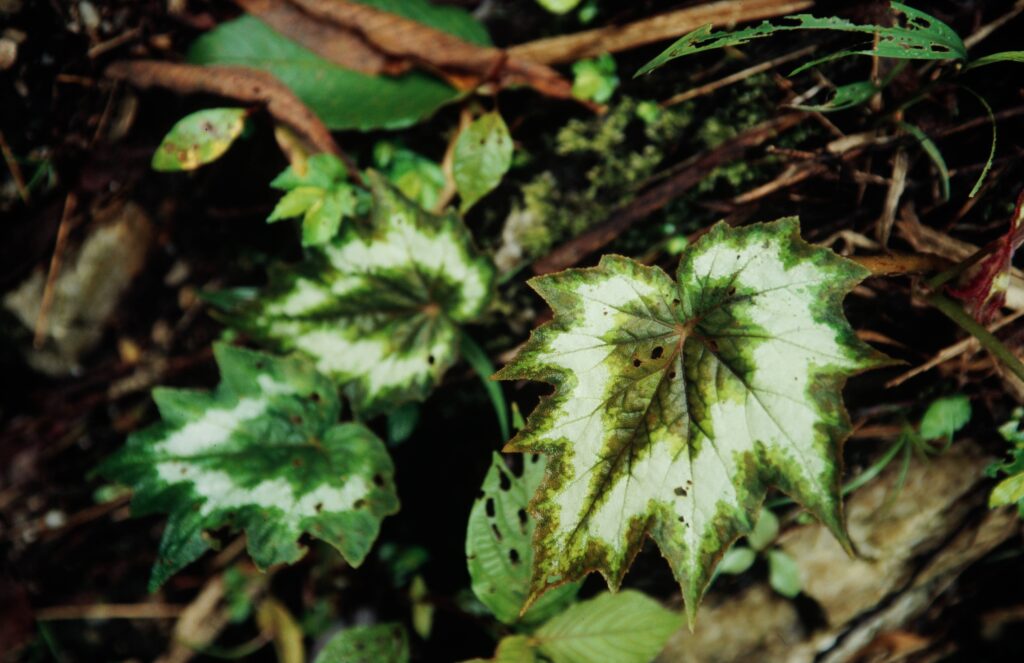
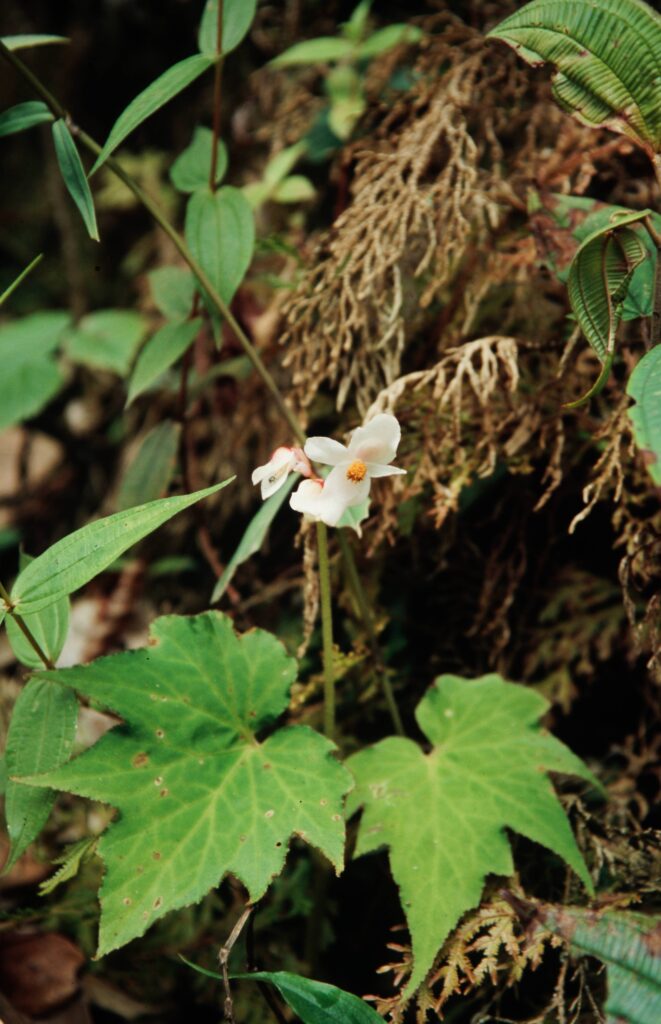
Begonia annulata is a Himalayan and Indo-Burmese begonia ranging through India, Bhutan, Bangladesh, Nepal and Myanmar; GBIF lists about 109 occurrences, the lower figure reflecting its restriction to humid lowland and submontane forest. It grows in warm, shaded, perpetually moist habitats, on damp rocks, mossy banks, ravines and forest-floor seepages in evergreen broadleaved forest of the foothills and outer ranges. The photograph from Galephug in southern Bhutan at about 700 m in October shows it in the low, humid subtropical belt along the Himalayan front, fruiting late in the year where high rainfall and dense canopy sustain its succulent growth.

It is a fleshy perennial herb with an erect to ascending, jointed, translucent stem arising from a creeping rhizome or tuberous base. The leaves are alternate, conspicuously asymmetric (oblique) at the base as is typical of the genus, ovate to broadly ovate with an acuminate apex and toothed margin, palmately veined and often bearing scattered hairs, the petioles and nodes sometimes ringed (annulate, the source of the epithet). Plants are monoecious, the flowers white to pale pink and unisexual, borne in axillary cymes; staminate flowers with several stamens and pistillate flowers with a conspicuously winged inferior ovary. The fruit is a three-winged, unequally winged capsule containing very numerous minute seeds.

Begonia is one of the largest angiosperm genera, strongly radiated in the wet forests of tropical Asia, and B. annulata represents the shade- and moisture-demanding rhizomatous group of the eastern Himalaya. Its asymmetric leaves, winged capsules and dust-fine seeds are hallmarks of the family. While not formally assessed as threatened, such narrowly humid-forest specialists are sensitive to lowland deforestation and habitat drying along the Himalayan foothills.

Author: K.Koch · Sources: POWO (Kew), GBIF, Flora of Bhutan, Flora of British India (Hooker), Tebbitt Begonias: Cultivation, Identification and Natural History
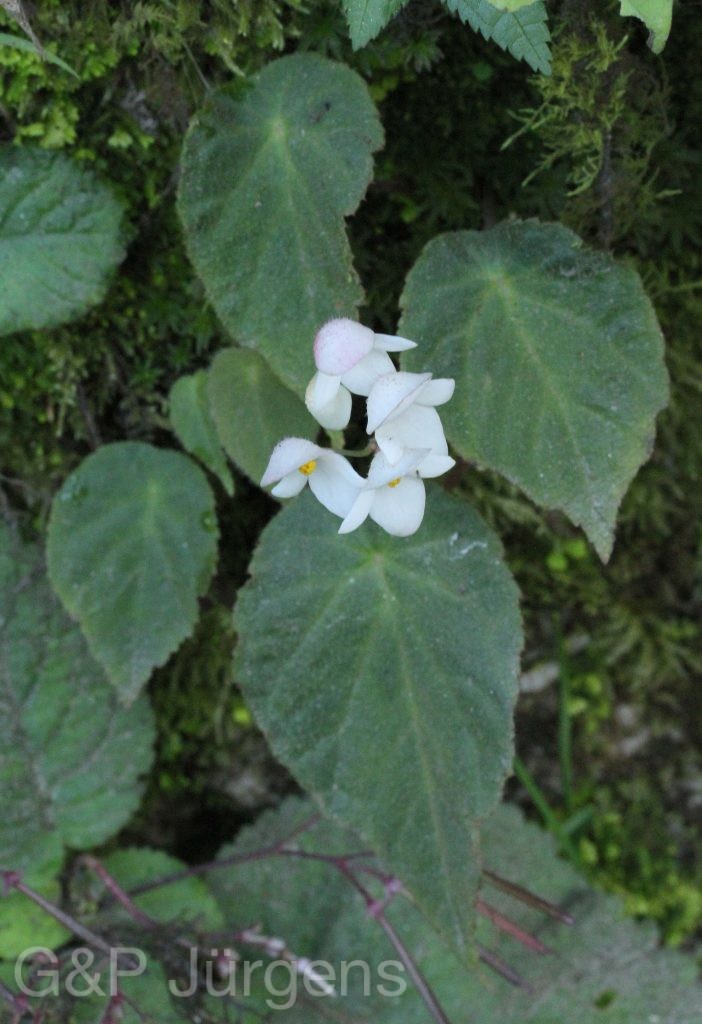
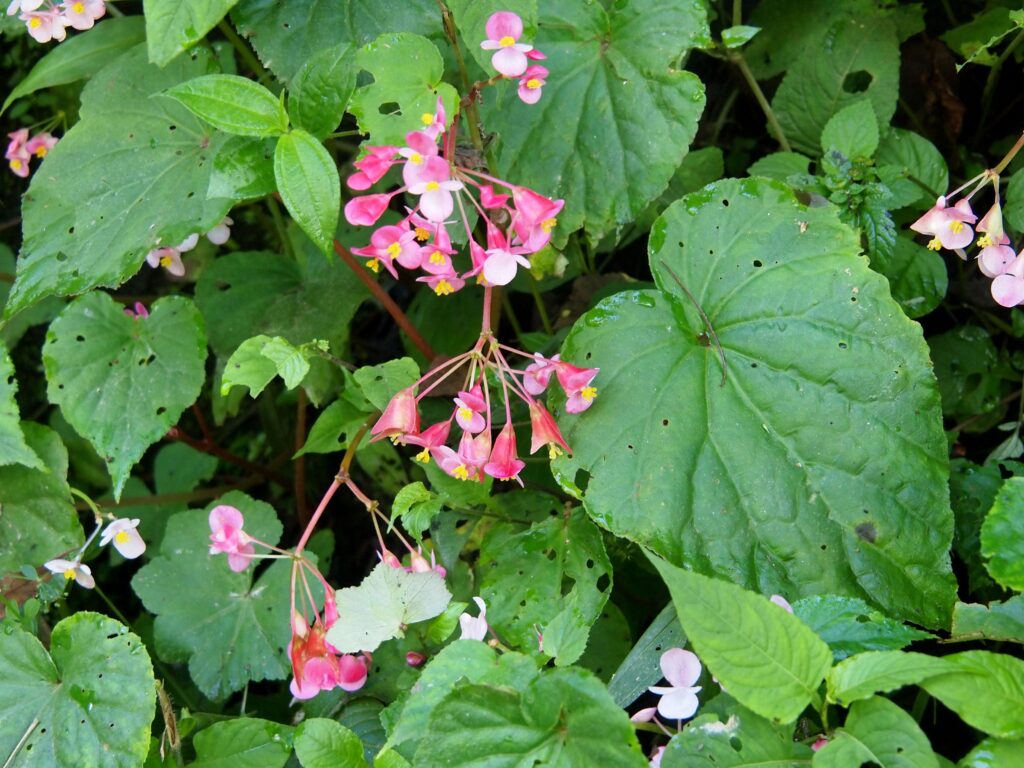
Begonia josephi

by GP Jürgens

A.DC.

Bhutan2012 487
Bhutan Pele-La 2850m, September

Description

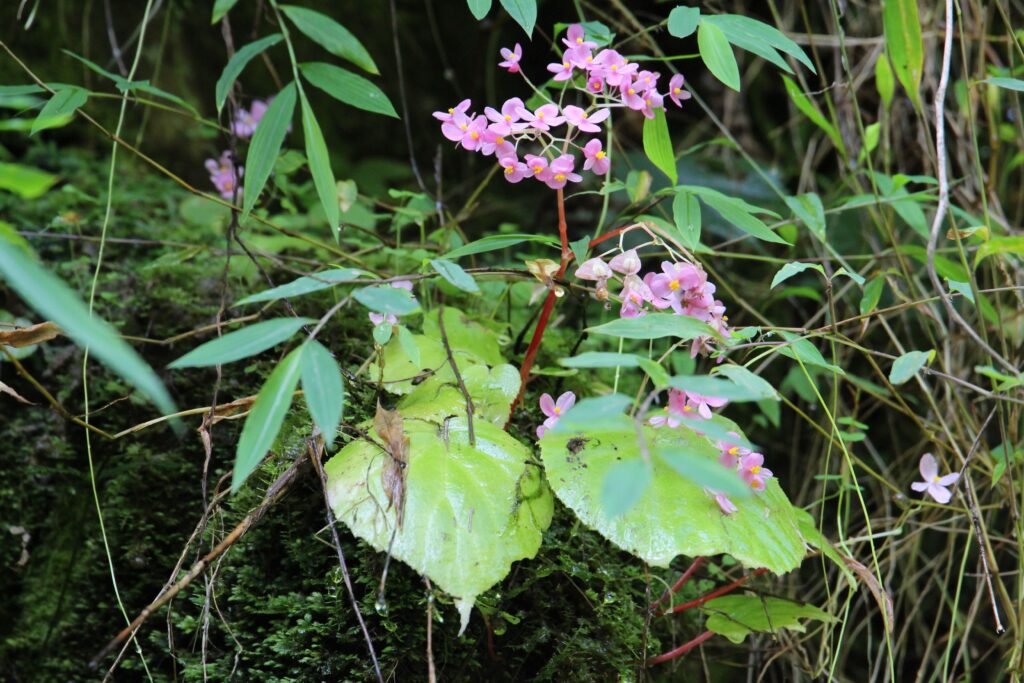
Begonia josephi is a Himalayan herb distributed through India, Nepal, Bhutan, southern China, Myanmar and Bangladesh, with 177 GBIF occurrences across the region. It is a plant of cool, humid, shaded montane habitats — mossy rock faces, banks, ravines and the floor of broadleaved and mixed forest — in the temperate zone, generally between about 2000 and 3200 m, a higher and cooler niche than many of its lowland congeners. The illustrated plant from the Pele-La in central Bhutan at around 2850 m, in September at the end of the monsoon, is characteristic of its preference for moist, montane forest reaching its flowering peak late in the wet season.

It is a tuberous perennial herb arising from a depressed underground tuber, with one or few erect, succulent, often reddish stems. The leaves are alternate and conspicuously asymmetric (oblique-based) as in the genus, broadly ovate to suborbicular, palmately veined, irregularly toothed and frequently bronze- or red-tinged, sometimes with a paler zone. The monoecious, zygomorphic flowers are pink to rose and arranged in axillary cymes; staminate flowers bear a cluster of stamens while pistillate flowers carry an inferior, unequally 3-winged ovary. The fruit is the typical winged, dehiscent capsule releasing copious minute seeds.

Belonging to the tuberous Himalayan begonias of section Platycentrum and allied groups, B. josephi shows the strongly seasonal phenology of monsoon-climate species, dying back to its tuber through the dry winter and re-emerging with the rains. The genus Begonia is hyperdiverse and the Eastern Himalaya a significant centre of endemism; like other shade-demanding forest begonias the species depends on intact humid forest cover, leaving it locally vulnerable to deforestation despite a fairly wide overall range.

Author: A.DC. · Sources: POWO (Kew), GBIF, Flora of Bhutan, Flora of British India, Annotated Checklist of the Flowering Plants of Nepal, Begoniaceae monographic studies

A.DC.

Bhutan2012 480 ergebnis
Bhutan, Wangdi 1800m, September
Bhutan2012 481
Bhutan, Wangdi 1800m, September

Description

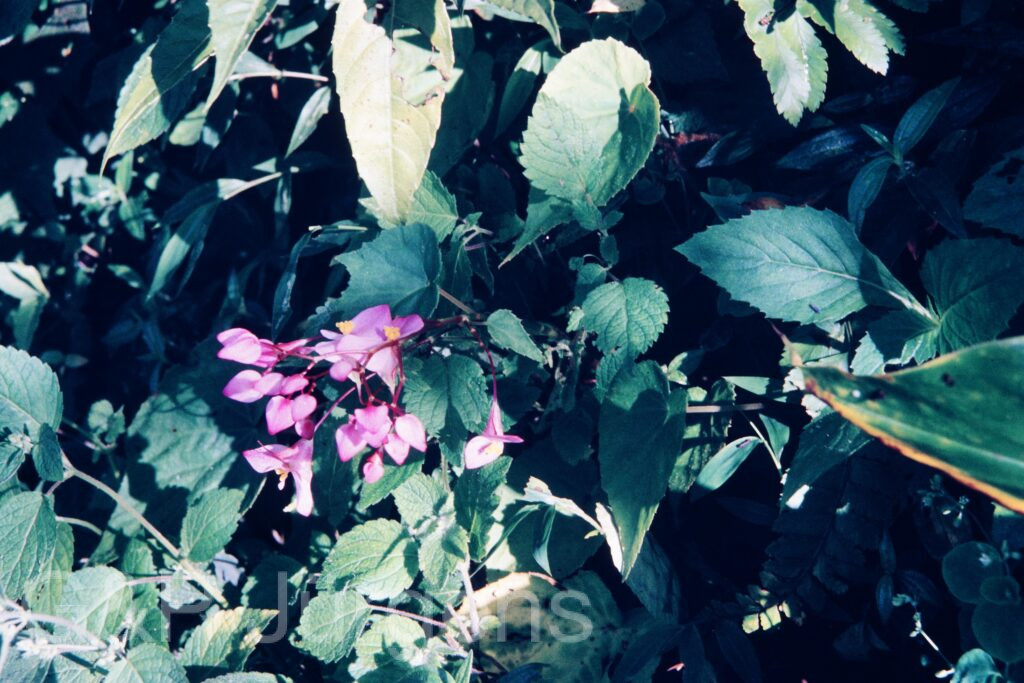
Begonia megaptera is a tuberous begonia native to the eastern Himalaya and adjacent regions, recorded from Nepal, northeast India (Sikkim, Darjeeling, Meghalaya), Bhutan, and Myanmar, with occasional records from Sri Lanka. It inhabits moist, shaded environments including rock crevices, mossy banks, stream margins, and damp earth walls in warm broadleaved and subtropical forests at elevations of 900–2,500 m. The species has been documented near Wangdi in Bhutan at 1,800 m, where it flowers during the monsoon and post-monsoon period in September.
The plant is a perennial herb arising from a globose tuber, with erect or ascending, succulent, sparsely branched stems 20–50 cm tall, tinged red and bearing scattered hairs. Leaves are alternate, broadly ovate to suborbicular, distinctly asymmetric, 8–20 cm long and nearly as wide, with a cordate base, irregularly serrate to dentate margins, and palmately veined undersurface often flushed reddish-purple. Stipules are large, ovate, and persistent. The inflorescence is a dichasial cyme bearing both male and female flowers; male flowers have two large, broadly ovate, white to pale pink tepals and numerous yellow stamens, while female flowers have five unequal tepals and a prominently three-winged inferior ovary — the epithet "megaptera" (large-winged) refers to the conspicuously enlarged wing on the fruit. The capsule is pendulous, with one wing much larger than the other two, up to 3 cm broad.
Begonia megaptera belongs to Begonia section Platycentrum and is distinguished by its notably large, unequal capsule wings and broad, nearly orbicular leaves. With only 63 occurrence records in GBIF, it remains a rather uncommon species. Begonia is one of the largest angiosperm genera, with over 2,000 species, and the eastern Himalayan region represents a secondary centre of diversity. B. megaptera contributes to the rich lithophytic and epipetric flora characteristic of humid gorge habitats in the region.

Author: A.DC. · Sources: POWO (Kew), GBIF, Flora of Bhutan Vol. 2, Doorenbos et al.: The Sections of Begonia (1998), Hughes et al.: Asian Begonia (2015)

Warb.

Bhutan2015 123
Bhutan Galephug 600m, October
Bhutan2015 126
Bhutan Galephug 600m, October

Description

Begonia nepalensis is a robust herbaceous Begonia of the Himalaya and its foothills, recorded by GBIF from Nepal, India, Bhutan, China and elsewhere across about 91 occurrences. It grows in warm, humid, shaded habitats, on moist banks, in ravines, beside streams and on damp rocks within subtropical and lower montane broad-leaved forest, typically at low to middle elevations. The plant photographed at Gelephu (Galephug) in southern Bhutan at about 600 m, in October, reflects this warm, wet foothill setting where the species flourishes in the deep shade and high humidity of the monsoon-fed forest understorey.

The plant is a tall, succulent, erect herb arising from a thick rhizome, with stout, somewhat fleshy, swollen-noded stems. The leaves are alternate, large and markedly asymmetric (oblique) at the base as is characteristic of the genus, broadly ovate, acuminate, with a toothed to shallowly lobed and ciliate margin and palmate venation; the foliage is often somewhat hairy. The plant is monoecious, bearing separate male and female flowers in the same axillary cymes; the white to pinkish flowers have tepals rather than differentiated sepals and petals, the staminate flowers with a cluster of stamens and the pistillate with an inferior, conspicuously winged ovary. The fruit is a three-winged, unequally winged capsule that dries and releases very numerous minute seeds.

Begonia is one of the largest angiosperm genera, hyper-diverse in the wet tropics, and the Himalayan species such as B. nepalensis belong to the assemblage of large-leaved, cane-stemmed forest herbs adapted to shaded, perennially moist habitats. The asymmetric leaves, winged capsules and dust-like seeds are hallmarks of the family. Although not assessed as threatened, the species' dependence on humid, undisturbed forest understorey makes it sensitive to deforestation and drying, and its restriction to the warm Himalayan foothills reflects a tropical-Asian biogeographic affinity.

Author: Warb. · Sources: POWO (Kew), GBIF, Flora of China, Flora of Bhutan, Annotated Checklist of the Flowering Plants of Nepal, Tebbitt "Begonias: Cultivation, Identification, and Natural History"

D.Don

Description

Begonia palmata D.Don is a widespread and highly variable perennial herb of the Sino-Himalaya and Southeast Asia, recorded by GBIF from across China and Taiwan, the eastern Himalaya (Nepal, India, Bhutan), Myanmar, Thailand, Laos, Vietnam, Bangladesh and Malesia. It is a characteristic plant of shaded, humid evergreen and broad-leaved forest, growing on moist rocks, mossy banks, ravine sides and beside streams from the foothills to roughly 2,500 m. The May collection from Chaana in Darjeeling district of West Bengal at 1,600 m exemplifies its monsoon-forest habitat, where it thrives in deep shade and high atmospheric humidity.

The plant is a succulent, rhizomatous to shortly caulescent herb with reddish, hispid stems. The asymmetric, palmately lobed leaves give the species its epithet: they are broadly ovate in outline, deeply incised into several acuminate, toothed lobes, often bristly-hairy and frequently marked with a paler or silvery zone above and reddish coloration beneath. As in all begonias the flowers are unisexual and monoecious, borne in axillary cymes; the pink to white male flowers bear two larger and two smaller tepals, while the female flowers have an inferior, three-winged ovary that develops into the characteristic unequally winged, dehiscent capsule containing very numerous minute seeds.

Begonia palmata is taxonomically a notoriously polymorphic species complex, with numerous varieties and segregate names reflecting wide variation in leaf division and indumentum across its range. Such variability has made it a focus of biogeographic and systematic study within the megadiverse genus Begonia. Many of its forms are cultivated as foliage ornamentals, and its broad distribution underlines the high endemism and diversification of begonias in the wet forests of tropical Asia.

Author: D.Don · Sources: POWO (Kew), GBIF, Flora of China Vol. 13, Flora of Bhutan Vol. 2, Tebbitt: Begonias — Cultivation, Identification, and Natural History

Begonia rubella

by GP Jürgens

Buch.-Ham. ex D.Don

Bhutan2015 228 ergebnis
Bhutan Zhemgang 910m, October

Description

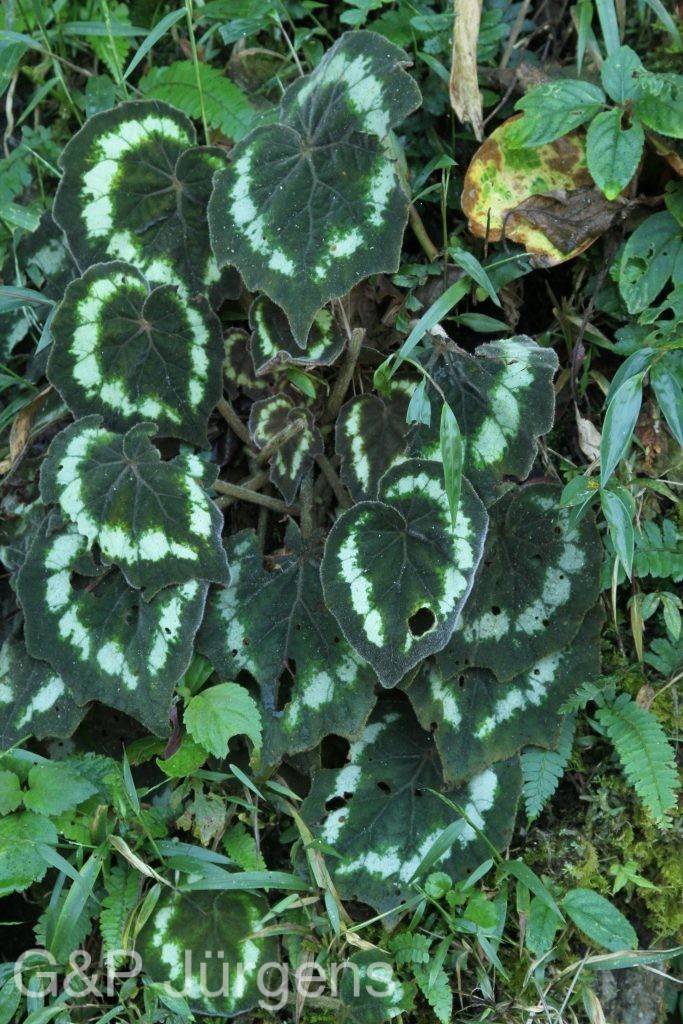
Begonia rubella is a Himalayan herb ranging through Nepal, northern India and Bhutan, with scattered GBIF records (67 occurrences) extending the data to Papua New Guinea, which most likely represents misidentification rather than a genuine disjunction. It is a plant of shaded, humid microhabitats — moist rock faces, stream banks, damp ravines and the floor of broadleaved subtropical to lower-temperate forest — where constant atmospheric moisture and deep shade prevail. The illustrated plant from Zhemgang in central Bhutan at about 910 m, in October at the close of the monsoon, exemplifies its preference for warm, wet, low-montane valleys.

The species is a soft, succulent perennial herb arising from a tuberous or rhizomatous rootstock, with erect to ascending, somewhat fleshy, reddish-tinged stems (the epithet rubella alluding to this colouring). The leaves are alternate, markedly asymmetric (oblique) at the base as is typical of the genus, ovate to broadly ovate, acuminate, irregularly toothed and often flushed red beneath. The flowers are monoecious and zygomorphic, pink to rose, borne in axillary cymes; staminate flowers bear numerous stamens, pistillate flowers an inferior, conspicuously 3-winged ovary. The fruit is the characteristic unequally 3-winged dehiscent capsule shedding minute seeds.

Begonia, the sole large genus of Begoniaceae, is one of the most species-rich angiosperm genera, and the Sino-Himalayan region is a notable centre of diversity. B. rubella belongs to the assemblage of tuberous Himalayan begonias adapted to a strongly seasonal monsoon climate, dying back in the dry winter. Like many narrowly distributed forest begonias it depends on undisturbed humid shade, making it sensitive to forest clearance, though horticultural interest in the group has aided its documentation.

Author: Buch.-Ham. ex D.Don · Sources: POWO (Kew), GBIF, Flora of Bhutan, Flora of British India, Annotated Checklist of the Flowering Plants of Nepal, Begonian Resource (Begoniaceae monographic studies)

C.B.Clarke

Nepal 95 12 P19 ergebnis
Nepal Gorkha 1200m, Octobre

Description

Begonia satrapis C.B.Clarke is a perennial herb of shaded, humid forest in the eastern Himalaya. It is a regional endemic of restricted distribution; GBIF records it only from India and Bhutan with a small number of collections (about 15), and it is also reported from the central Himalaya, consistent with the illustrated plant from Nepal, Gorkha, at 1,200 m in October. It grows in moist subtropical to lower temperate broad-leaved forest, on damp mossy banks, rock ledges and ravine sides where humidity is high and light is diffuse, typically between roughly 1,000 and 2,000 m.

The plant is a monoecious, succulent-stemmed herb with an erect or ascending, often reddish, somewhat fleshy stem. The leaves are alternate, markedly asymmetric (oblique) at the base as is characteristic of the genus, ovate to broadly ovate with an acuminate apex and a serrate to shallowly lobed, ciliate margin, often bearing a reddish flush or marking on the upper surface. Flowers are unisexual and borne in axillary, dichasial cymes; the staminate flowers have a few perianth segments and a cluster of yellow stamens, while the pistillate flowers bear an inferior, conspicuously winged ovary. The fruit is a pendulous, three-winged, many-seeded capsule with one wing typically larger than the others.

Begonia is one of the largest angiosperm genera, and the Sino-Himalayan species form a notable centre of diversity. B. satrapis belongs to the Asian herbaceous assemblage in which winged-capsule morphology and oblique foliage are diagnostic. Its narrow range and dependence on undisturbed humid forest make populations sensitive to habitat loss, although it has not been formally assessed.

Author: C.B.Clarke · Sources: POWO (Kew), GBIF, Flora of Bhutan Vol. 2, Flora of Nepal, Flora of China Vol. 13, Tebbitt: Begonias – Cultivation, Identification and Natural History