
A.DC.
Description
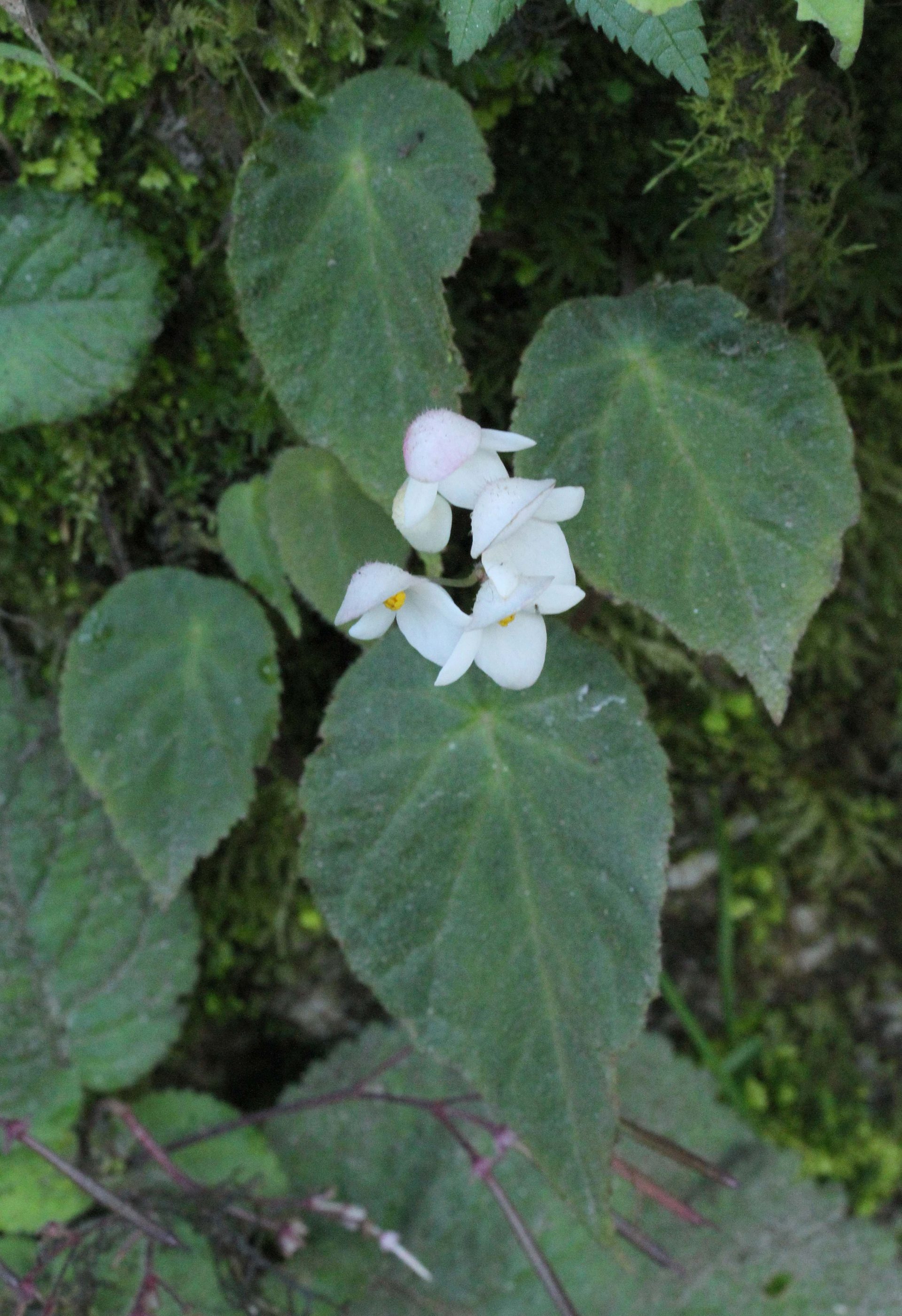
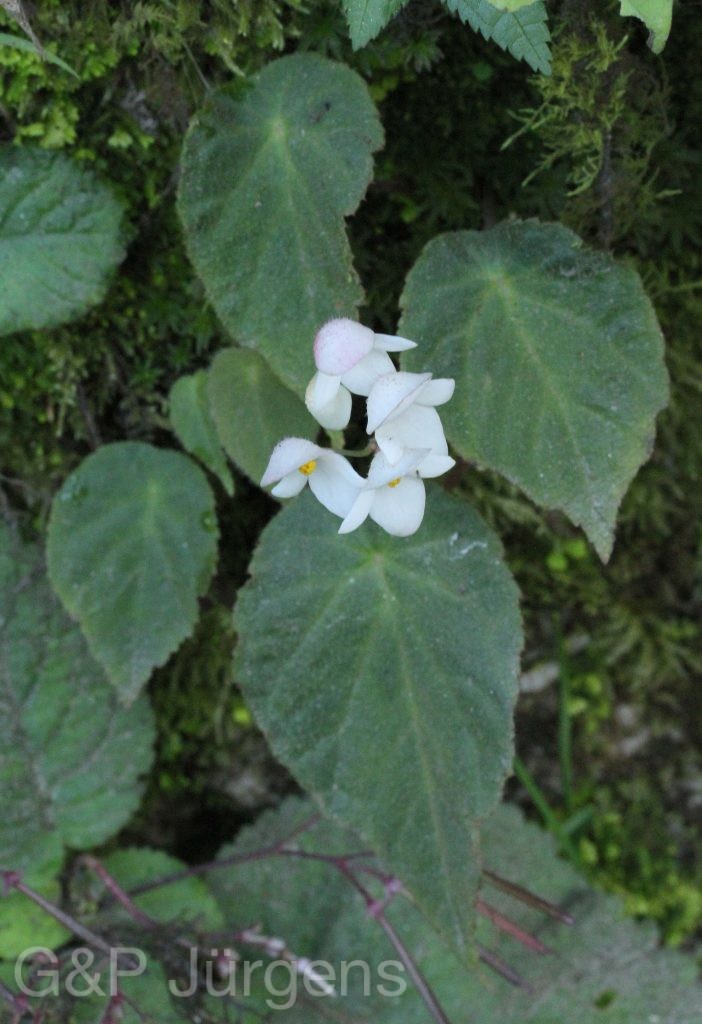
Begonia josephi is a Himalayan herb distributed through India, Nepal, Bhutan, southern China, Myanmar and Bangladesh, with 177 GBIF occurrences across the region. It is a plant of cool, humid, shaded montane habitats — mossy rock faces, banks, ravines and the floor of broadleaved and mixed forest — in the temperate zone, generally between about 2000 and 3200 m, a higher and cooler niche than many of its lowland congeners. The illustrated plant from the Pele-La in central Bhutan at around 2850 m, in September at the end of the monsoon, is characteristic of its preference for moist, montane forest reaching its flowering peak late in the wet season.
It is a tuberous perennial herb arising from a depressed underground tuber, with one or few erect, succulent, often reddish stems. The leaves are alternate and conspicuously asymmetric (oblique-based) as in the genus, broadly ovate to suborbicular, palmately veined, irregularly toothed and frequently bronze- or red-tinged, sometimes with a paler zone. The monoecious, zygomorphic flowers are pink to rose and arranged in axillary cymes; staminate flowers bear a cluster of stamens while pistillate flowers carry an inferior, unequally 3-winged ovary. The fruit is the typical winged, dehiscent capsule releasing copious minute seeds.
Belonging to the tuberous Himalayan begonias of section Platycentrum and allied groups, B. josephi shows the strongly seasonal phenology of monsoon-climate species, dying back to its tuber through the dry winter and re-emerging with the rains. The genus Begonia is hyperdiverse and the Eastern Himalaya a significant centre of endemism; like other shade-demanding forest begonias the species depends on intact humid forest cover, leaving it locally vulnerable to deforestation despite a fairly wide overall range.
Author: A.DC. · Sources: POWO (Kew), GBIF, Flora of Bhutan, Flora of British India, Annotated Checklist of the Flowering Plants of Nepal, Begoniaceae monographic studies