
A.DC.
Description
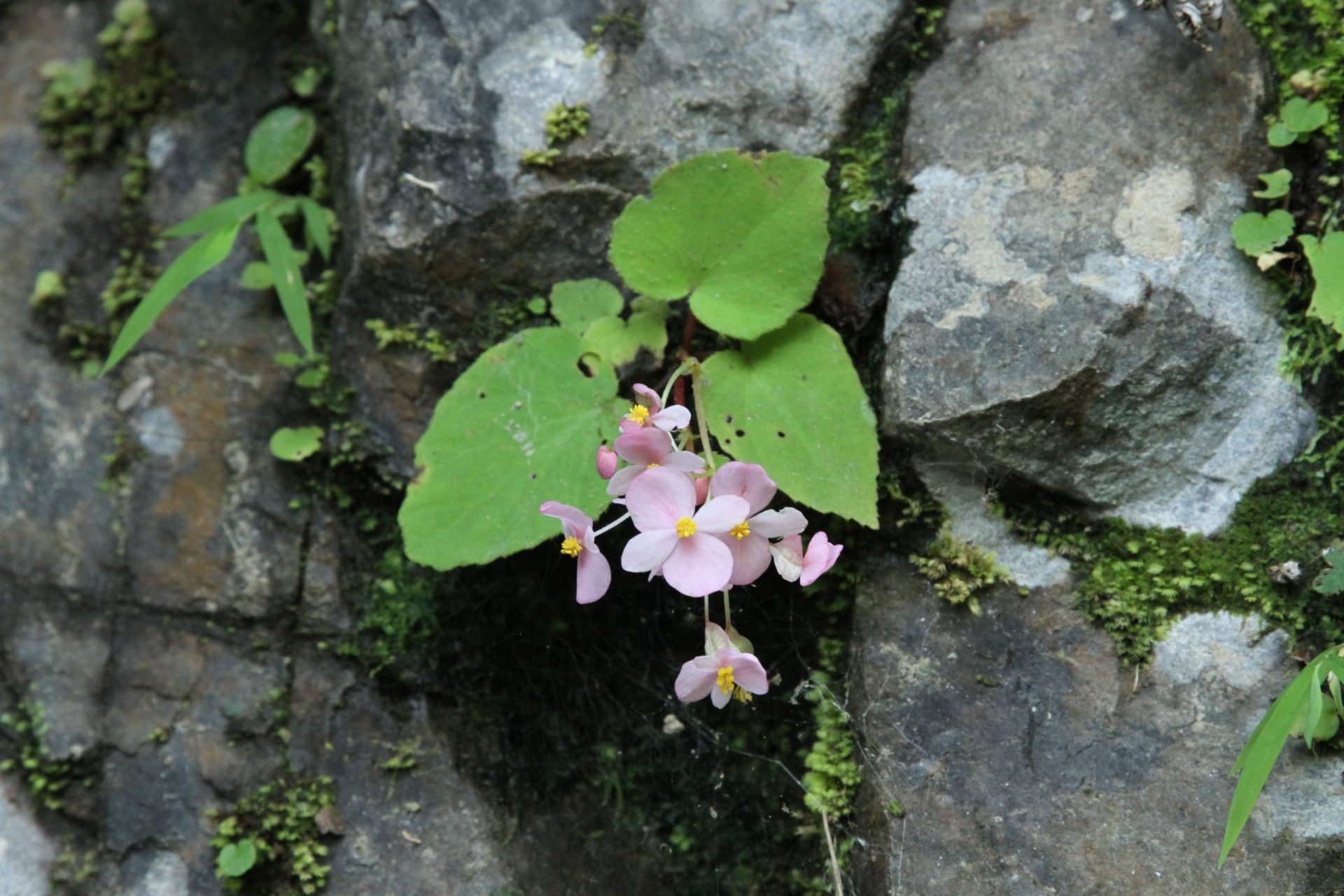
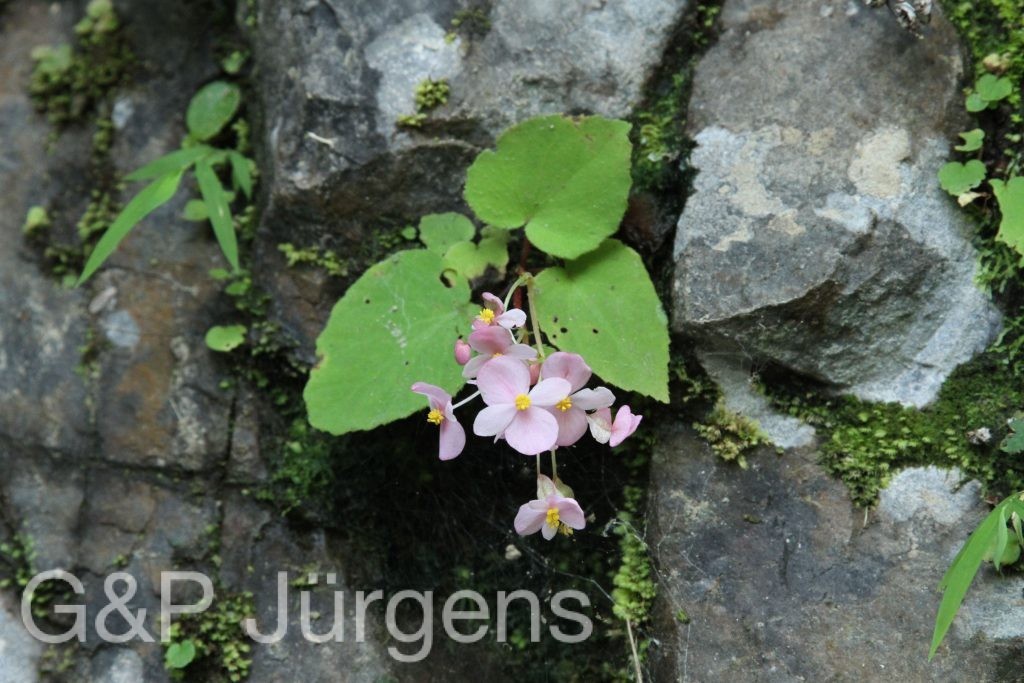
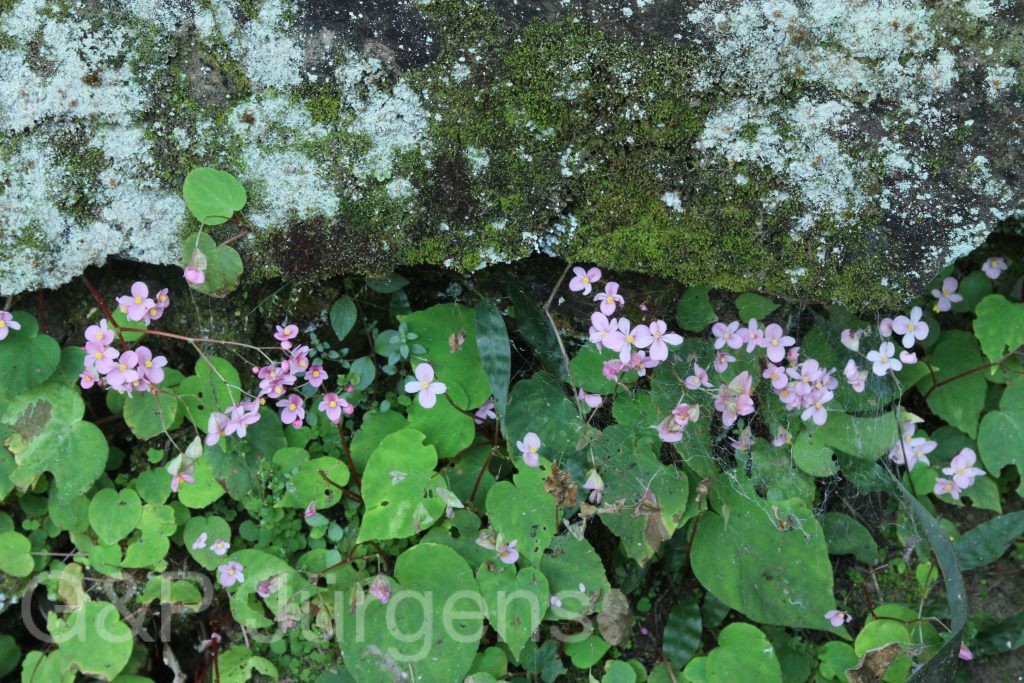
Begonia ovatifolia A.DC. is an eastern Himalayan herb known from Bhutan, north-eastern India and Nepal, a comparatively narrow-ranging species with few records (GBIF lists about 58 occurrences). It is a plant of shaded, humid situations – moss-covered rock faces, stream banks, damp ravines and the floor of evergreen broad-leaved forest – at low to mid elevations. The illustrated material was collected at Zhemgang in central Bhutan at about 950 m in October, where the monsoon-fed forests provide the perennially moist, sheltered microhabitat that suits the genus.
It is a perennial herb with succulent, often reddish-tinged stems arising from a fibrous-rooted or shortly rhizomatous base. The leaves are alternate, asymmetric (oblique) at the base as is typical of Begonia, ovate in outline with an acuminate apex and a finely serrate to denticulate margin, the lamina sometimes sparsely hairy. The plants are monoecious, bearing unisexual flowers in axillary cymes; the staminate flowers have showy tepals and a cluster of yellow stamens, the pistillate flowers an inferior, conspicuously 3-winged ovary with branched stigmas. The fruit is a winged capsule, one wing usually larger, dehiscing to release very numerous minute seeds.
Begonia (Begoniaceae) is one of the largest angiosperm genera, with the Sino-Himalayan species forming a centre of diversity and high local endemism. B. ovatifolia belongs to this assemblage of forest-floor herbs whose narrow distributions make them sensitive to habitat loss and forest disturbance, though the species is not formally assessed. Its inferior winged ovary and dust-like seeds are characteristic adaptations for dispersal in the humid, low-light understorey it occupies.
Author: A.DC. · Sources: POWO (Kew), GBIF, Flora of Bhutan, Flora of China, Begonia treatment in Flora of British India, Tebbitt studies of Asian Begonia, Camfield & Hughes phylogeny of Begonia