
C.B.Clarke
Description
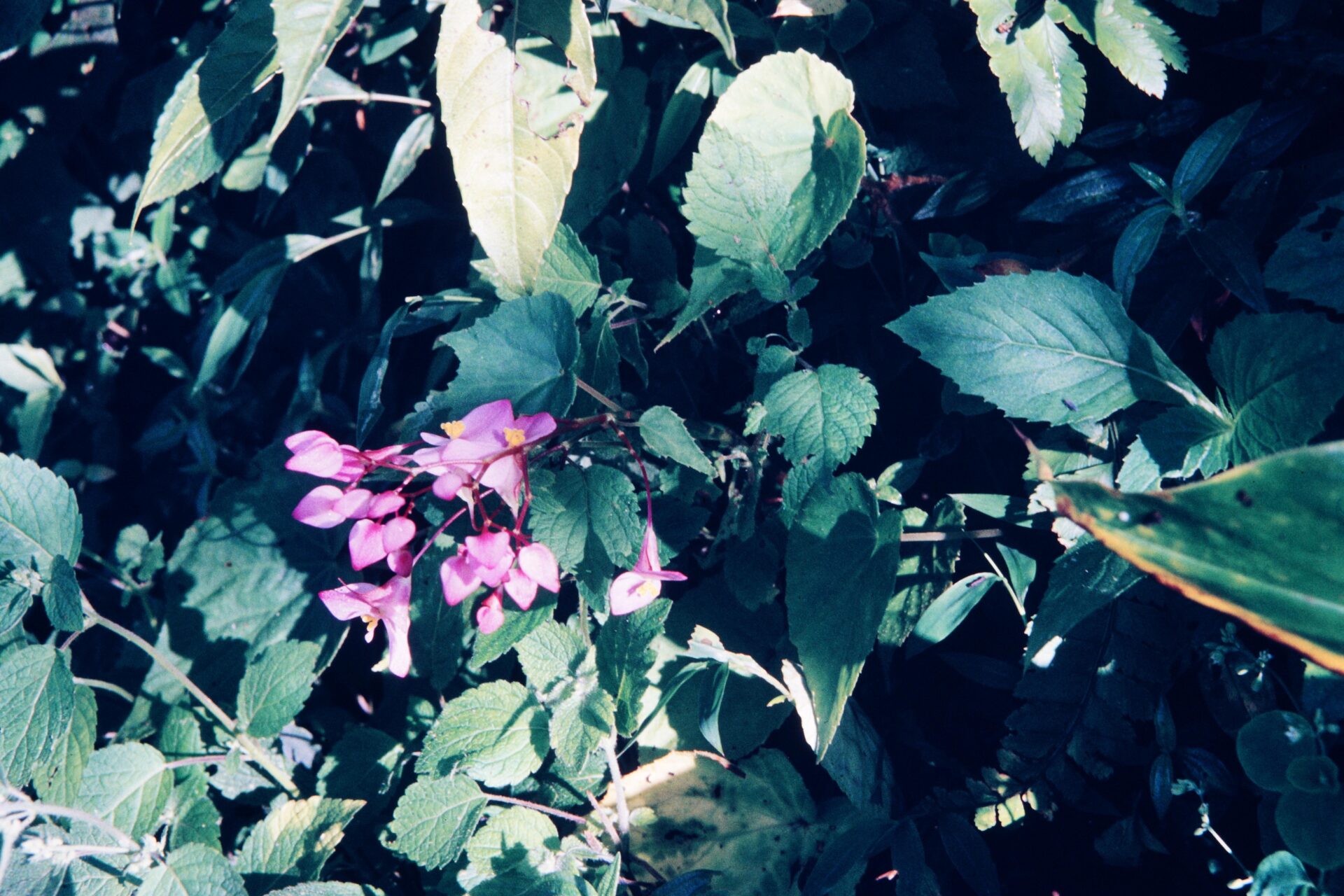
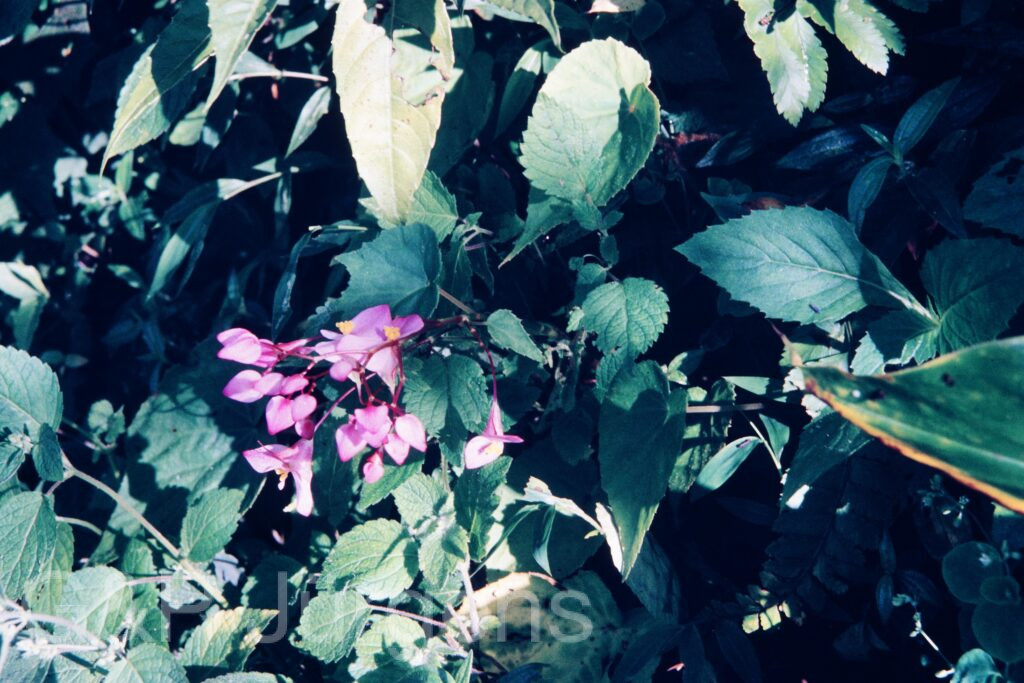
Begonia satrapis C.B.Clarke is a perennial herb of shaded, humid forest in the eastern Himalaya. It is a regional endemic of restricted distribution; GBIF records it only from India and Bhutan with a small number of collections (about 15), and it is also reported from the central Himalaya, consistent with the illustrated plant from Nepal, Gorkha, at 1,200 m in October. It grows in moist subtropical to lower temperate broad-leaved forest, on damp mossy banks, rock ledges and ravine sides where humidity is high and light is diffuse, typically between roughly 1,000 and 2,000 m.
The plant is a monoecious, succulent-stemmed herb with an erect or ascending, often reddish, somewhat fleshy stem. The leaves are alternate, markedly asymmetric (oblique) at the base as is characteristic of the genus, ovate to broadly ovate with an acuminate apex and a serrate to shallowly lobed, ciliate margin, often bearing a reddish flush or marking on the upper surface. Flowers are unisexual and borne in axillary, dichasial cymes; the staminate flowers have a few perianth segments and a cluster of yellow stamens, while the pistillate flowers bear an inferior, conspicuously winged ovary. The fruit is a pendulous, three-winged, many-seeded capsule with one wing typically larger than the others.
Begonia is one of the largest angiosperm genera, and the Sino-Himalayan species form a notable centre of diversity. B. satrapis belongs to the Asian herbaceous assemblage in which winged-capsule morphology and oblique foliage are diagnostic. Its narrow range and dependence on undisturbed humid forest make populations sensitive to habitat loss, although it has not been formally assessed.
Author: C.B.Clarke · Sources: POWO (Kew), GBIF, Flora of Bhutan Vol. 2, Flora of Nepal, Flora of China Vol. 13, Tebbitt: Begonias – Cultivation, Identification and Natural History