
D.Don
Description
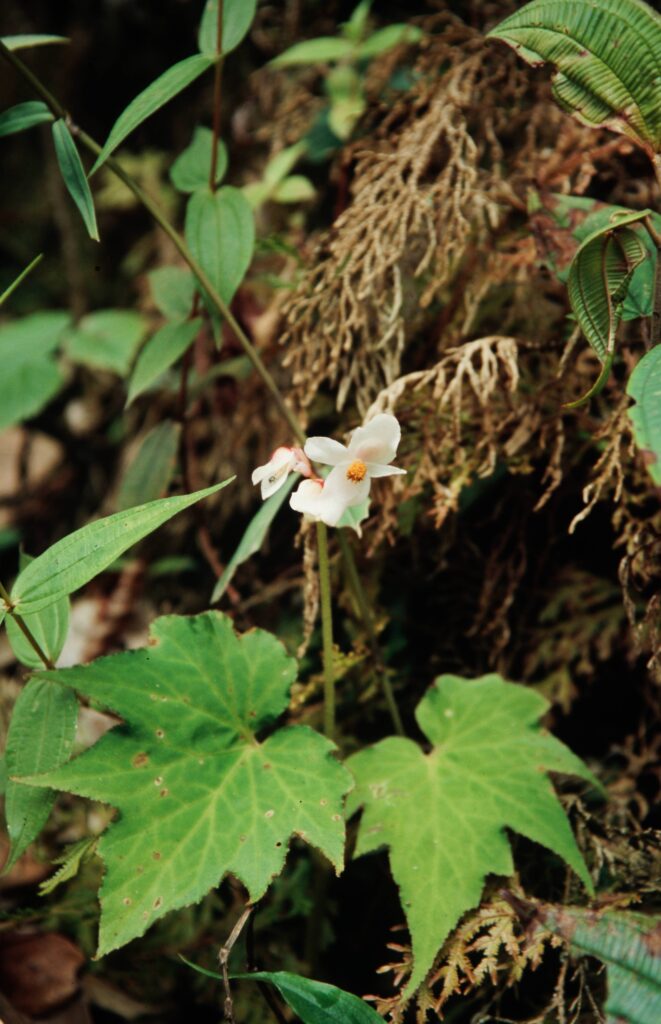
Begonia palmata D.Don is a widespread and highly variable perennial herb of the Sino-Himalaya and Southeast Asia, recorded by GBIF from across China and Taiwan, the eastern Himalaya (Nepal, India, Bhutan), Myanmar, Thailand, Laos, Vietnam, Bangladesh and Malesia. It is a characteristic plant of shaded, humid evergreen and broad-leaved forest, growing on moist rocks, mossy banks, ravine sides and beside streams from the foothills to roughly 2,500 m. The May collection from Chaana in Darjeeling district of West Bengal at 1,600 m exemplifies its monsoon-forest habitat, where it thrives in deep shade and high atmospheric humidity.
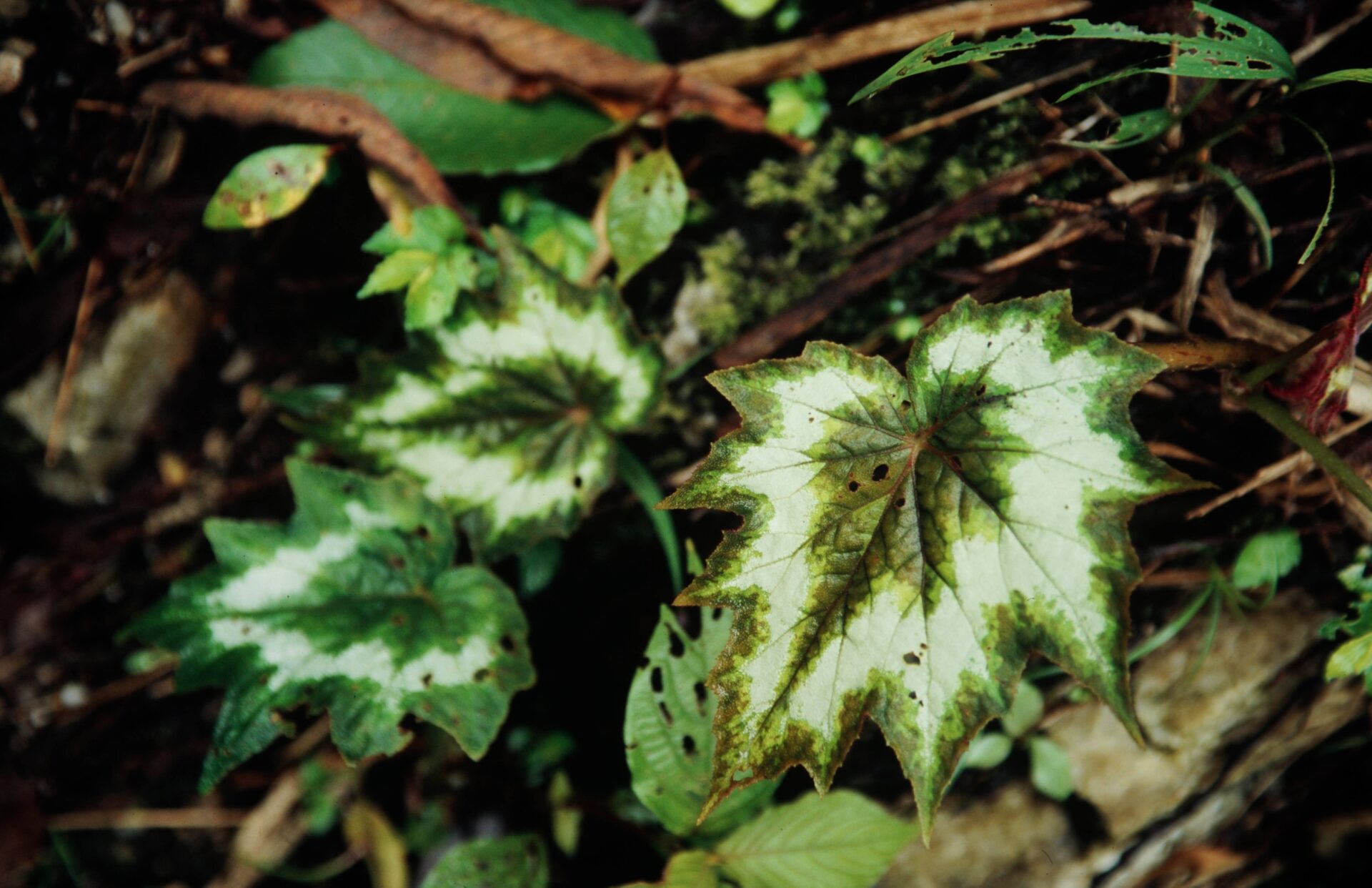
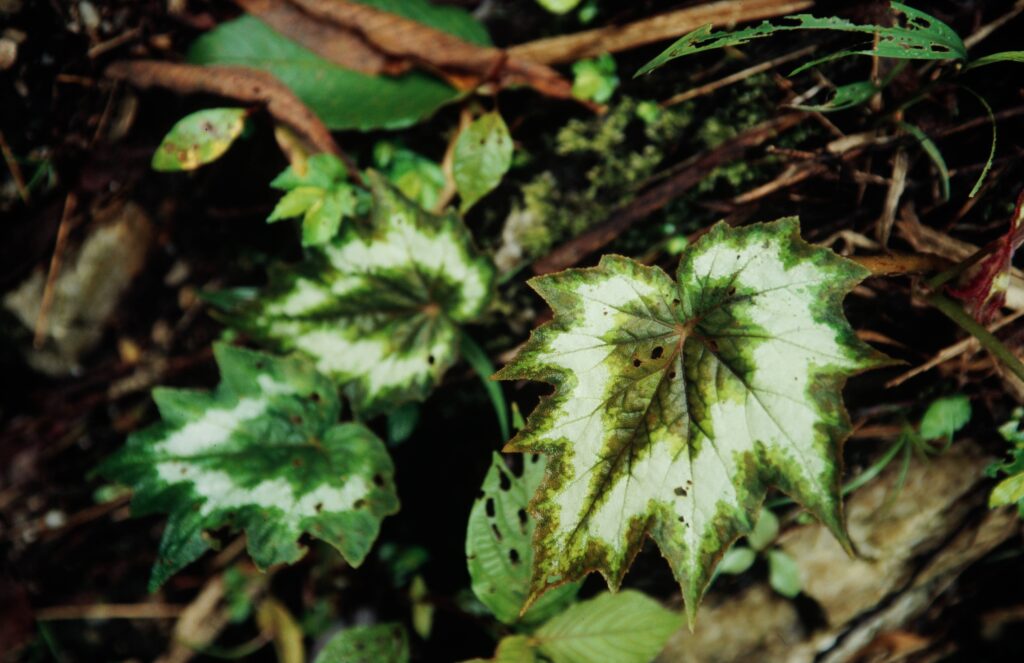
The plant is a succulent, rhizomatous to shortly caulescent herb with reddish, hispid stems. The asymmetric, palmately lobed leaves give the species its epithet: they are broadly ovate in outline, deeply incised into several acuminate, toothed lobes, often bristly-hairy and frequently marked with a paler or silvery zone above and reddish coloration beneath. As in all begonias the flowers are unisexual and monoecious, borne in axillary cymes; the pink to white male flowers bear two larger and two smaller tepals, while the female flowers have an inferior, three-winged ovary that develops into the characteristic unequally winged, dehiscent capsule containing very numerous minute seeds.
Begonia palmata is taxonomically a notoriously polymorphic species complex, with numerous varieties and segregate names reflecting wide variation in leaf division and indumentum across its range. Such variability has made it a focus of biogeographic and systematic study within the megadiverse genus Begonia. Many of its forms are cultivated as foliage ornamentals, and its broad distribution underlines the high endemism and diversification of begonias in the wet forests of tropical Asia.
Author: D.Don · Sources: POWO (Kew), GBIF, Flora of China Vol. 13, Flora of Bhutan Vol. 2, Tebbitt: Begonias — Cultivation, Identification, and Natural History