Papaveraceae

Hook.f.

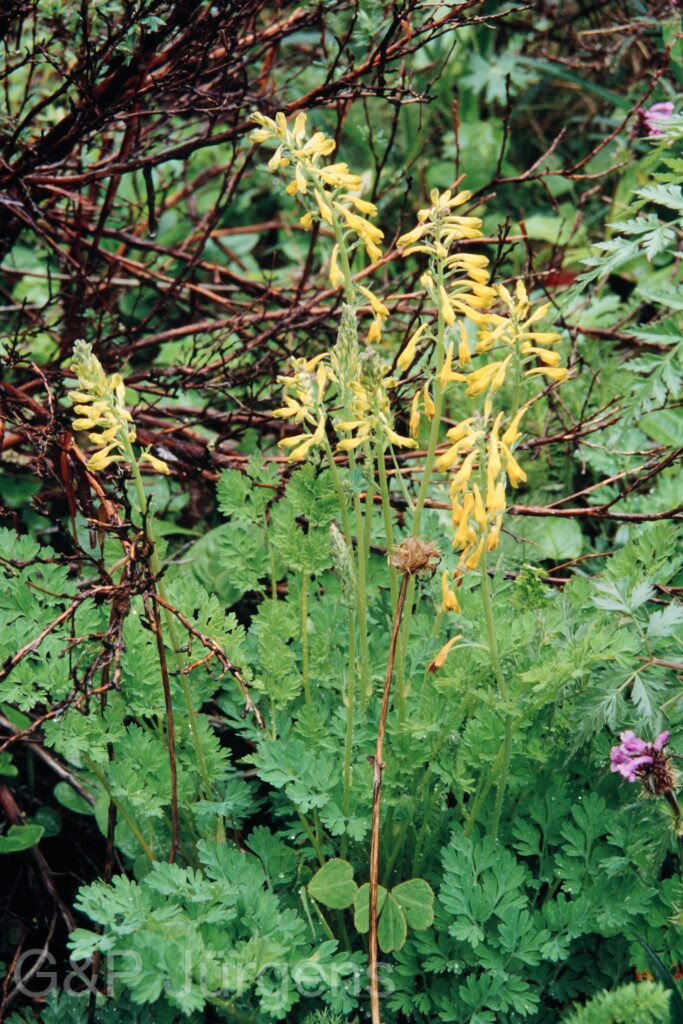
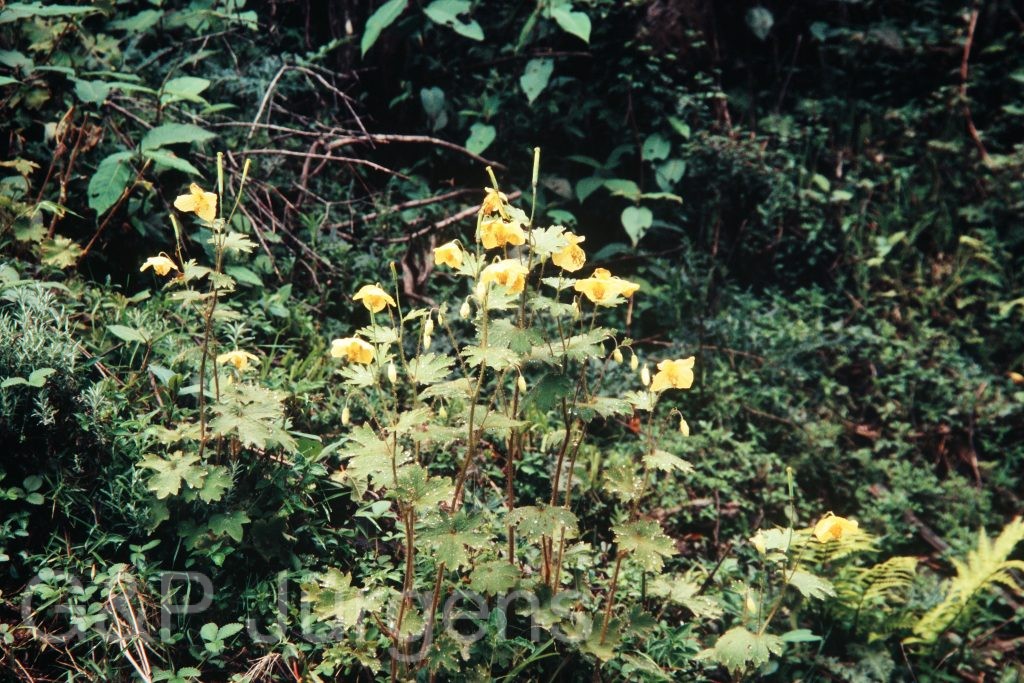
BhutanPG2011 681 01 01
Bhutan Luksor, 3000m July
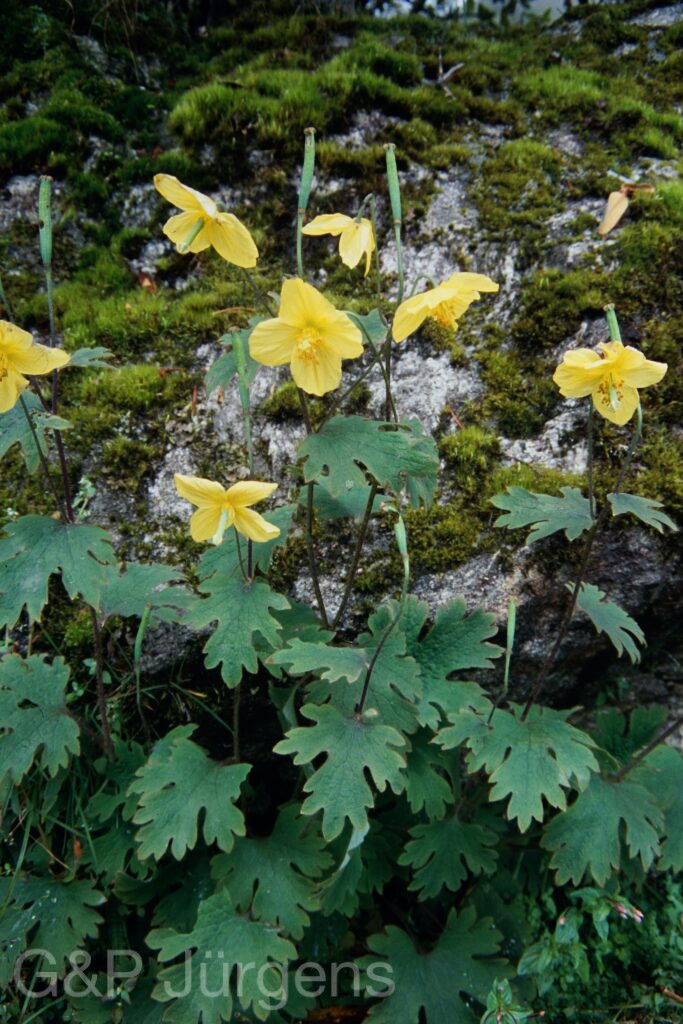
Bh09 293 G482
Bhutan Tongsa 2400m, June
Sikkim2003 152 G203
Sikkim Dzongri 4000m 08.2003

Description

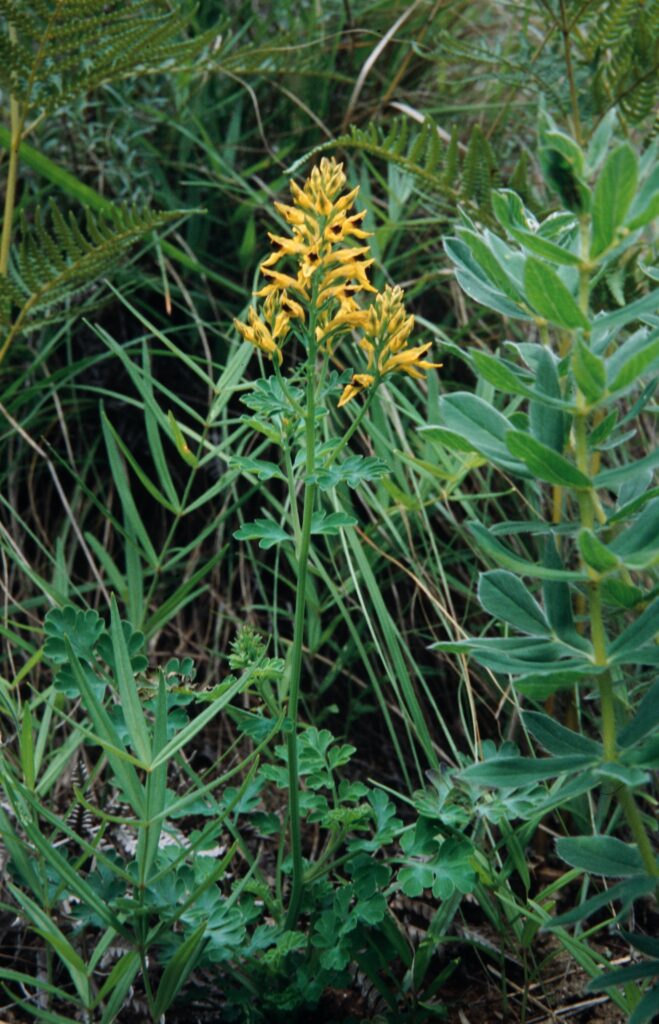
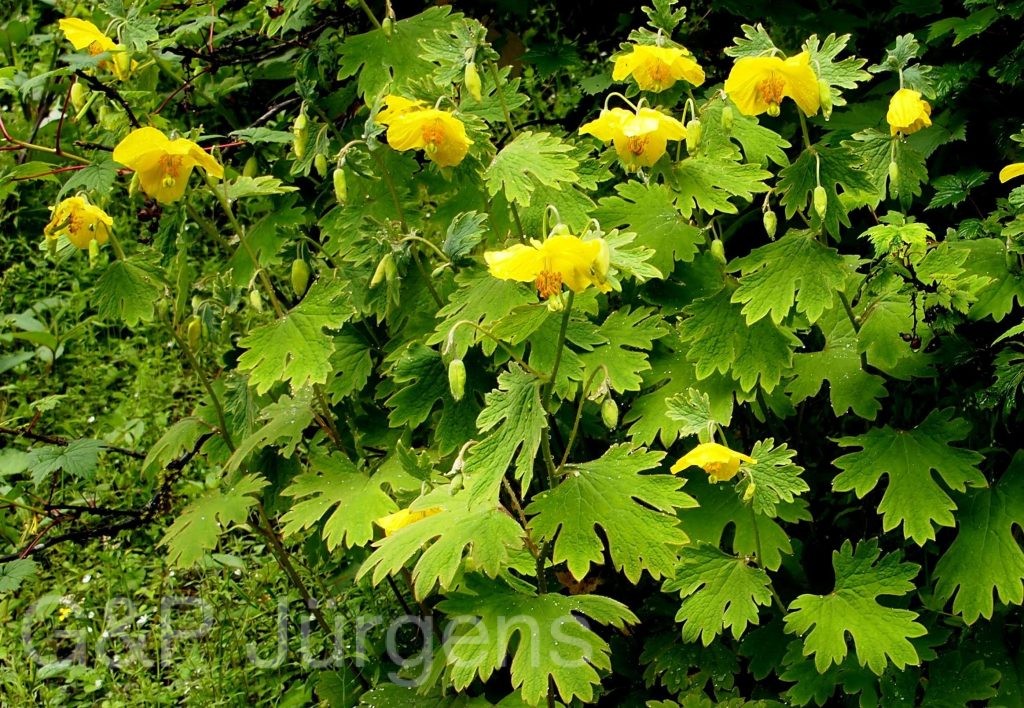
Cathcartia villosa is an eastern Himalayan poppywort distributed through India, Nepal, Bhutan and southern Tibet (China), the GBIF dataset holding about 110 records (codes for Canada and Great Britain reflect cultivated and herbarium material). It grows in cool, humid montane and subalpine settings: shaded forest margins, mossy rocks, ravine sides and damp banks, broadly between about 2400 and 4000 m. The collections illustrated span this gradient, from Tongsa in Bhutan at around 2400 m and Luksor at 3000 m to Dzongri in Sikkim near 4000 m, recorded between June and August.

It is a softly villous perennial herb clothed throughout in long, spreading yellowish-brown hairs. The leaves are mostly basal, long-petiolate, the blade rounded and palmately lobed to crenate, the whole densely hairy and yielding a coloured latex when broken, as is typical of the poppy family. One or a few nodding, golden-yellow flowers are borne on slender hairy scapes; each has two caducous sepals, four broad spreading petals, numerous stamens and a superior ovary. The fruit is an elongate, hairy capsule dehiscing by valves to shed many small seeds.

Long treated within Meconopsis, this plant is now widely referred to the segregate genus Cathcartia, a Sino-Himalayan group of yellow-flowered, villous poppyworts distinguished from true Meconopsis by molecular and morphological evidence; older sources and the source URL still use the name Meconopsis villosa. It is valued in temperate gardens as an elegant woodland perennial. The species is locally frequent across its range and is not formally assessed as threatened, but it depends on cool, moist forest-edge habitats susceptible to deforestation and to climatic warming.

Author: Hook.f. · Sources: POWO (Kew), GBIF, Flora of Bhutan, Flora of China, Annotated Checklist of the Flowering Plants of Nepal, Grey-Wilson The Genus Meconopsis
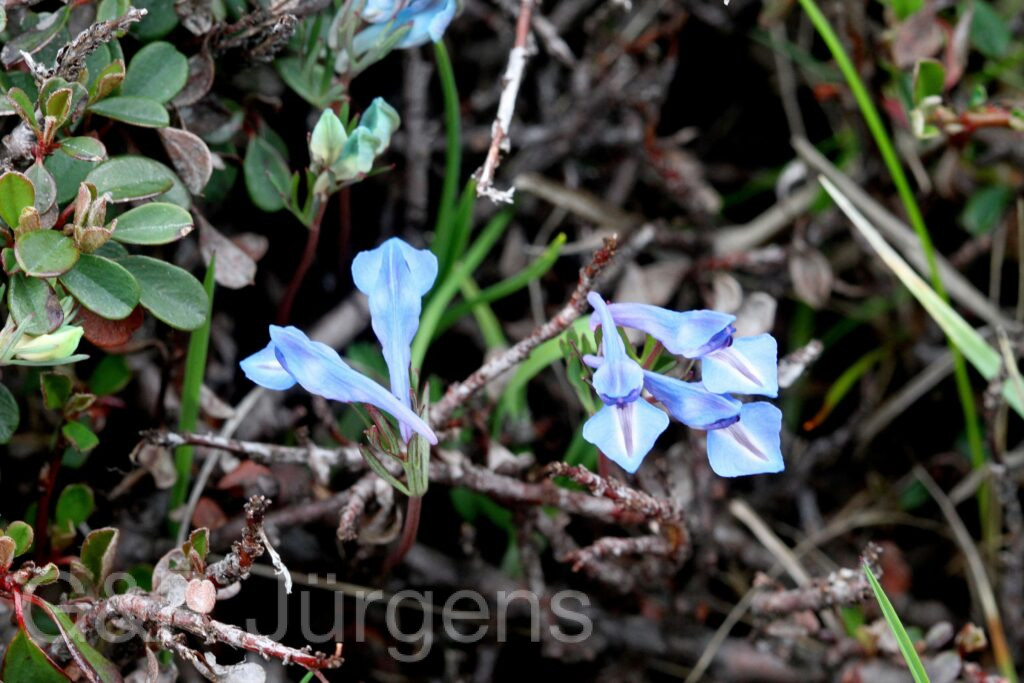
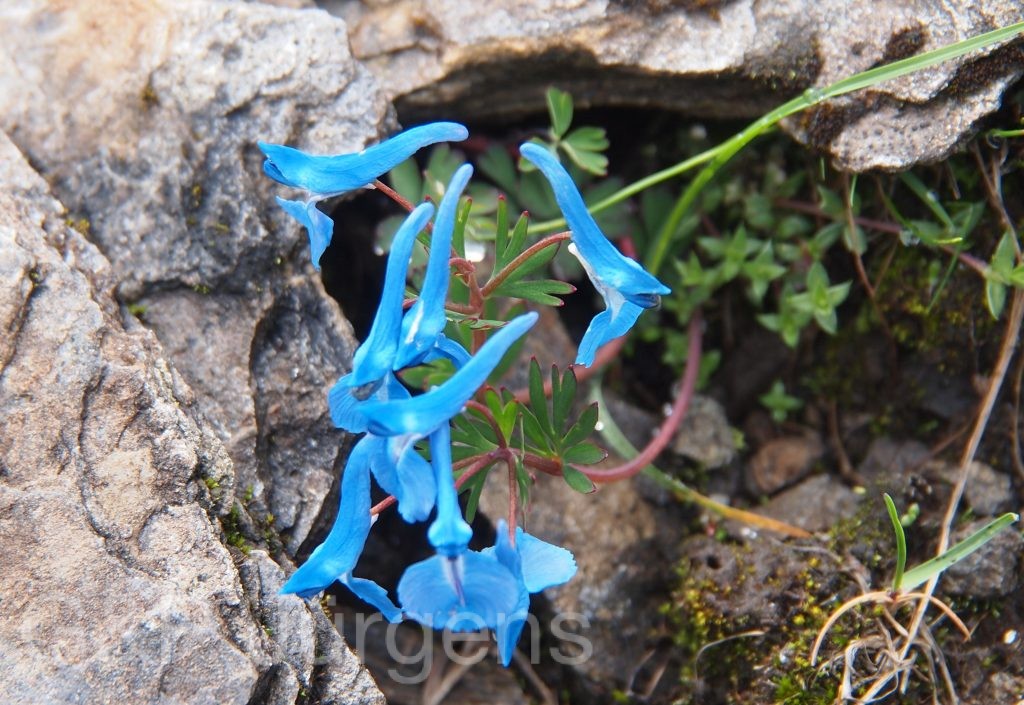
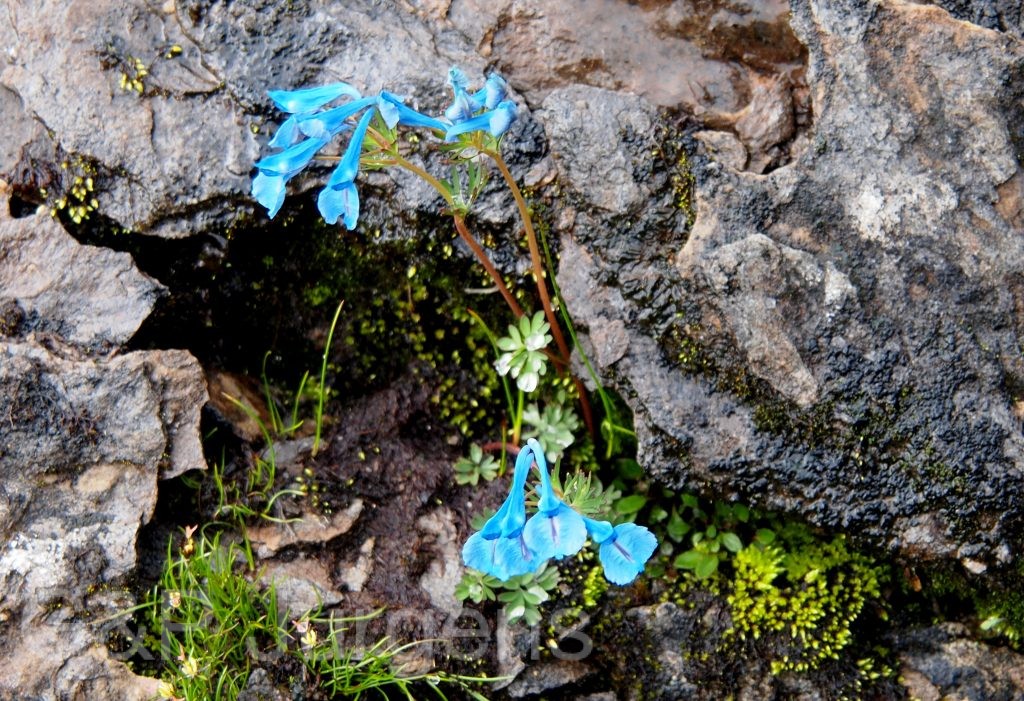
D.G. Long.

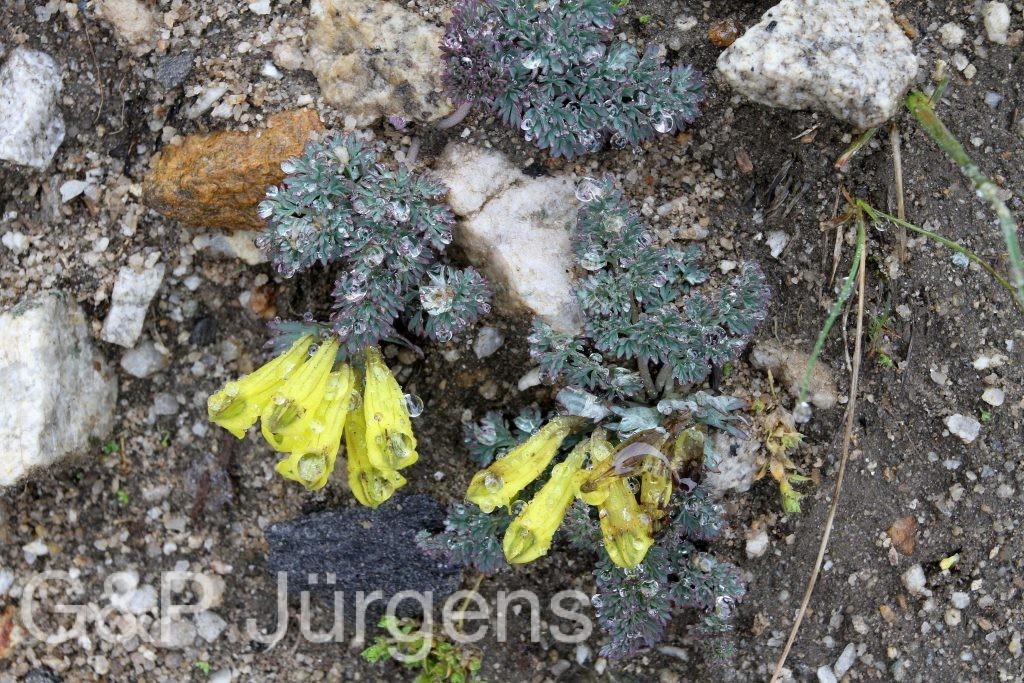
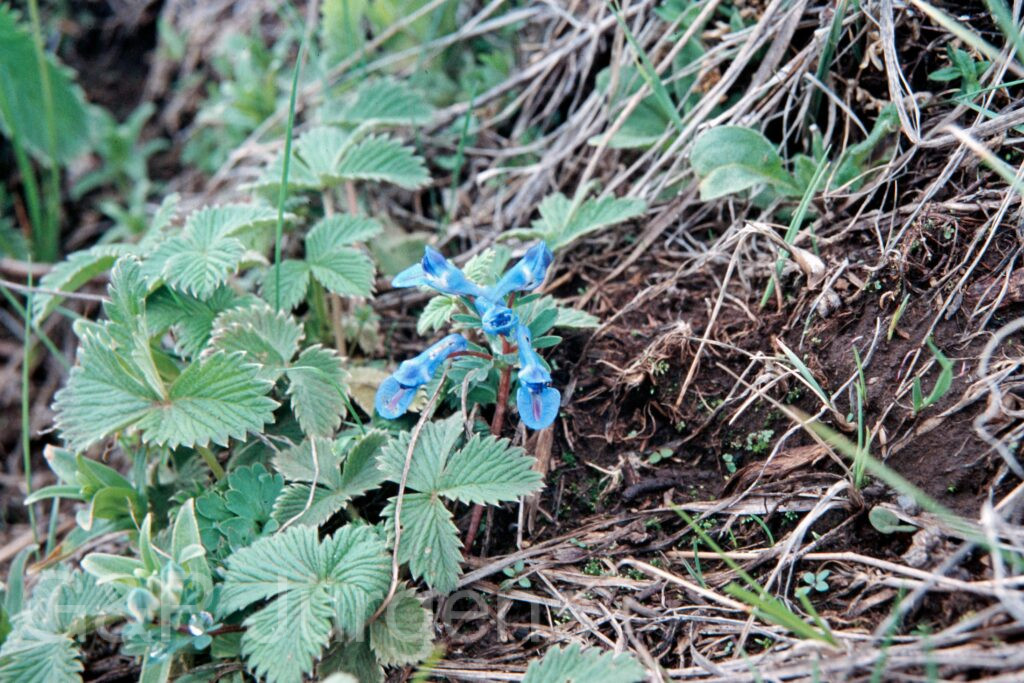
BhutanPG2011 568 01
Bhutan Ludlow-Sherriff-Trail Dem-Tso, 4600m July

Description

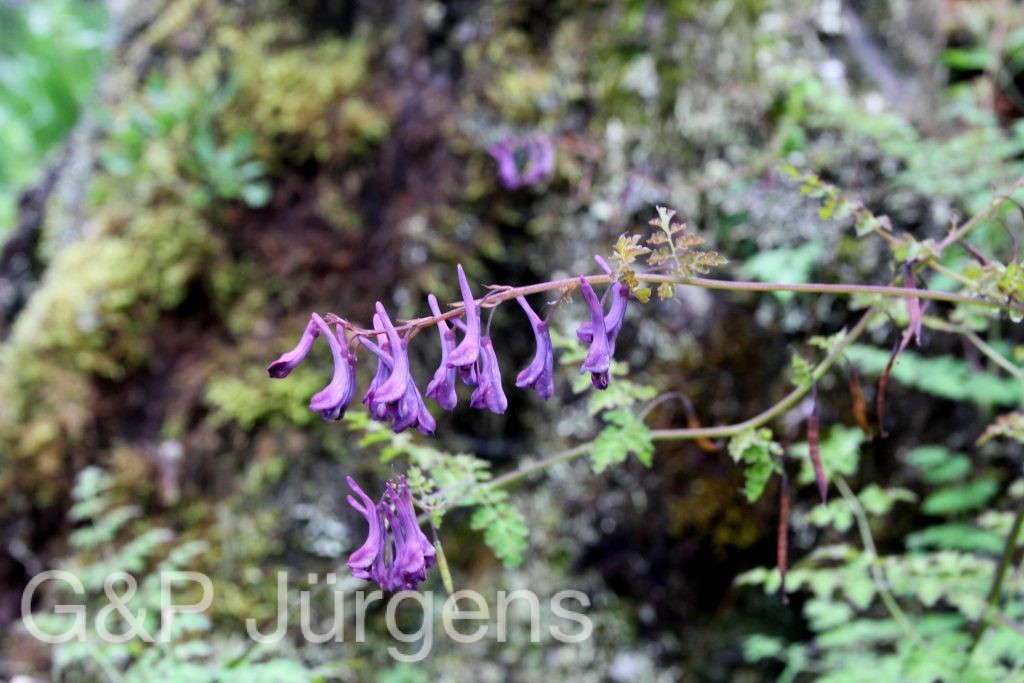
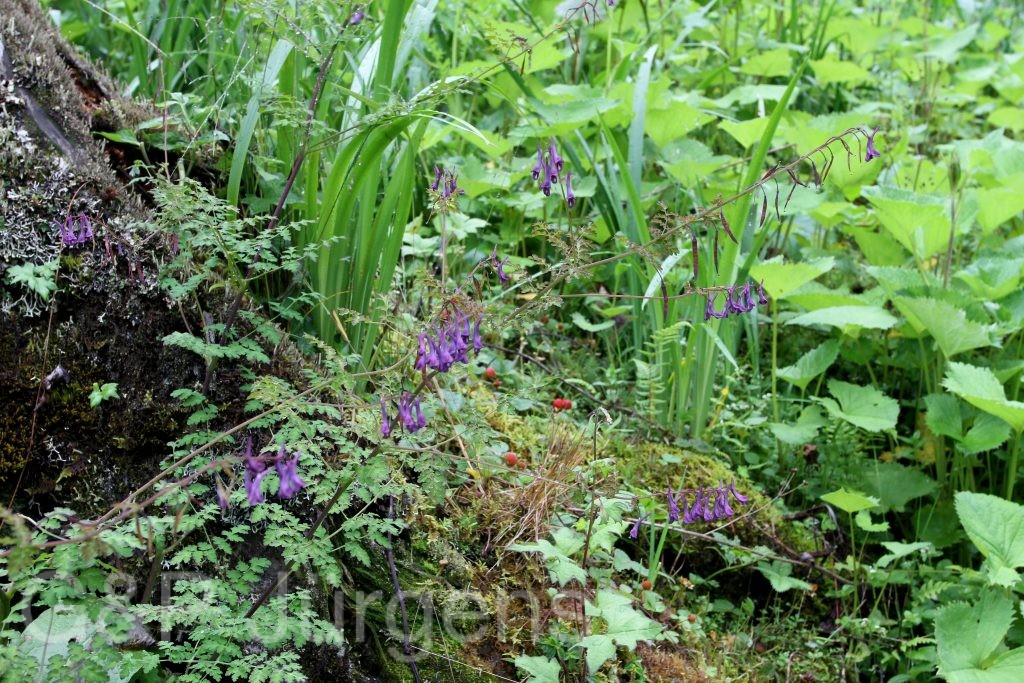
Corydalis calliantha is a high-alpine herb of the Eastern Himalaya, narrowly endemic to Bhutan, where it is the only territory from which it is documented (GBIF records derive exclusively from BT, with very few verified occurrences). It occupies the upper alpine and subnival belt, growing among moist screes, moraine debris and damp turf at the margins of glacial tarns. The collection illustrated here, gathered along the Ludlow-Sherriff Trail near Dem-Tso at about 4600 m in July, typifies its preference for cool, well-drained but seasonally irrigated substrates exposed only briefly during the short alpine summer.

It is a low, tufted, glabrous and somewhat glaucous perennial arising from a slender fleshy rootstock. The leaves are mostly basal, petiolate and several times finely divided into small obovate to oblong segments, giving a delicate, almost ferny appearance. Flowers are borne in short, few-flowered racemes; each zygomorphic flower has four petals, the outer upper petal produced backward into a slender, gently curved nectar spur, and is typically clear sky-blue to violet-blue, the colour to which the epithet calliantha ("beautiful-flowered") alludes. The fruit is a slender dehiscent capsule containing several small, shining black seeds, each often bearing a small elaiosome.

Within the large and taxonomically intricate genus Corydalis, this species belongs to the blue-flowered alpine assemblage centred on the Sino-Himalayan region, a group much studied by D.G. Long and collaborators in the Flora of Bhutan. Its restricted range and specialised subnival habitat make it of biogeographic interest and potentially vulnerable to climatic shifts affecting high-altitude snowmelt, although its remote terrain affords protection from direct disturbance.

Author: D.G. Long. · Sources: POWO (Kew), GBIF, Flora of Bhutan, Annotated Checklist of the Flowering Plants of Nepal, Liden & Zetterlund monograph of Corydalis

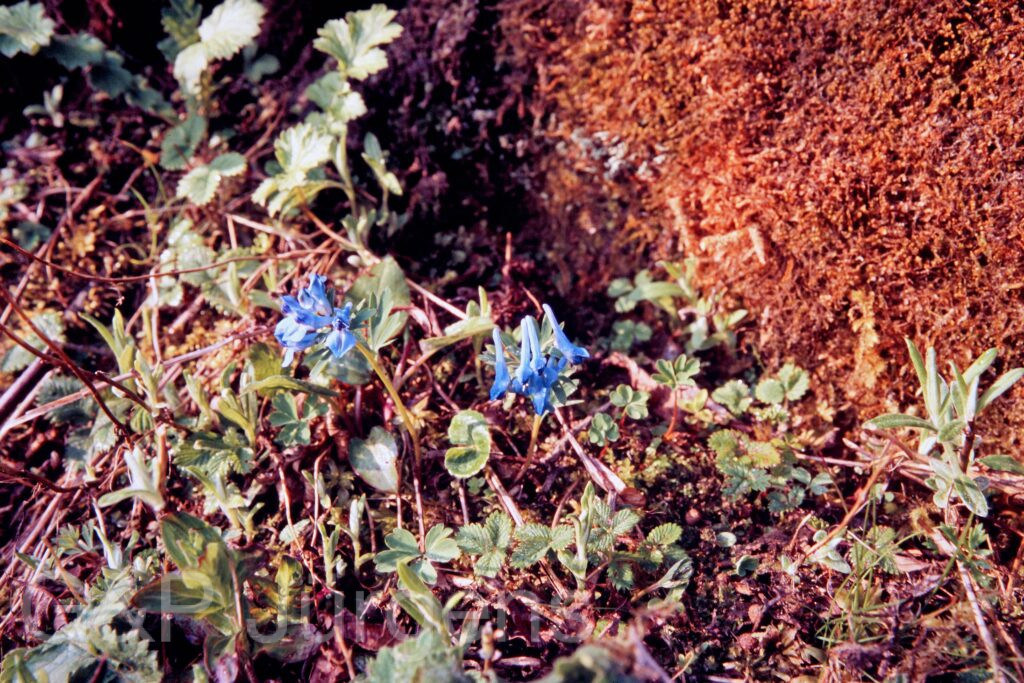
Royle

Nepal 99 132 ergebnis
West-Nepal South of Rara-Lake 3800m, June
Garh 07 117 ergebnis
India Garhwal Meggu Kichatti 3400m, June

Description

Corydalis cashmeriana is a celebrated blue-flowered alpine herb of the western and central Himalaya. GBIF records place it in Nepal, India, Bhutan and China, with around 130 occurrences reflecting its distribution through the high mountains from Kashmir eastward. It grows on moist alpine meadows, turfy slopes, the margins of melting snowbeds and damp rocky ground, generally between roughly 3000 and 4500 m, where cool, well-watered summer conditions prevail. The photographed plants from south of Rara Lake in West Nepal at 3800 m and from Meggu Kichatti in Garhwal, India, at 3400 m, both flowering in June, illustrate its early-summer blooming in the subalpine to alpine belt as the snow retreats.

It is a low, tufted perennial herb arising from small, clustered tubers, producing a few erect, leafy stems. The leaves are mostly basal and long-petiolate, the blades much-divided and glaucous, the ultimate segments small and obovate. The inflorescence is a short terminal raceme of few flowers; each flower is strongly zygomorphic, with four petals of which the outer upper one is prolonged backwards into a slender, gently curved spur, the whole of an intense sky-blue to deep azure. The fruit is a narrow, elongate capsule dehiscing to release shining black seeds bearing an elaiosome.

Corydalis is a very large genus of the Fumarioideae, here treated within the Papaveraceae, with its greatest diversity in the Sino-Himalayan region. The intensely blue-flowered alpine species, of which C. cashmeriana is the type of much horticultural interest, are notoriously challenging in cultivation. The seed elaiosome promotes dispersal by ants, while the spurred flowers are pollinated by long-tongued bumblebees probing for nectar held in the spur.

Author: Royle · Sources: POWO (Kew), GBIF, Flora of Nepal, Flora of China (Papaveraceae, Fumarioideae), The Genus Corydalis (Lidén & Zetterlund)

Duthie & Prain ex Prain

Garw 2005 174 ergebnis ergebnis
India Garhwal Shertoli 3100m, September

Description

Corydalis casimiriana is a Himalayan herb distributed across the western and central ranges, recorded from India, Nepal, Pakistan, southern China and Bhutan (gbif_countries: IN, NP, PK, CN, BT), with some 192 GBIF occurrences. It occupies moist temperate to subalpine habitats, including shaded forest floors, mossy banks, boulder slopes and the margins of streams, where cool, humid conditions persist through the growing season. The illustrated collection comes from Shertoli in Garhwal, India, at about 3100 m in September, capturing the species in late-season flower as the monsoon recedes from the western Himalayan hills.

The plant is a slender, often glaucous annual or short-lived herb arising from a fine root system, with erect to ascending, somewhat brittle stems. The leaves are alternate and two- to three-times pinnately or ternately divided into small, narrow to obovate segments, giving a delicate, ferny aspect. The flowers are borne in terminal racemes and are markedly zygomorphic, each with four petals of which the upper bears a backward-projecting spur; the corolla is typically blue to purplish, sometimes paler. The fruit is a slender, dehiscent capsule splitting to release small, shining seeds often bearing an elaiosome that promotes ant dispersal.

Corydalis is one of the largest genera in the fumitory alliance of Papaveraceae, exceptionally diverse in the Sino-Himalaya, and C. casimiriana belongs to its assemblage of slender, blue-flowered montane herbs. The genus is taxonomically complex, with many narrowly defined species, and accurate determination relies on flower and fruit detail. Widespread across the western and central Himalaya, the species is of no particular conservation concern.

Author: Duthie & Prain ex Prain · Sources: POWO (Kew), GBIF, Flora of Nepal, Flora of China, Annotated Checklist of the Flowering Plants of Nepal, Lidén & Zetterlund monograph of Corydalis

Royle

Nepal 2009 86 ergebnis
Nepal Helambu Bolgoau 2000, May

Description

Corydalis cornuta is a Himalayan fumitory whose reliable distribution lies along the temperate ranges of Nepal, India, Pakistan, Afghanistan and adjacent China; GBIF returns 273 occurrences, though several listed countries reflect database artefacts rather than genuine native populations. It grows in moist shaded sites, on damp banks, forest floors, ledges and cultivated terrace margins in the temperate belt, broadly between about 1800 and 3000 m. The illustrated plant was recorded in Nepal, in Helambu near Bolgoau, at around 2000 m in May, a typical mid-montane spring station where the slender annual completes its cycle before the monsoon.

The plant is a delicate, glabrous annual herb with brittle, often branched stems arising from a slender root. Leaves are alternate and two- to three-pinnately dissected into small obovate to cuneate ultimate segments, the foliage glaucous and somewhat fern-like. The flowers are borne in short, leaf-opposed or terminal racemes; each is strongly zygomorphic and yellow, with four petals in two whorls, the outer upper petal prolonged backwards into a slender nectar spur and the inner pair connate over the stigma. There are two stamens, each split into three (diadelphous), and a superior ovary that ripens into a narrow, linear, dehiscent capsule shedding shining black seeds.

Corydalis is treated here within an expanded Papaveraceae (incorporating the former Fumariaceae), consistent with the input family. POWO and GBIF accept the name. The genus is enormously diverse in the Himalaya and Tibet, and the spurred yellow-flowered annuals such as this form a distinctive ecological group of the moist temperate forest floor.

Author: Royle · Sources: POWO (Kew), GBIF, Flora of Pakistan, Annotated Checklist of the Flowering Plants of Nepal, Flora of China, The Genus Corydalis (Papaveraceae/Fumariaceae monograph)

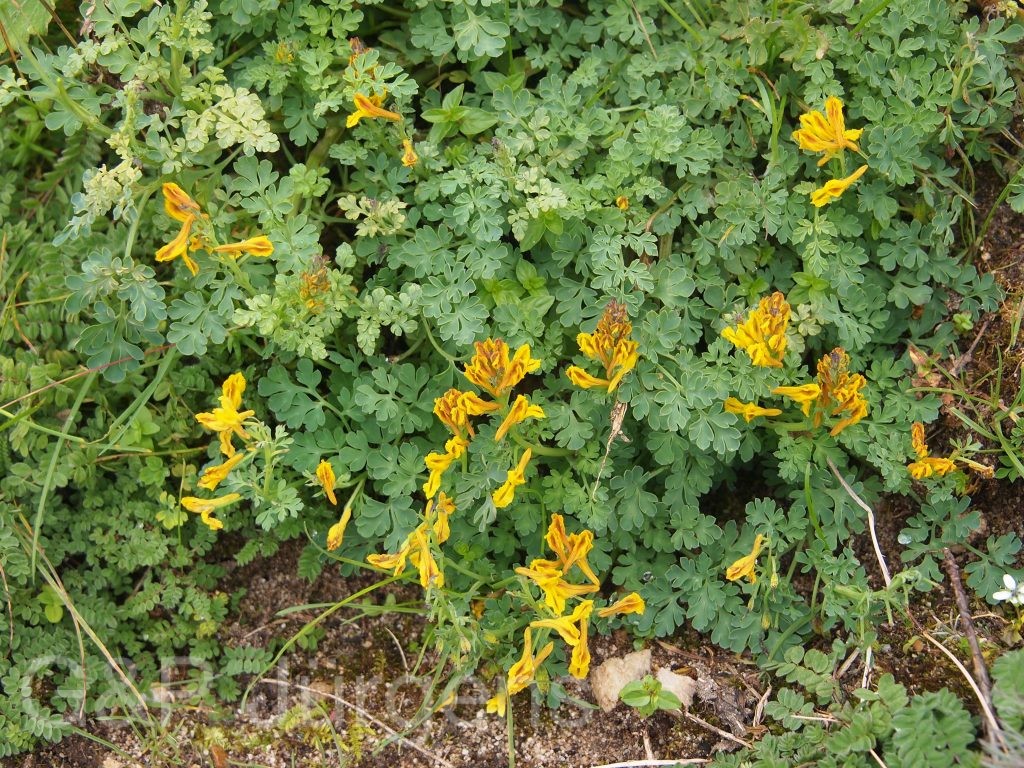
Prain

Bhutan2012 307
Bhutan Shale-La, 4100m September

Description

Corydalis crispa is an eastern Himalayan fumitory restricted to China, Bhutan and India, with around 129 GBIF records. It is a high-altitude species of the alpine zone, growing on open stony slopes, screes, rock crevices and the gravelly margins of meadows. The cited material from Shele-La in Bhutan at about 4100 m, flowering in September, is representative of its occurrence near the upper limit of vascular plant growth, where it occupies well-drained, sunny but moist mineral soils and flowers late in the brief alpine summer as the monsoon eases.

The plant is a glabrous, somewhat glaucous herb arising from a slender rootstock, with erect to ascending, branched and often slightly flexuose stems. The leaves are alternate, two- to three-times divided into small, narrow, often crisped or finely dissected ultimate segments, giving rise to the epithet. The flowers are borne in lax terminal racemes; each is strongly zygomorphic with four petals in two whorls, the outer upper petal prolonged backward into a spur, and are typically blue to purplish-blue. The fruit is a slender, dehiscent capsule that opens to disperse small black seeds, frequently bearing an oil-rich elaiosome attractive to ants.

Described by Prain, C. crispa is one of many alpine blue-flowered Corydalis that diversified across the Sino-Himalayan high mountains, a centre of exceptional richness for the genus. Such species are closely tied to specialised scree and crevice microhabitats. The web link references a synonymous name, C. bowes-lyonii, reflecting nomenclatural realignment. As a narrow high-altitude endemic, its populations merit monitoring against climatic change affecting alpine habitats.

Author: Prain · Sources: POWO (Kew), GBIF, Flora of China, Flora of Bhutan, Liden & Zetterlund's monograph of Corydalis

(Prain) D.G. Long

Sikkim2011 347
Sikkim Lada-La 4000m, June
BhutanPG2011 653
Bhutan Thitha-Tso, 4300m June
BhutanPG2011 652 1
Bhutan Thitha-Tso, 4300m June

Description

Corydalis ecristata is a small alpine herb of the higher Himalaya, distributed through Nepal, India, China and Bhutan (NP, IN, CN, BT), with about 58 recorded occurrences. It grows on open stony slopes, in screes, alpine turf, moraine and damp gravelly ground near snowmelt, characteristically in the high alpine to subnival zone, broadly between about 3800 and 4800 m. The gatherings cited come from Lada-La in Sikkim at 4000 m and from Thitha-Tso in Bhutan at 4300 m, both flowering in June, an elevation and early-summer season typical of the species, which colonises freshly exposed, well-drained debris in the brief window following the retreat of snow.

The plant is a small, glabrous, somewhat glaucous perennial herb arising from a slender tuber or rootstock. The leaves are mostly basal and finely divided, ternately to pinnately dissected into narrow ultimate segments, with long petioles. The flowers are few, borne in a short terminal raceme; each is strongly zygomorphic with four petals in two whorls, the outer upper petal prolonged backward into a nectar spur, the inner petals cohering over the stigma. As the epithet 'ecristata' indicates, the petals are crestless (lacking the dorsal wing or crest found in many congeners), the corolla blue to sky-blue, sometimes with darker markings. The fruit is a slender, dehiscent, few-seeded capsule.

Corydalis (subfamily Fumarioideae of the Papaveraceae, sometimes treated in Fumariaceae) attains exceptional diversity in the Sino-Himalayan alpine flora, where blue-flowered, tuberous species like C. ecristata are a conspicuous element of the high screes. The spurred, bilaterally symmetric flowers are pollinated chiefly by bumblebees seeking the nectar held in the spur. As a specialist of high-altitude scree and moraine with a fairly restricted range, it is dependent on stable alpine conditions, though it is not at present regarded as threatened.

Author: (Prain) D.G. Long · Sources: POWO (Kew), GBIF, Flora of Bhutan, Flora of China, The Genus Corydalis (Liden & Zetterlund monograph)

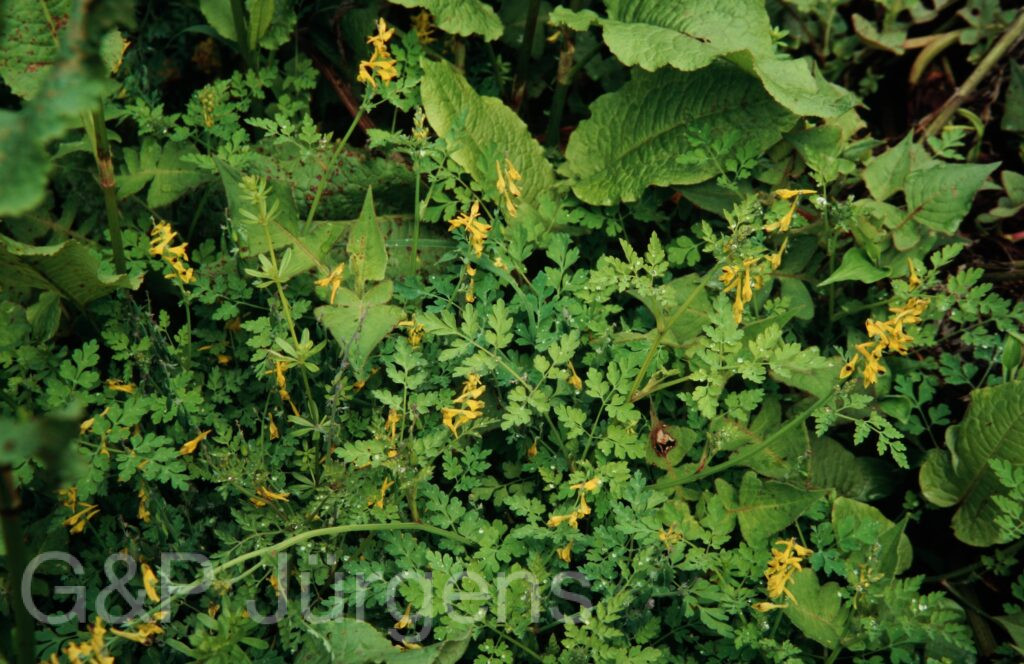
Wall. ex Hook.f. & Thomson

Nepal 99 483 ergebnis
West-Nepal Churta-Khola 3700m, June

Description

Corydalis elegans is a slender alpine herb of the western Himalaya, known principally from India and Nepal, where its 22 documented occurrences reflect a restricted and rather local distribution. It is a plant of high-elevation habitats, growing on moist open slopes, among rocks, in damp shrubberies and along the margins of forest in the subalpine and alpine zones, where it flowers in the early summer after snowmelt. In west Nepal it ascends to considerable altitude, as shown by the collection along the Churta Khola at about 3700 m in June, a site typical of its cool, well-watered montane preference.

The plant is a glabrous, somewhat glaucous annual or short-lived herb with slender erect to ascending stems arising from a fine root system. The leaves are alternate, two- to three-pinnately dissected into small, narrow, oblong to obovate ultimate segments, giving a delicate, finely cut appearance. The inflorescence is a terminal raceme of few-to-several zygomorphic flowers; each flower is yellow, the outer of the four petals prolonged backward into a slender curved spur, the inner petals connivent over the stamens, which are united into two bundles of three. The fruit is a slender dehiscent capsule containing several small black seeds, typically bearing an elaiosome.

Corydalis, treated within Papaveraceae (sometimes segregated as Fumariaceae), is one of the largest genera of the Himalaya, with a great proliferation of species across the alpine belt. The spurred, nectariferous flowers are adapted to pollination by long-tongued bees, while the elaiosome-bearing seeds are dispersed by ants. As a narrowly distributed western Himalayan endemic known from few collections, C. elegans warrants attention as a potentially range-restricted species, its conservation tied to the stability of high-altitude habitats sensitive to grazing and climatic change.

Author: Wall. ex Hook.f. & Thomson · Sources: POWO (Kew), GBIF, Flora of Nepal, Flora of Pakistan, Flora of China Vol. 7, Lidén & Zetterlund monograph Corydalis (A Gardener's Guide)

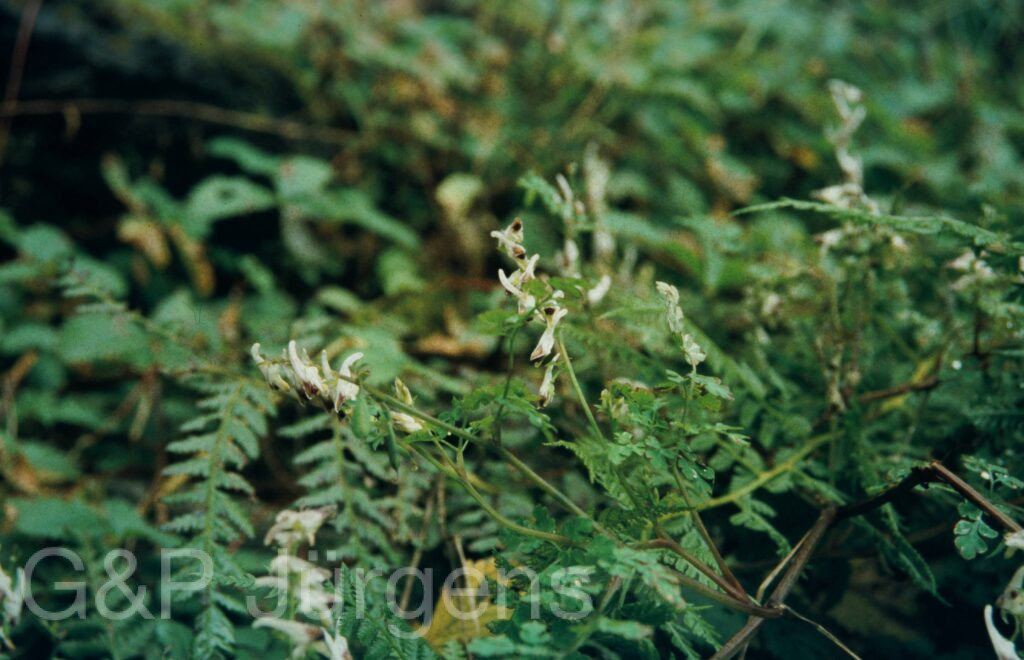
Prain

Nepal 99 889 ergebnis
Nepal Murwa 3360m, July

Description

Corydalis filicina is a Sino-Himalayan herb distributed across the central and eastern Himalaya, with verified occurrences in Nepal, Bhutan and south-western China (Xizang and adjacent provinces). Though comparatively few collections are catalogued (some 14 georeferenced occurrences), the species occupies a well-defined montane to subalpine belt. It favours cool, humid microhabitats — shaded ravines, mossy banks beneath shrubberies, conifer and Rhododendron forest margins, and damp rock crevices — typically between about 3,000 and 4,300 m. The plant photographed at Murwa, Nepal, at 3,360 m in July, illustrates its flowering during the monsoon season, when meltwater and rainfall sustain the moist soils it requires.

It is a slender, glabrous, often glaucous annual or short-lived perennial arising from a fibrous root system. The stems are erect to ascending, branched and rather weak. The leaves are notably finely dissected, two- to three-pinnate or pinnatisect into narrow, fern-like ultimate segments, a feature reflected in the epithet "filicina" (fern-like). The flowers are borne in lax terminal or leaf-opposed racemes; each zygomorphic flower is yellow, with the outer pair of the four petals forming a spur at the base and a galeate upper lip, in the characteristic Corydalis structure. The fruit is a slender dehiscent capsule containing small shining black seeds, generally bearing an elaiosome.

Corydalis (subfamily Fumarioideae) is among the largest Himalayan genera, with intense diversification on the Tibetan Plateau and its margins. The fern-leaved species form a taxonomically intricate group requiring careful comparison of leaf division, raceme arrangement and capsule shape. No targeted conservation assessment exists; like many narrow-ranging Himalayan herbs it is potentially vulnerable to habitat disturbance and climate-driven upward shifts of subalpine vegetation.

Author: Prain · Sources: POWO (Kew), Flora of China Vol. 7, Flora of Bhutan Vol. 1, GBIF, Lidén & Zetterlund: Corydalis – A Gardener's Guide (1997)

Hook.f. & Thomson

BhutanPG2011 814 01 01
Bhutan Chele-La, 3700m July
BhutanPG2011 813
Bhutan Chele-La, 3700m July

Description

Corydalis flaccida is a Himalayan herb distributed through China, Nepal, India and Bhutan, with GBIF documenting 138 occurrences across this Sino-Himalayan arc. It grows in cool, moist montane to sub-alpine habitats, including forest margins, shrubberies, shaded banks, rocky slopes and stream-sides, broadly between 2700 and 4000 m. The photographed plant from the Chele-La pass in western Bhutan at about 3700 m, flowering in July, illustrates its monsoon-season blooming in humid high-pass environments where it grows among rocks and moist alpine scrub.

The species is an erect, somewhat lax, glabrous annual or short-lived perennial herb with brittle, often somewhat flaccid stems, as the epithet suggests. The leaves are alternate and two- to three-pinnately divided into small ovate to oblong segments, frequently glaucous beneath. Flowers are borne in elongating racemes subtended by leafy or dissected bracts; each zygomorphic flower has four petals in two whorls, the upper petal prolonged backward into a slender spur. The corolla is typically blue to purplish-blue, sometimes with darker tips, and the inner petals are apically connate over the stigma. The fruit is a slender, linear, dehiscent capsule containing several shiny black seeds, each usually bearing an oily elaiosome.

Described by Hooker and Thomson, the species belongs to the large, taxonomically complex genus Corydalis (Fumarioideae), notable in the Himalaya for its diversity of blue-flowered species. The elaiosome-bearing seeds promote myrmecochorous (ant-mediated) dispersal, while the spurred flowers are adapted for pollination by long-tongued bees. Like many Himalayan Corydalis it contains isoquinoline alkaloids of pharmacological interest. With a broad regional distribution it is not considered threatened, though its specialised high-elevation habitats are sensitive to land-use and climatic change.

Author: Hook.f. & Thomson · Sources: POWO (Kew), GBIF, Flora of China, Flora of Bhutan, Revision of the genus Corydalis (Lidén & Zetterlund)