
Prain
Description
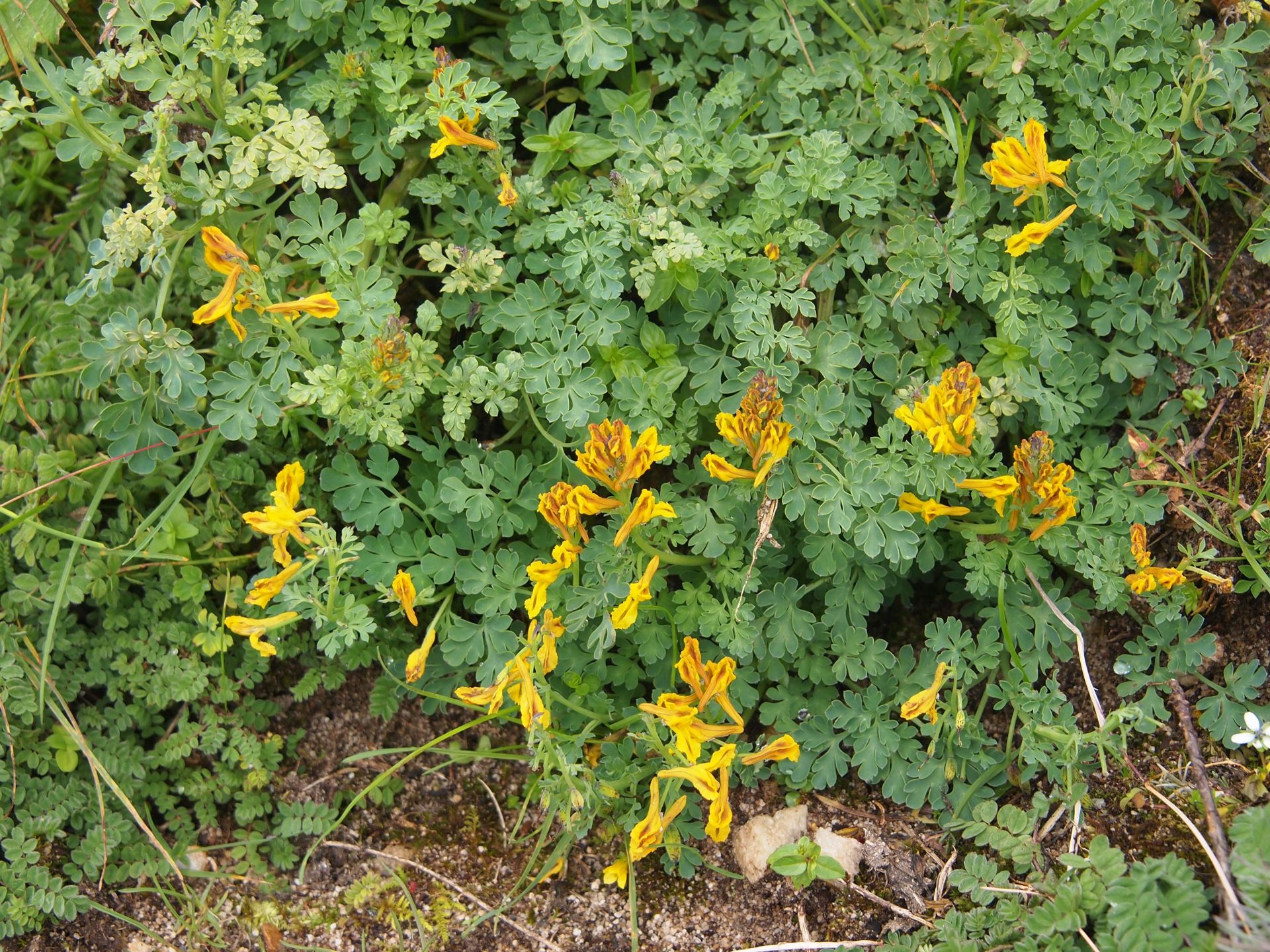
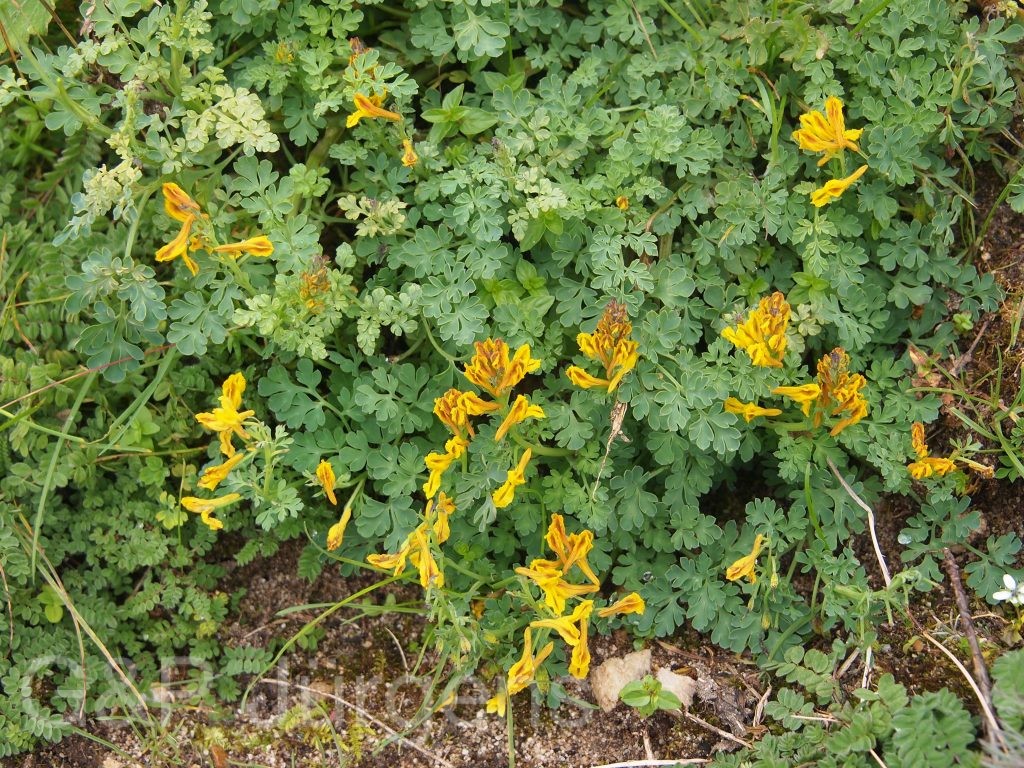
Corydalis crispa is an eastern Himalayan fumitory restricted to China, Bhutan and India, with around 129 GBIF records. It is a high-altitude species of the alpine zone, growing on open stony slopes, screes, rock crevices and the gravelly margins of meadows. The cited material from Shele-La in Bhutan at about 4100 m, flowering in September, is representative of its occurrence near the upper limit of vascular plant growth, where it occupies well-drained, sunny but moist mineral soils and flowers late in the brief alpine summer as the monsoon eases.
The plant is a glabrous, somewhat glaucous herb arising from a slender rootstock, with erect to ascending, branched and often slightly flexuose stems. The leaves are alternate, two- to three-times divided into small, narrow, often crisped or finely dissected ultimate segments, giving rise to the epithet. The flowers are borne in lax terminal racemes; each is strongly zygomorphic with four petals in two whorls, the outer upper petal prolonged backward into a spur, and are typically blue to purplish-blue. The fruit is a slender, dehiscent capsule that opens to disperse small black seeds, frequently bearing an oil-rich elaiosome attractive to ants.
Described by Prain, C. crispa is one of many alpine blue-flowered Corydalis that diversified across the Sino-Himalayan high mountains, a centre of exceptional richness for the genus. Such species are closely tied to specialised scree and crevice microhabitats. The web link references a synonymous name, C. bowes-lyonii, reflecting nomenclatural realignment. As a narrow high-altitude endemic, its populations merit monitoring against climatic change affecting alpine habitats.
Author: Prain · Sources: POWO (Kew), GBIF, Flora of China, Flora of Bhutan, Liden & Zetterlund's monograph of Corydalis