
Royle
Description
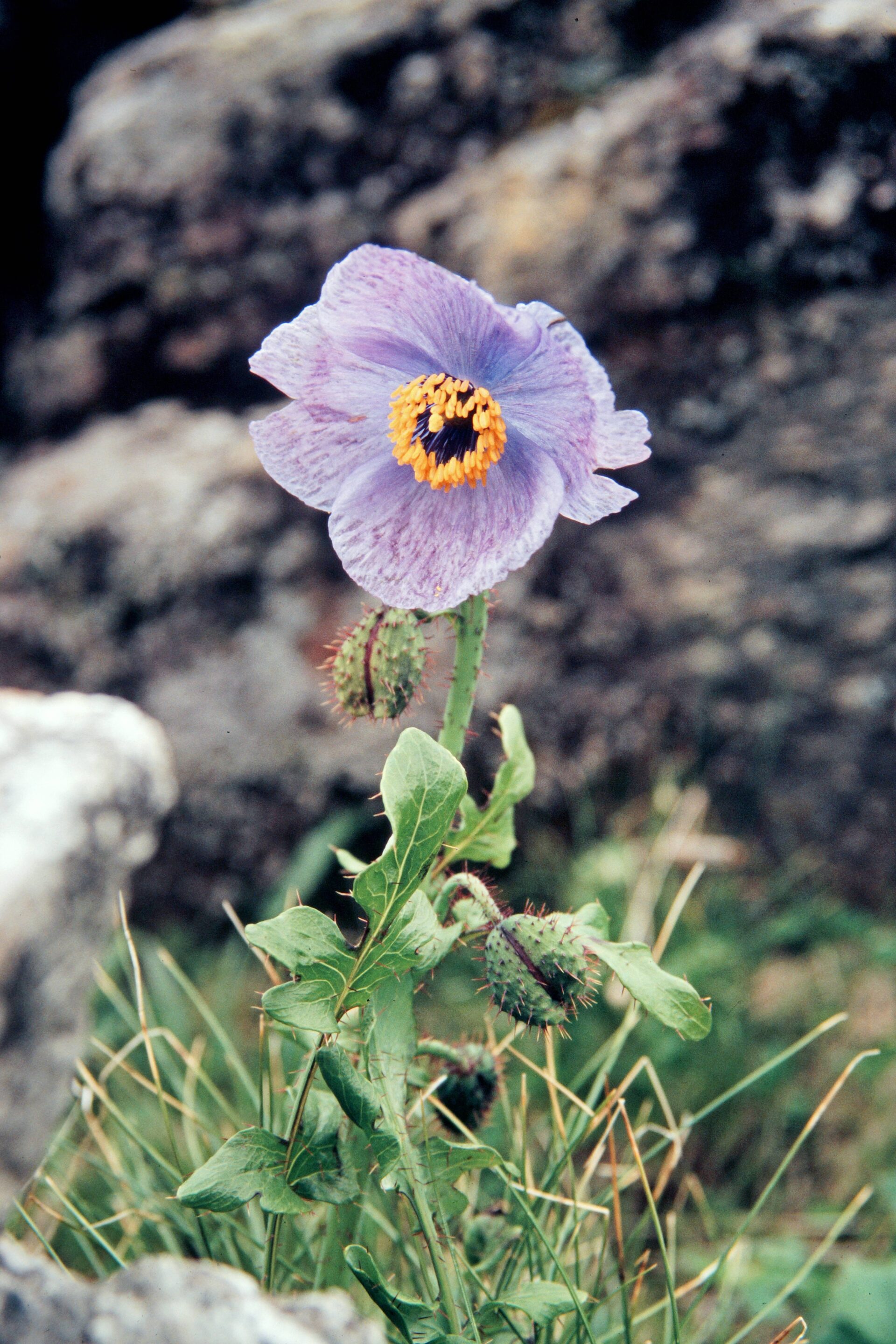
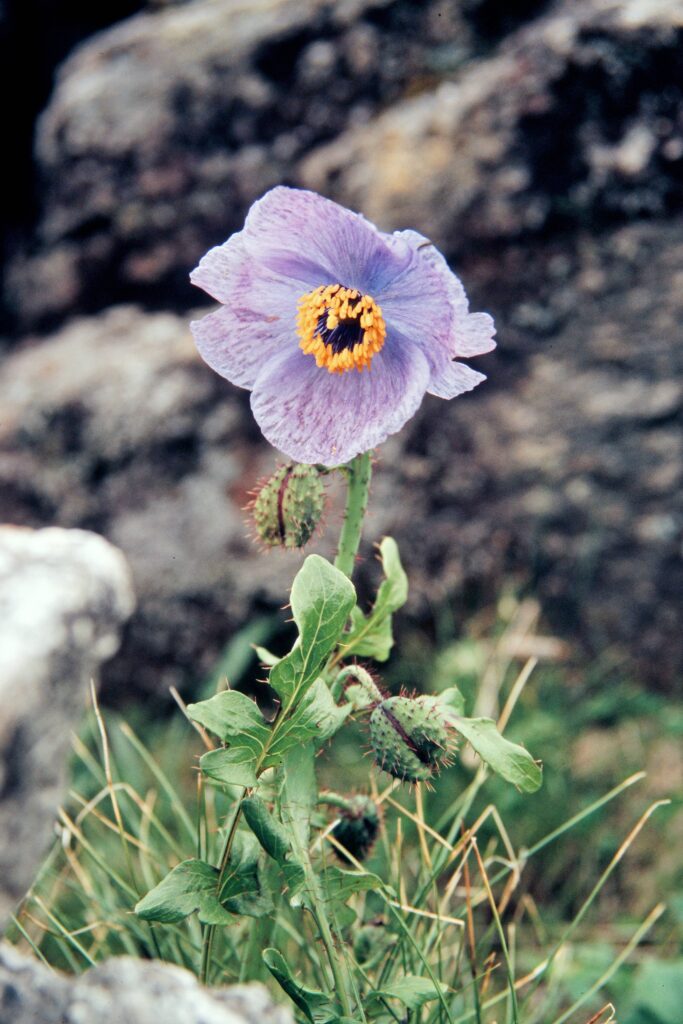
Meconopsis aculeata is a Western Himalayan endemic of the high mountains of northern India, Pakistan and adjacent China (Tibet), extending marginally into Nepal; its roughly 249 GBIF records concentrate in the north-western ranges, with cultivated and herbarium material accounting for the scattered occurrences in Great Britain, Canada and Egypt. It grows on open alpine slopes, moist screes, rock crevices and moraine margins, typically between 3000 and 4500 m. The photographed population at Khiar Kutti in the Garhwal Himalaya of India, at 3850 m in June, is characteristic of its early-summer flowering on damp, stony alpine meadow.
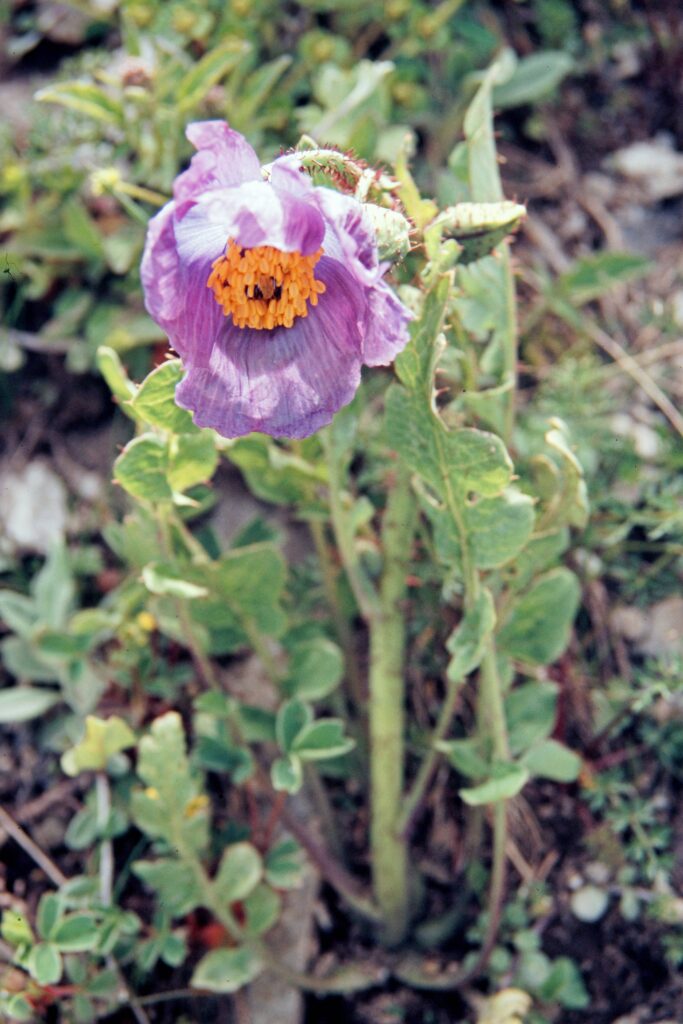
It is a monocarpic or short-lived perennial herb forming a stout taproot and a basal rosette. The whole plant is densely armed with stiff, yellowish bristles and prickle-like setae, giving it its epithet aculeata. Leaves are oblong to oblanceolate, pinnately lobed to deeply pinnatifid, narrowed to a winged petiole. The flowering stem bears several large, nodding to spreading flowers; the four petals are clear sky-blue to purplish-blue, broadly obovate and crinkled. Stamens are numerous; the bristly ovary ripens into an ellipsoid, setose capsule dehiscing by short apical valves to release many small seeds.
Within Meconopsis, this species belongs to the blue-flowered, bristly poppies and is among the most widespread of the blue Himalayan poppies west of Nepal. Its dense armature is an adaptation to grazing and harsh exposure, and like many monocarpic Meconopsis it depends on a multi-year rosette to accumulate resources before a single flowering episode. It remains locally frequent and is not formally assessed as threatened, though habitat degradation and collection pressure are localised concerns.
Author: Royle · Sources: POWO (Kew), GBIF, Flora of Pakistan, Flora of British India, The Genus Meconopsis (Grey-Wilson monograph)