Pinaceae

Cedrus deodara

by G & P Jürgens

(Roxb. ex D.Don) G.Don
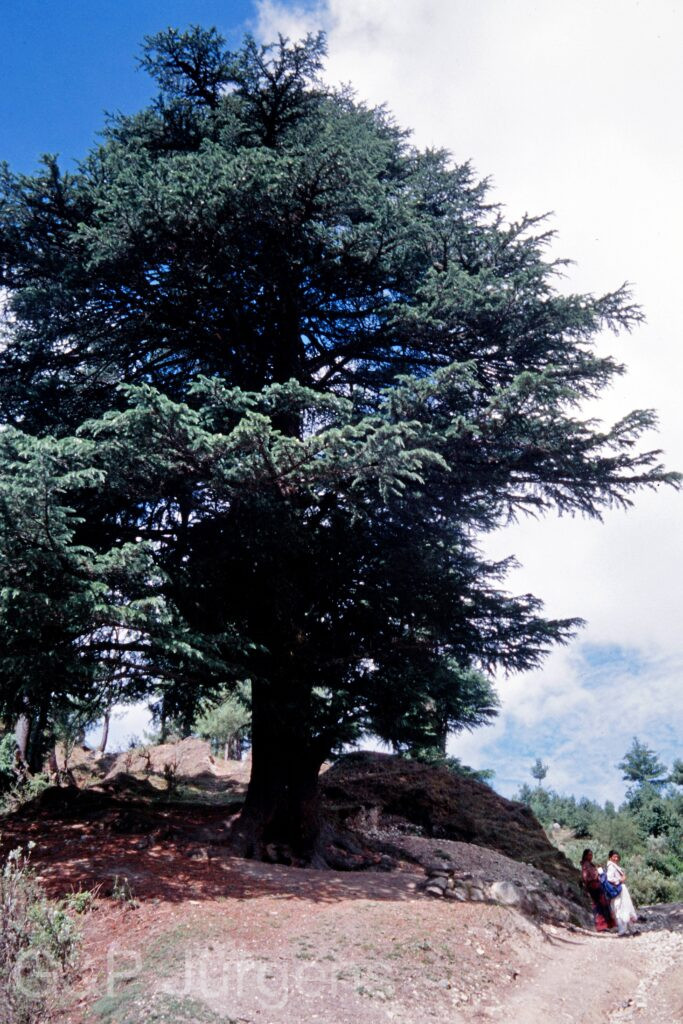
Nepal 99 203 ergebnis
West-Nepal Lara-Lake 2800m, June

Description

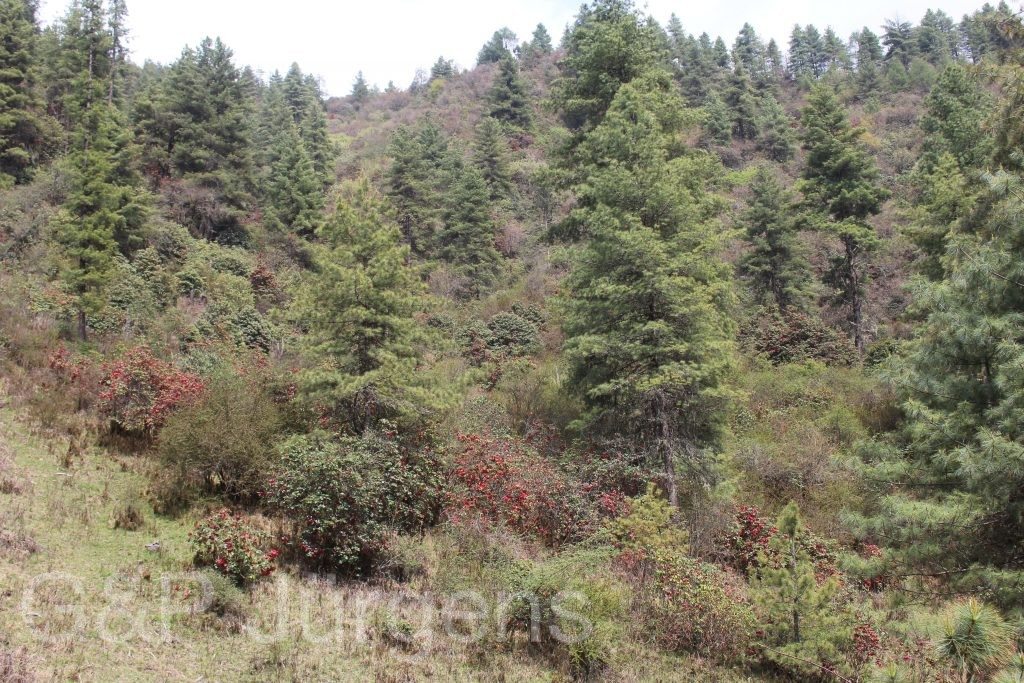
Cedrus deodara, the deodar or Himalayan cedar, is a large evergreen coniferous tree of the Pinaceae native to the western and central Himalaya. GBIF data (over 11,000 occurrences) reflect both its natural range across Pakistan, India and Nepal and its extensive cultivation in temperate regions worldwide. In its native belt it forms extensive forests, often dominant, on cool, well-drained mountain slopes generally between about 1,500 and 3,200 m. The tree recorded near Lara Lake in West Nepal at 2,800 m in June represents the upper temperate coniferous zone, where deodar grows in association with blue pine, spruce and oaks.

The tree reaches 40–60 m, with a broadly conical crown and characteristically drooping leader and branch tips. The bark is dark grey and fissured into scaly plates. The needle-like leaves are borne singly on long shoots and in dense whorl-like clusters on short spur shoots; they are stiff, sharp-pointed, 25–50 mm long and glaucous green. Like all true cedars the species is monoecious: pollen cones are erect and catkin-like, shedding pollen in autumn, while the female cones are erect, barrel-shaped, 7–13 cm long, green ripening to reddish-brown, and disintegrate on the tree to release broadly winged seeds.

Cedrus is a small Old World genus of the Atlas, Mediterranean and Himalayan mountains, of which C. deodara is the easternmost member. The deodar is of great economic and cultural importance, valued for its durable, aromatic, decay-resistant timber and revered in South Asian tradition. Though widespread and much planted, native old-growth stands have been depleted by logging, and sustainable management of natural deodar forests remains an ecological priority.

Author: (Roxb. ex D.Don) G.Don · Sources: POWO (Kew), Flora of Pakistan, Flora of China Vol. 4, GBIF, Farjon: A Handbook of the World's Conifers (2010)
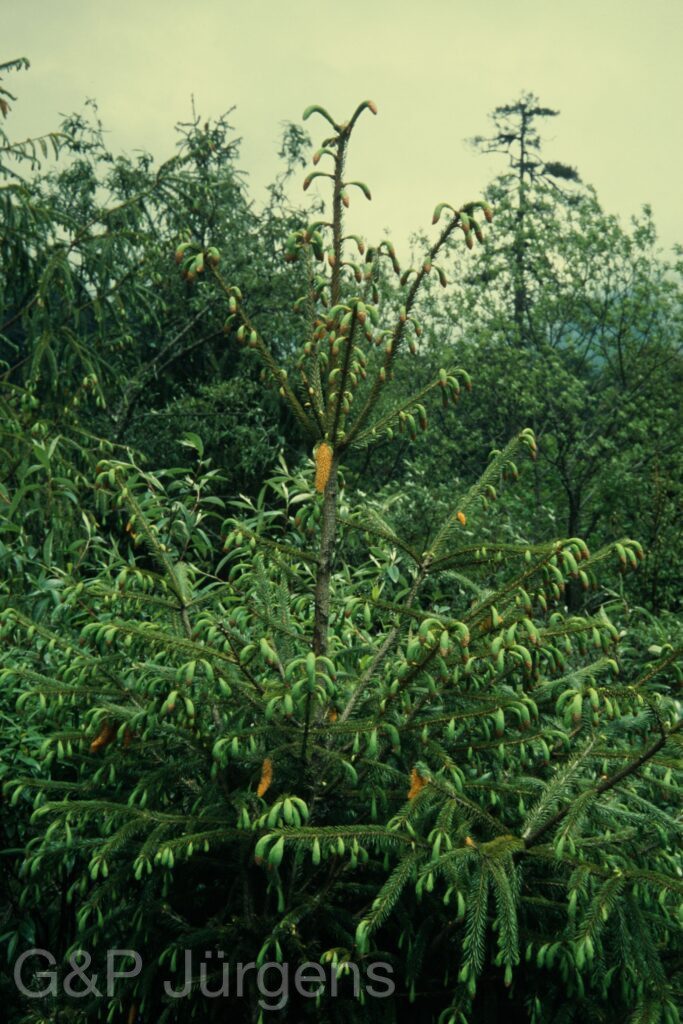
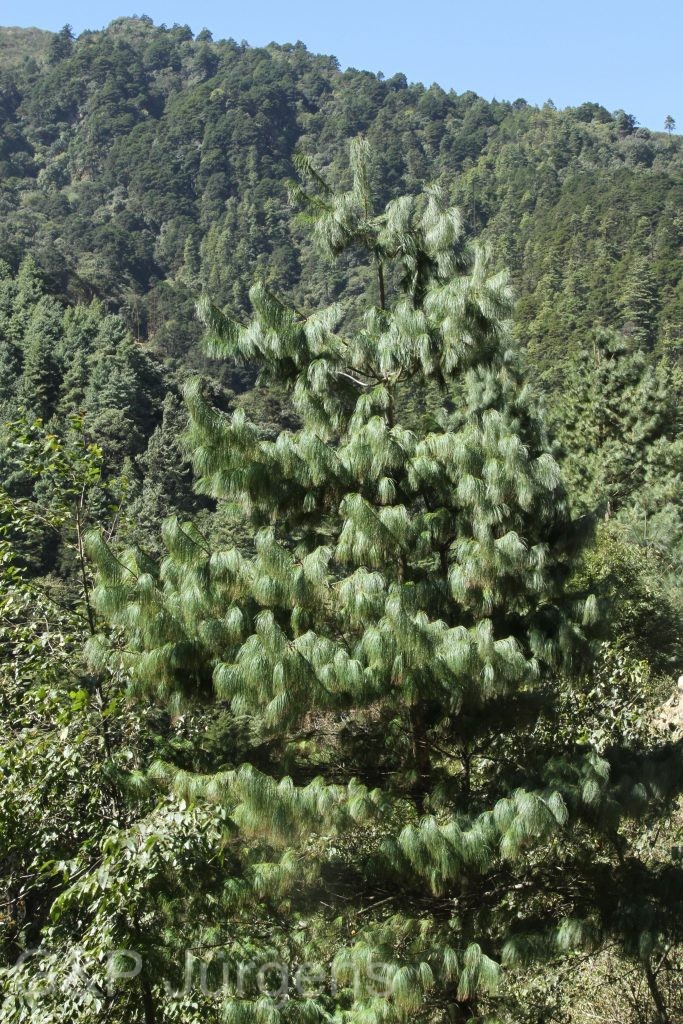
Picea smithiana

by G & P Jürgens

(Wall.) Boiss.

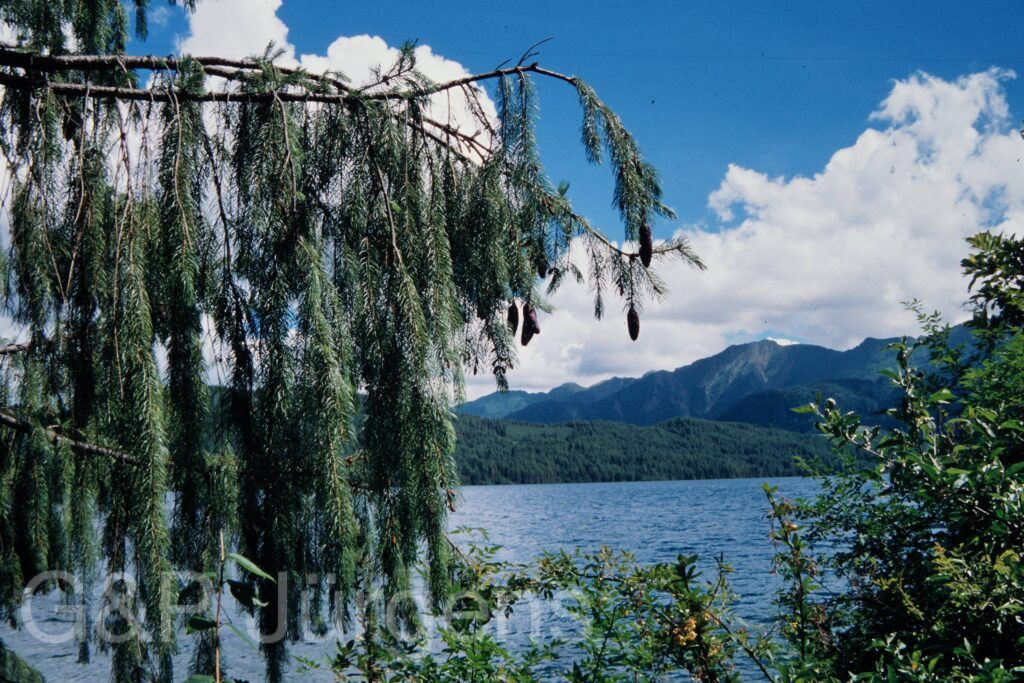
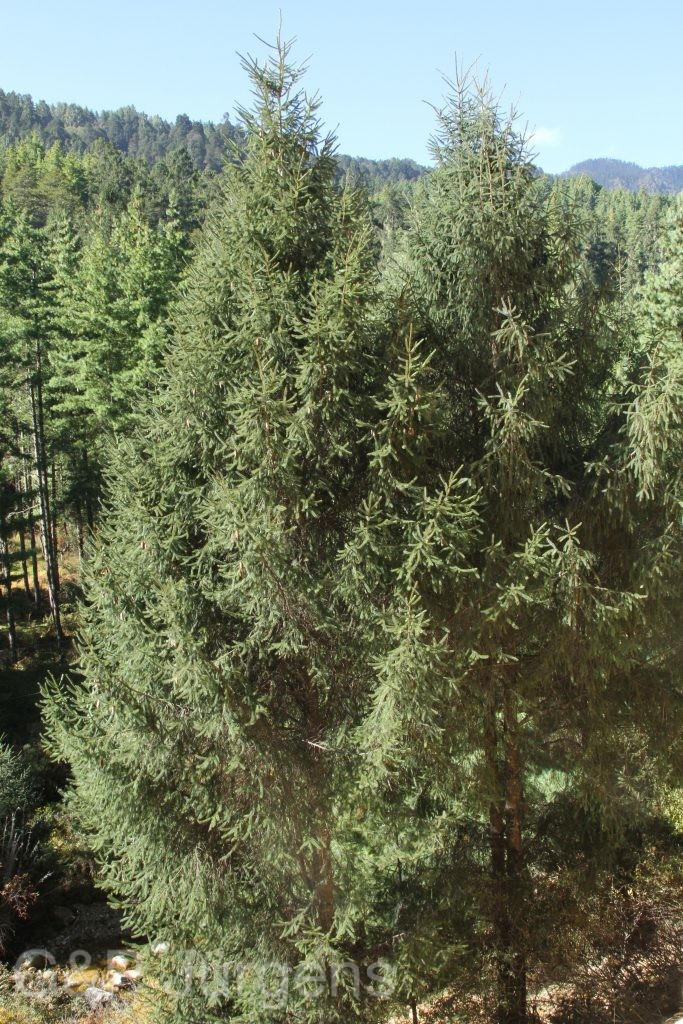
Nepal 99 189 ergebnis
West-Nepal Lara-Lake 3000m, June

Description

Picea smithiana, the West Himalayan or morinda spruce, is a large coniferous tree native to the western and central Himalaya, with a natural range from Afghanistan through northern Pakistan and India to western Nepal and adjacent Tibet (China). The numerous GBIF records outside this core area (United Kingdom, United States, New Zealand, Spain, Italy, Germany, Belgium and others) reflect its long history in arboreta and forestry cultivation rather than natural occurrence. In the wild it forms montane and subalpine coniferous forest, often mixed with Cedrus deodara, Abies pindrow and Pinus wallichiana, typically between about 2,000 and 3,600 m. The plant photographed at Lara Lake in West Nepal at 3,000 m in June lies near the south-eastern limit of its distribution.

The tree is evergreen, reaching 40 m or more, with a straight trunk and conspicuously pendulous branchlets that give it a weeping habit. The leaves are needle-like, quadrangular in cross-section, dark green, among the longest of any spruce at up to 4 cm, borne radially on raised peg-like pulvini. It is monoecious; the pollen cones are small and reddish, while the seed cones are pendulous, cylindrical, 12-18 cm long, green ripening to glossy brown, with smooth-margined, rounded scales. The winged seeds are shed in autumn.

Picea smithiana is the only spruce native to the western Himalaya and is valued for its soft, light timber and as an ornamental. It is assessed as Least Concern globally, though local populations are reduced by logging and grazing pressure. Its weeping, long-needled morphology distinguishes it readily from the eastern Himalayan Picea spinulosa, with which it forms a vicariant pair across the genus's Himalayan distribution.

Author: (Wall.) Boiss. · Sources: POWO (Kew), Flora of China Vol. 4, Flora of Pakistan, GBIF, Farjon: A Handbook of the World's Conifers

Picea spinulosa

by G & P Jürgens

(Griff.) A.Henry

Bhutan2015 407
Bhutan Jakar 2550, October
Sikkim2004 440 P767
Sikkim/India Lachung 3400m May

Description

Picea spinulosa, the Sikkim or Himalayan weeping spruce, is a coniferous tree endemic to the eastern Himalaya, native to Bhutan, India (Sikkim), Nepal and adjacent China (Xizang); GBIF lists 291 occurrences, many from cultivated arboretum specimens in Europe and North America. In the wild it forms montane coniferous and mixed forests, often on north-facing slopes and in sheltered valleys, generally between about 2300 and 3700 m. The trees illustrated were photographed at Jakar in Bhutan at 2550 m in October and at Lachung in Sikkim at 3400 m in May, spanning the typical altitudinal range.

It is a tall evergreen tree with a conical to columnar crown and pendulous, weeping branchlets that give the species its distinctive habit. The bark is grey and scaly; the needle leaves are flattened, sharply pointed (spinulose, as the epithet notes), borne singly on small peg-like pulvini and showing two whitish stomatal bands beneath. The seed cones are pendulous, cylindrical, green ripening to pale brown, with thin, rounded, entire scales. Pollen and seed cones mature in a single season, and the winged seeds are dispersed by wind from the opening cones.

Picea spinulosa belongs to Pinaceae and is a regional dominant of the eastern Himalayan temperate conifer forests, frequently associating with Tsuga, Abies and broadleaved genera. Its graceful weeping form has led to its planting in temperate arboreta worldwide, accounting for the wide scatter of cultivated records. The species yields useful softwood timber. Although restricted in natural range, it remains locally common; nonetheless its forests are vulnerable to logging, fire and the cumulative effects of land-use change across the eastern Himalaya.

Author: (Griff.) A.Henry · Sources: POWO (Kew), GBIF, Flora of China, Flora of Bhutan, Conifers of the World, Farjon A Handbook of the World's Conifers

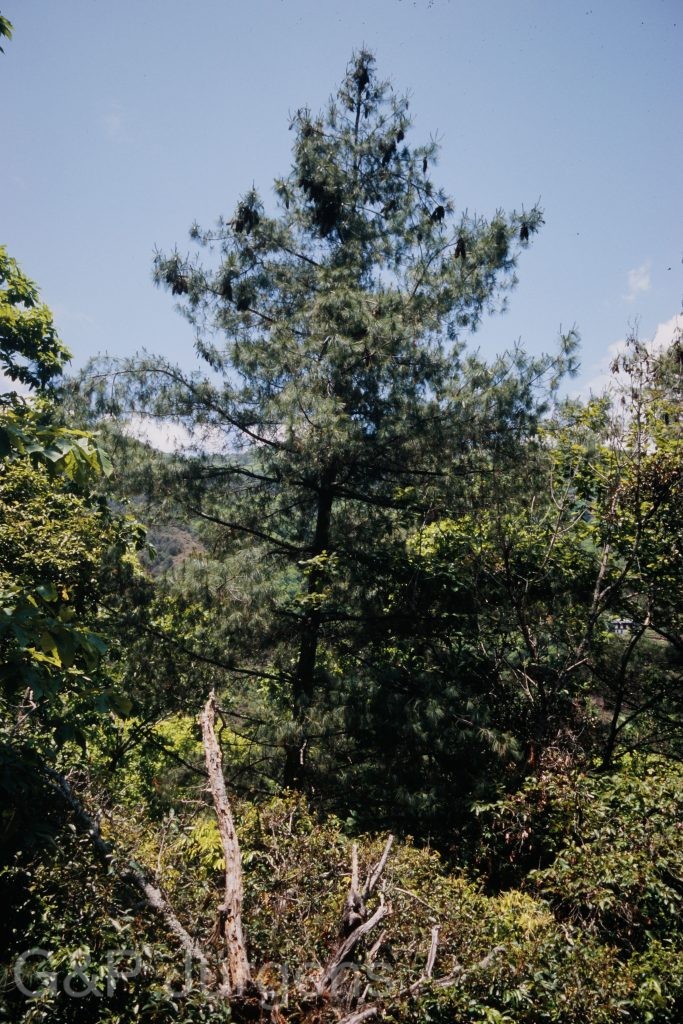
Pinus bhutanica

by G & P Jürgens

Grierson, D.G.Long & C.N.Page

Bhutan2015 468
  Bhutan Trongsa 2300m, October
Bh2008 479 P744
Bhutan, Chongsakha 1800m, May

Description

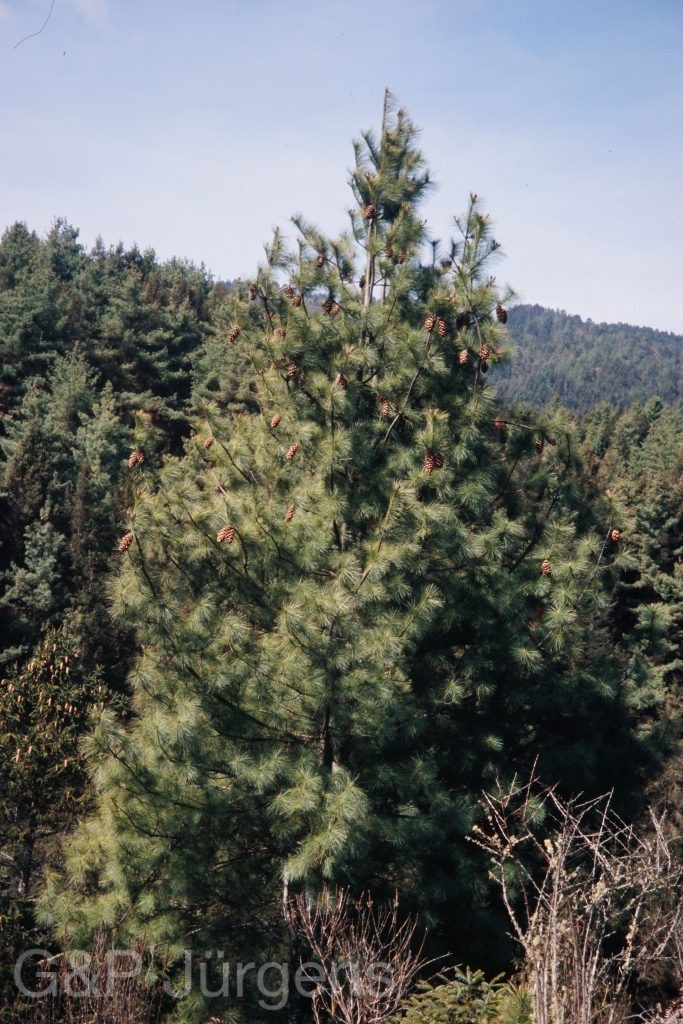
Pinus bhutanica Grierson, D.G.Long & C.N.Page is a five-needled white pine of the eastern Himalaya, restricted to Bhutan, north-eastern India (Arunachal Pradesh) and adjacent south-eastern Tibet (China); GBIF records about 96 occurrences, the few extralimital points reflecting cultivation or database artefacts. It grows in warm-temperate to subtropical montane forest, often on humid, monsoon-exposed slopes, typically between about 1,700 and 2,400 m. Both photographed stands are Bhutanese – Trongsa at 2,300 m in October and Chongsakha at 1,800 m in May – matching its known occurrence in the wet central and eastern Bhutanese hills.

It is an evergreen coniferous tree to 25 m or more, with spreading branches and a somewhat open crown. The needles are borne in fascicles of five, and are notably long, slender and pendulous, drooping gracefully and distinguishing it from the related P. wallichiana. The species is monoecious, with small pollen cones clustered at the base of new shoots and erect young seed cones that mature in the second year. The mature cone is large, cylindrical and resinous, with thin woody scales; the seeds are winged for wind dispersal, borne beneath the cone scales.

Pinus bhutanica was described as recently as 1980 and belongs to subgenus Strobus (the soft or white pines), being closely allied to the widespread Himalayan blue pine P. wallichiana, from which it differs chiefly in its longer, conspicuously drooping needles and more pronounced resin glands. Its narrow eastern Himalayan range makes it of biogeographic interest as a regional endemic of the wetter Bhutan-Arunachal sector; it is assessed by IUCN as Least Concern owing to stable populations within extensive forest.

Author: Grierson, D.G.Long & C.N.Page · Sources: POWO (Kew), GBIF, Flora of Bhutan, Flora of China, IUCN Red List of Threatened Species, Farjon Handbook of the World's Conifers, Grierson Long & Page protologue of Pinus bhutanica

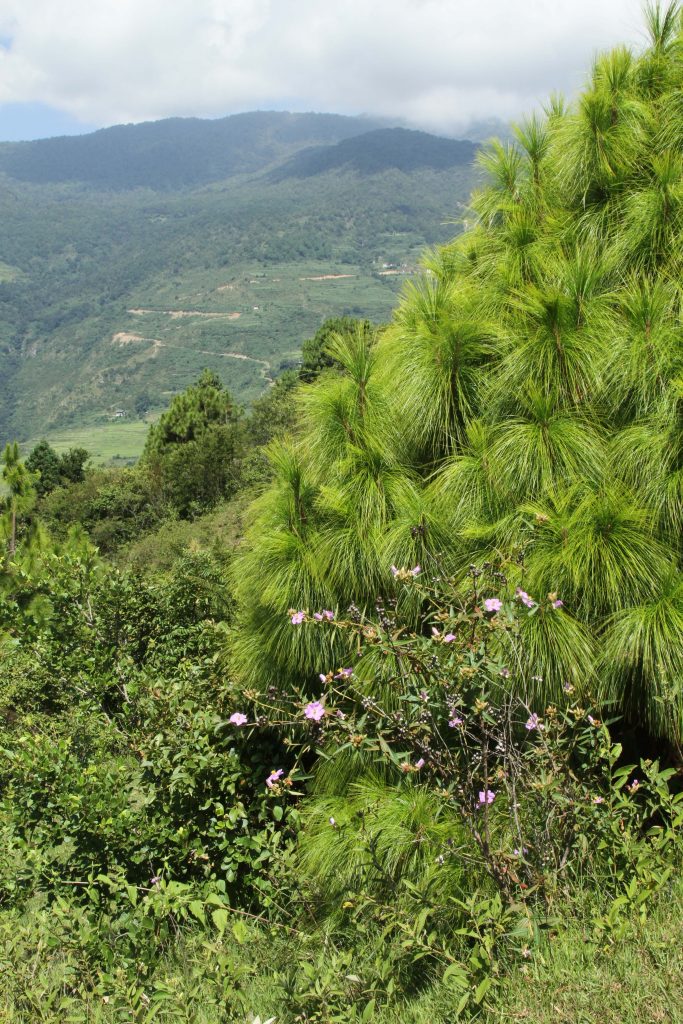
Sarg.

Bhutan2012 531
Bhutan Wangdi, Phodrang 2400m, September
Bhutan2015 312
Bhutan, Trongsa 2100m, October

Description

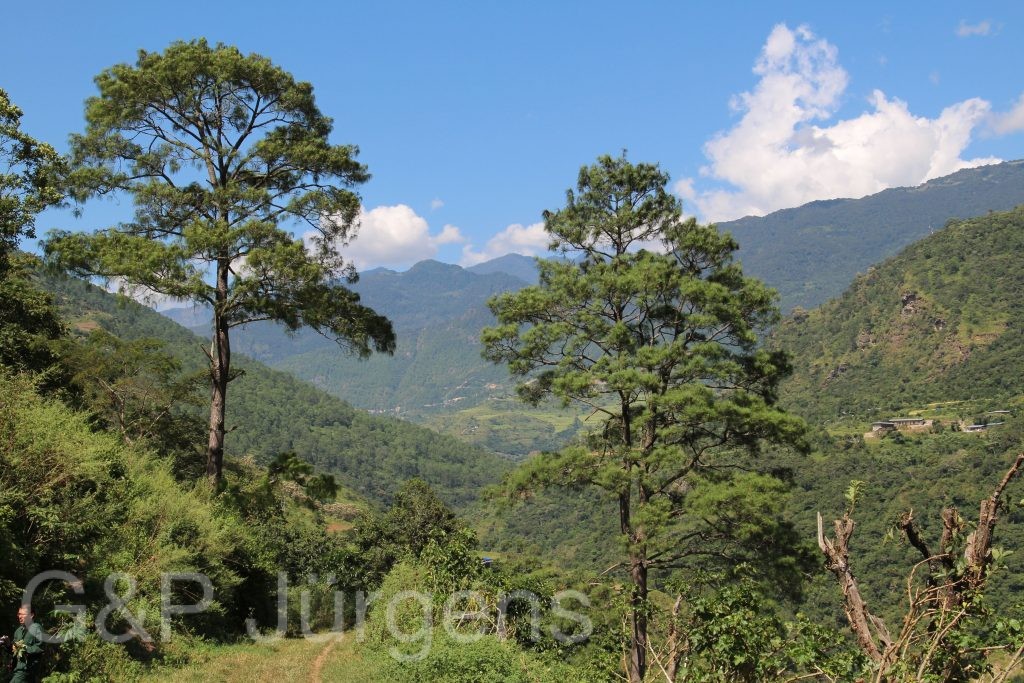
Pinus roxburghii, the chir or longleaf Himalayan pine, is the dominant conifer of the dry outer ranges and inner valleys of the Himalaya, native across India, Nepal, Bhutan, Pakistan, Afghanistan and China, and widely planted elsewhere, as reflected by occurrence records from South Africa, the United States, New Zealand and Europe. It forms extensive open forests on warm, sun-exposed slopes, ridges and rain-shadowed valleys, characteristically between about 500 and 2300 m. The trees photographed near Wangdi Phodrang at 2400 m and Trongsa at 2100 m in Bhutan illustrate its presence in the dry inner Himalayan valleys, where it forms the lower montane pine belt below the broad-leaved and fir zones.

It is a large evergreen tree with a tall, often clear bole and a rounded to spreading crown, the thick bark deeply fissured into reddish-brown plates that confer fire resistance. The needles are borne in fascicles of three, long, slender and pendulous, light green and finely serrulate, with a persistent basal sheath. It is monoecious: the male strobili cluster at the base of new shoots, while the woody seed cones are large, ovoid-conical and hard, the cone scales bearing a stout, recurved umbo. The winged seeds are released at maturity and dispersed by wind.

Pinus roxburghii belongs to the hard pines (subgenus Pinus) and is the characteristic fire-adapted, drought-tolerant pioneer of the Himalayan subtropical pine forest, regenerating vigorously after burning and forming nearly pure stands. It is economically important as a source of resin (oleoresin tapped for turpentine and rosin), construction timber and fuelwood. Though not threatened given its vast range, its needle litter and flammability strongly shape fire regimes and understorey composition across the lower Himalaya.

Author: Sarg. · Sources: POWO (Kew), GBIF, Flora of China, Conifers of the Himalaya, Annotated Checklist of the Flowering Plants of Nepal, Farjon's A Handbook of the World's Conifers

(Wall. ex. D.Don) A.B.Jacks.

Bhutan2014 544
Bhutan, Phobjika 3000m, May
Bhutan2014 961
Bhutan, Haa-valley, 2800m, May
Bh2008 295 P454
Bhutan, Ura 2900m, April

Description

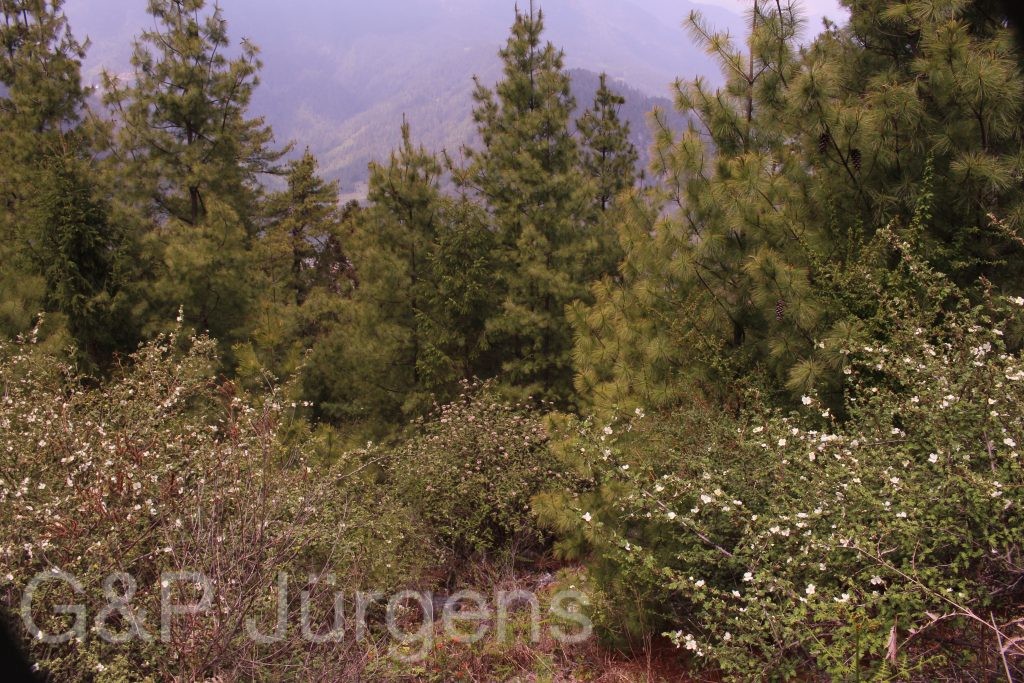
Pinus wallichiana, the Bhutan or blue pine, is a major timber conifer of the Himalaya and Hindu Kush, ranging from Afghanistan and Pakistan through Kashmir, the Indian Himalaya, Nepal and Bhutan to south-eastern Tibet and China. It is among the best-recorded Himalayan trees, GBIF holding over 2400 occurrences, many from cultivation in Europe, North America and Australasia where it is a graceful ornamental. Natively it forms montane forests, often with Picea, Abies and Cedrus, on well-drained slopes between about 1800 and 4000 m. The Bhutanese stands at Phobjikha, the Haa valley and Ura between 2800 and 3000 m exemplify its dominance in the temperate conifer belt.

It is a large evergreen tree to 40 m or more, with a straight trunk, greyish fissured bark and whorled spreading branches forming a broad conical crown. The needle leaves are five per fascicle, slender, soft and drooping, 12 to 20 cm long, glaucous-bluish (whence blue pine) and finely serrulate. It is monoecious: small yellow pollen cones cluster at the base of new shoots, while the seed cones are long-pedunculate, cylindrical and resinous, 15 to 30 cm long and pendent, with broad woody scales spreading at maturity, each fertile scale bearing two winged, wind-dispersed seeds.

A member of Pinus subgenus Strobus (the soft or white pines, section Quinquefoliae), P. wallichiana is allied to P. griffithii and other five-needle pines of eastern Asia and North America, distinguished by its long pendulous cones and drooping foliage. It is important for construction timber, resin and fuel, and ecologically as a pioneer colonising landslides and abandoned terraces. Though widespread and not threatened, it is locally susceptible to blister rust and to over-exploitation near settlements.

Author: (Wall. ex. D.Don) A.B.Jacks. · Sources: POWO (Kew), GBIF, Flora of China Vol. 4, Flora of Bhutan Vol. 1, Flora of Pakistan, Farjon A Handbook of the World's Conifers