
Hook.f.
Description
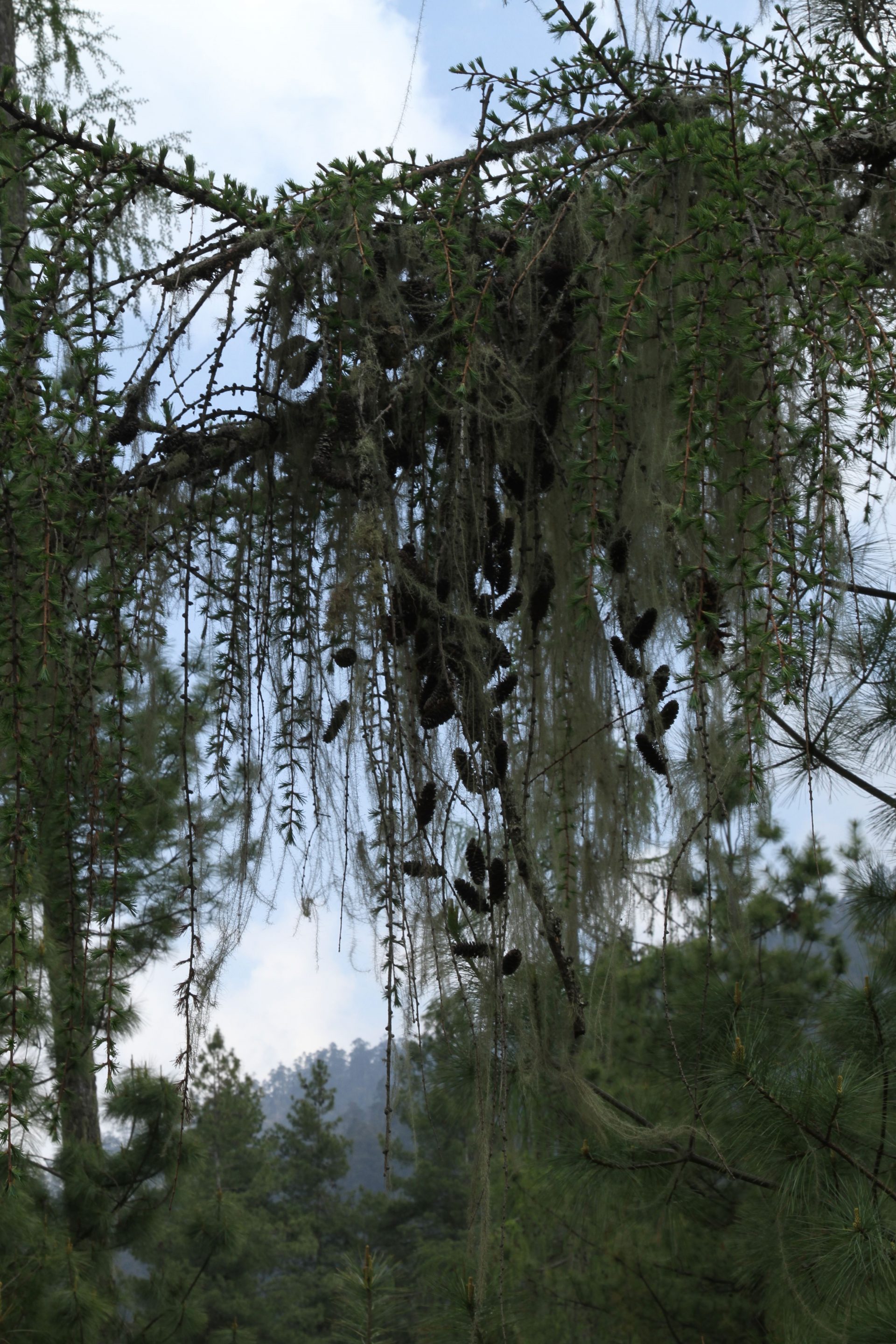
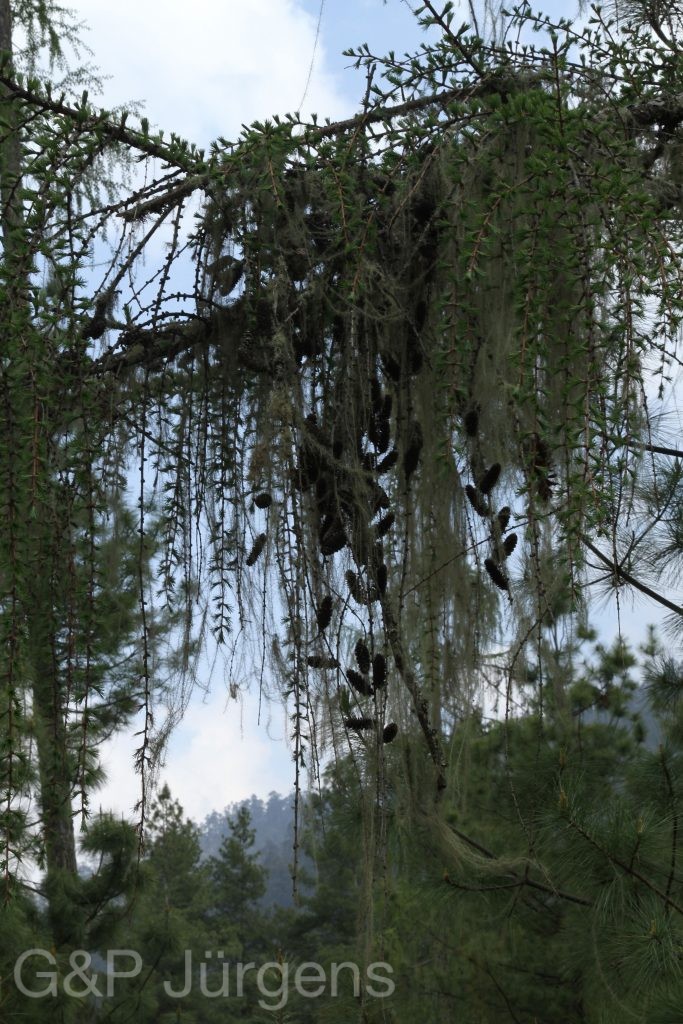
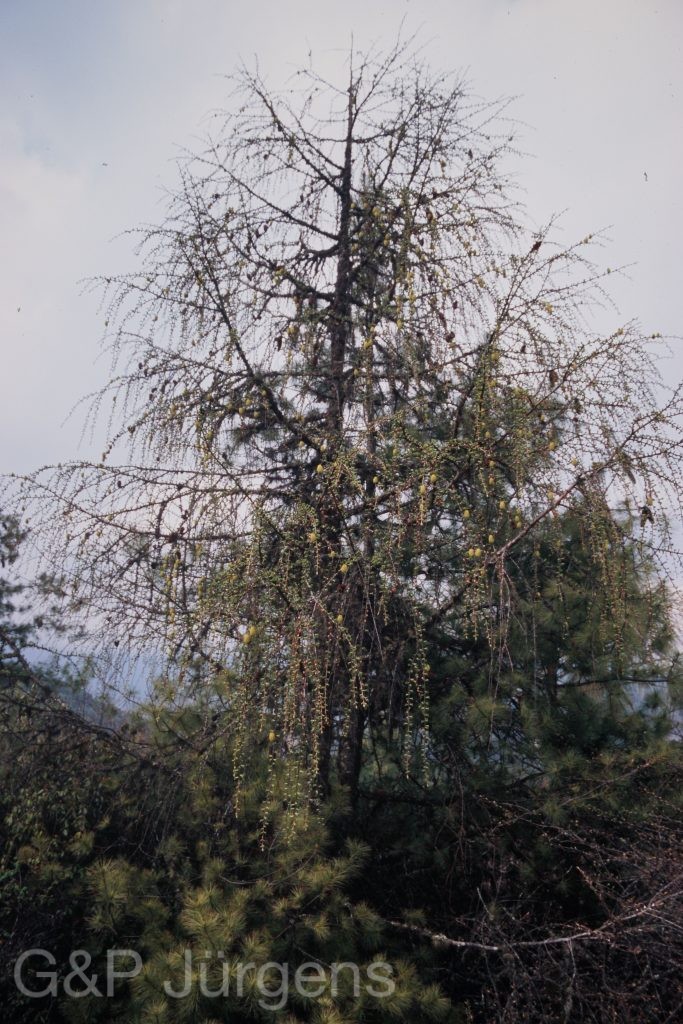
Larix griffithii, the Sikkim or Himalayan larch, is a deciduous conifer of the eastern Himalaya, native to China (Xizang), Bhutan, India (Sikkim) and Nepal; GBIF lists 525 occurrences, including many cultivated specimens in temperate arboreta abroad. In the wild it forms open montane to subalpine forests, often near the treeline on rocky slopes and moraines, generally between about 2800 and 4100 m. The trees illustrated were photographed in Bhutan at Phobjika (2810 m) in May and at the Tumchinching-La pass (3760 m) in April, the latter near its upper altitudinal limit.
It is a medium-sized deciduous tree with a conical crown and long, often pendulous branchlets. The soft, needle-like leaves are borne singly on long shoots and in dense rosette-like clusters on short, knob-like spur shoots; they are bright green, flushing in spring and turning golden-yellow before falling in autumn, an unusual habit among Himalayan conifers. The pendulous seed cones are oblong-cylindrical with conspicuous, exserted, often reflexed bracts that exceed the seed scales, a key diagnostic character; the winged seeds are wind-dispersed when the cones open.
Larix griffithii belongs to Pinaceae and is the principal larch of the eastern Himalaya, characteristically associated with Abies, Picea and rhododendron scrub at the upper forest limit. Its long-exserted cone bracts readily distinguish it from other larches. The wood is used locally for timber and fuel, and the tree's graceful weeping form has led to its cultivation in temperate collections, accounting for the wide scatter of records. Restricted in natural range but locally frequent, it faces pressure from logging, fire and grazing in the fragile treeline ecotone.
Author: Hook.f. · Sources: POWO (Kew), GBIF, Flora of China, Flora of Bhutan, Conifers of the World, Farjon A Handbook of the World's Conifers