
(Roxb. ex D.Don) G.Don
Description
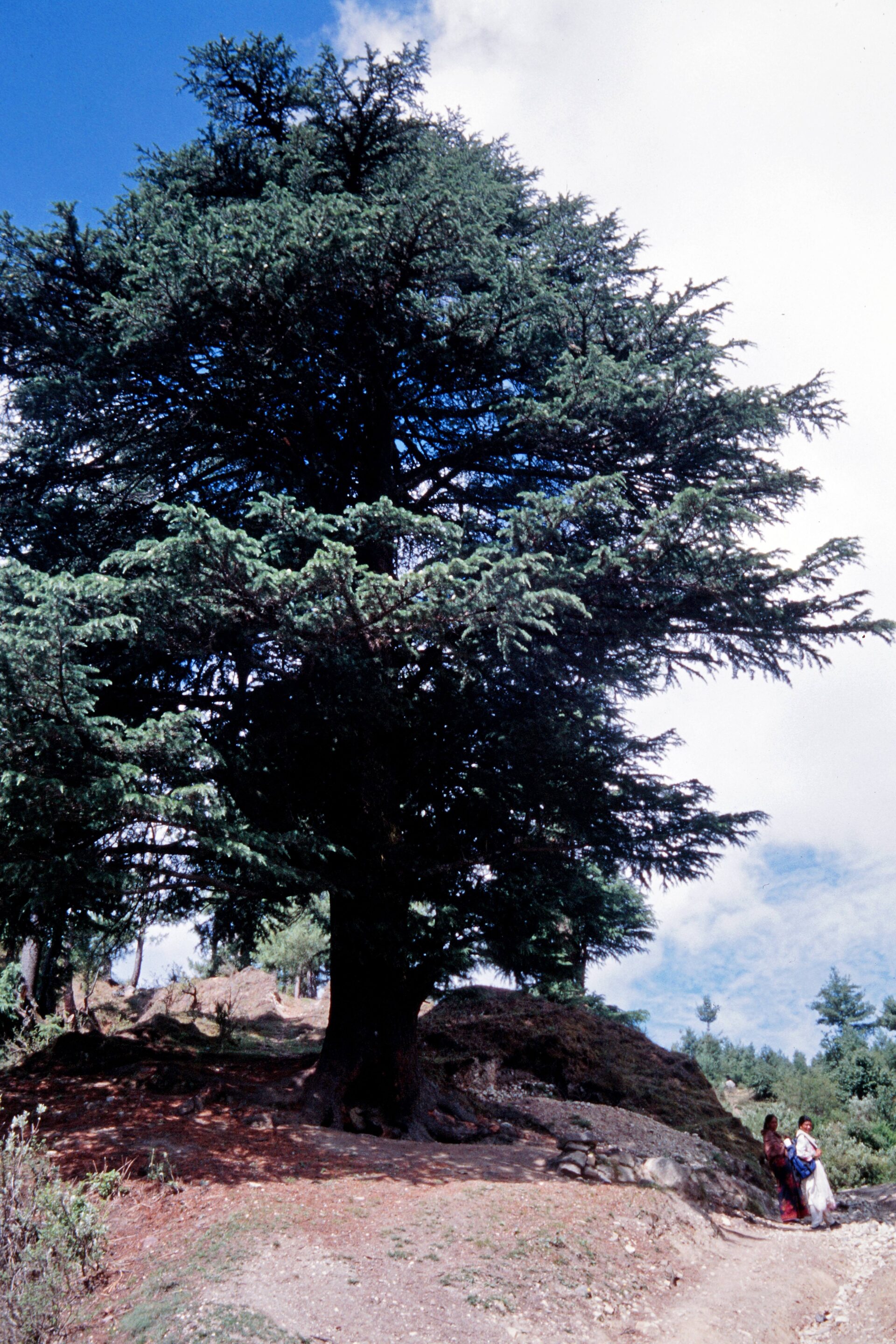
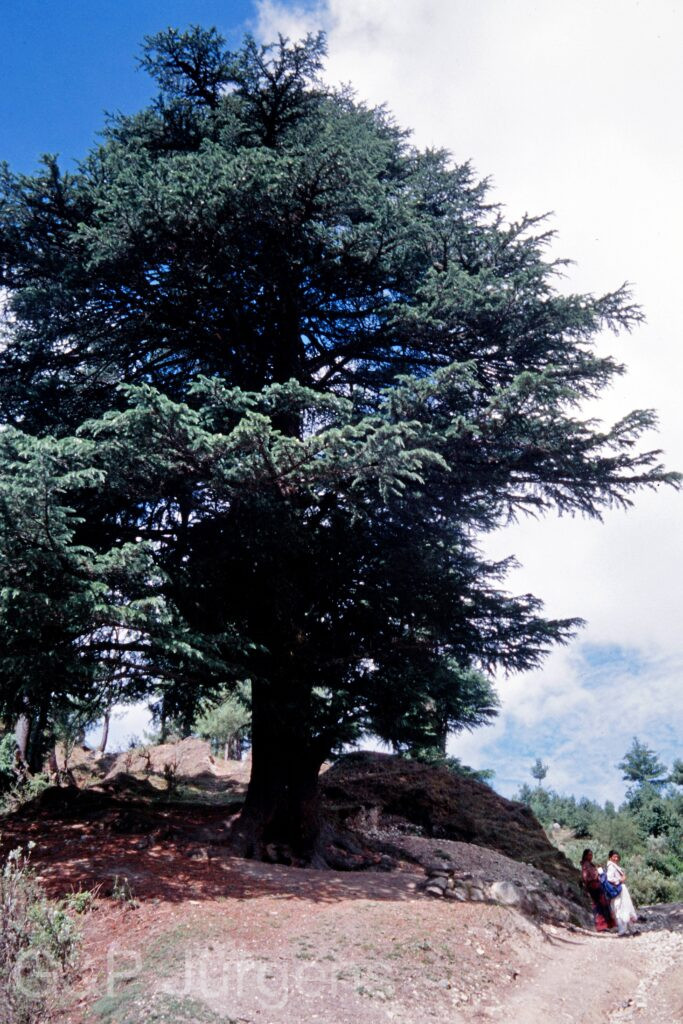
Cedrus deodara, the deodar or Himalayan cedar, is a large evergreen coniferous tree of the Pinaceae native to the western and central Himalaya. GBIF data (over 11,000 occurrences) reflect both its natural range across Pakistan, India and Nepal and its extensive cultivation in temperate regions worldwide. In its native belt it forms extensive forests, often dominant, on cool, well-drained mountain slopes generally between about 1,500 and 3,200 m. The tree recorded near Lara Lake in West Nepal at 2,800 m in June represents the upper temperate coniferous zone, where deodar grows in association with blue pine, spruce and oaks.
The tree reaches 40–60 m, with a broadly conical crown and characteristically drooping leader and branch tips. The bark is dark grey and fissured into scaly plates. The needle-like leaves are borne singly on long shoots and in dense whorl-like clusters on short spur shoots; they are stiff, sharp-pointed, 25–50 mm long and glaucous green. Like all true cedars the species is monoecious: pollen cones are erect and catkin-like, shedding pollen in autumn, while the female cones are erect, barrel-shaped, 7–13 cm long, green ripening to reddish-brown, and disintegrate on the tree to release broadly winged seeds.
Cedrus is a small Old World genus of the Atlas, Mediterranean and Himalayan mountains, of which C. deodara is the easternmost member. The deodar is of great economic and cultural importance, valued for its durable, aromatic, decay-resistant timber and revered in South Asian tradition. Though widespread and much planted, native old-growth stands have been depleted by logging, and sustainable management of natural deodar forests remains an ecological priority.
Author: (Roxb. ex D.Don) G.Don · Sources: POWO (Kew), Flora of Pakistan, Flora of China Vol. 4, GBIF, Farjon: A Handbook of the World's Conifers (2010)