Berberidaceae

Wall. ex Hook.f. & Thomson
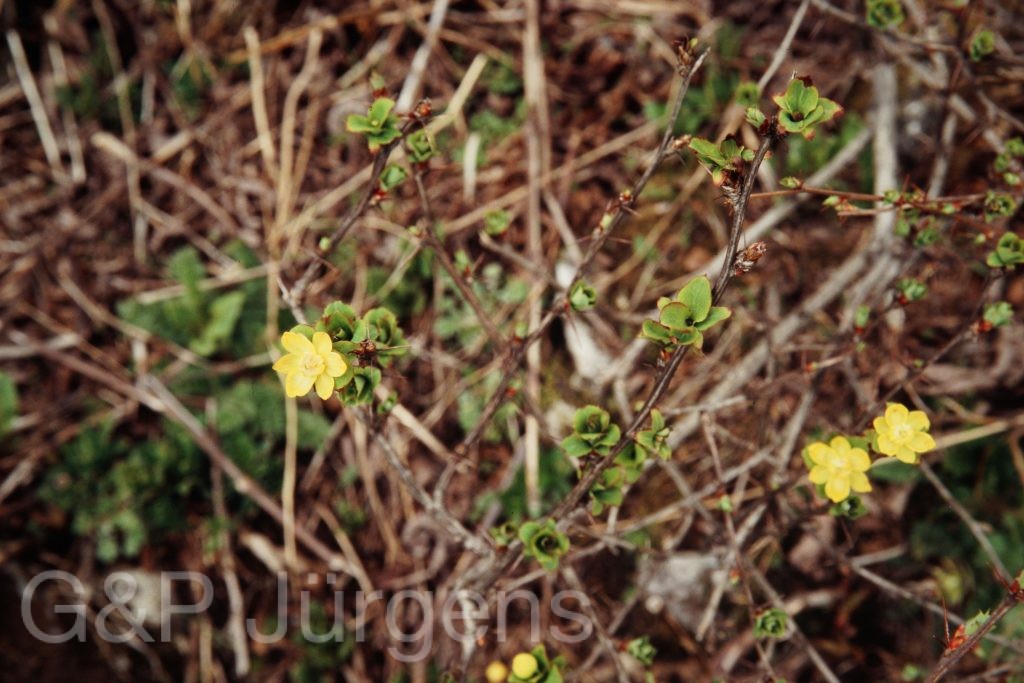
Bh09 146 P260
Bhutan Labana 4000m, June

Description

Berberis angulosa Wall. ex Hook.f. & Thomson is a deciduous, spiny shrub of the high Himalaya. GBIF (around 164 occurrences) confirms a core range across Nepal, southern China (Tibet), Bhutan and northern India, the remaining scattered records reflecting cultivated or herbarium material outside the native area. It is a plant of subalpine and alpine zones, growing on open slopes, among rocks, in shrubberies and at the upper forest margin, typically between 3,000 and 4,300 m. The specimen photographed at Labana in Bhutan at 4,000 m in June represents the species near the upper limit of its altitudinal range, flowering early in the short alpine season.

The shrub is low and densely branched, often less than a metre high, with terete to angled, reddish-brown young shoots and stout, usually three-parted spines derived from modified leaves. The foliage leaves are clustered in axillary fascicles, obovate to spathulate, entire or with a few spinulose-dentate margins, often glaucous beneath. The flowers are comparatively large for the genus, solitary or in few-flowered clusters, with the typical Berberis arrangement of sepals and petals in whorls of three and six stamens that respond to touch; they are yellow, sometimes flushed reddish outside. The fruit is an ellipsoid red berry, glaucous when young, containing few seeds.

Berberis angulosa is distinguished within the large and taxonomically difficult Sino-Himalayan Berberis assemblage by its relatively large, often solitary flowers and conspicuous berries. Like other species of the genus it is a host in the alternation of the wheat-rust fungus and is valued locally for its edible fruit and the yellow alkaloid berberine in its bark and wood. Its high-elevation, cold-adapted habit makes it a characteristic component of Himalayan alpine scrub communities.

Author: Wall. ex Hook.f. & Thomson · Sources: POWO (Kew), Flora of Bhutan Vol. 1, Flora of China Vol. 19, GBIF, Ahrendt: Berberis and Mahonia, a taxonomic revision (1961)
Hook.f.

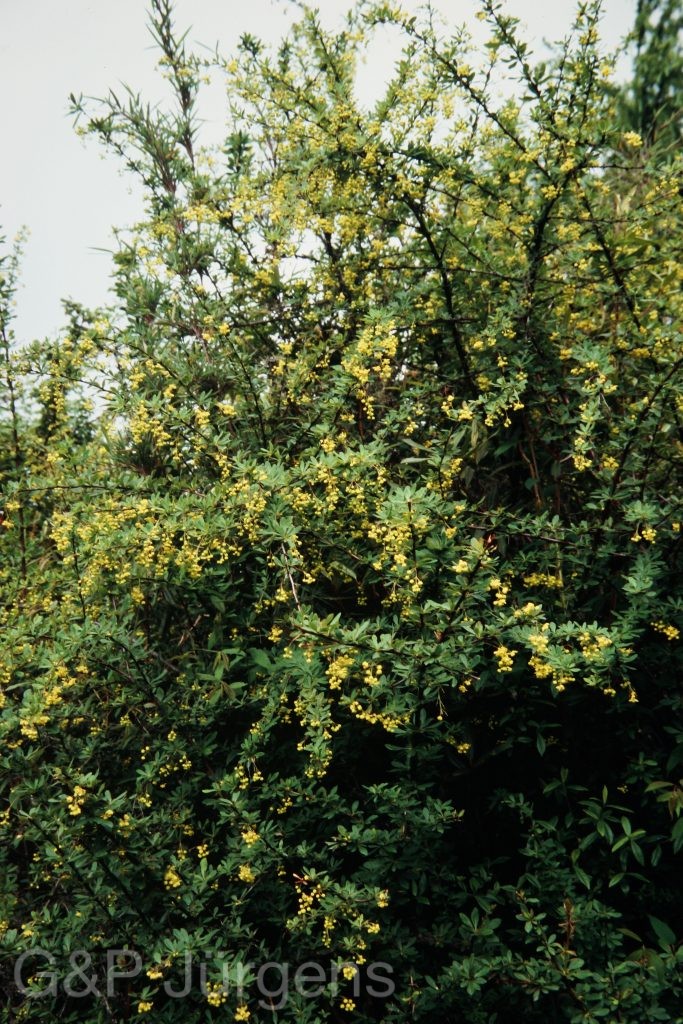
Bh09 251 G419
Bhutan Wanghdi 1900m, June
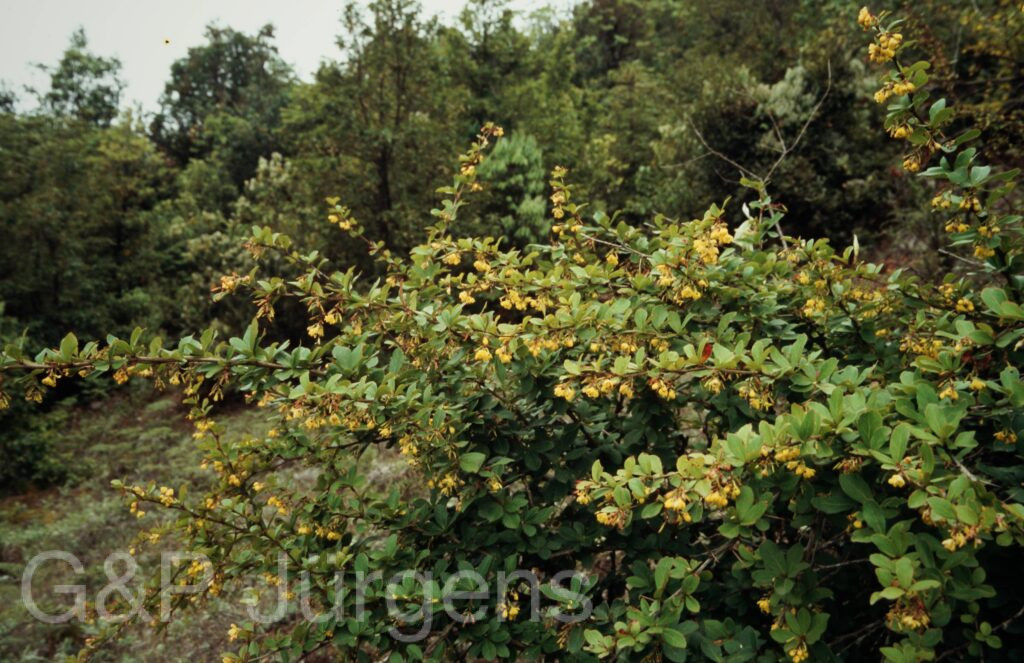
Nepal 2009 12 ergebnis
Nepal Helambu Sheno-Okrini 2200m, May

Description

Berberis virescens is a deciduous Himalayan barberry distributed through Nepal, northern India, Bhutan and southern Tibet, the numerous additional GBIF country codes reflecting its long cultivation in botanic gardens of Europe, North America and East Asia. In the wild it occupies open slopes, forest edges, scrub and clearings in the temperate zone, generally between 2,500 and 3,500 m. The vouchered plants derive from Wangdue in Bhutan at about 1,900 m in June and from Sheno-Okrini in the Helambu of Nepal at around 2,200 m in May, within the lower part of its montane range where it flowers in late spring.

The species is a shrub up to about 2 m tall with reddish young shoots that become greenish, giving the epithet, and bearing simple, often three-parted spines at the nodes. The leaves are obovate to narrowly spathulate, thin-textured and clustered on short shoots, with entire or sparsely spinulose margins and a glaucous lower surface. The flowers are yellow, borne in few-flowered fascicles or short racemes, with the typical Berberis arrangement of six sepals, six petals and six stamens that snap inward on contact. The fruit is an ellipsoid to oblong berry, red ripening to blackish and often pruinose, containing a few seeds.

Berberis is a large, taxonomically intricate genus in which species are separated by spine, leaf, inflorescence and berry characters; B. virescens is recognised by its green twigs and red autumn fruit. Like its relatives it is an alternate host for rust fungi and a source of the alkaloid berberine. The species is widespread, hardy and frequently grown ornamentally, and is not considered to be of conservation concern.

Author: Hook.f. · Sources: POWO (Kew), GBIF, Flora of China Vol. 19 (Berberidaceae), Grierson & Long: Flora of Bhutan Vol. 1, Ahrendt: Berberis and Mahonia, A Taxonomic Revision

DC.

Nepal1992 158 P231 ergebnis
Nepal Yamphudin 1800m March 

Description

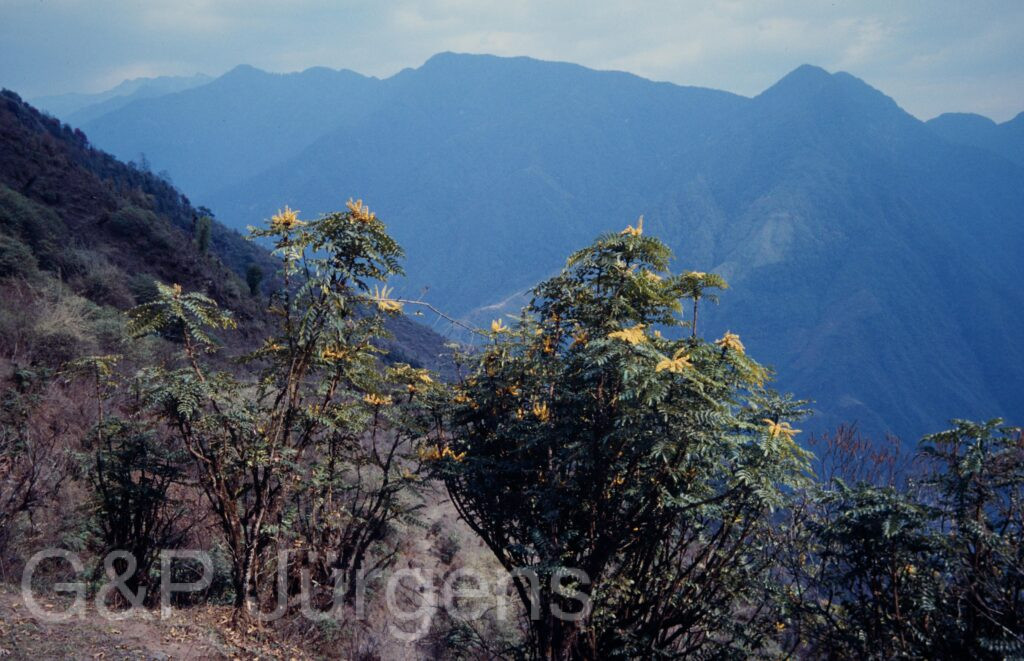
Mahonia napaulensis is a Himalayan evergreen shrub distributed from central Nepal eastward through northeast India, Bhutan, and Myanmar to southern China (Yunnan, Sichuan, Guizhou), with outlying populations recorded in northern Thailand, Vietnam, and Indonesia. GBIF documents nearly 985 occurrences across its range. The species inhabits montane broadleaved and mixed forests, forest clearings, and rocky slopes at elevations of 1,100–2,800 m. Near Yamphudin in eastern Nepal at 1,800 m, it occurs in the understorey of mid-hill Quercus–Rhododendron forests, flowering conspicuously in the dry pre-monsoon months of February to April.
Mahonia napaulensis is an erect, often sparsely branched shrub growing to 2–5 m tall. The leaves are imparipinnately compound, 25–45 cm long, with 7–15 pairs of coriaceous, ovate-lanceolate leaflets that are spinose-serrate along the margins and glossy dark green above. The inflorescence consists of 5–12 fascicled racemes arising from the stem apex, each 12–25 cm long, bearing densely arranged yellow flowers. Individual flowers are trimerous with 6 sepals in two whorls, 6 petals, and 6 stamens with valvate dehiscence. The fruit is a globose berry, 7–10 mm in diameter, blue-black with a waxy bloom at maturity, containing 2–5 seeds.
Mahonia napaulensis is closely allied to M. acanthifolia, from which it is distinguished by its more numerous leaflet pairs and generally longer racemes. Some authorities have treated these taxa as conspecific, but molecular phylogenetic studies support their separation. The berries are consumed by birds, particularly bulbuls and laughingthrushes, which serve as the primary seed dispersers. The species is widely cultivated as an ornamental in temperate gardens worldwide, valued for its architectural foliage and fragrant winter flowers.

Author: DC. · Sources: POWO (Kew), GBIF, Flora of China Vol. 6, Flora of Nepal Checklist, Adhikari et al.: Berberidaceae of Nepal (2010)

Royle

Sikkim2011 57
Sikkim Tanghu 3900m, June
Sikkim2011 70
Sikkim Tanghu 3900m, June
Sikkim2011 72
Sikkim Tanghu 3900m, June

Description

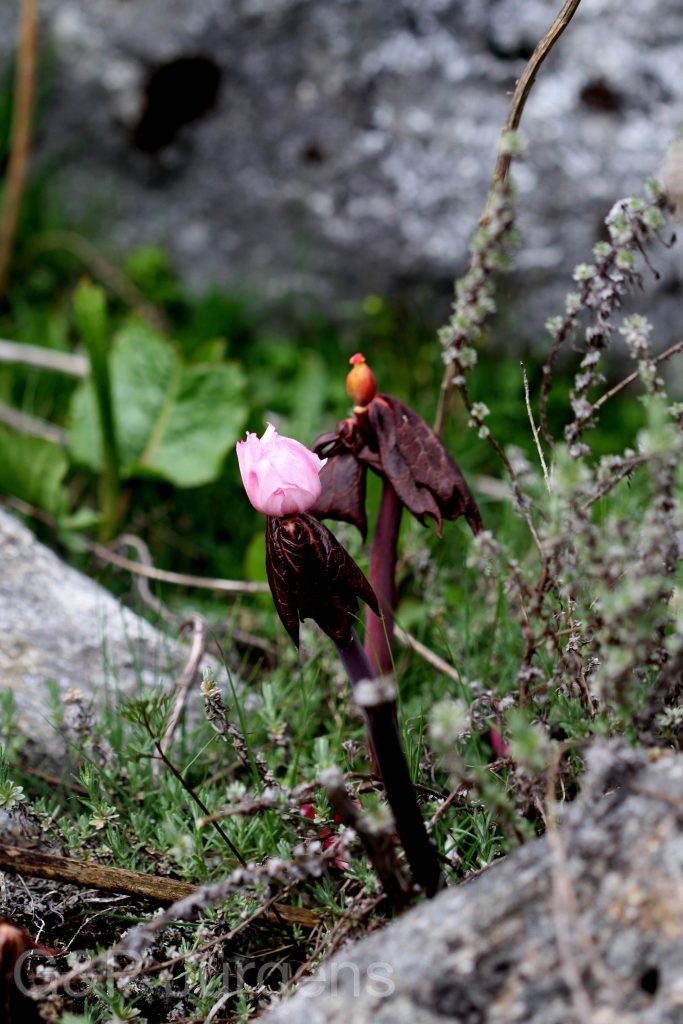
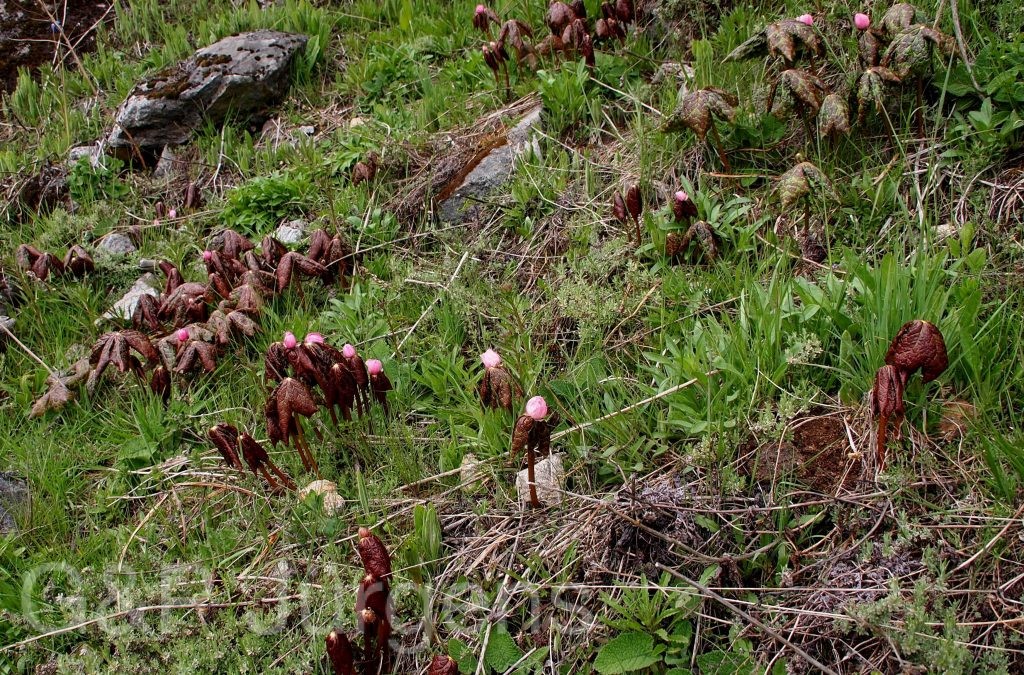
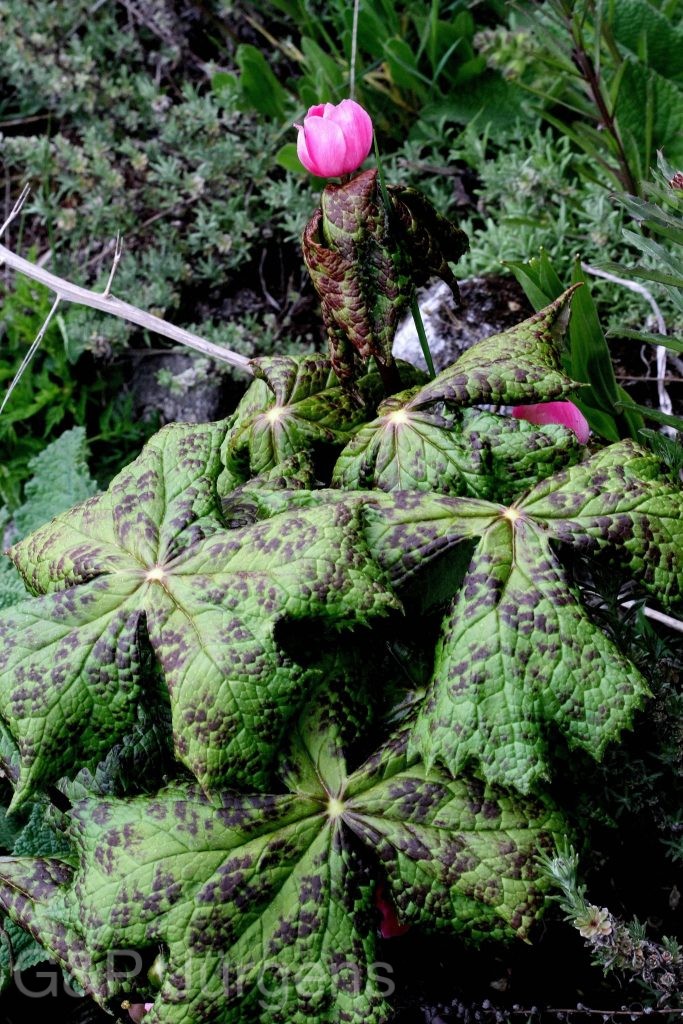
Podophyllum hexandrum, the Himalayan mayapple, is a perennial herb of the high temperate and subalpine Himalaya, occurring through China, India, Pakistan, Nepal, Bhutan and Afghanistan, with around 860 occurrences in GBIF. It grows in moist alpine meadows, open fir and birch forest, shaded scrub and along the margins of melting snowfields, typically between about 2500 and 4500 m. The plant photographed at Tanghu in northern Sikkim at 3900 m in June, emerging and flowering as the snow recedes, is characteristic of its high-elevation niche, where the rich, moist humus of the upper forest and meadow ecotone supports dense local stands.

The species arises from a stout, creeping, knotty rhizome and produces a single erect aerial stem 15–50 cm tall bearing usually two large, long-petiolate leaves that are deeply palmately three- to five-lobed, the lobes themselves further cut and toothed, often bronze-mottled when young. A solitary, nodding to erect flower is borne at the fork of the leaves; it is cup-shaped with white to pale pink petals and (as the epithet indicates) commonly six stamens. The fruit is a large, fleshy, ovoid berry ripening to bright red and containing numerous seeds embedded in pulp.

GBIF flags the name as a synonym, the species being widely treated under the accepted name Podophyllum hexandrum, with the genus Sinopodophyllum (S. hexandrum) recognised by some authors to accommodate the Asian taxon apart from the North American Podophyllum peltatum; the source page links to that segregate name. The plant is the principal natural source of podophyllotoxin, a lignan of major pharmaceutical importance as a precursor of anticancer agents. Heavy harvesting of the rhizomes for this trade, together with habitat disturbance, has caused marked local declines, and the species is regarded as threatened and is subject to conservation and CITES-related concern across much of its range.

Author: Royle · Sources: POWO (Kew), GBIF, Flora of China Vol. 19, Flora of Bhutan Vol. 1, Flora of Pakistan, Medicinal Plants of the Himalaya: A Monograph of Podophyllum