
Hook.f. & Thomson
Description
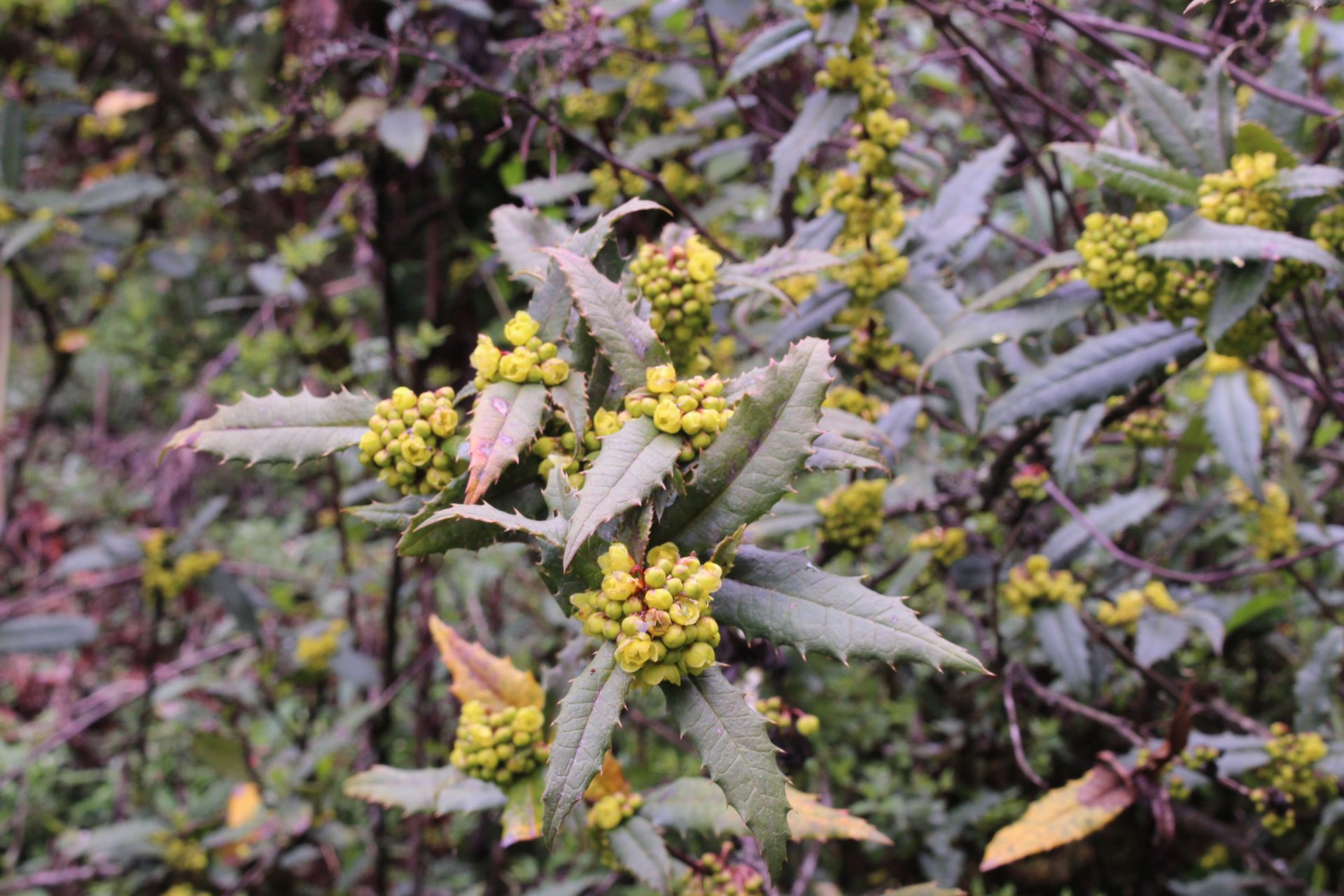
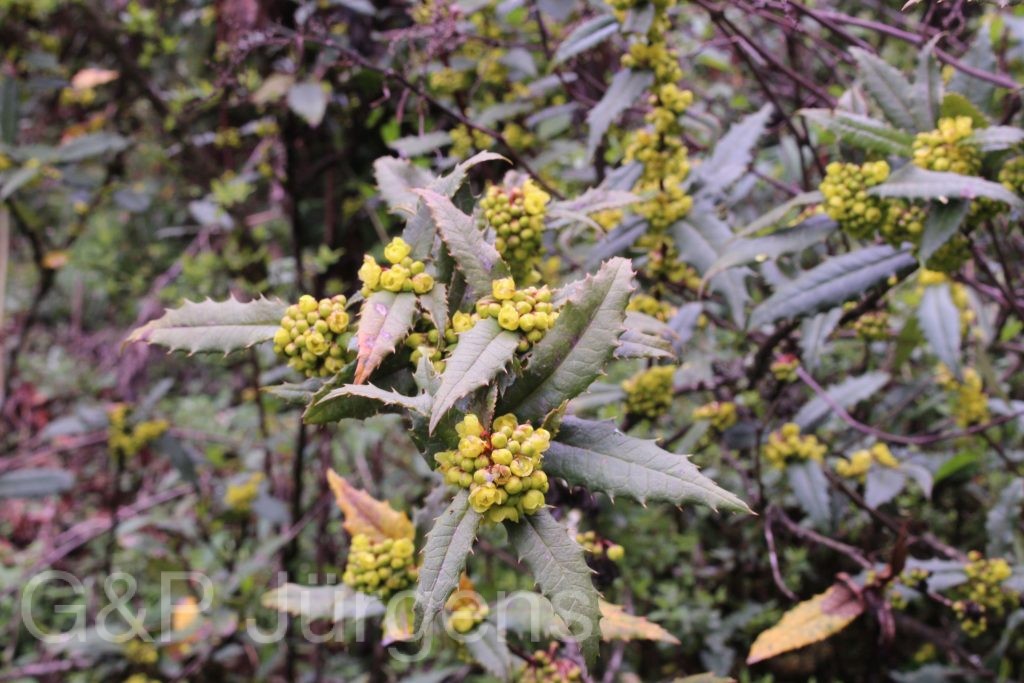
Berberis insignis is an evergreen barberry of the eastern Himalaya, native to Nepal, India, Bhutan and adjacent China, with its 161 georeferenced occurrences also reflecting cultivated material in Britain, the United States and elsewhere. It inhabits cool, moist temperate forest, shrubberies and shaded ravine margins, frequently in the rhododendron and oak belt. The specimen recorded at Tumching-La in Bhutan at 2900 m in May illustrates its occurrence in the upper temperate zone and its late-spring flowering, when the conspicuous yellow blossoms appear among the previous season's foliage.
Distinctively for the genus, B. insignis is a spineless or nearly spineless shrub, lacking the stout nodal thorns of most barberries. The leaves are large, leathery and lustrous, elliptic to oblong-lanceolate, with strongly spinulose-toothed margins and a prominently reticulate venation, borne in tufts on short shoots. The flowers are golden-yellow, clustered in dense axillary fascicles; each flower has the typical berberidaceous arrangement of sepals and petals in whorls of three, with six stamens that respond to touch, and a single carpel. The fruit is an ellipsoid to oblong berry, ripening dark blue-black with a glaucous bloom.
Berberis is a large genus traditionally divided into spiny-leaved evergreen and deciduous groups; B. insignis is notable for combining bold evergreen foliage with the absence of stem spines, characters that have made it a recognised parent in horticulture. Within its native range it is locally frequent in undisturbed forest, and its broad eastern-Himalayan distribution indicates no immediate conservation concern.
Author: Hook.f. & Thomson · Sources: POWO (Kew), GBIF, Flora of China, Flora of Bhutan, The genus Berberis monograph (Ahrendt), Flowers of the Himalaya (Polunin & Stainton)