Benth. ex Naudin


Description
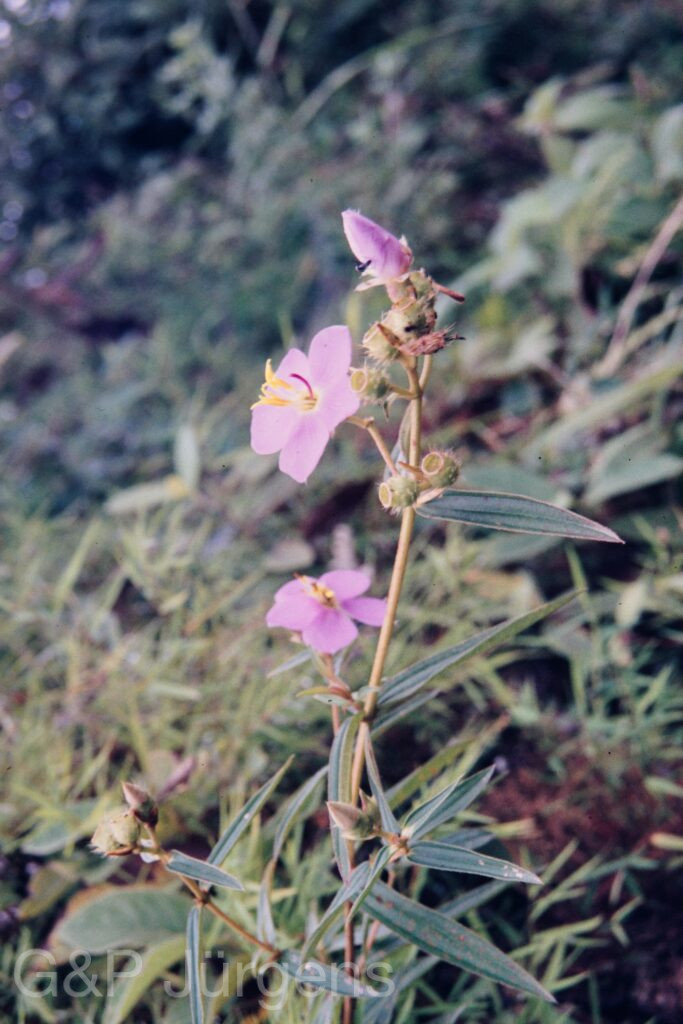
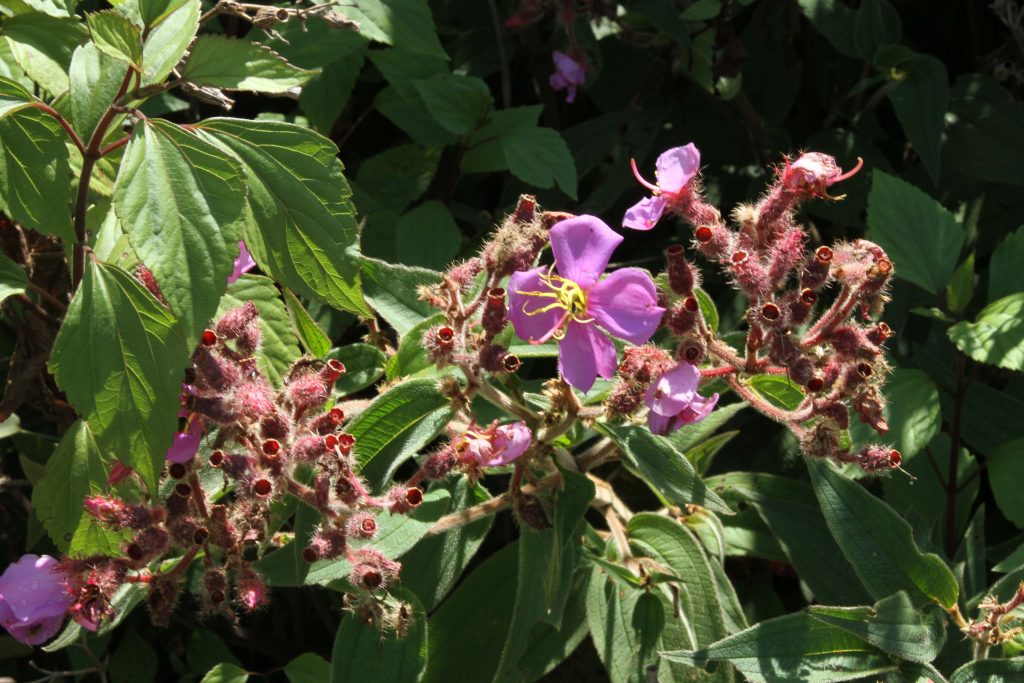
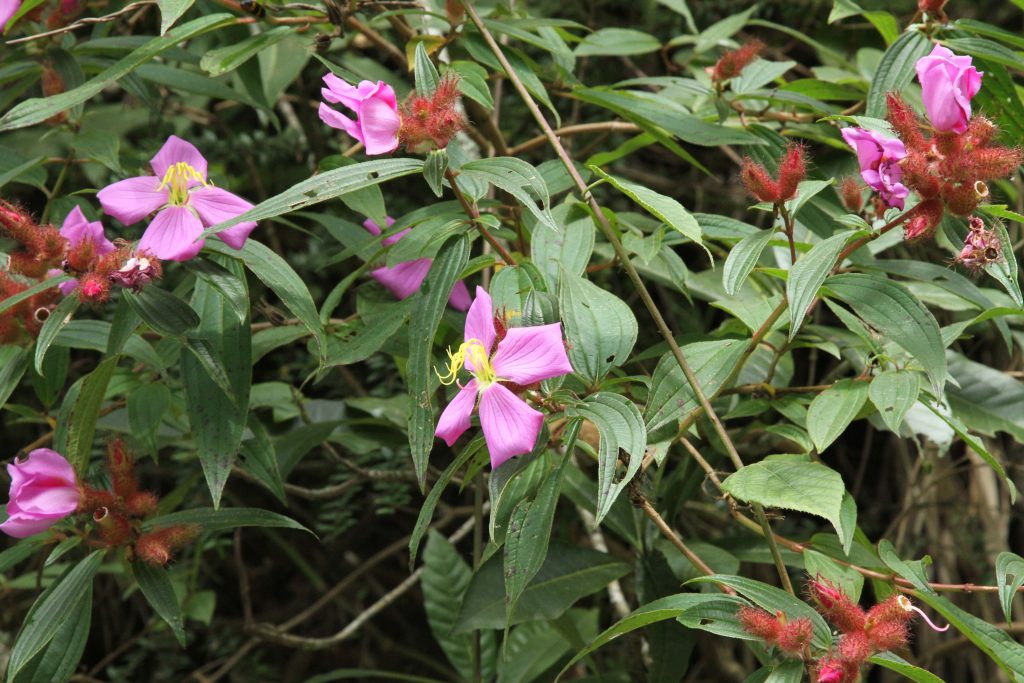
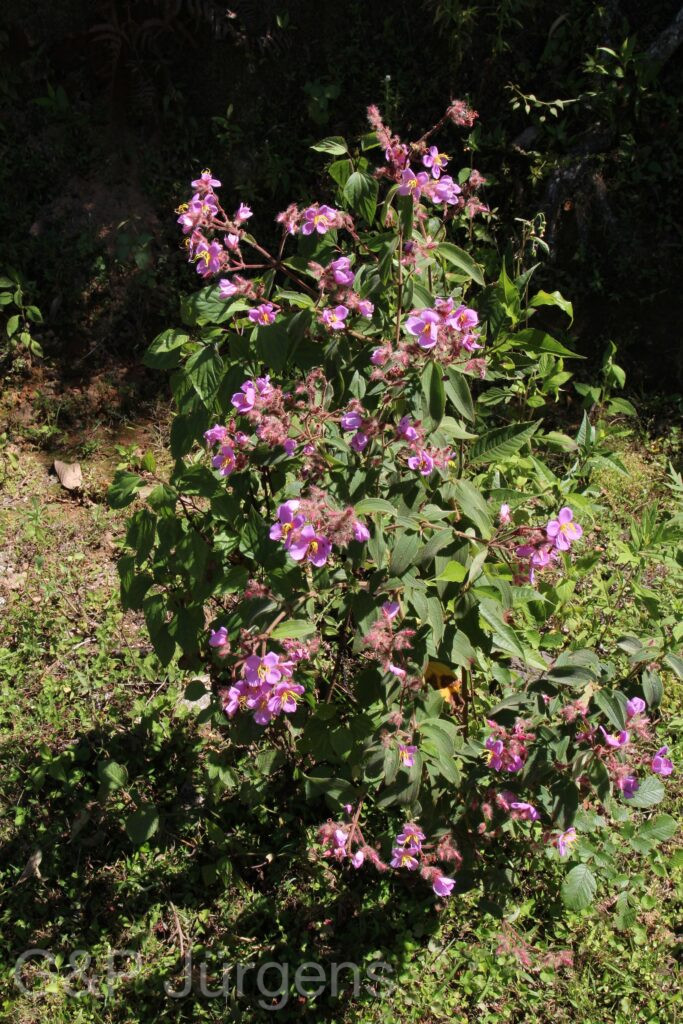
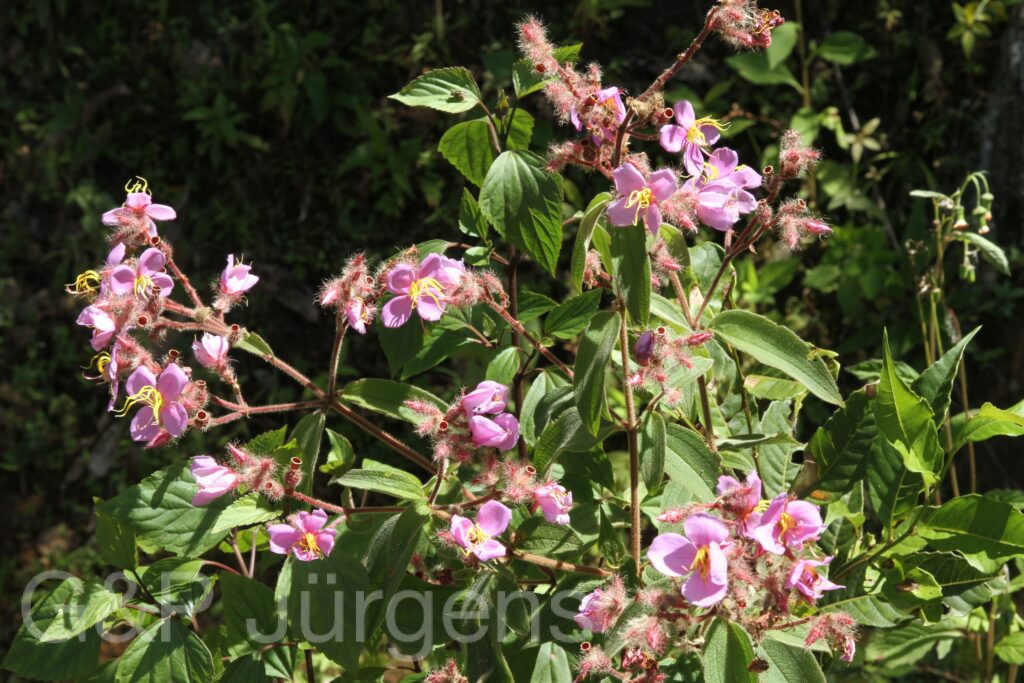
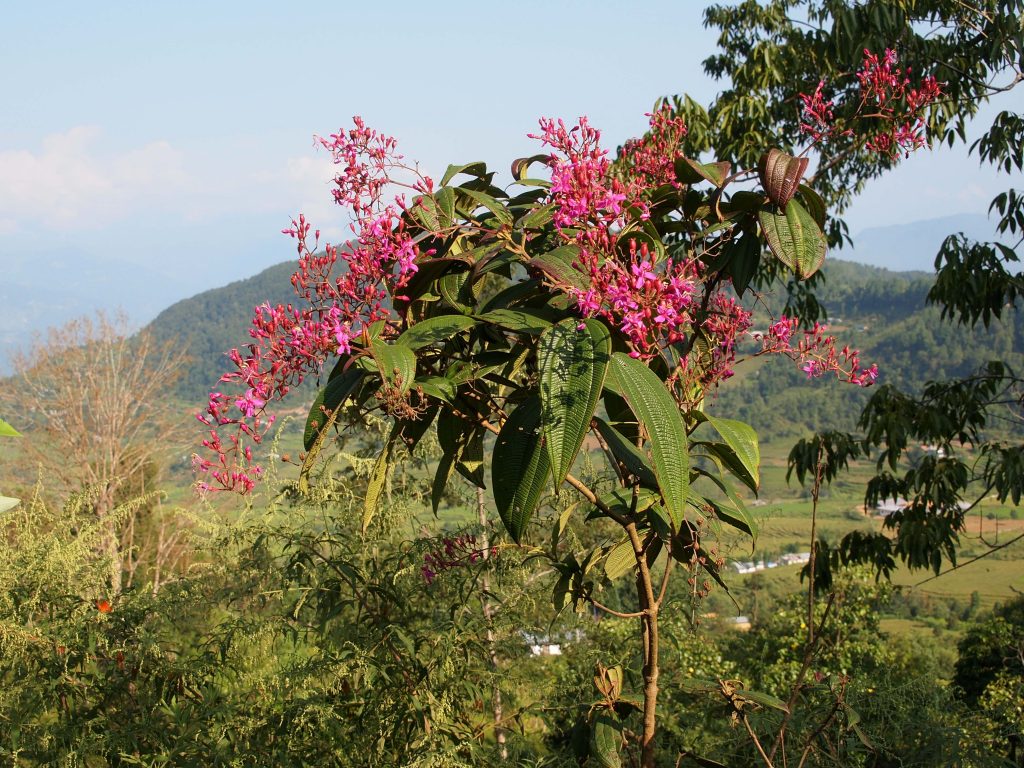
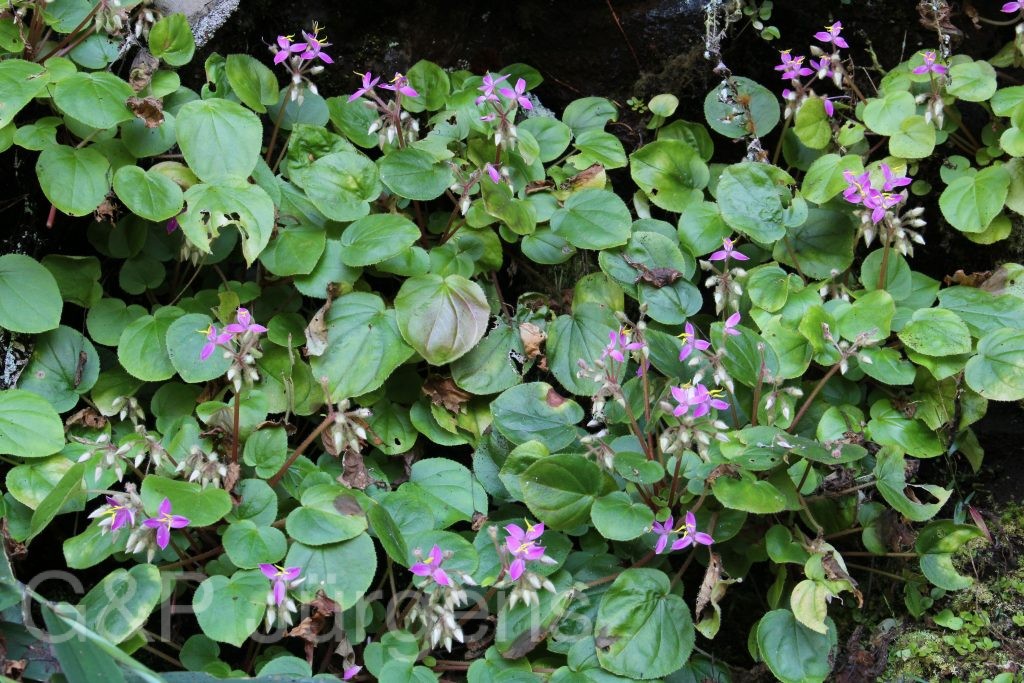
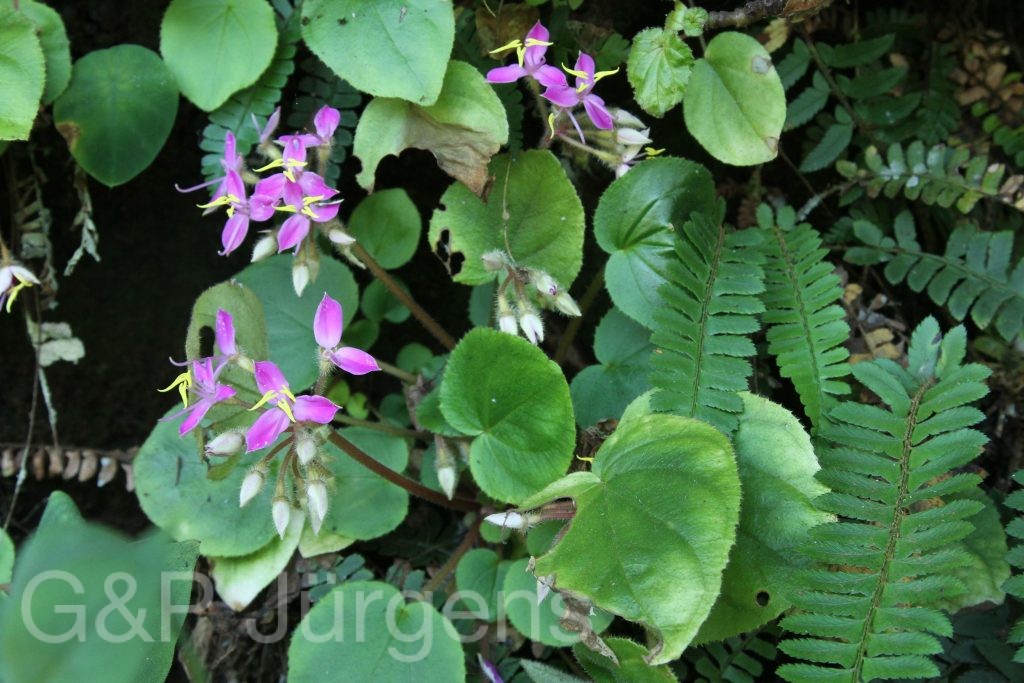
Osbeckia capitata Benth. ex Naudin is a subshrubby herb of the eastern Himalaya, recorded by GBIF (69 occurrences) from China, India, Bhutan and Bangladesh. It occupies open grassy slopes, forest clearings, scrub margins and disturbed banks in the subtropical to lower temperate hill zone, flowering through the late monsoon. The photographed plant from Wangdue Phodrang (Wangdi) in western Bhutan at 2600 m in September is characteristic of its occurrence on warm, humid mid-elevation slopes among grasses and low shrubs.
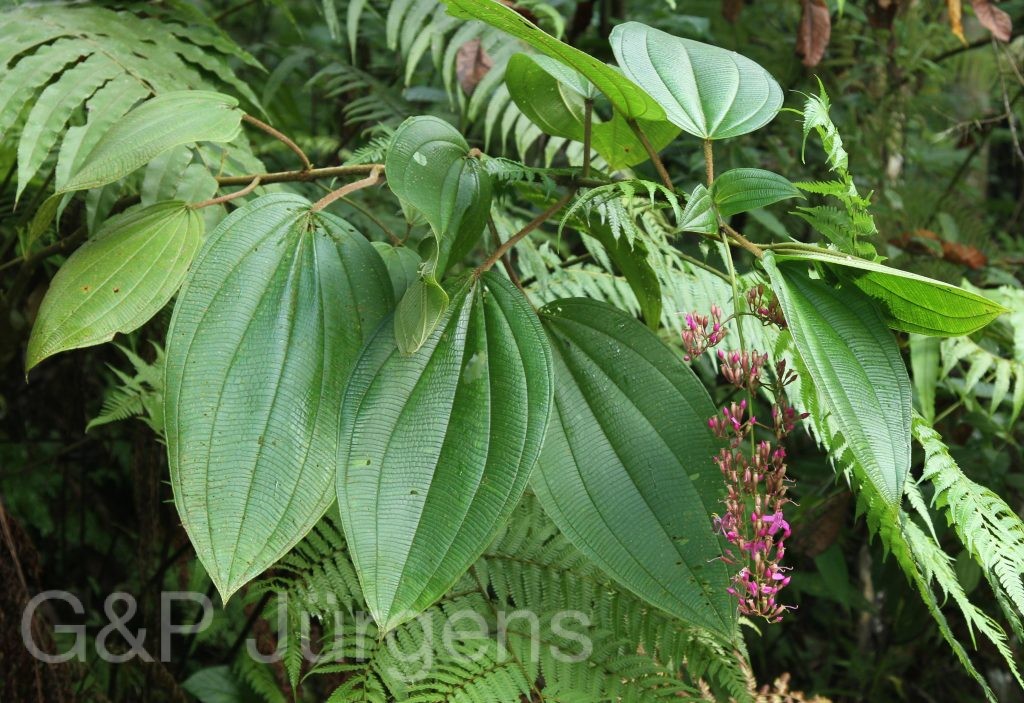
The plant is an erect to ascending perennial herb with quadrangular, bristly stems bearing opposite, sessile to shortly petiolate leaves. The blades are ovate to lanceolate, setose on both surfaces, with the strongly arcuate three-to-five longitudinal nerves diagnostic of the family. As the epithet capitata indicates, the flowers are aggregated into dense terminal heads or capitate clusters; each flower has four pink to purple petals, a setose, urceolate hypanthium, and the typical melastomataceous androecium of curved stamens whose elongate, beaked anthers open by apical pores. The fruit is a setose urceolate capsule retained within the persistent hypanthium.
Osbeckia is a palaeotropical genus of around 50 species best developed in tropical Asia, separated from Melastoma by its smaller, dry, poricidal-anthered flowers and capsular fruits; the capitate inflorescence distinguishes O. capitata within the Himalayan members. The poricidal anthers are adapted to buzz-pollination by bees, and several congeners have local medicinal use. The species is not assessed as threatened, persisting in open and lightly disturbed montane habitats across its eastern Himalayan range.
Author: Benth. ex Naudin · Sources: POWO (Kew), GBIF, Flora of Bhutan, Flora of China, Melastomataceae of the Indian Subcontinent, Hansen monograph on Osbeckia