
DC.
Description
Oxyspora paniculata is a widespread species of the family Melastomataceae, distributed from the eastern Himalayas through mainland Southeast Asia to southern China and Vietnam. GBIF records over 1,090 occurrences across Nepal, India, Bhutan, Myanmar, China, Laos, Vietnam, and Japan. The species inhabits warm-temperate to subtropical broadleaved forests, forest margins, and streamsides at elevations of 500–2,200 m, favouring humid, semi-shaded habitats with well-drained acidic soils. Along the Mo-Chu valley in Bhutan at 1,400 m, it grows in the understorey of warm broadleaved forests dominated by Castanopsis and Schima.
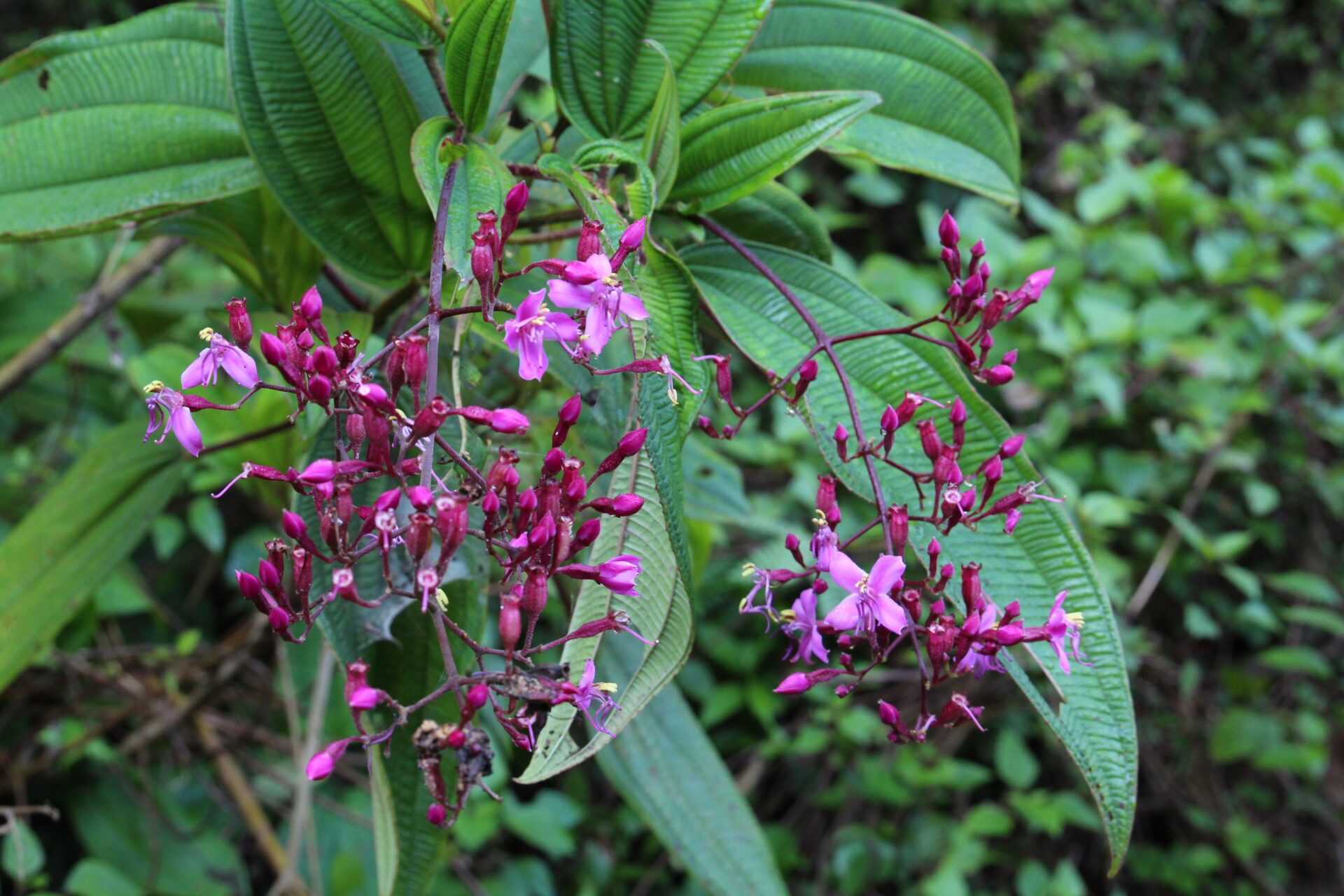
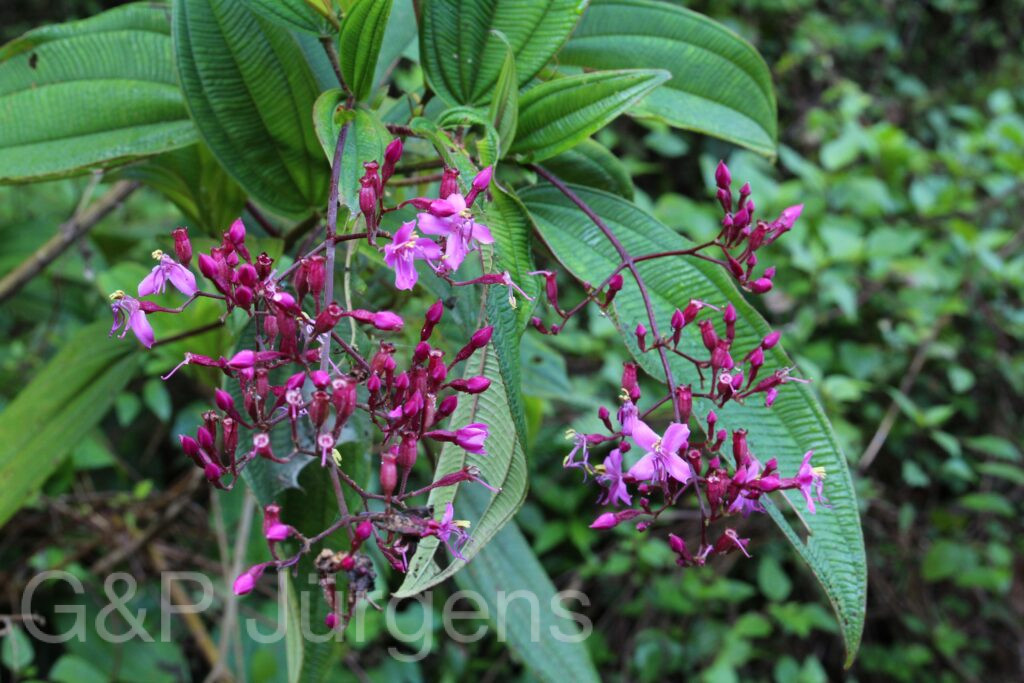
Oxyspora paniculata is a shrub or subshrub, typically 1–3 m tall, with quadrangular, often narrowly winged stems. Leaves are opposite, ovate to ovate-lanceolate, 8–18 cm long, acuminate at the apex, with 3–5 prominent acrodromous veins and finely serrulate margins. The inflorescence is a terminal, lax panicle of cymes, 10–25 cm long, bearing numerous small flowers. Flowers are tetramerous, with pink to mauve petals 6–10 mm long and eight stamens of two lengths; the longer stamens bear sigmoid filaments and poricidal anthers with a short dorsal spur. The fruit is a urceolate capsule dehiscing by four apical valves, releasing numerous minute, cuneate seeds.
The genus Oxyspora comprises approximately 20 species centred in the Sino-Himalayan region and mainland Southeast Asia. Oxyspora paniculata is the most widespread member of the genus and has at times been confused with O. vagans, from which it differs in its distinctly winged stems and larger panicles. The species plays an important ecological role as a nectar source for pollinators in subtropical forest margins and is occasionally used in traditional medicine in parts of northeast India.
Author: DC. · Sources: POWO (Kew), GBIF, Flora of China Vol. 13, Flora of Bhutan Vol. 2, Renner et al.: Melastomataceae of the Old World (2021)