
C.B.Clarke
Description
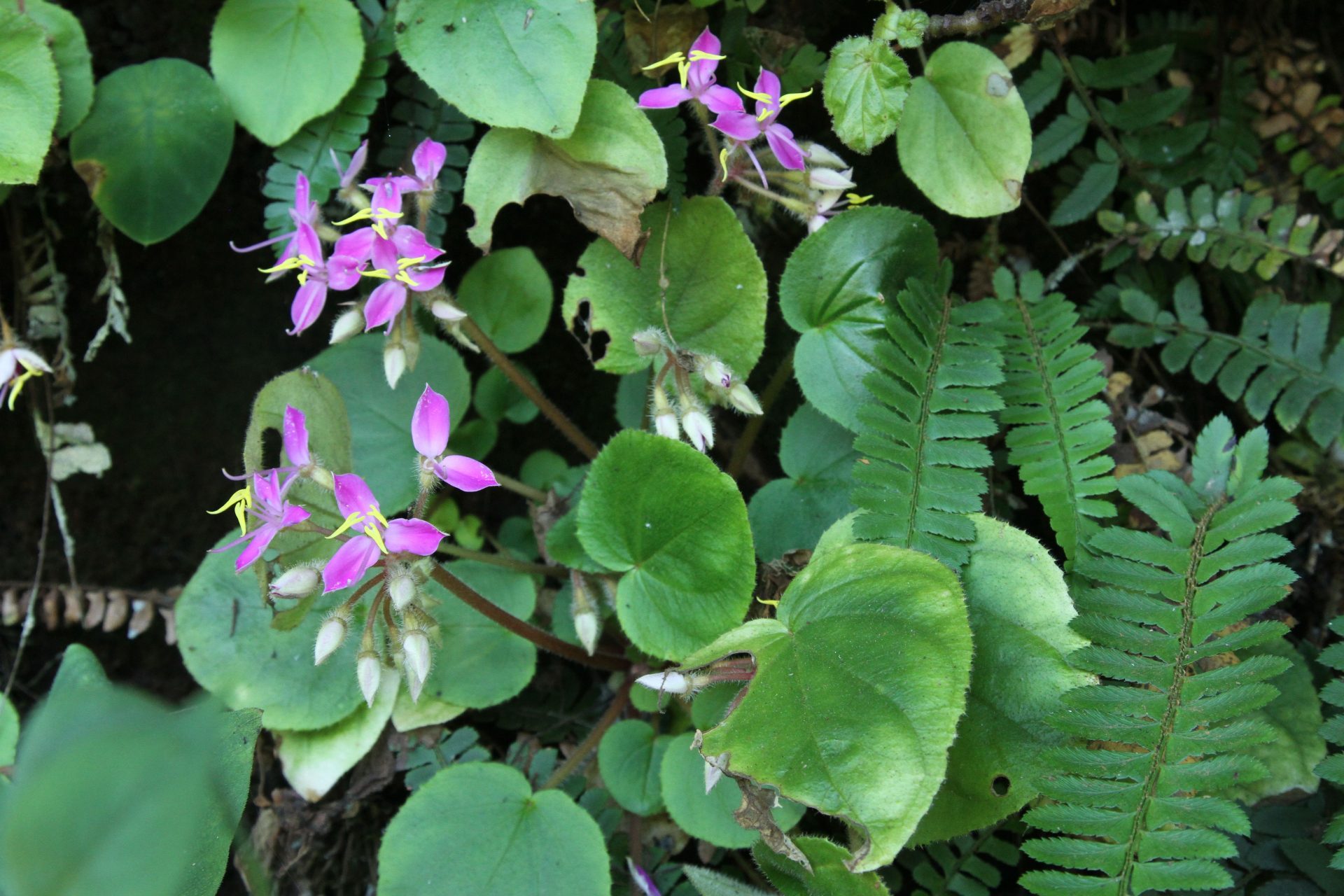
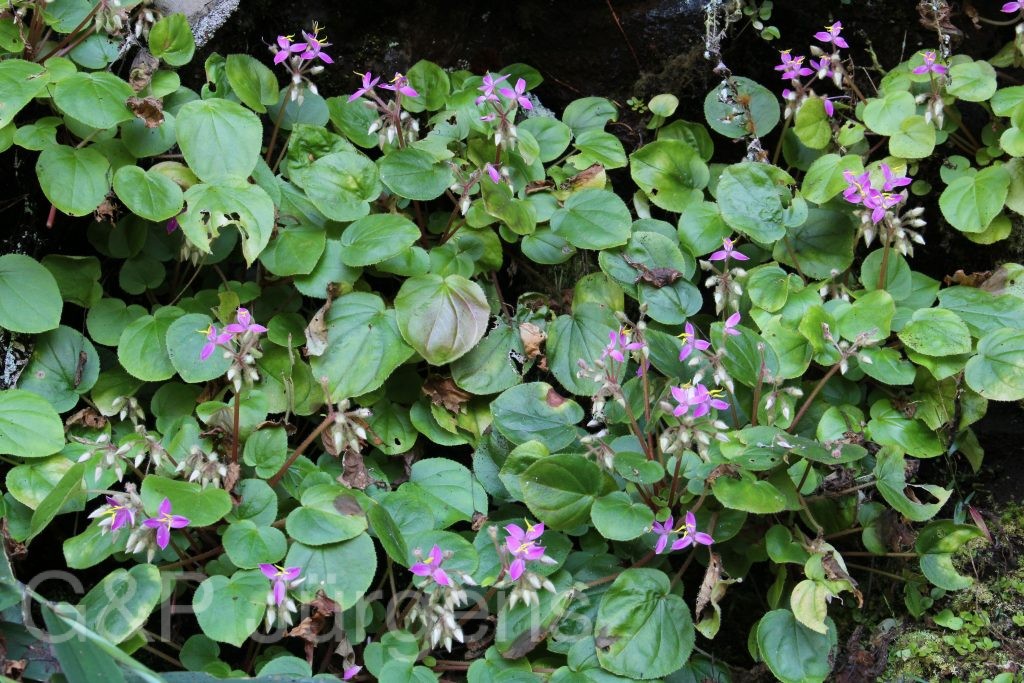
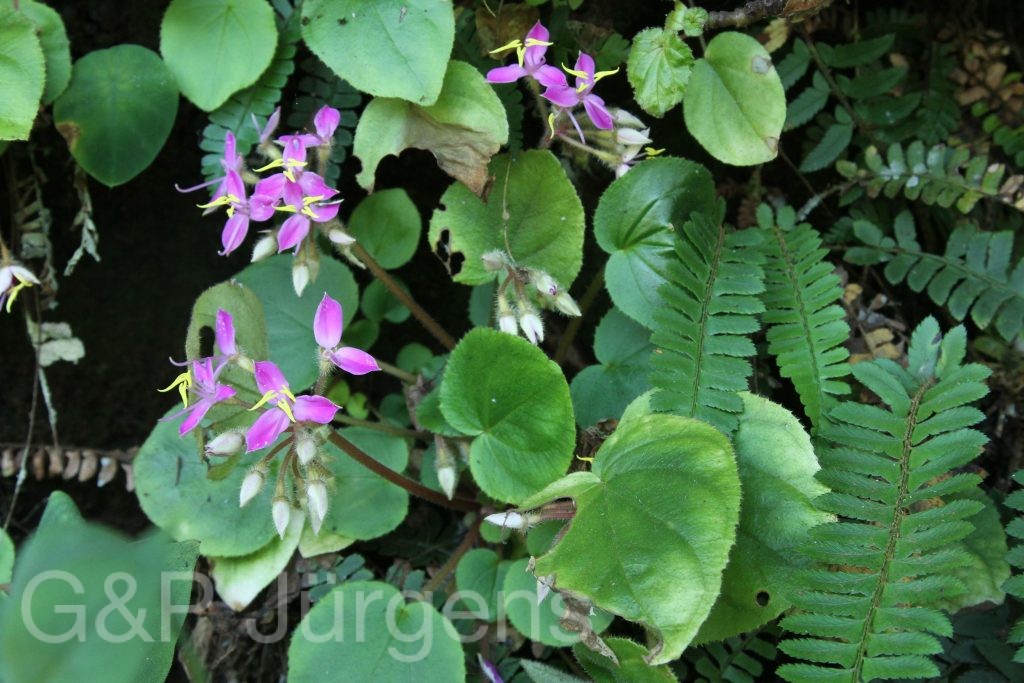
Sonerila khasiana is a small herb of the eastern Himalayan and northeast Indian region, recorded from India, Nepal, Bhutan, China and Myanmar, with comparatively few documented collections. It is a shade-loving plant of moist, humus-rich forest floors, shaded rock faces and damp banks in subtropical and lower montane forest, typically below about 1500 m. The illustrated plant from Galephug in southern Bhutan, at around 600 m and flowering in October, is characteristic of its lowland, post-monsoon flowering habit in warm, perpetually humid foothill forest where deep shade and constant moisture prevail.
The species is a delicate, often somewhat succulent annual or short-lived perennial with slender, ascending, frequently reddish stems. The leaves are opposite, ovate to elliptic, serrulate and traversed by the curved, parallel-converging nervation diagnostic of the Melastomataceae, the lamina often sparsely setose. The inflorescence is a short, terminal, scorpioid cyme of few flowers. The flowers are trimerous, with three pink to rose-purple petals and typically three stamens bearing the conspicuous, yellow, beaked anthers characteristic of the genus; the fruit is a small, three-angled, top-shaped capsule releasing numerous minute seeds.
The epithet refers to the Khasi Hills of Meghalaya, a centre of diversity for the genus. Sonerila is a large palaeotropical genus notable for its consistently trimerous flowers, unusual within a predominantly pentamerous family, and for its many narrow-range, forest-floor endemics. With relatively few records and a dependence on undisturbed shaded forest, such species are potentially sensitive to deforestation, although its full conservation status remains insufficiently assessed.
Author: C.B.Clarke · Sources: POWO (Kew), GBIF, Flora of China Vol. 13, Flora of Bhutan Vol. 2, Flora of Nepal, Revision of Sonerila (Melastomataceae)