
Hook.
Description
Osbeckia nepalensis is a subtropical to warm-temperate herb or subshrub of the eastern Himalaya and southeastern Asia, ranging through China, Nepal, India, Bhutan, Bangladesh, Myanmar, Thailand, Vietnam, Malaysia and Indonesia; its roughly 563 GBIF occurrences trace a broad Sino-Himalayan to Indochinese arc. In Nepal it descends to low elevations along river valleys, as recorded along the Darondi Khola at about 630 m in October, when the post-monsoon period brings peak flowering. It favours open, sunny situations on grassy hillsides, forest margins and roadside banks, behaving as an early-successional colonist of seasonally humid foothill habitats.
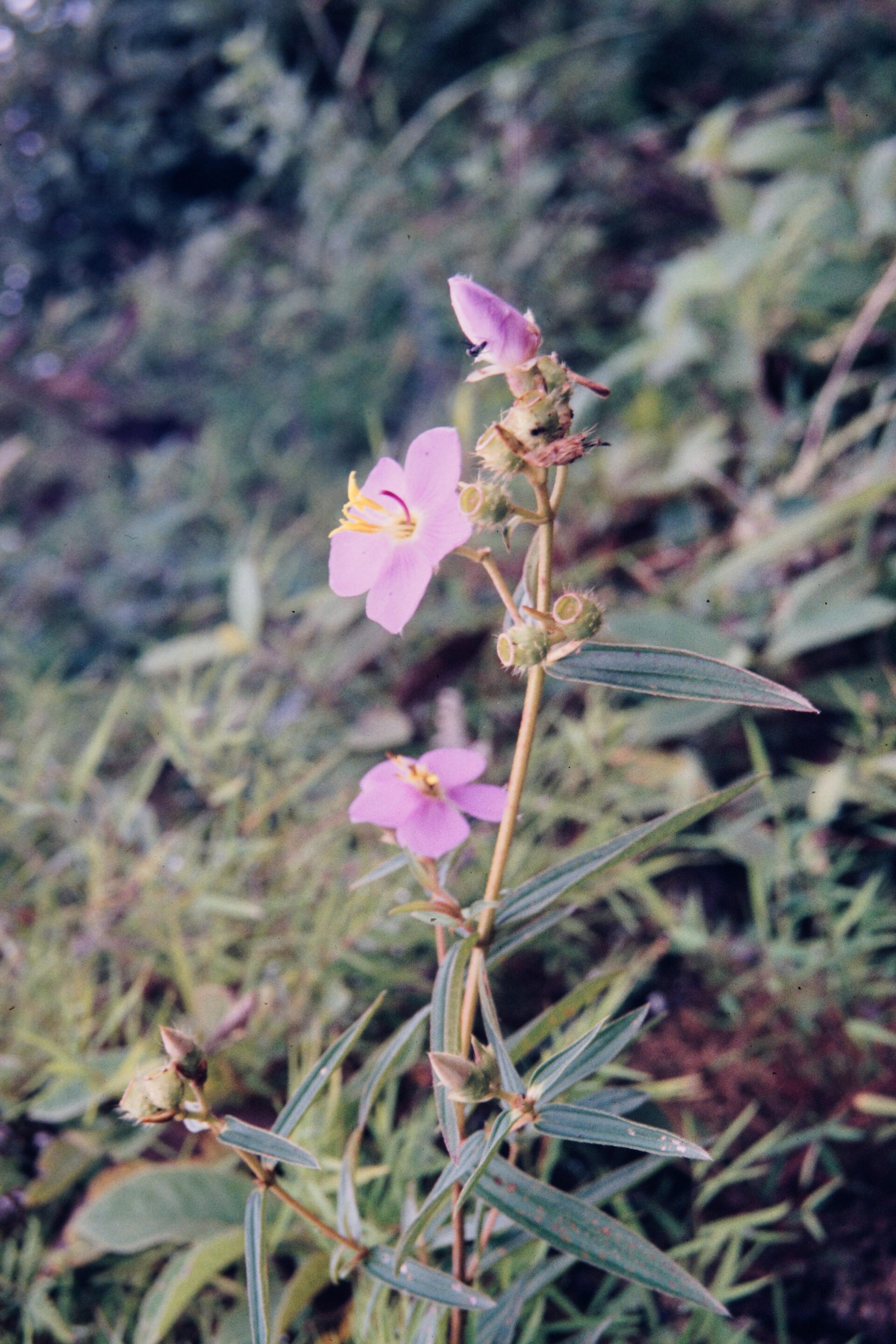
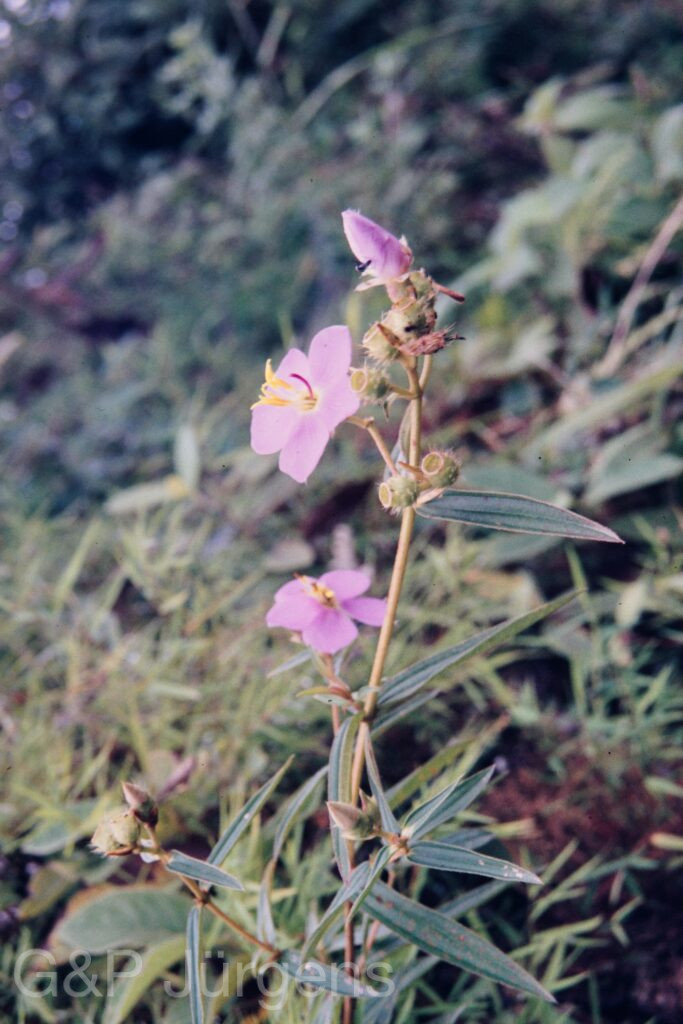
The plant is an erect, branched herb or soft subshrub with four-angled stems clothed, like the foliage, in stiff bristly hairs. The leaves are opposite, ovate-lanceolate, and bear the curved-parallel primary veins diagnostic of Melastomataceae. The handsome flowers are clustered in terminal heads, each with a bristly urn-shaped hypanthium and usually four broad, rounded petals of rich rose-purple to magenta; within are twice as many stamens with geniculate filaments and elongate, beaked, poricidal anthers adapted for buzz-pollination by bees. The fruit is a bristly capsule enclosed in the persistent hypanthium, releasing many minute seeds.
Osbeckia is closely allied to Melastoma, from which it is separated by its smaller, dry, poricidal capsules rather than fleshy berries. O. nepalensis is among the most ornamental species of the genus, valued horticulturally and used locally in herbal medicine. As a common, weedy coloniser of disturbed ground over a very large area, it carries no significant conservation concern.
Author: Hook. · Sources: POWO (Kew), GBIF, Flora of China Vol. 13, Flora of Bhutan Vol. 2, Flora of Nepal, A Revision of Osbeckia (Melastomataceae)