
(CB.Clarke) Nayar
Description
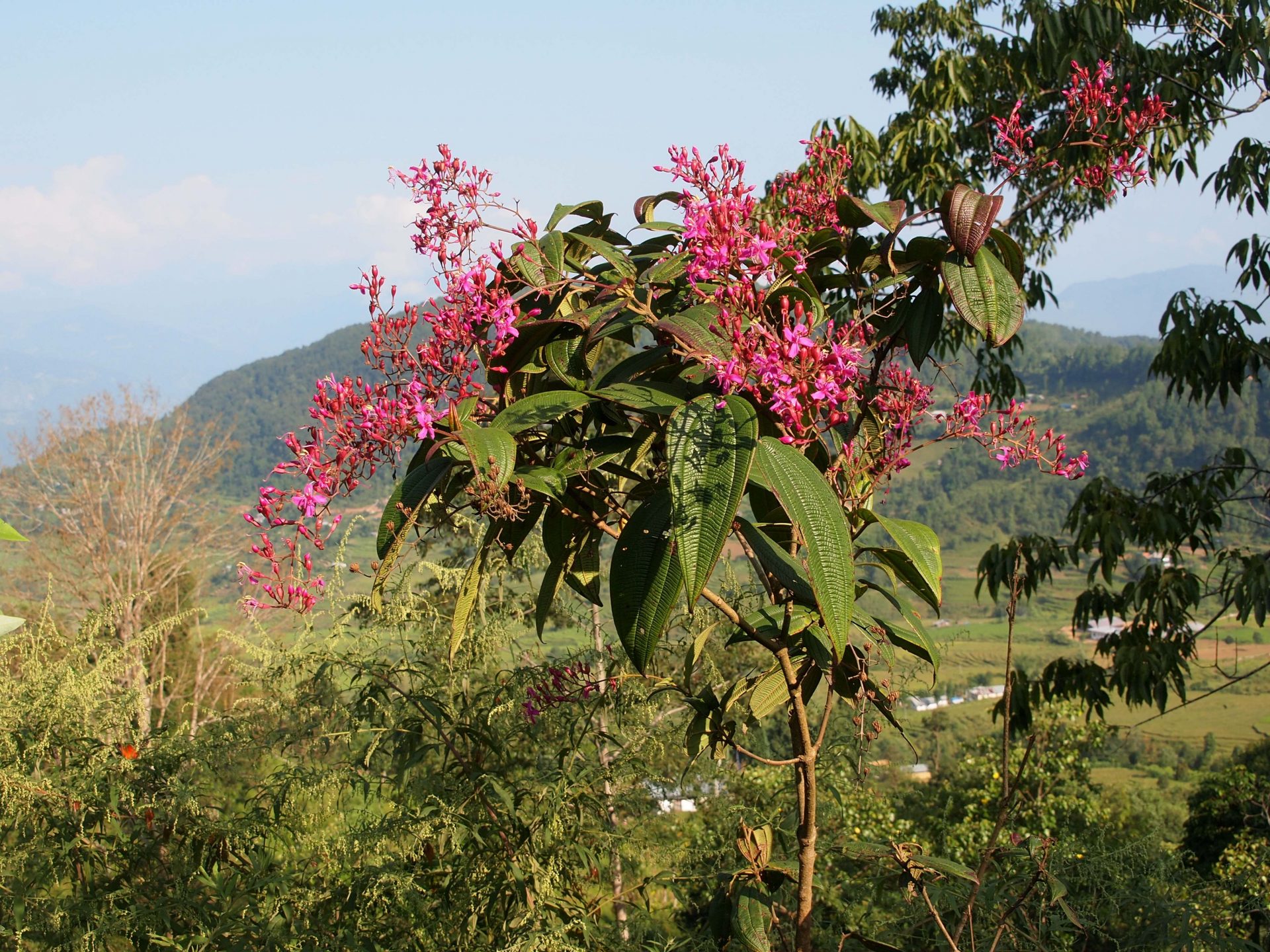
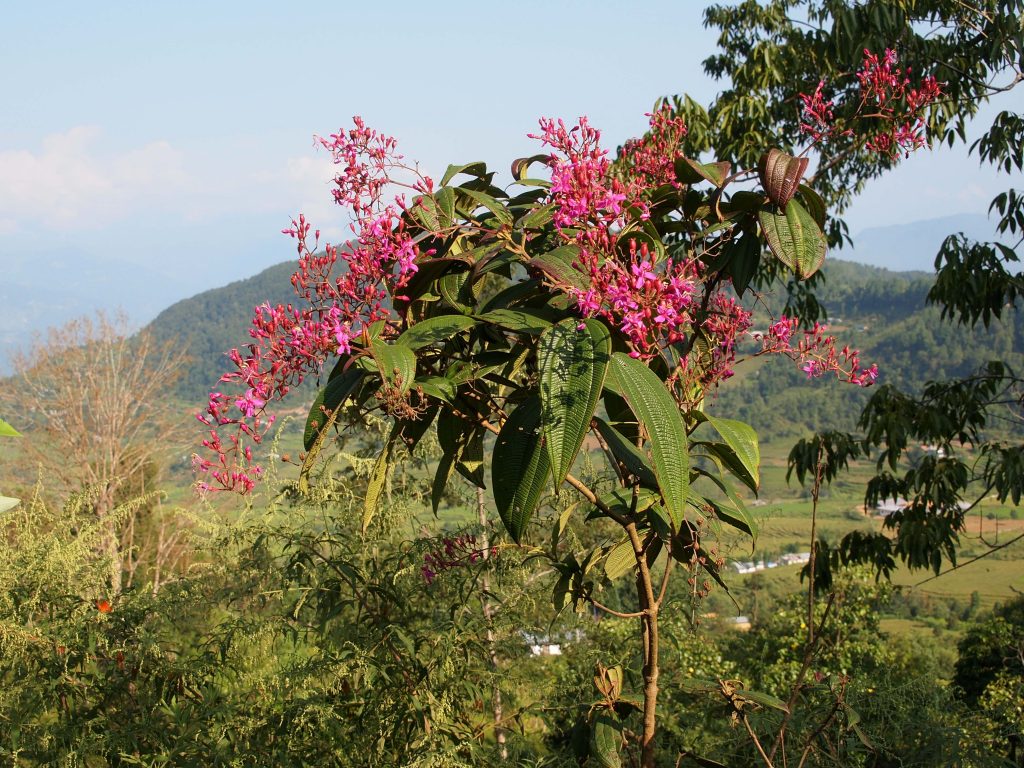
Pseudodissochaeta assamica is a forest shrub of the Sino-Himalayan and Indo-Burmese region, recorded from China, Vietnam, India, Laos, Bhutan, Myanmar and Bangladesh, with a moderate body of data (c. 126 records in GBIF). It is a plant of warm, humid broad-leaved evergreen and semi-evergreen forest, growing in shaded understorey, along streamsides, ravines and forest margins, typically in the subtropical to lower montane belt around 1000–2000 m. The photographed individual from Tserang in Bhutan, at 1600 m, is representative of this moist, shaded mid-elevation forest habitat where members of the family flourish.
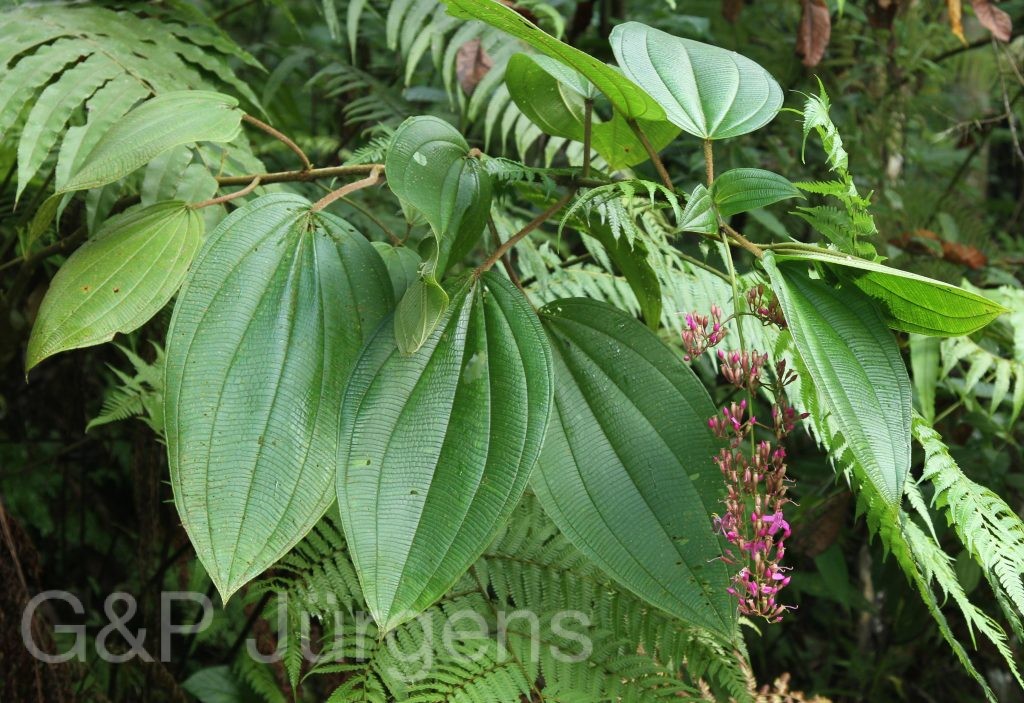
The plant is an erect to scrambling shrub with quadrangular young stems and the opposite, decussate leaves typical of Melastomataceae. The leaves are large, ovate to elliptic-lanceolate, with the characteristic curvinerved (acrodromous) venation of several main veins arising near the base and converging at the apex, the lamina often scabrous or sparsely setose. The flowers are borne in terminal or axillary panicles; each has a campanulate hypanthium, four small petals, and conspicuous stamens that are markedly dimorphic or unequal, with appendaged, often geniculate connectives and poricidal anthers adapted to buzz-pollination. The fruit is an urceolate, several-seeded capsule or berry-like structure crowned by the persistent calyx.
The genus Pseudodissochaeta (tribe Dissochaeteae) was segregated by Nayar from Dissochaeta on differences in stamen and connective structure. This taxon was based on a Clarke name and has a complex synonymy; the source page links to Oxyspora paniculata, an allied melastome with which it has at times been confused, underscoring the taxonomic intricacy of the group. As a fairly widespread forest shrub it is not regarded as threatened, though it depends on intact mid-elevation forest.
Author: (CB.Clarke) Nayar · Sources: POWO (Kew), GBIF, Flora of China (Melastomataceae), Flora of Bhutan, A Revision of the Asiatic Melastomataceae