Apiaceae

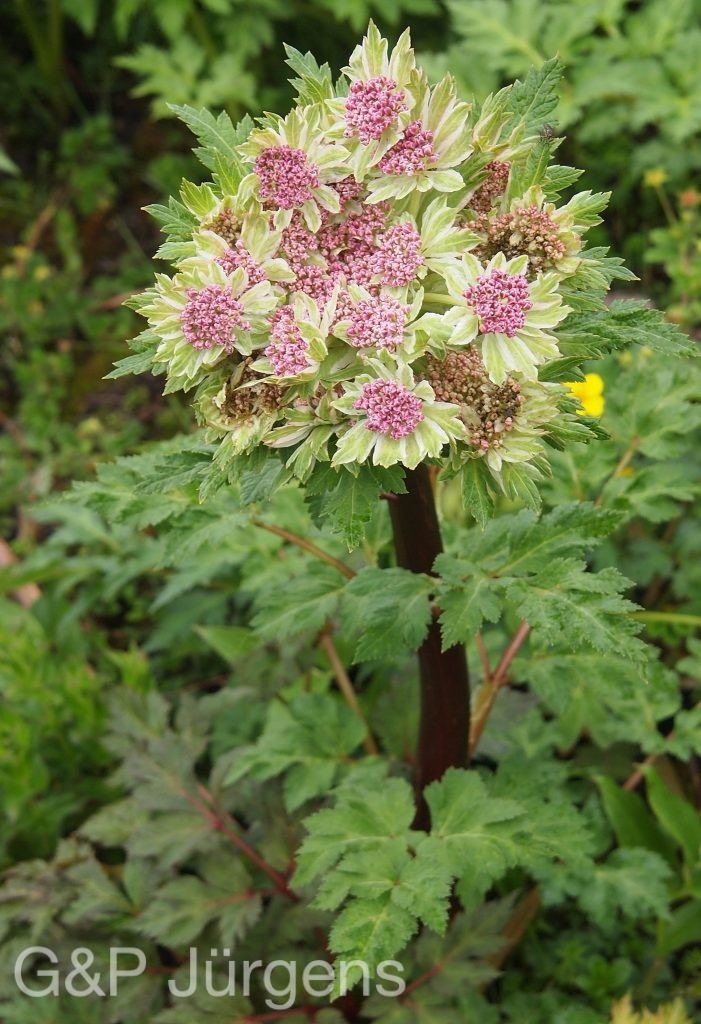
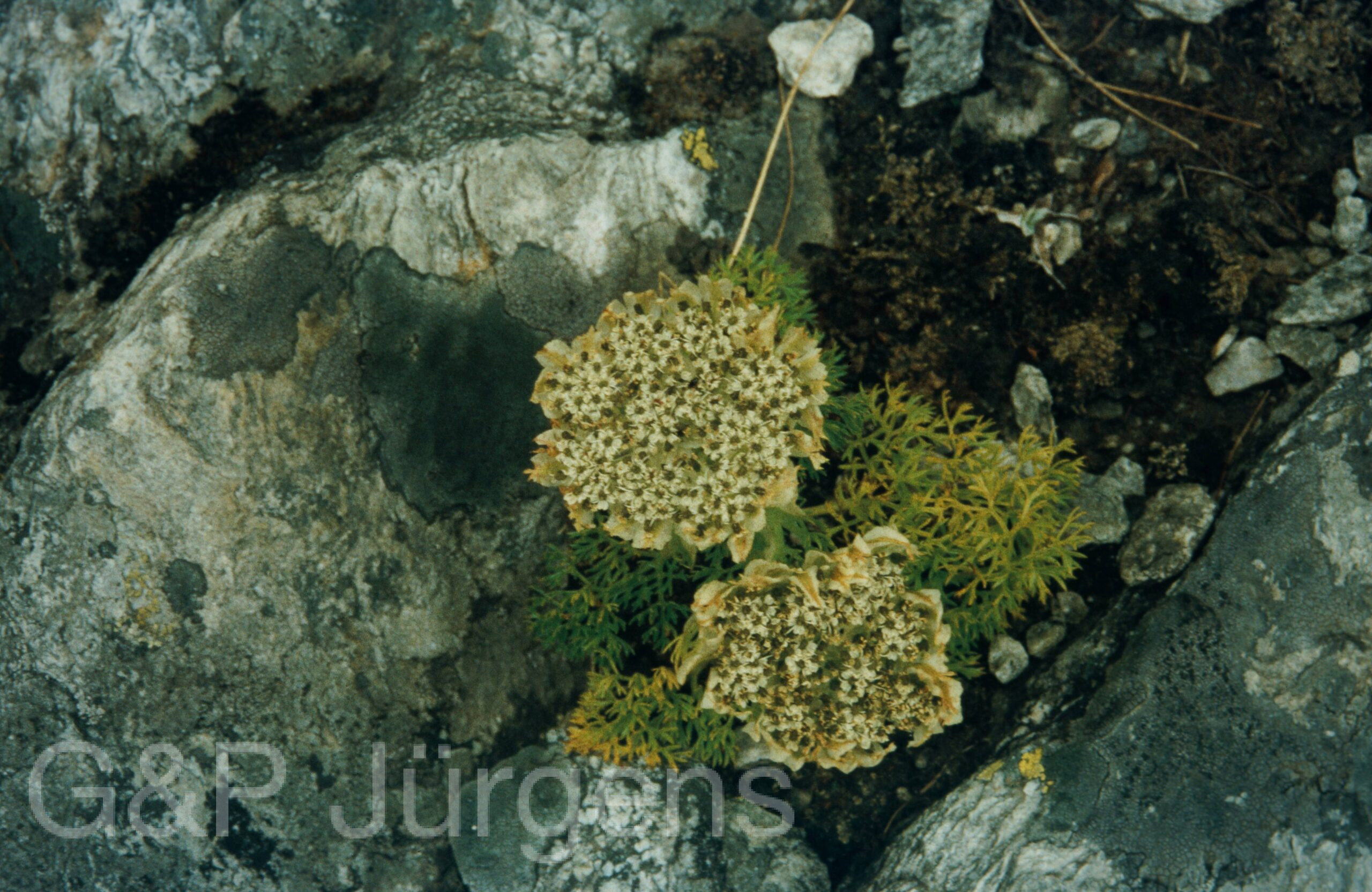
Cortiella hookeri

by GP Jürgens

(C.B.Clarke) C.Norman
Sikkim2003 243 P334
Sikkim Dzongri 4100m, August

Description

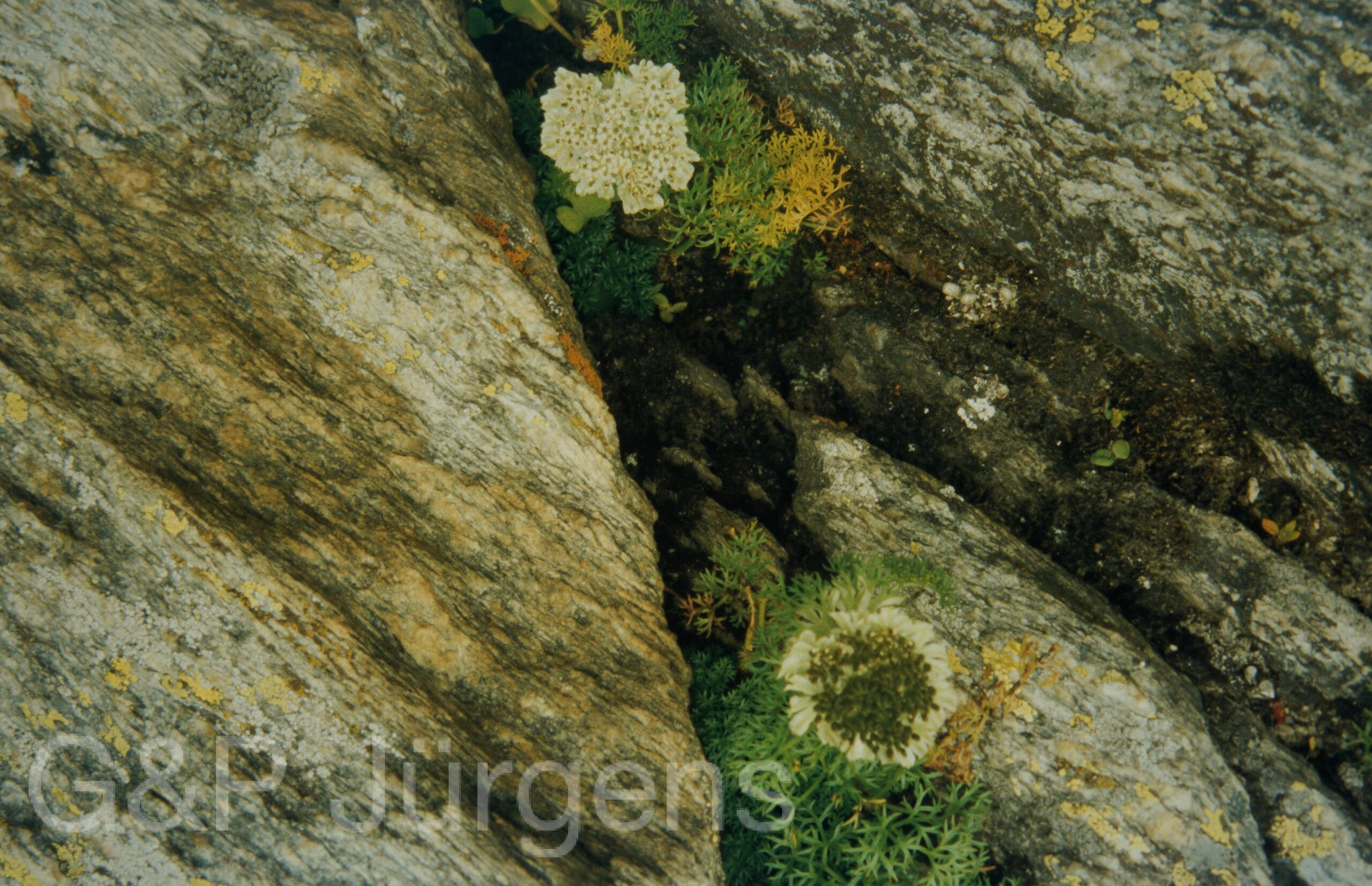
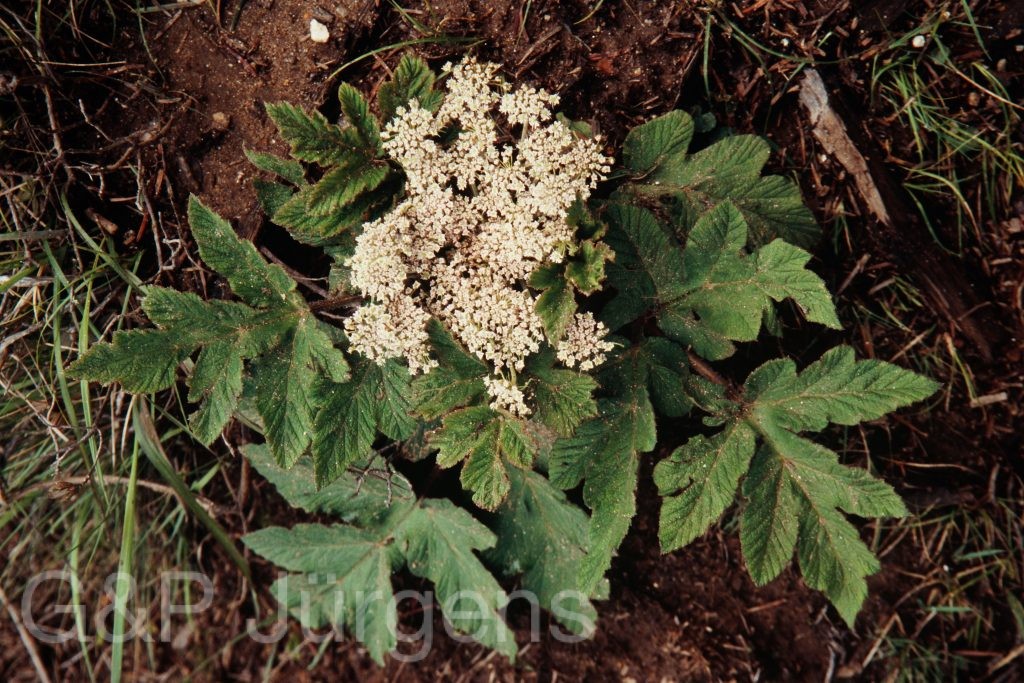
Cortiella hookeri is a cushion-forming umbellifer of the high Himalaya and Tibetan Plateau, distributed through Nepal, China, India and Bhutan; GBIF records 115 occurrences, concentrated in the alpine zone of this region. It grows on open stony slopes, gravelly alpine turf, screes and exposed ridges, typically above 4000 m where few flowering plants persist. The illustrated material was gathered in Sikkim at Dzongri at about 4100 m in August, a classic high-alpine station where the species flowers late in the short growing season among rock and short turf swept by monsoon cloud.

The plant is a low, compact perennial herb forming a flattened rosette or cushion from a stout, often woody taproot crowned by the fibrous remains of old leaf bases. Leaves are crowded, petiolate and pinnately to ternately dissected into small, firm, often crowded segments adapted to cold and wind. The inflorescence is a condensed, sessile or short-stalked compound umbel held close to the rosette, subtended by conspicuous bracts and bracteoles; the small flowers are white to pinkish, five-merous, with inflexed petals and an inferior ovary. The fruit is a dorsally somewhat compressed schizocarp splitting into two ribbed mericarps, the ribs and vittae providing key diagnostic characters.

Cortiella is a small genus of the Sino-Himalayan alpine flora, segregated within the carrot family on fruit anatomy and habit, with C. hookeri commemorating J. D. Hooker. POWO and GBIF accept the name. Its cushion habit and high-elevation niche exemplify the convergent growth forms that allow Apiaceae to colonise the harshest Tibetan alpine ground.

Author: (C.B.Clarke) C.Norman · Sources: POWO (Kew), GBIF, Flora of China, Flora of Bhutan, Annotated Checklist of the Flowering Plants of Nepal, Umbelliferae of the Sino-Himalaya (Apiaceae monograph)
(Wall. ex DC.) F.T.Pu & M.F.Watson

BhutanPG2011 769 01 01
Bhutan Chele-La, 3900m July

Description

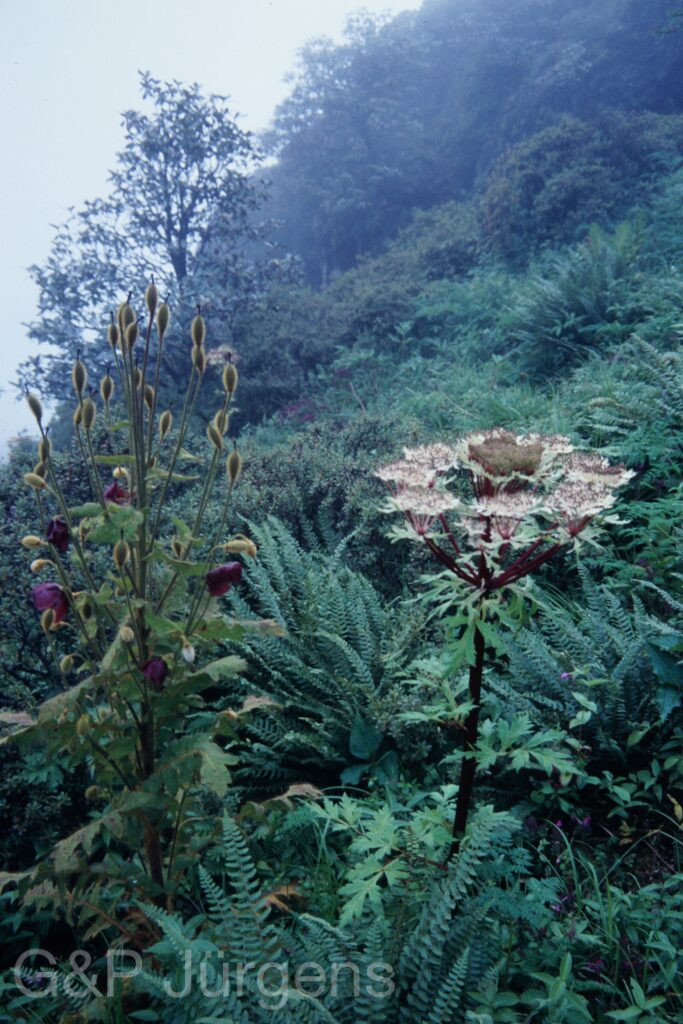
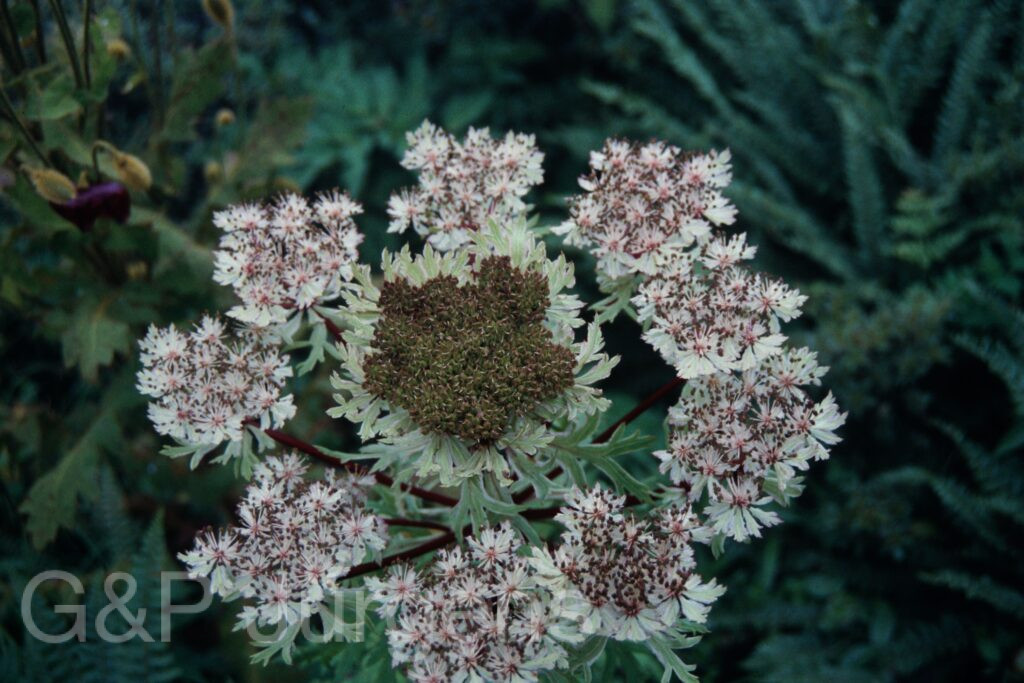
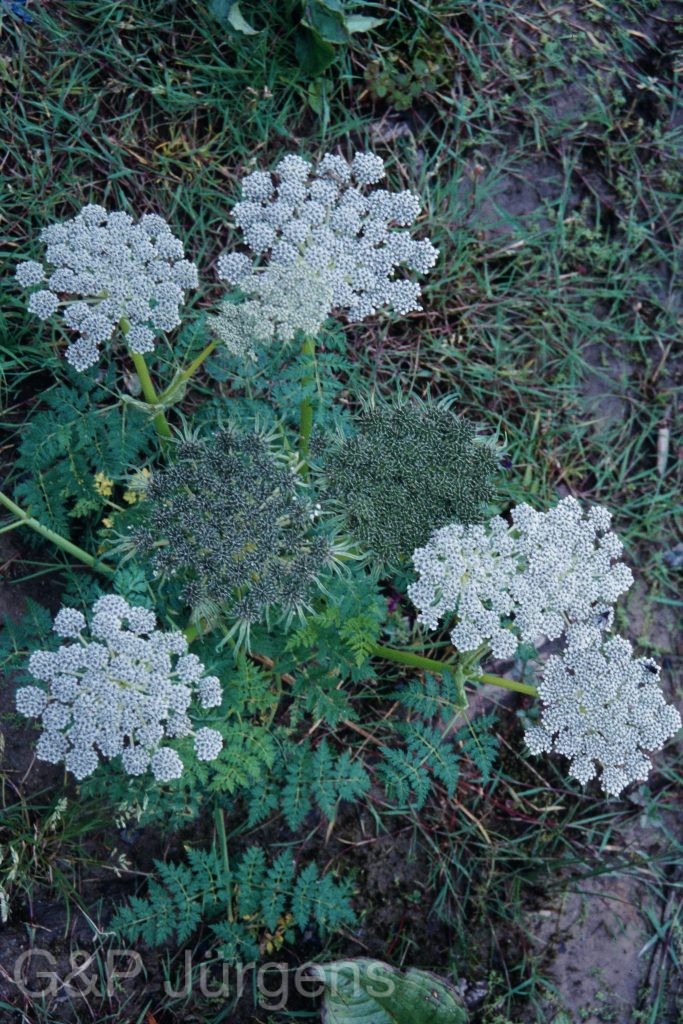
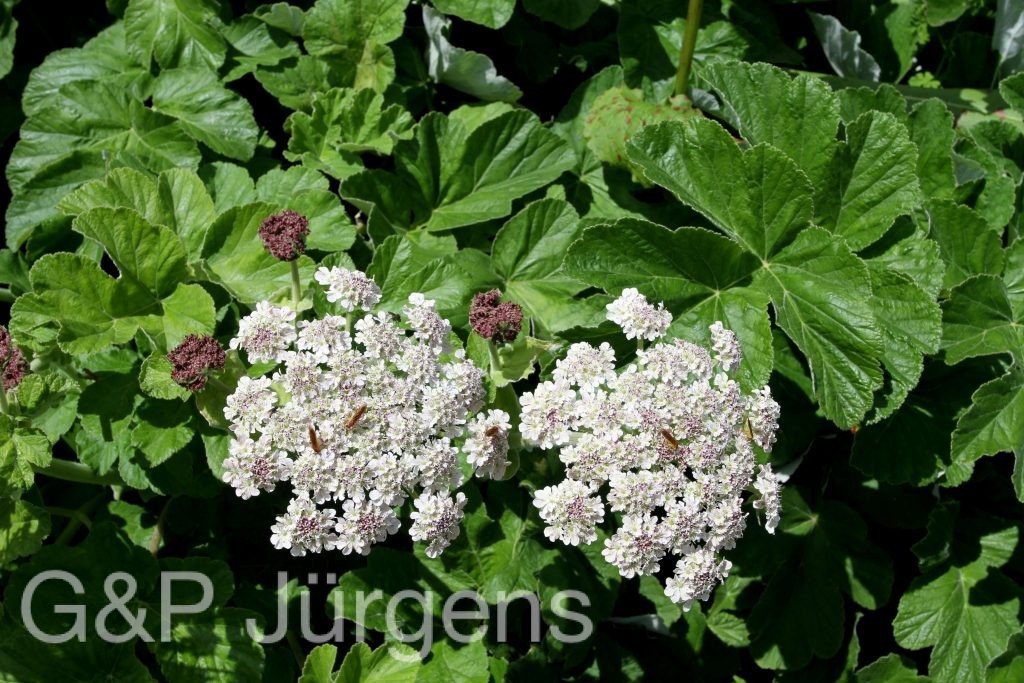
Heracleum candidans var. obtusifolium (Wall. ex DC.) F.T.Pu & M.F.Watson is treated by GBIF as a synonym, with the accepted name being Heracleum candicans obtusifolium. It is a Himalayan umbellifer recorded from China and Nepal, GBIF documenting 44 occurrences, and is a plant of the upper subalpine and alpine zones. It occupies open slopes, meadow flushes, shrubberies and forest clearings, typically between about 3000 and 4200 m. The photographed plant at the Chele-La in western Bhutan, at roughly 3900 m in July, illustrates its association with the moist, high-elevation grasslands of the eastern Himalaya during the summer flowering season.

The plant is a robust, tomentose perennial with a stout rootstock and erect, ridged, hollow stems. The leaves are large and pinnately divided, with broad, lobed segments that are densely white-woolly beneath, the obtuse leaf segments giving the variety its epithet. The inflorescence is a large compound umbel with numerous rays subtended by deciduous bracts; the small flowers are white, with the marginal flowers often radiant and the outer petals enlarged and bilobed. The fruit is a dorsally compressed, broadly winged schizocarp bearing conspicuous oil ducts (vittae), the typical mericarp of the genus.

Heracleum is a taxonomically difficult genus in the Himalaya, with a continuum of closely allied entities; this taxon has been variously ranked as a species, subspecies or variety, and its placement under H. candicans reflects ongoing molecular and morphological reassessment of the group. As with other species of the genus, the foliage and sap contain furanocoumarins that may cause phototoxic dermatitis. The taxon is not regarded as threatened, though it occupies the narrow, climate-sensitive alpine belt of the central and eastern Himalaya.

Author: (Wall. ex DC.) F.T.Pu & M.F.Watson · Sources: POWO (Kew), GBIF, Flora of China, Flora of Bhutan, Flora of Nepal, Pimenov & Leonov genera of Umbelliferae

C.B.Clarke

Nepal 99 285 ergebnis
West-Nepal Kalmura 4000m, June

Description

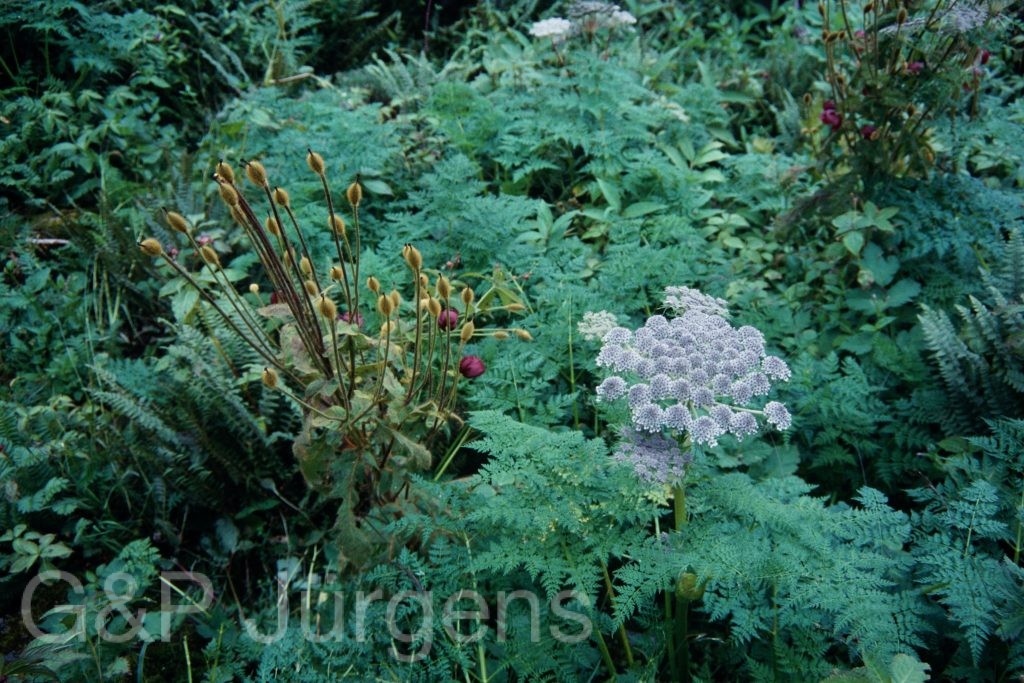
Heracleum pinnatum, here treated under its accepted name in current databases (it is variously circumscribed and has at times been placed in the segregate genus Tetrataenium, as reflected in the source page), is a robust umbellifer of the western and central Himalaya. GBIF holds about 193 occurrences from India, Pakistan, China and Nepal, indicating a montane-to-alpine distribution along the northwestern arc of the range. It favours open grassy slopes, herb-rich alpine meadows, forest clearings and moist hollows, generally between 3000 and 4300 m. The plant figured from Kalmura in West Nepal at roughly 4000 m in June occupies the upper part of this band, flowering in early summer amid the lush tall-herb communities that develop on deep, moisture-retentive alpine soils.

It is a stout, erect perennial herb arising from a thick taproot, the hollow furrowed stem reaching one to two metres and clothed, as is typical of the genus, in rough or hispid hairs. The leaves are large and pinnately compound with broad, coarsely toothed and often deeply lobed segments. The inflorescence is a large flat-topped compound umbel with numerous rays; the outer flowers frequently have enlarged, radiating, deeply notched petals that give the umbel a showy margin, a trait promoting insect attraction. Flowers are white. The fruit is a dorsally compressed schizocarp (a mericarp pair) with broad lateral wings and conspicuous dark longitudinal oil canals (vittae) on the commissural and dorsal faces, the diagnostic feature underpinning the Tetrataenium concept.

The taxonomy of Himalayan Heracleum is notoriously complex, with the broad-fruited, club-shaped-vitta species often segregated as Tetrataenium by some authors while others retain them within an enlarged Heracleum; molecular work has tended to support a reintegration, hence the accepted placement adopted here. Like its congeners the plant contains furanocoumarins that can cause phytophotodermatitis, and it offers abundant nectar to a wide guild of generalist pollinators. As a wide-ranging montane herb of accessible meadow habitat it is not regarded as threatened.

Author: C.B.Clarke · Sources: POWO (Kew), GBIF, Flora of China Vol. 14, Flora of Pakistan, Flora of Nepal, Mukherjee & Constance Umbelliferae of India

(Wall. ex DC.) C.B. Clarke

BhutanPG2011 365
Bhutan Jule-Tso 4150m, June
Sikkim2003 159 P212
Sikkim Dzongri 3900m, August
Sikkim2003 160 P213
Sikkim Dzongri 3900m, August

Description

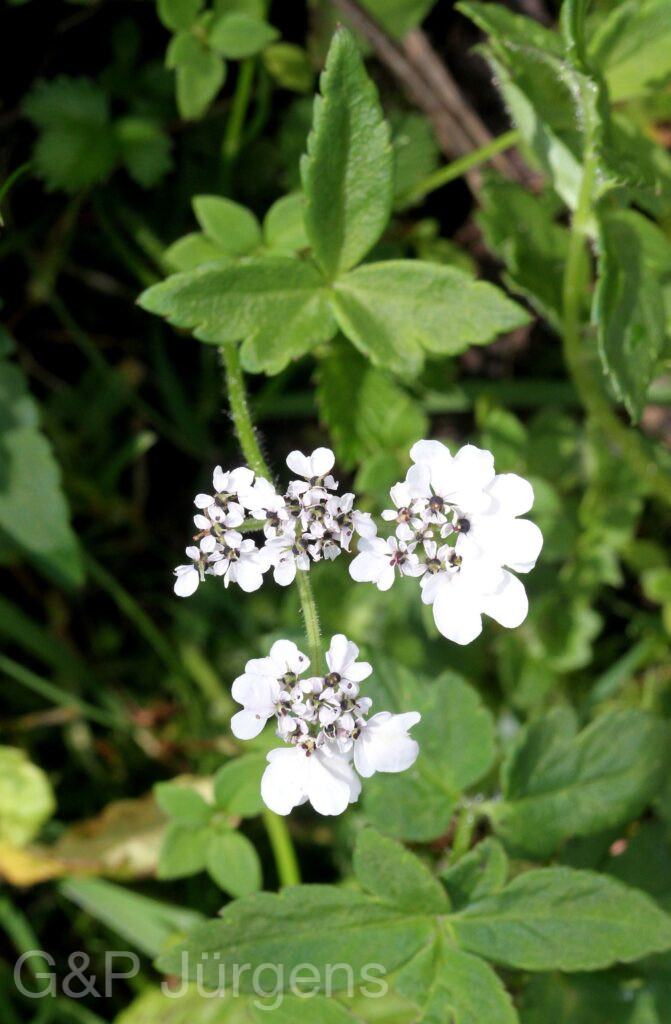
Hymenidium benthamii is a robust alpine umbellifer of the high Himalaya, distributed through Nepal, China, India, Myanmar and Bhutan (gbif_countries: NP, CN, IN, MM, BT), with about 181 GBIF occurrences. It grows in alpine meadows, damp grassy slopes, rocky pastures and streamside flushes above the treeline, where it is a characteristic herb of the moist eastern Himalayan uplands. The illustrated collections span Jule-Tso in Bhutan at about 4150 m, flowering in June, and Dzongri in Sikkim at about 3900 m in August, documenting its occupation of the cool subalpine to alpine zone through the monsoon season.

The plant is a stout perennial arising from a thickened taproot and crown, with erect, ribbed, often hollow stems. The leaves are largely basal, long-petiolate and two- to three-times pinnately divided into toothed or further-dissected segments, the petioles sheathing at the base. The inflorescence is a large, flat-topped compound umbel subtended by a conspicuous involucre of broad, often membranous-margined bracts, a feature recalling the genus name Hymenidium; the small flowers are white to pinkish with five petals. The fruit is a dry schizocarp splitting into two ribbed mericarps, the ridges and oil-canals (vittae) providing key taxonomic characters.

Long known under Pleurospermum benthamii, the species, as the wp_link itself preserves, has been transferred to Hymenidium following revisionary work that dismembered the broadly construed Pleurospermum on molecular grounds. It belongs to the conspicuous-bracted alpine Apiaceae of the Sino-Himalaya, a group much used in regional ethnomedicine. Widespread across its montane range, it is of no conservation concern.

Author: (Wall. ex DC.) C.B. Clarke · Sources: POWO (Kew), GBIF, Flora of Nepal, Flora of China, Annotated Checklist of the Flowering Plants of Nepal, Pimenov & Kljuykov revision of Pleurospermum and allied genera

Lindl.

Description

Hymenidium brunonis is a high-alpine umbellifer of the Himalaya, recorded from Pakistan eastward through north-west and central India to Nepal. Long familiar under the name Pleurospermum brunonis, it inhabits open alpine meadows, screes, rocky slopes and moist hollows above the treeline, generally between about 3,500 and 4,800 m. The individual photographed at the Kuari Pass in Garhwal, India, at 4,000 m in September shows the species in its characteristic late-season setting, fruiting as the short alpine summer closes. Its scattered but consistent occurrence across the chain (some 75 georeferenced records) reflects a true alpine specialist of the inner Himalayan ranges.

It is a low, glabrous, somewhat fleshy perennial arising from a stout taproot and a sheath of fibrous remains of old petioles. The leaves are mostly basal, pinnate to bipinnate, the segments oblong and often crowded, the petioles broadly sheathing at the base. The inflorescence is a compound umbel subtended by conspicuous, broad, membranous-margined, often leafy bracts and bracteoles — a diagnostic feature of the group. The small flowers are white to pinkish, with five petals and an epigynous disc. The fruit is an ovoid to oblong schizocarp with prominently winged or ridged mericarps.

The transfer of many Asian Pleurospermum species to Hymenidium follows molecular work resolving the polyphyly of Pleurospermum sensu lato; the conspicuous scarious bracts unite the segregate. As a plant of remote high-elevation habitats it faces little direct pressure, though alpine flora of this belt is sensitive to grazing intensity and to the upslope compression of habitat under a warming climate.

Author: Lindl. · Sources: POWO (Kew), Flora of China Vol. 14, Flora of Pakistan (Umbelliferae), GBIF, Pimenov & Leonov: The Genera of the Umbelliferae (1993)

(DC.) Pimenov & Kljuykov

Sikkim2003 98 P135
Sikkim below Dzongri 3700m 08.2003
Sikkim2003 161 P214
Sikkim below Dzongri 3900m, August

Description

Ligusticopsis wallichiana is a Himalayan umbellifer ranging from Pakistan and northern India through Nepal, Sikkim and Bhutan into south-western China and Myanmar. The 406 GBIF records lie chiefly within this native arc, the European and North American points reflecting herbarium and garden material. It occupies subalpine and alpine meadows, forest clearings, open slopes and streamsides, generally between about 3000 and 4300 m, where it is a characteristic tall herb of moist Himalayan grassland. The plants photographed below Dzongri in Sikkim at 3700 to 3900 m in August illustrate the species at the height of the monsoon flowering season on these damp, herb-rich slopes.

It is a stout, glabrous perennial herb arising from a thick, aromatic rootstock, with erect, ribbed, often purplish stems. The leaves are large and several times pinnate (ternate-pinnate), the ultimate segments lanceolate to ovate and toothed, the lower leaves long-petiolate with sheathing bases. The inflorescence is a terminal compound umbel with numerous rays, subtended by narrow bracts and bracteoles; the small flowers are white. The fruit is an oblong-ellipsoid, dorsally compressed schizocarp with prominently winged lateral ribs, splitting into two mericarps.

Long familiar as Selinum wallichianum (its WordPress URL preserves that name), the species was transferred to Ligusticopsis by Pimenov and Kljuykov in their revision of the Selinum-Ligusticum complex, reflecting carpological and molecular evidence. The aromatic root has a history of use in Himalayan folk medicine. Common and widespread across its range, it is not considered threatened and forms a conspicuous element of high Himalayan meadow vegetation.

Author: (DC.) Pimenov & Kljuykov · Sources: POWO (Kew), GBIF, Flora of Bhutan, Flora of China, Pimenov & Kljuykov Umbelliferae revision

(Fedde ex H. Wolff) A.K. Mukh. & Constance

Bhutan2012 79
Bhutan Shele-La, 4000m September

Description

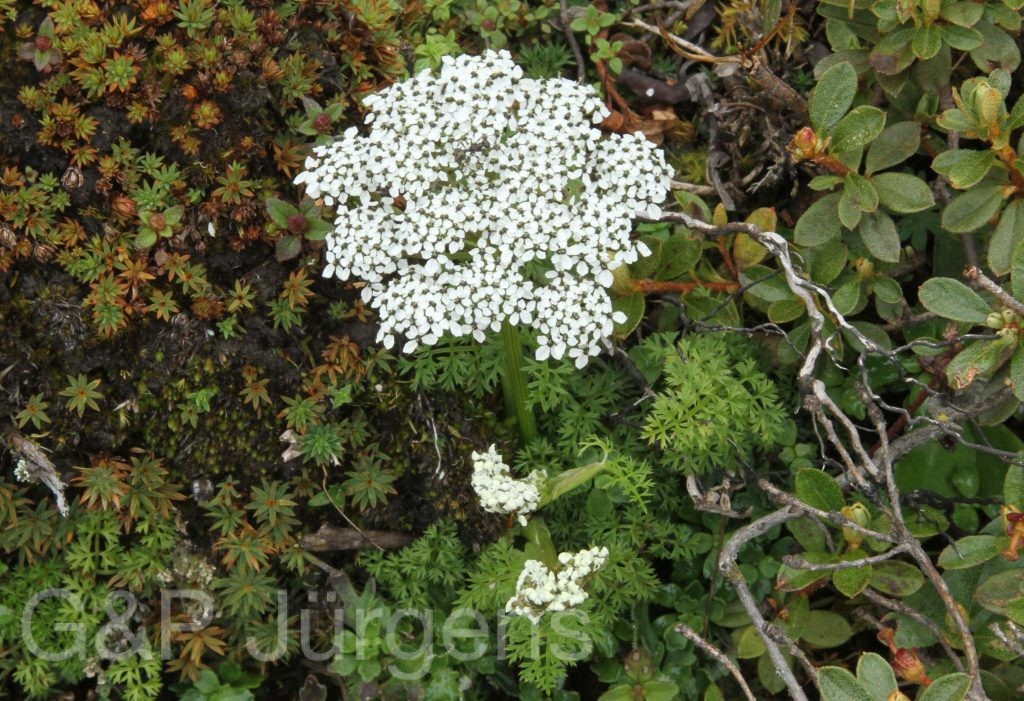
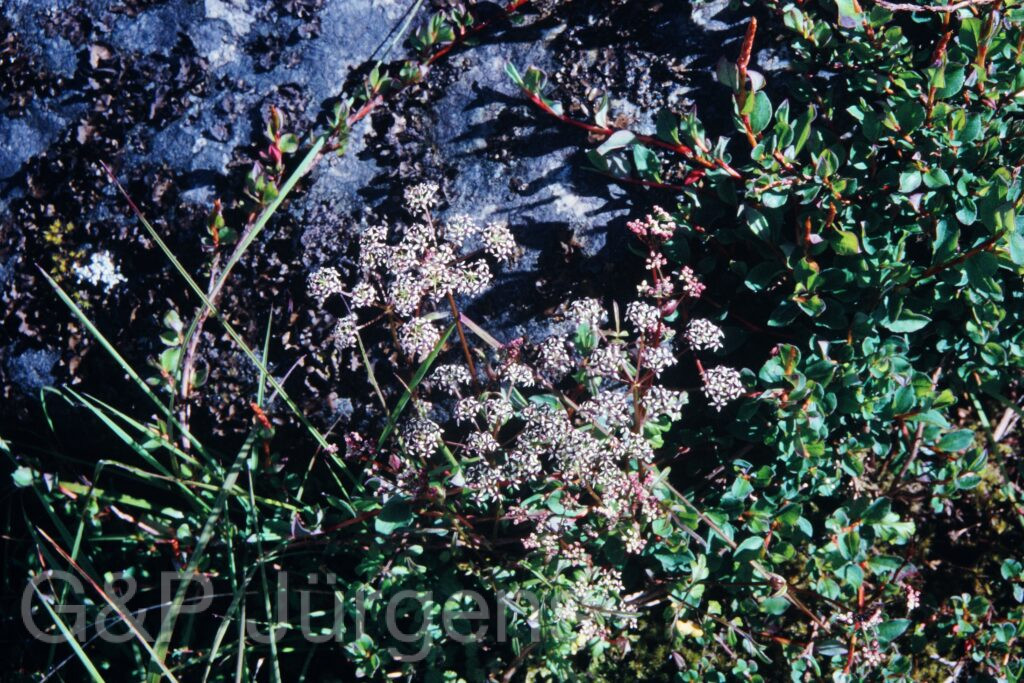
Sinocarum wolffianum is a small alpine umbellifer of the Himalaya and south-western China, recorded from China, northern India, Nepal and Bhutan, a restricted distribution reflected in only about 54 occurrence records. It grows on open alpine meadows, turf, screes and rocky slopes, typically between roughly 3500 and 4500 m. The specimen photographed at Shele-La in Bhutan at about 4000 m in September illustrates its late-season presence in the high alpine zone, where short-statured umbellifers persist among the cushion vegetation.

The plant is a small, slender perennial arising from a tuberous or fusiform root, usually only a few centimetres to about 15 cm tall. The leaves are mostly basal, finely divided (ternately to pinnately dissected) into narrow, linear ultimate segments, on slender petioles sheathing at the base. The inflorescence is a small, lax compound umbel, often lacking or with few bracts and bracteoles; the flowers are minute, with white to pinkish petals and the inferior ovary typical of the family. The fruit is a small, ovoid to oblong schizocarp splitting into two ribbed mericarps.

Sinocarum (Apiaceae, subfamily Apioideae) is a small Sino-Himalayan genus of dwarf alpine umbellifers segregated from Carum and allied genera, and its species circumscription has been revised by workers including Mukherjee and Constance, who established the present combination. The genus is taxonomically intricate, with several narrow-range high-mountain taxa. Pollinated by generalist alpine insects, the mericarps are dispersed passively. As a localised high-elevation endemic of limited known range, it is of biogeographic interest and likely sensitive to climatic change in its alpine habitat.

Author: (Fedde ex H. Wolff) A.K. Mukh. & Constance · Sources: POWO (Kew), GBIF, Flora of China, Flora of Bhutan, Annotated Checklist of the Flowering Plants of Nepal, Pimenov & Leonov The Genera of the Umbelliferae

(D.Don) Manden.

Bh09 71 P123
Bhutan Jili-La 3600m, June

Description

Tetrataenium nepalense is a tall Himalayan umbellifer distributed from Nepal and northern India through Bhutan into south-western China and Myanmar. Its 266 GBIF records lie within this native arc, indicating a widespread montane species of the Eastern and Central Himalaya. It occupies subalpine and alpine meadows, open slopes, forest margins and clearings, generally between about 3000 and 4000 m, where it is a characteristic robust herb of moist high-altitude grassland. The plant photographed at Jili-La in Bhutan at about 3600 m in June illustrates the species at its early-summer flowering on these damp, herb-rich montane slopes.

It is a stout, erect biennial or perennial herb arising from a thick taproot, with hollow, ridged, often pubescent stems. The large leaves are pinnate to ternately compound, the broad leaflets ovate, lobed and toothed, the lower leaves long-petiolate with conspicuous sheathing bases. The inflorescence is a large terminal compound umbel with numerous rays; the small white flowers are often radiant, the marginal petals of the outer flowers enlarged. The fruit is a flattened, broadly ovate to obovate, dorsally compressed schizocarp with conspicuous oil ducts (vittae) and narrowly winged lateral ribs.

Long known as Heracleum nepalense (a name preserved in its WordPress URL), the species was transferred to the segregate genus Tetrataenium, distinguished from Heracleum by features of the vittae and fruit. Its hogweed-like habit and large radiant umbels are typical of the group. Widespread and locally common across its range, T. nepalense is not considered threatened and is a prominent component of high Himalayan meadow vegetation.

Author: (D.Don) Manden. · Sources: POWO (Kew), GBIF, Flora of Bhutan, Flora of China, Pimenov & Kljuykov Umbelliferae revision

DC.

Sikkim2011 224
Sikkim Yumthang 3600m, June

Description

Tordyliopsis brunonis DC. is a monotypic genus of Apiaceae endemic to the high Himalaya. GBIF data (121 occurrences) document its occurrence in Nepal, north India (including Sikkim), Bhutan, and adjacent southwest China, where it inhabits open alpine meadows, rocky slopes, and grazed turf. The species was photographed at Yumthang in Sikkim at 3,600 m in June, consistent with its alpine ecology in the subalpine-to-alpine belt between roughly 3,000 and 4,500 m, where it flowers as snowmelt recedes. It typically grows in moist, humus-rich pockets among boulders and in herb-rich pasture.

The plant is a low perennial herb arising from a stout taproot, with short, often more or less prostrate or ascending stems. The leaves are pinnate to bipinnate with toothed leaflets, forming a basal cluster. As in most Apiaceae the inflorescence is a compound umbel, here subtended by conspicuous bracts and bracteoles; the small white to pinkish flowers give rise to dorsally compressed mericarps whose lateral wings and ribbed dorsal surface recall those of Tordylium, the genus from which the name ("resembling Tordylium") derives.

Tordyliopsis occupies an isolated position within subfamily Apioideae and has been the subject of debate regarding its tribal placement, owing to its distinctive winged fruit anatomy. As a Himalayan endemic restricted to high elevations, it is potentially vulnerable to climate-driven upslope habitat contraction and intensive summer grazing, though no formal IUCN assessment exists. It serves as a useful indicator of intact alpine meadow communities.

Author: DC. · Sources: POWO (Kew), Flora of China Vol. 14, Flora of Bhutan Vol. 2, GBIF, Pimenov & Leonov: The Genera of the Umbelliferae (1993)