
(D.Don) Manden.
Description
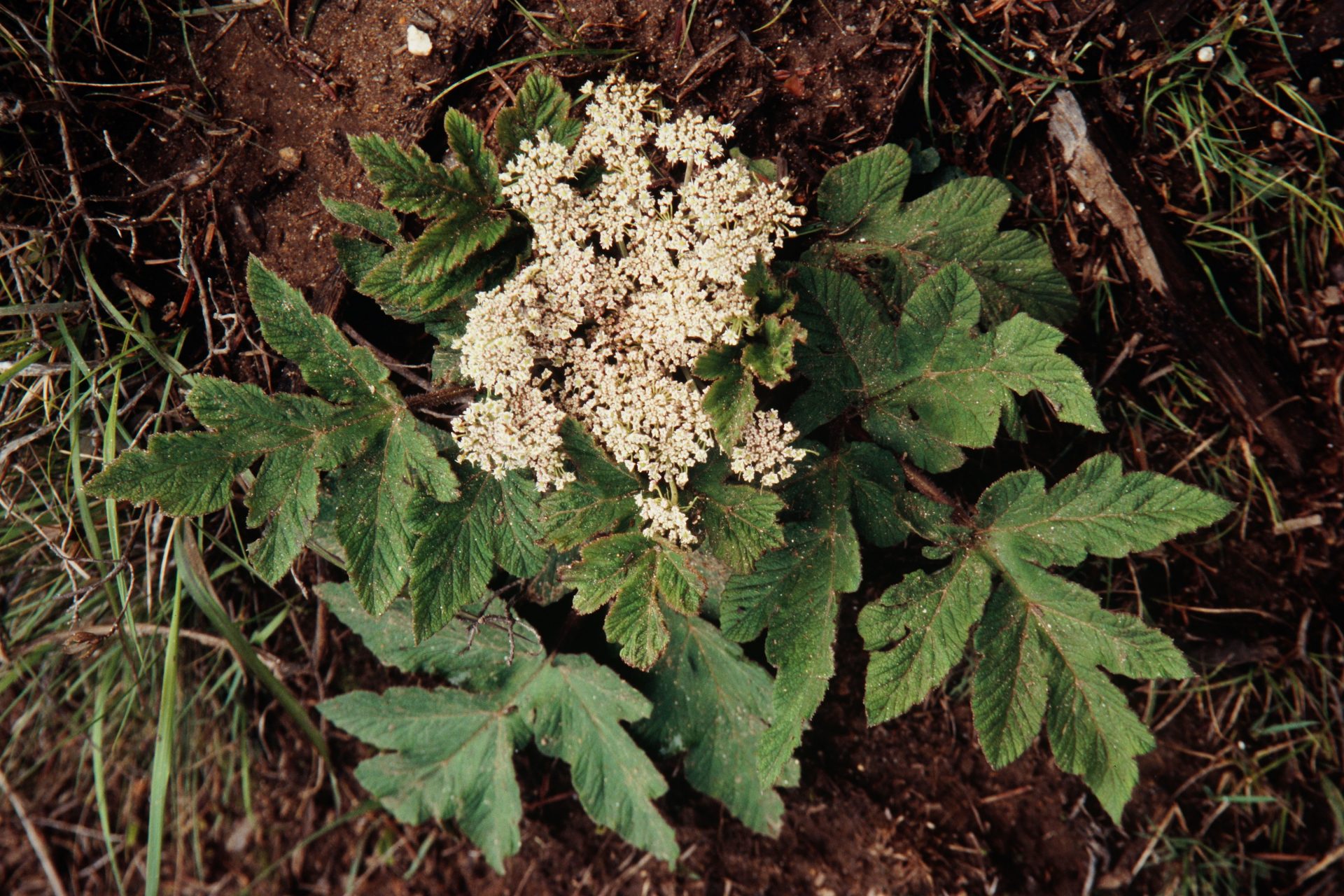
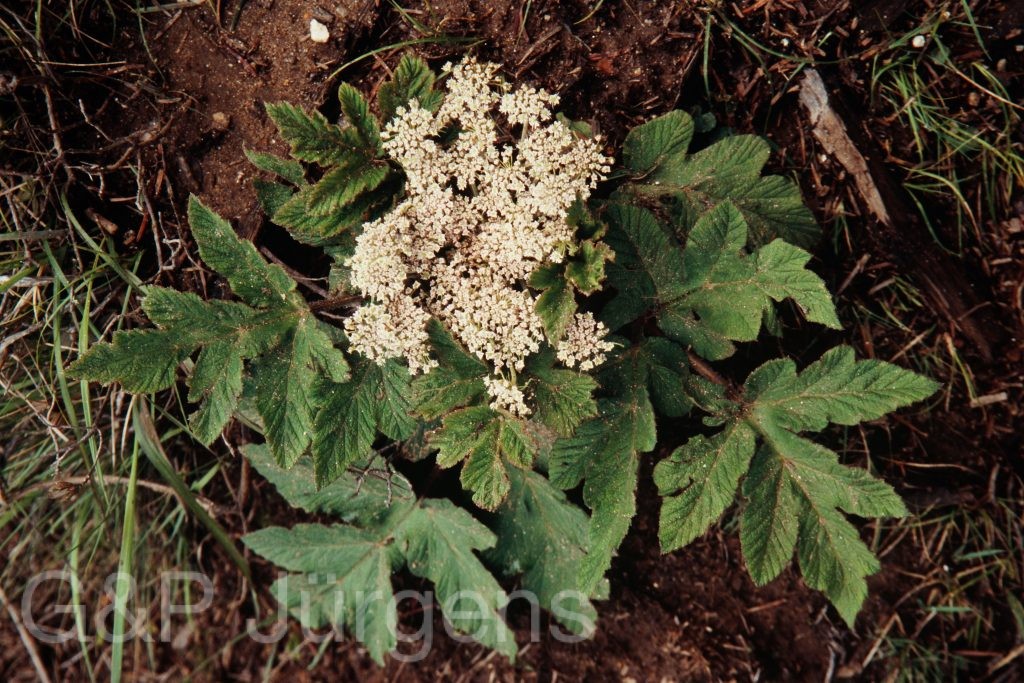
Tetrataenium nepalense is a tall Himalayan umbellifer distributed from Nepal and northern India through Bhutan into south-western China and Myanmar. Its 266 GBIF records lie within this native arc, indicating a widespread montane species of the Eastern and Central Himalaya. It occupies subalpine and alpine meadows, open slopes, forest margins and clearings, generally between about 3000 and 4000 m, where it is a characteristic robust herb of moist high-altitude grassland. The plant photographed at Jili-La in Bhutan at about 3600 m in June illustrates the species at its early-summer flowering on these damp, herb-rich montane slopes.
It is a stout, erect biennial or perennial herb arising from a thick taproot, with hollow, ridged, often pubescent stems. The large leaves are pinnate to ternately compound, the broad leaflets ovate, lobed and toothed, the lower leaves long-petiolate with conspicuous sheathing bases. The inflorescence is a large terminal compound umbel with numerous rays; the small white flowers are often radiant, the marginal petals of the outer flowers enlarged. The fruit is a flattened, broadly ovate to obovate, dorsally compressed schizocarp with conspicuous oil ducts (vittae) and narrowly winged lateral ribs.
Long known as Heracleum nepalense (a name preserved in its WordPress URL), the species was transferred to the segregate genus Tetrataenium, distinguished from Heracleum by features of the vittae and fruit. Its hogweed-like habit and large radiant umbels are typical of the group. Widespread and locally common across its range, T. nepalense is not considered threatened and is a prominent component of high Himalayan meadow vegetation.
Author: (D.Don) Manden. · Sources: POWO (Kew), GBIF, Flora of Bhutan, Flora of China, Pimenov & Kljuykov Umbelliferae revision