
Lindl.
Description
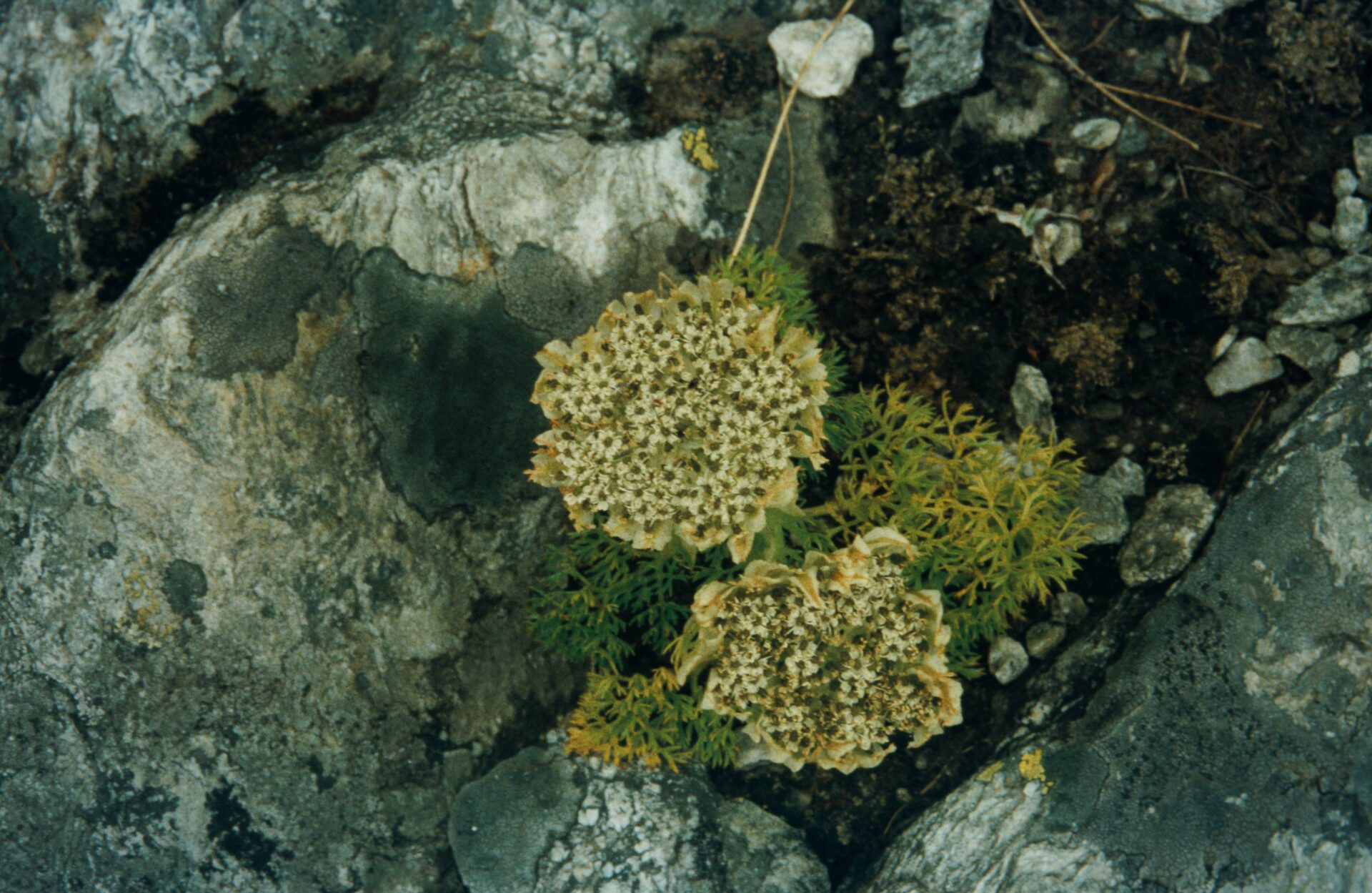
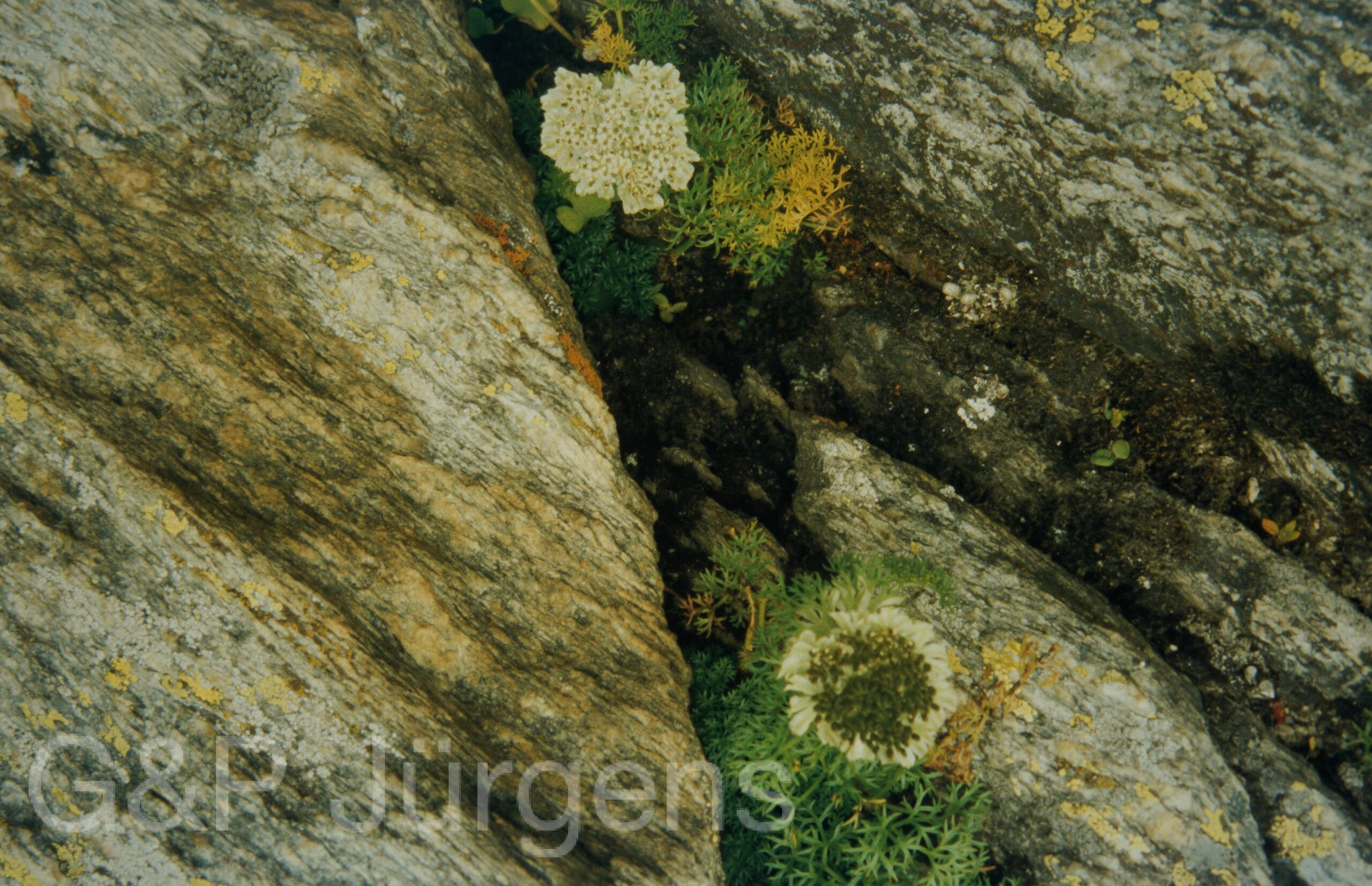
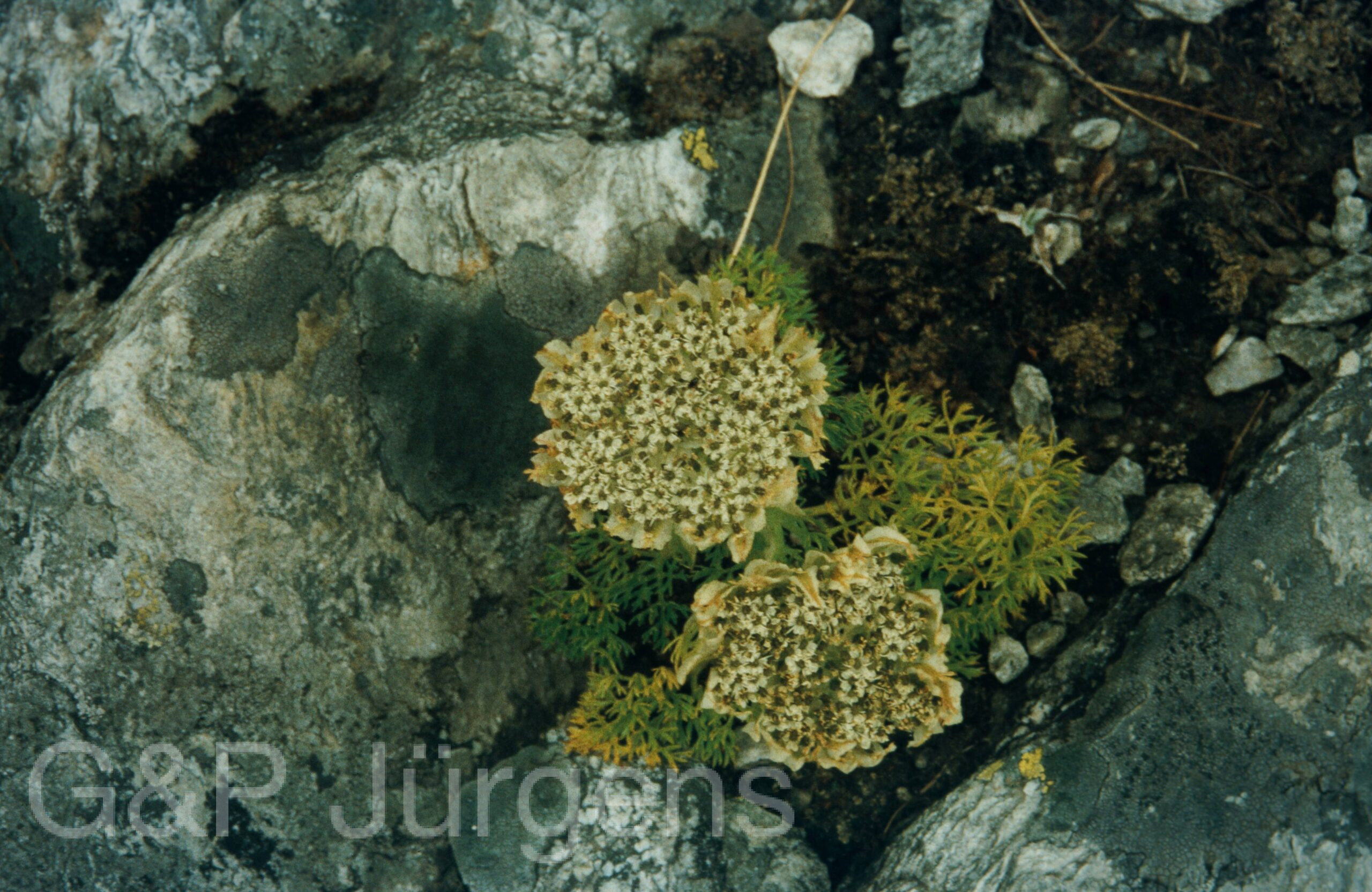
Hymenidium brunonis is a high-alpine umbellifer of the Himalaya, recorded from Pakistan eastward through north-west and central India to Nepal. Long familiar under the name Pleurospermum brunonis, it inhabits open alpine meadows, screes, rocky slopes and moist hollows above the treeline, generally between about 3,500 and 4,800 m. The individual photographed at the Kuari Pass in Garhwal, India, at 4,000 m in September shows the species in its characteristic late-season setting, fruiting as the short alpine summer closes. Its scattered but consistent occurrence across the chain (some 75 georeferenced records) reflects a true alpine specialist of the inner Himalayan ranges.
It is a low, glabrous, somewhat fleshy perennial arising from a stout taproot and a sheath of fibrous remains of old petioles. The leaves are mostly basal, pinnate to bipinnate, the segments oblong and often crowded, the petioles broadly sheathing at the base. The inflorescence is a compound umbel subtended by conspicuous, broad, membranous-margined, often leafy bracts and bracteoles — a diagnostic feature of the group. The small flowers are white to pinkish, with five petals and an epigynous disc. The fruit is an ovoid to oblong schizocarp with prominently winged or ridged mericarps.
The transfer of many Asian Pleurospermum species to Hymenidium follows molecular work resolving the polyphyly of Pleurospermum sensu lato; the conspicuous scarious bracts unite the segregate. As a plant of remote high-elevation habitats it faces little direct pressure, though alpine flora of this belt is sensitive to grazing intensity and to the upslope compression of habitat under a warming climate.
Author: Lindl. · Sources: POWO (Kew), Flora of China Vol. 14, Flora of Pakistan (Umbelliferae), GBIF, Pimenov & Leonov: The Genera of the Umbelliferae (1993)