Iridaceae

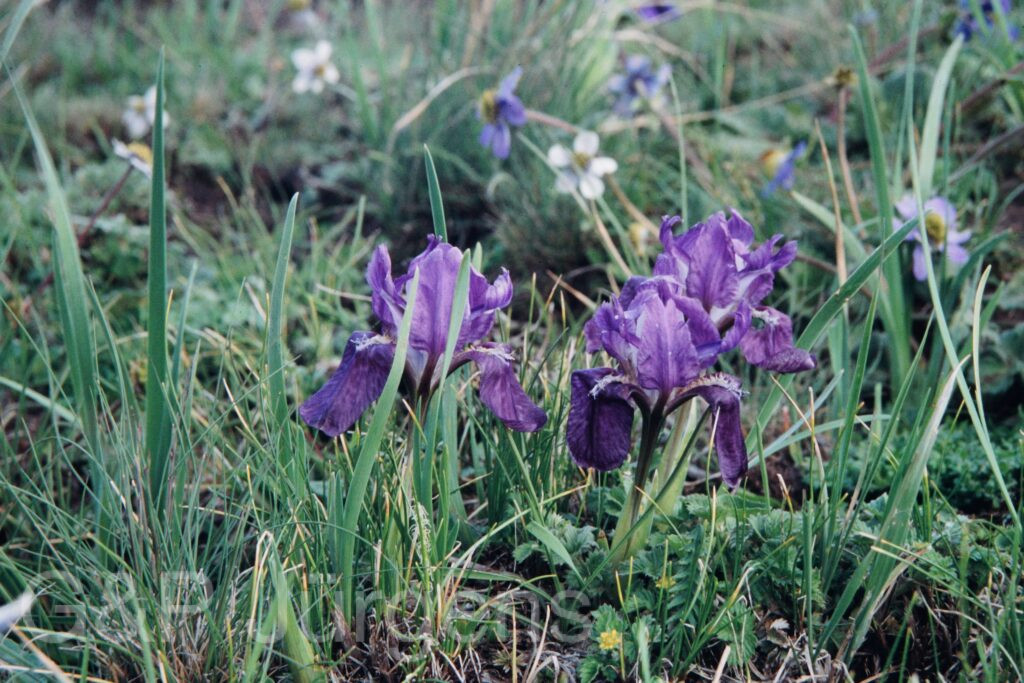
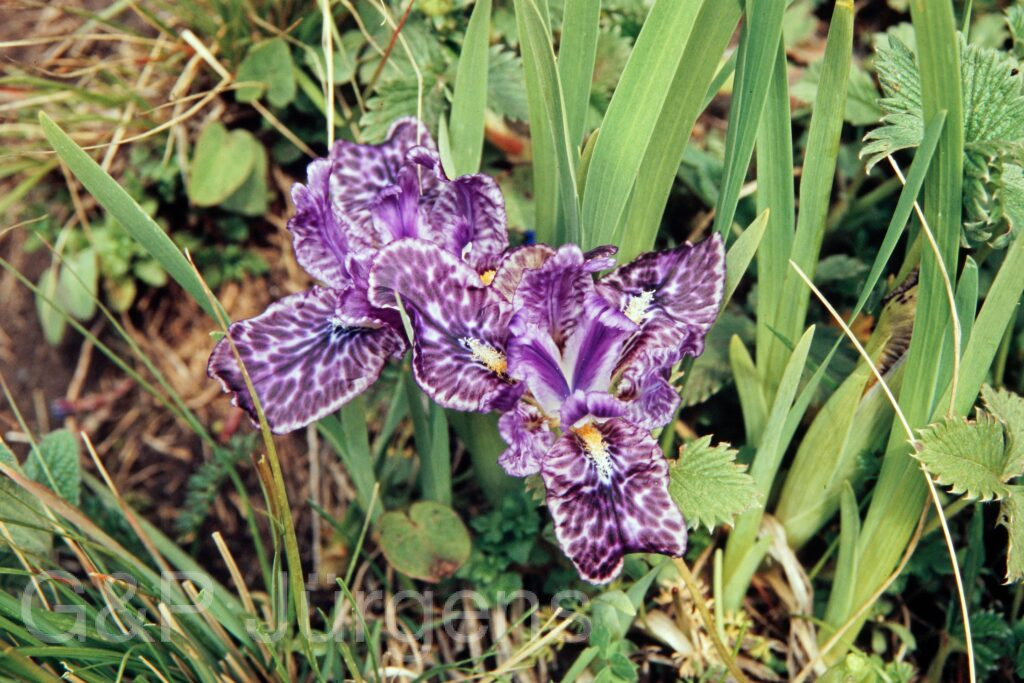
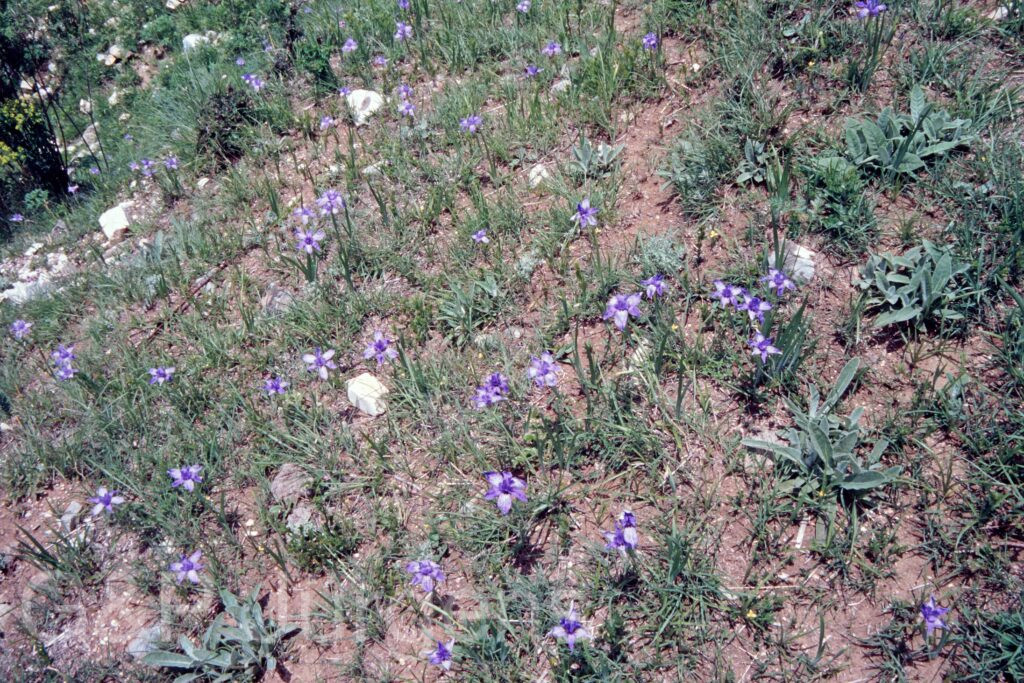
Iris collettii

by G & P Jürgens

Hook.f.

Nepal 99 413 ergebnis
West-Nepal Talphi 2830m, June
Nepal 99 414 ergebnis
West-Nepal Talphi 2830m, June
Nepal 99 415 ergebnis
West-Nepal Talphi 2830m, June

Description

Iris collettii is a Himalayan iris distributed from western Nepal through northeast India and northern Myanmar to southwest China (Yunnan, Sichuan) and northern Thailand. GBIF records approximately 349 occurrences, with the majority from China and Myanmar. The species favours open, grassy slopes, forest margins, and pine-oak woodland clearings at elevations of 1,800–3,200 m, typically on well-drained soils. At Talphi in western Nepal at 2,830 m, it grows in open montane grassland and along forest edges, flowering in June at the onset of the monsoon season — a period when the grassy slopes of the western Nepalese mid-hills support a rich herbaceous flora.
Iris collettii is a rhizomatous perennial herb, 20–40 cm tall. The rhizome is slender, creeping, and clothed in persistent fibrous leaf bases. Leaves are basal, linear-ensiform, 15–30 cm long and 5–10 mm wide, with a prominent midrib, often slightly falcate. The stem bears 1–3 terminal flowers subtended by a pair of spathaceous bracts. Flowers are 4–6 cm in diameter, blue-violet to deep purple; the falls are obovate with a prominent white and yellow signal patch and darker veining, while the standards are erect, oblanceolate, and slightly paler. The style branches are petaloid and arching over the stamens. The fruit is an ellipsoid capsule, trigonous, 2–3 cm long, containing brown angular seeds.
Iris collettii was described by J.D. Hooker and named in honour of Sir Henry Collett, who collected extensively in Myanmar and northern India. The species belongs to subgenus Limniris, section Lophiris (crested irises), and is distinguished from the related I. decora by its generally shorter stature, narrower leaves, and deeper violet flower colour. Its occurrence in western Nepal at Talphi represents the westernmost limit of its known Himalayan distribution. The species is of biogeographical interest as a link between the Sino-Himalayan and Indo-Burmese iris floras.

Author: Hook.f. · Sources: POWO (Kew), GBIF, Flora of China Vol. 24, Flora of Nepal Checklist, Mathew: The Iris (1981)
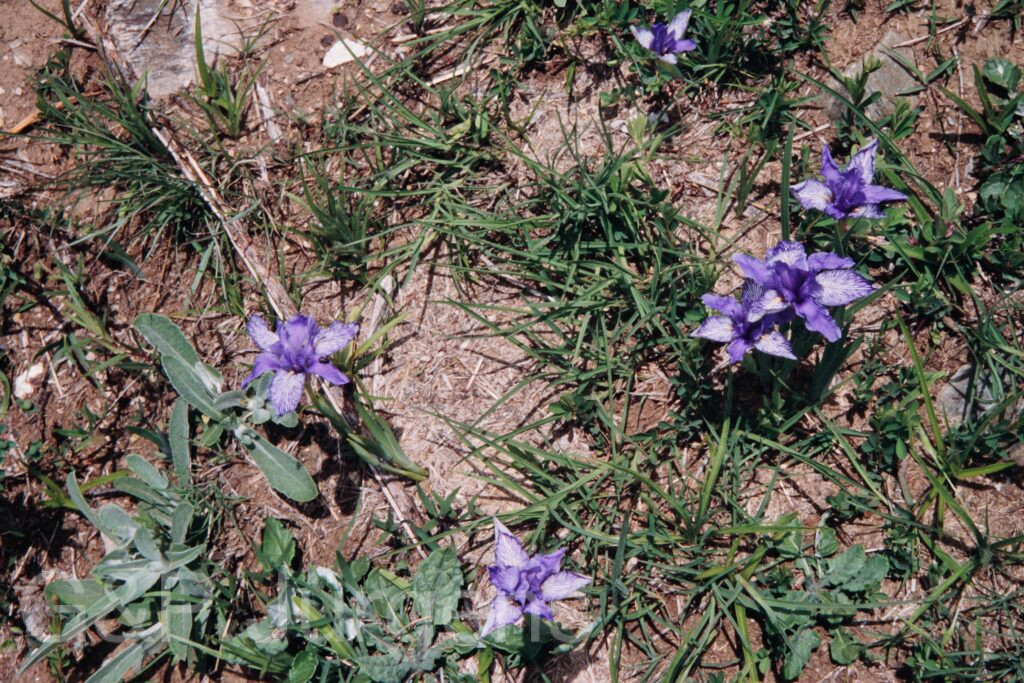
Noltie

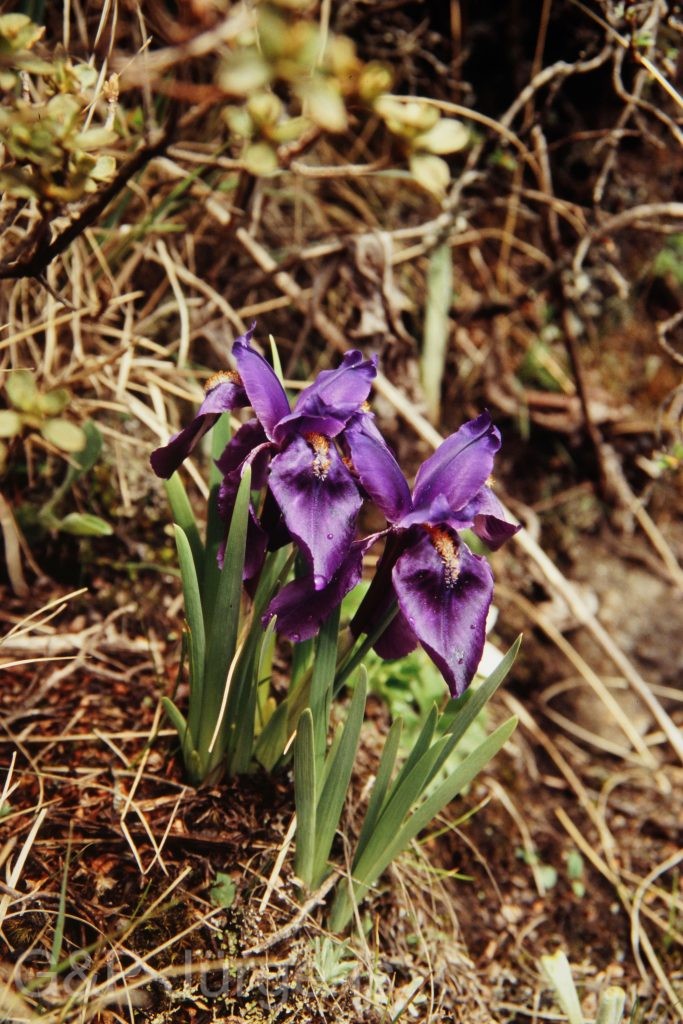
Bh09 30 G56
Bhutan Shele-La 4000m, June
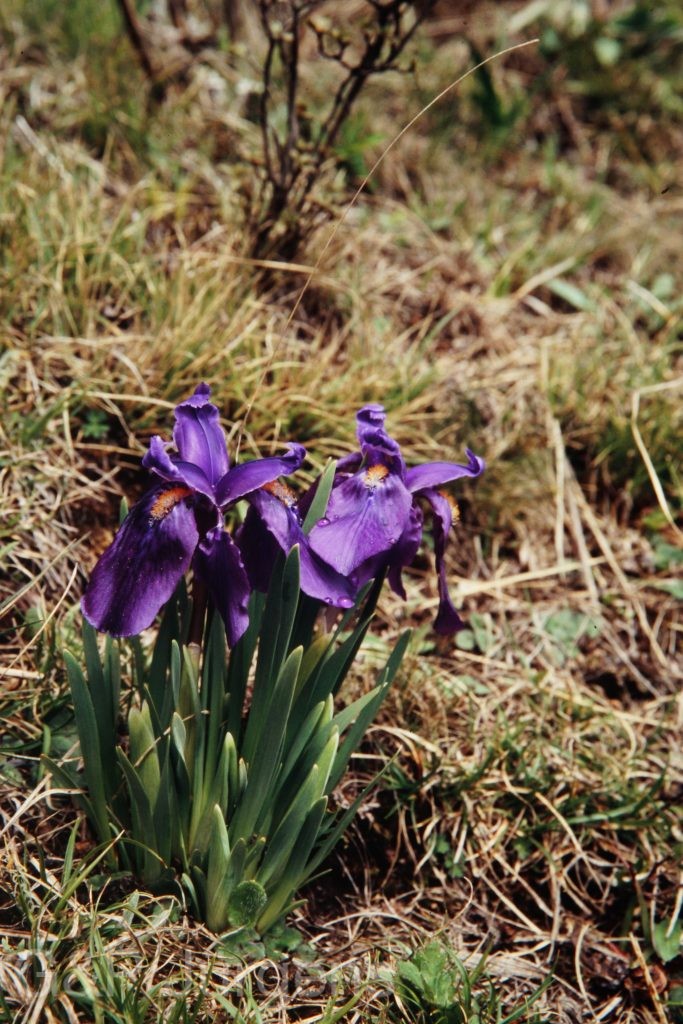
Bh09 31 P57
Bhutan Shele-La 4000m, June

Description

Iris dolichosiphon is a high-alpine dwarf iris restricted to the eastern Himalaya and adjacent China, a narrow-range endemic recorded by GBIF from only China, Bhutan and India, with a small total of around 77 occurrences reflecting both its limited distribution and the remoteness of its habitat. It grows in open alpine turf, meadows, grassy slopes and rocky pastures above the treeline, generally between about 3500 and 4500 m, where snow-melt and short cool summers govern its brief flowering season. The photographed plant from the Shele La in Bhutan, at roughly 4000 m and flowering in June, is exactly typical of its occurrence on exposed high passes, where it forms low cushions among short alpine vegetation soon after the snow recedes.

It is a small, tufted perennial of the dwarf-crested and beardless Himalayan iris assemblage, arising from a slender, fibrous-coated rhizome and producing narrow, linear, grass-like leaves. The flowers are nearly sessile at ground level but are raised, in effect, by an extremely long, slender perianth tube, the character that gives the species its epithet (dolichos, long; siphon, tube), so that the floral parts are presented well above the very short stem. The flowers are violet to lilac-blue, the three outer tepals (falls) spreading and signalled with a paler, veined and crested or ridged blaze, the three inner tepals (standards) smaller and erect; the three petaloid style branches arch over the stamens.

Described by H. J. Noltie, who clarified much of the Sino-Himalayan iris flora, I. dolichosiphon belongs to the alpine, beardless dwarf irises and is allied to species such as I. kemaonensis and the I. goniocarpa group, from which the conspicuously elongate perianth tube distinguishes it. Its pollination by long-tongued bumblebees is favoured by the deep tube, and seed is set in a capsule that ripens as the brief alpine season closes. As a narrowly distributed high-altitude endemic with few records, it warrants monitoring; while not formally assessed as threatened, its restricted range and sensitivity to climate-driven shifts in the alpine zone make it of biogeographic and conservation interest.

Author: Noltie · Sources: POWO (Kew), GBIF, Flora of China Vol. 24, Flora of Bhutan Vol. 3, Flora of Nepal, Flora of Pakistan, Noltie's account of the Sino-Himalayan irises

Iris kemaonensis

by GP Jürgens

Wall. ex D.Don

Nepal 99 299 ergebnis
West-Nepal Kalmura 4200m, June
Nepal 99 298 ergebnis
West-Nepal Kalmura 4200m, June
Garh 07 172 ergebnis
India Garhwal Kinkhola 3545m, June

Description

Iris kemaonensis is a dwarf alpine iris of the Himalaya and adjacent ranges, distributed across Pakistan, Nepal, NW India, Bhutan and SW China, with 346 GBIF occurrences. It grows on open alpine meadows, grassy slopes, stony pastures and recently snow-freed ground in the upper subalpine to alpine zone. The cited collections from Kalmura in West Nepal at about 4,200 m and Kinkhola in Garhwal at 3,545 m, both in June, are characteristic of its early-summer flowering as snow melts on high turf, where it forms low scattered clumps.

It is a rhizomatous perennial with a short, stout, branching rhizome bearing fibrous remains of old leaves. The leaves are linear-ensiform, appearing with or shortly after the flowers and elongating considerably as the fruit ripens. The flowers are usually solitary and almost sessile at ground level, lilac to pale purple, mottled and spotted with deeper purple; the falls are obovate with a yellow or white beard along the median crest, the standards smaller and erect. The perianth tube is long and slender, raising the flower above the spathes. The fruit is a trigonous capsule, often borne on an elongating stalk emerging after anthesis.

The species belongs to Iris subgen. Pseudoregelia, the bearded, mottled-flowered, rhizomatous group centred on the Himalaya and Central Asia. GBIF records it as accepted. It is a charismatic, ground-hugging alpine bearing close ecological resemblance to other cushion-meadow geophytes, and remains widespread and unthreatened, though locally subject to grazing pressure.

Author: Wall. ex D.Don · Sources: POWO (Kew), Flora of China Vol. 24, Flora of Bhutan Vol. 3, GBIF, Mathew: The Iris (1989)