
Maxim.

Description
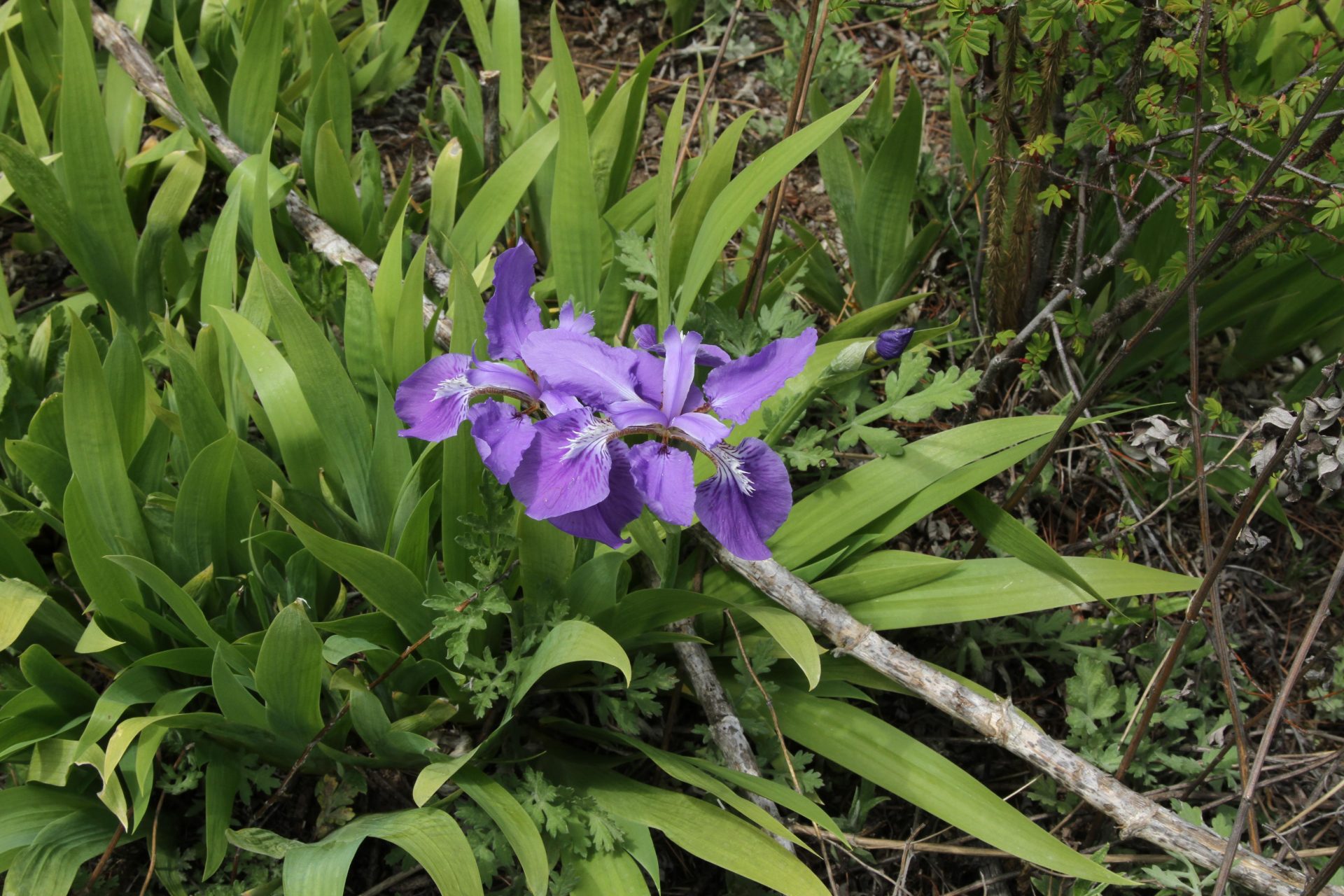
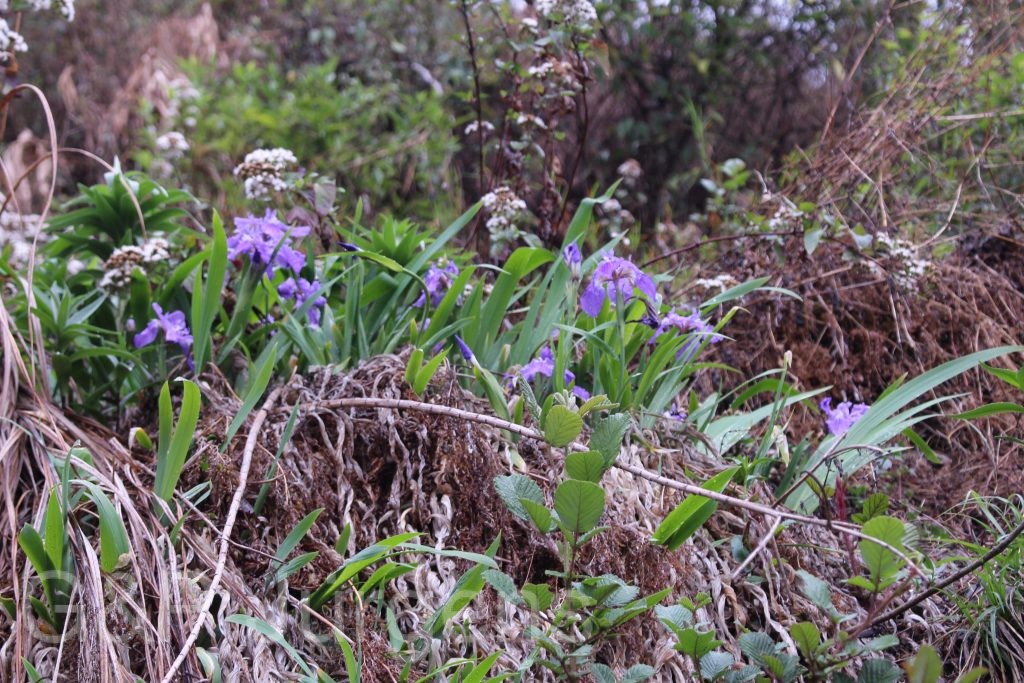
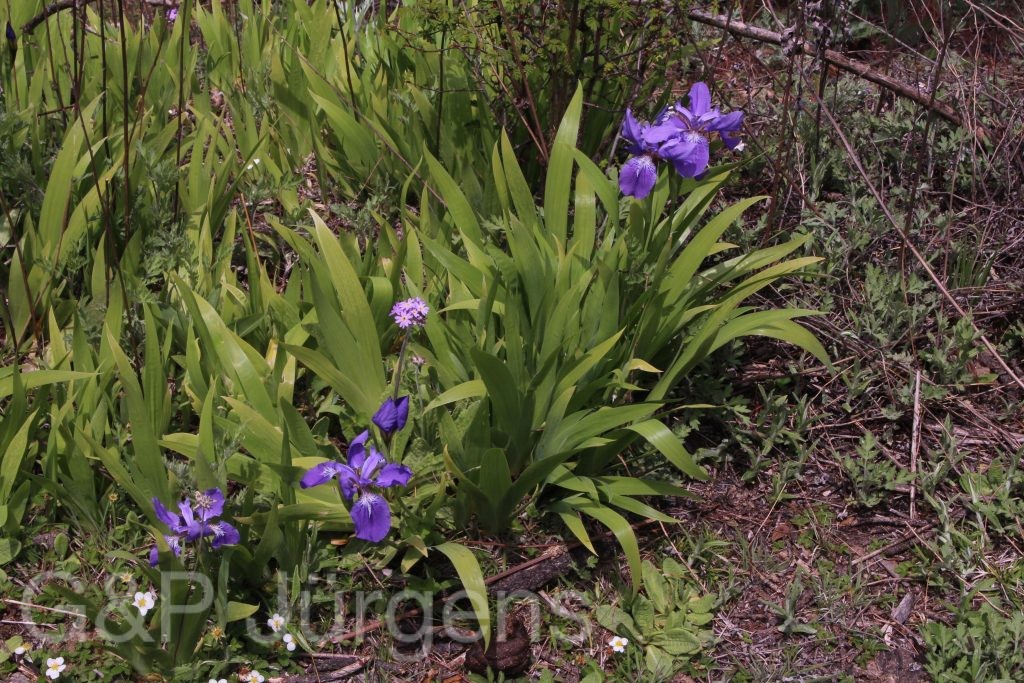
Iris tectorum, the roof iris or wall iris, is native to China and long cultivated across East Asia, with naturalised and planted populations widely recorded; GBIF documents 1128 occurrences in China, Japan, Korea, the United States, India, Bhutan, Myanmar, Taiwan, Kazakhstan and parts of Europe. It grows on dry banks, grassy slopes, rocky ground and, famously, on thatched roofs and old walls where it was traditionally established. In Bhutan the illustrated plants span a wide range, from Trashigang at about 1200 m to Chele-La at 3400 m, both flowering in May, showing its tolerance of both warm valley and high-pass conditions.
The plant is a rhizomatous perennial with a stout, shortly creeping rhizome bearing tufts of broadly ensiform, soft, ribbed leaves arranged in flat fans. The flowering stem is branched and bears several large flowers; each has the iris structure of three spreading, reflexed outer perianth segments (falls) and three smaller erect inner segments (standards). The falls are pale lilac-blue, conspicuously veined and mottled with darker blue, and bear a fringed or crested white-and-violet ridge in place of a beard, identifying it as a crested (Evansia) iris. The three petaloid style branches arch over the stamens; the inferior ovary matures into an oblong, ridged loculicidal capsule releasing rounded seeds.
Assigned to subgenus Limniris and the crested-iris alliance, I. tectorum is a long-standing ornamental and the source material for traditional medicinal use of its rhizome. POWO and GBIF accept the name. Its frequent cultivation accounts for the scattered extralimital records far beyond its East Asian native range.
Author: Maxim. · Sources: POWO (Kew), GBIF, Flora of China, Flora of Bhutan, The Iris (Iridaceae monograph), Annotated Checklist of the Flowering Plants of Nepal