Brassicaceae

(H.Pearson) Al-Shehbaz & Warwick
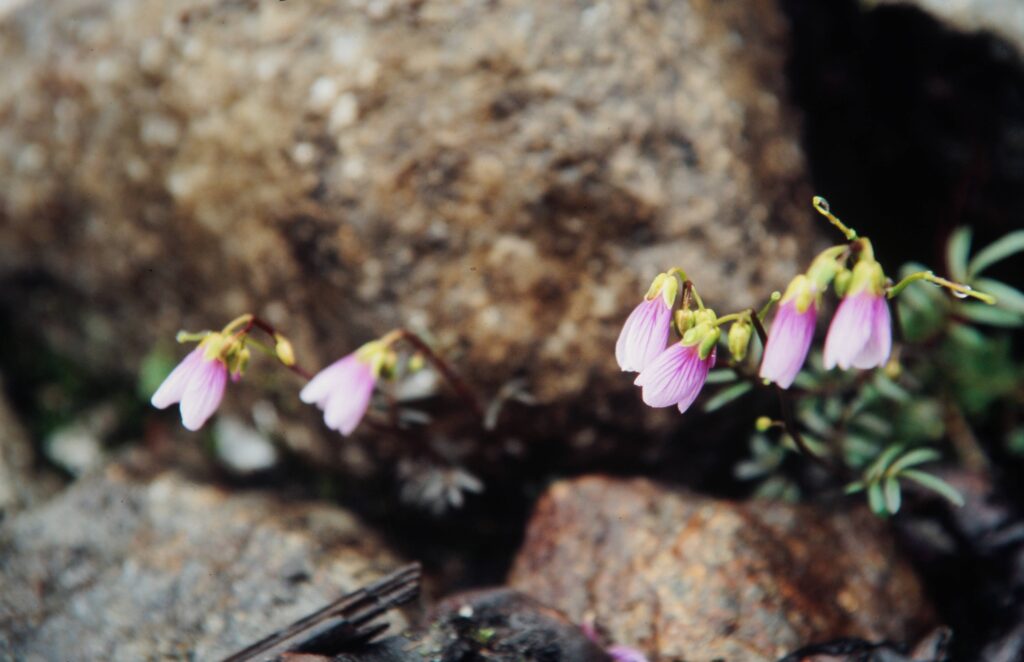
Bh09 80 G136
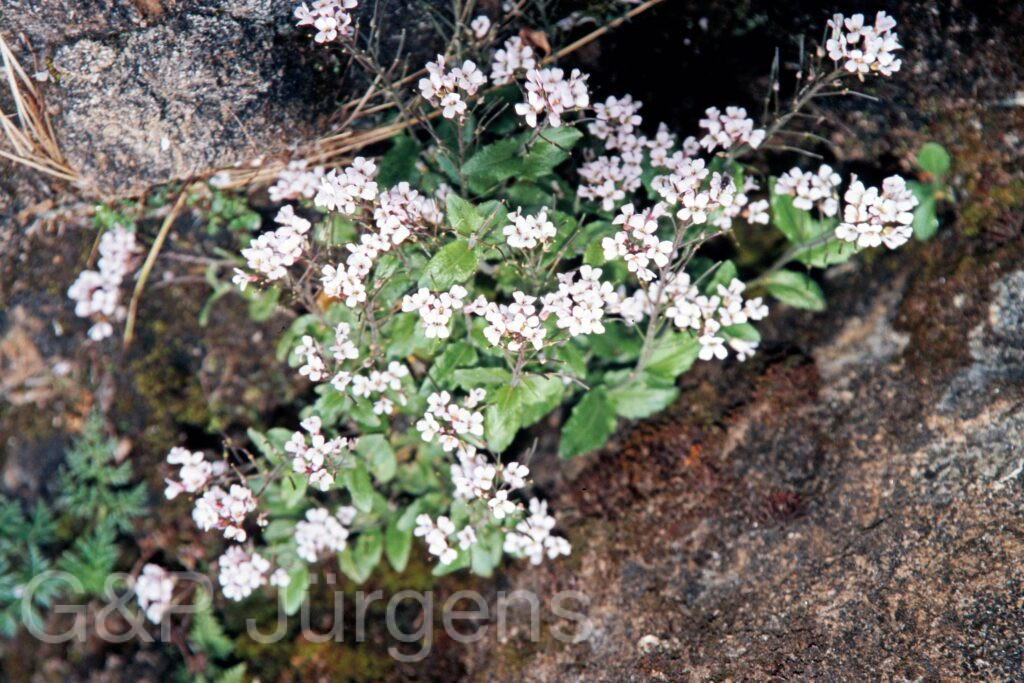
Bhutan Jangchulakha, 3750m June

Description

Aphragmus hobsonii is a high-alpine crucifer of the eastern Himalaya and adjacent Tibet, with GBIF records from Nepal, Bhutan and China amounting to roughly 55 occurrences (a Papua New Guinea datum is almost certainly an error). It is a plant of cold, open habitats near the upper limit of vegetation: stony alpine turf, scree margins, moraines and damp gravelly flushes, typically between about 3500 and 4500 m. The specimen depicted at Jangchulakha in Bhutan at 3750 m in June, flowering early in the alpine summer, is characteristic of its occupation of exposed, well-drained high-mountain ground.

It is a small, cushion- or tuft-forming perennial herb arising from a branched caudex topped by a slender taproot. The leaves are mostly basal, entire, oblanceolate to spathulate and narrowed to the base, often forming a dense rosette. The flowers are arranged in a short, congested raceme that scarcely elongates in fruit; the four petals are white to pale lilac, clawed and arranged in the cruciform pattern of the family. The fruit is a short silique or silicula, the seeds in one or two rows, dehiscing by two valves in the typical brassicaceous manner.

Aphragmus is a small genus of cold high-mountain Asia whose generic limits have been revised through molecular study, and the present species was transferred here by Al-Shehbaz and Warwick from earlier placements, reflecting ongoing reassessment of Himalayan crucifer relationships. Its compact, low-growing habit is a clear adaptation to wind exposure, intense radiation and short growing seasons at extreme elevations. Though not formally assessed, its specialised high-alpine niche makes it potentially vulnerable to upslope habitat compression under climate change.

Author: (H.Pearson) Al-Shehbaz & Warwick · Sources: POWO (Kew), GBIF, Flora of China (Brassicaceae), Flora of Bhutan, Annotated Checklist of the Flowering Plants of Nepal, Al-Shehbaz systematic studies in Brassicaceae
(H.Hara) Al-Shehbaz, G.Q.Hao & J.Q.Liu

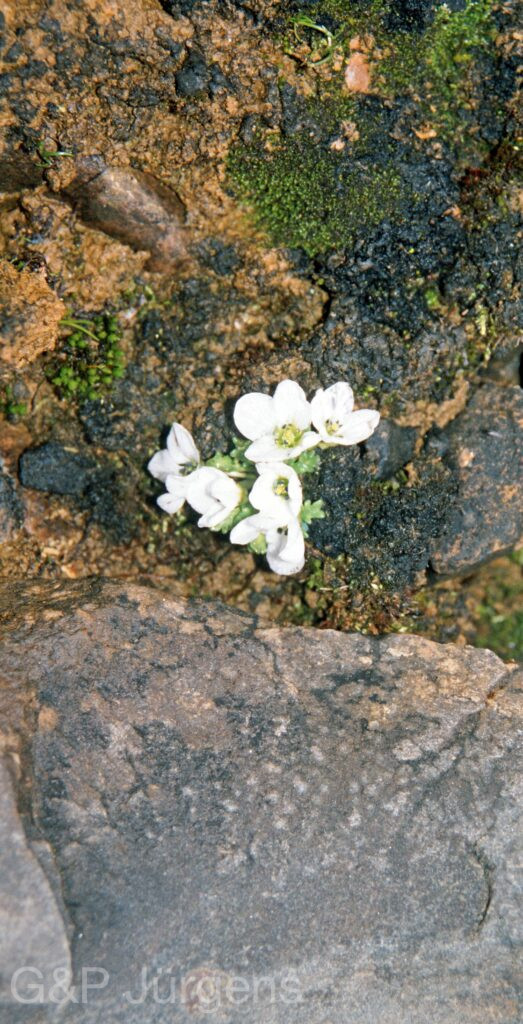
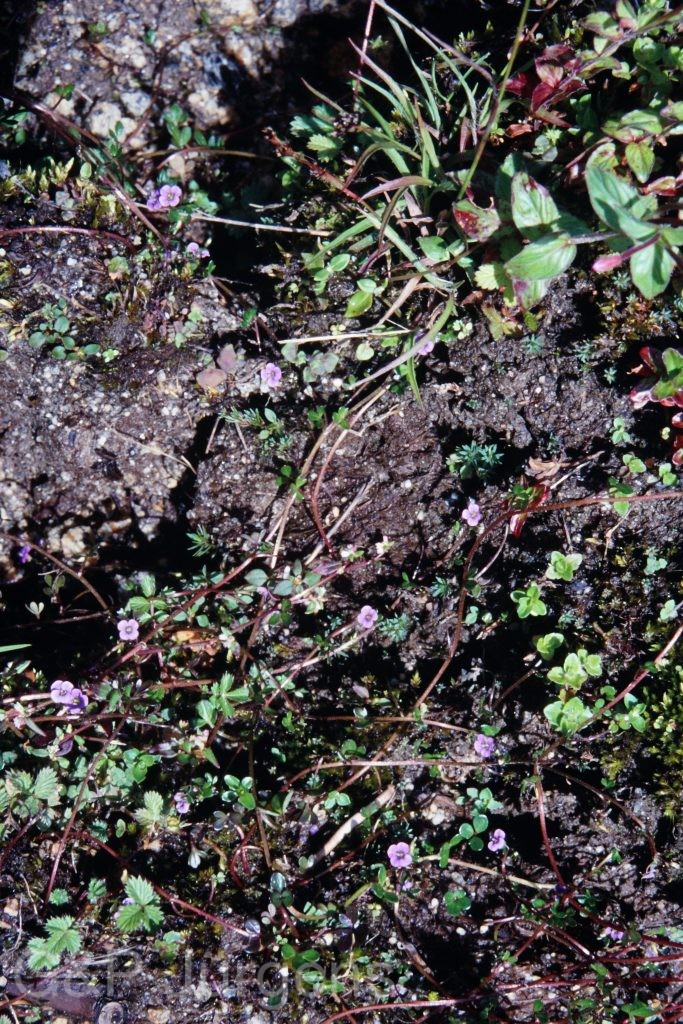
Nepal 99 640 ergebnis
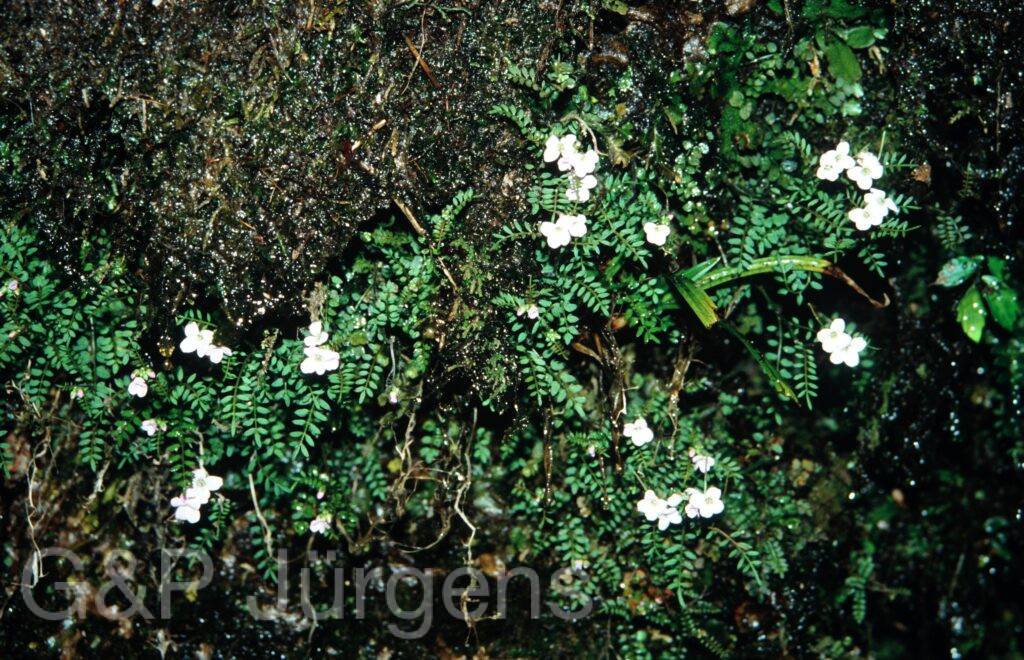
West-Nepal Kagmara-La 5000m, July

Description

Aphragmus minutus is a diminutive crucifer of the highest Himalaya and adjacent Tibetan and Indo-Burmese mountains, recorded by GBIF (about 34 occurrences) from India, Nepal, Bhutan, Myanmar and China. It is a subnival specialist, growing on open scree, gravelly flats, moraine and fine-grained alpine soils close to the upper limit of vascular plant life, where it endures intense cold, wind and a very short growing season. The illustrated plant was found in West Nepal on the Kagmara La at about 5000 m in July, an elevation typical of the species and among the highest at which flowering plants occur in the region.

It is a tiny, low, cushion- or rosette-forming perennial, as the epithet minutus implies, arising from a slender taproot crowned by a branched caudex. The leaves are crowded, small, entire or slightly toothed, spathulate to oblanceolate, glabrous or nearly so. The flowers are borne in a short, congested raceme scarcely raised above the foliage; each has four greenish sepals and four small white to pale lilac petals in the cruciform arrangement of the family, with tetradynamous stamens. The fruit is a short, oblong to ellipsoid silicula with a persistent style, dehiscing to release a few seeds, its compact form an adaptation to the brief alpine summer.

The species was transferred to Aphragmus on molecular and morphological grounds, the binomial (H. Hara) Al-Shehbaz, G. Q. Hao and J. Q. Liu reflecting that recombination; Aphragmus is a small high-Asian genus of the Brassicaceae centred on the Himalaya and Tibetan Plateau. As an extreme high-altitude cushion plant it is naturally rare and very localised but faces few direct threats beyond climate change, which may compress the habitat of such ceiling-dwelling alpines.

Author: (H.Hara) Al-Shehbaz, G.Q.Hao & J.Q.Liu · Sources: POWO (Kew), GBIF, Flora of China, Flora of Bhutan, Annotated Checklist of the Flowering Plants of Nepal, Al-Shehbaz's systematic studies of Asian Brassicaceae

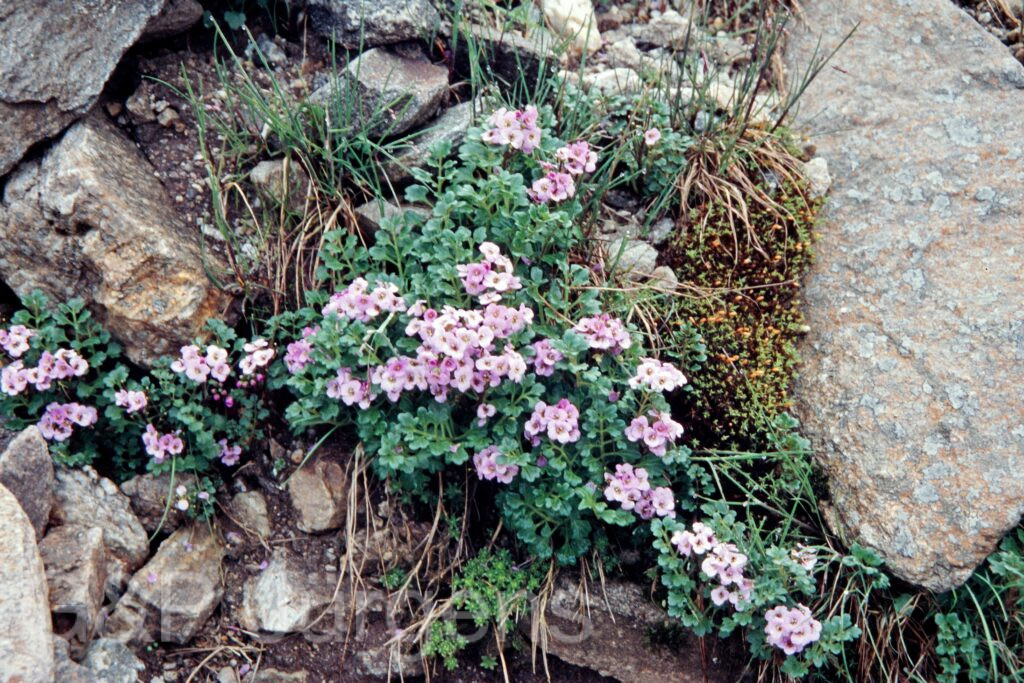
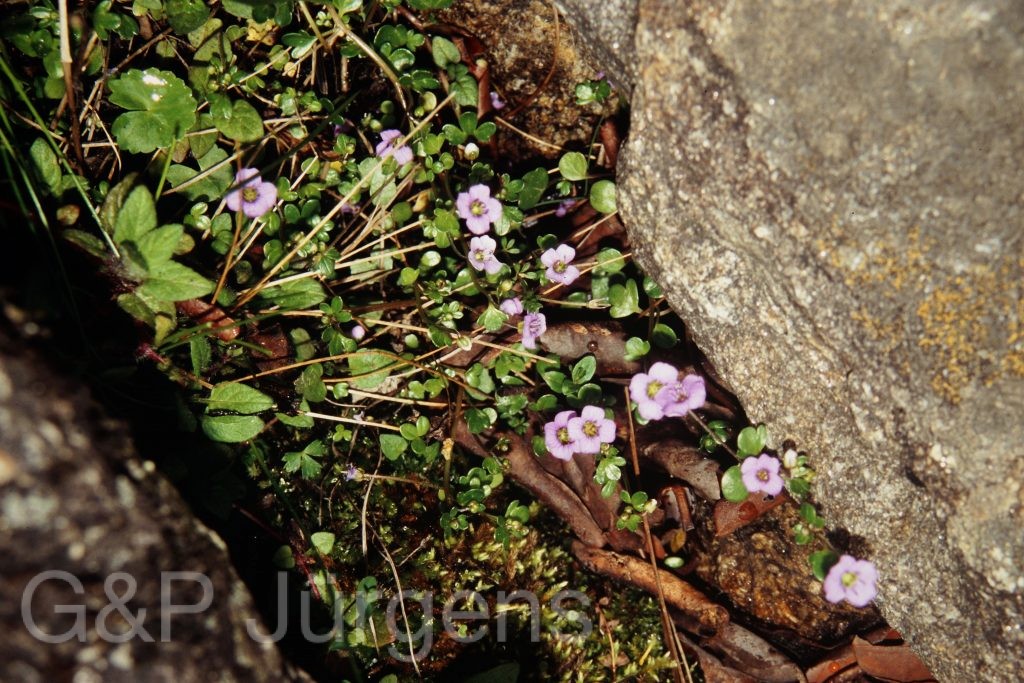
(W.W.Sm.) Al-Shehbaz & Warwick

Sikkim2003 104 P142
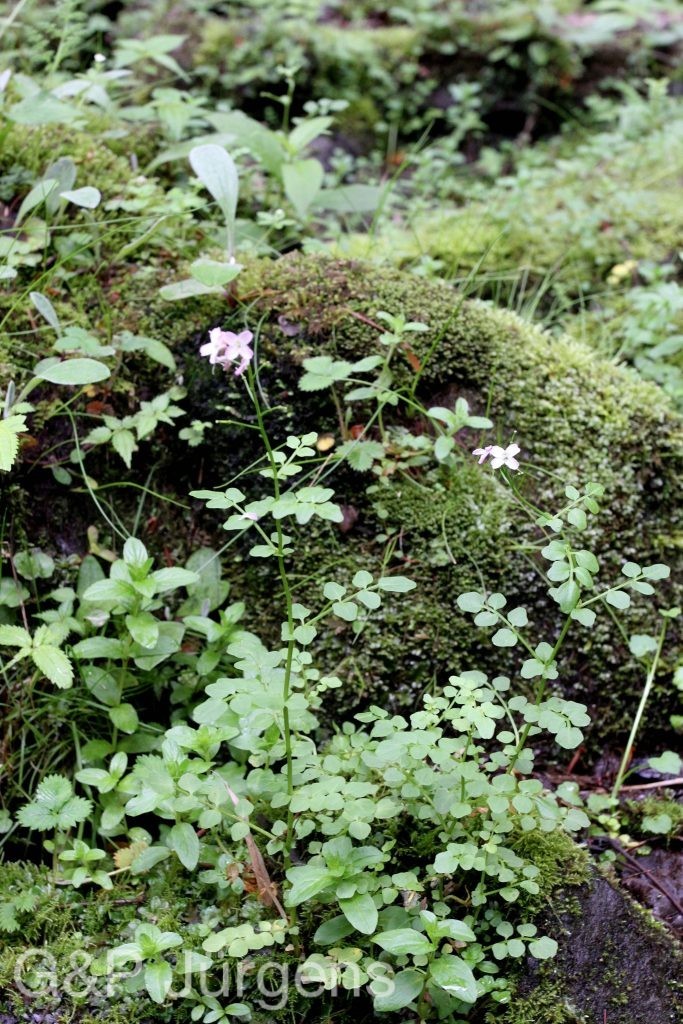
Sikkim below Dzongri 3850m, August

Description

Aphragmus serpens is a diminutive alpine crucifer of the eastern and central Himalaya, recorded from India, Nepal, Bhutan and China, with some 74 georeferenced occurrences indicating a scattered but recurrent presence across the high ranges. It is a plant of cold, open alpine habitats — gravelly and stony slopes, moraine debris, rock ledges and the margins of snow-melt seepages — typically well above treeline. The illustrated material from below Dzongri in Sikkim, at about 3850 m and photographed in August, is representative of the late-summer flowering of this species in the moist eastern Himalayan alpine zone.

The plant is a small, low-growing perennial with a slender, often creeping or trailing habit reflected in the epithet serpens. It arises from a thin rootstock and forms loose tufts or mats of mostly basal leaves; these are small, entire to slightly toothed, narrowed to a petiole, and more or less glabrous to sparsely hairy. The inflorescence is a short, few-flowered raceme; the flowers are typically cruciform with four small petals, usually white to pale lilac or pinkish, four sepals and the characteristic tetradynamous androecium of six stamens. The fruit is a short, oblong to ovoid silicula containing few seeds, the slender style persisting at the apex.

The genus Aphragmus comprises a small group of high-alpine Asian crucifers whose generic limits and species circumscriptions have been substantially revised, this combination being attributed to Al-Shehbaz & Warwick in the course of modern molecular and morphological reassessment of the Brassicaceae. As a specialist of severe high-altitude environments, A. serpens is intimately tied to short, cool growing seasons and reliable snow-melt moisture, and its restricted alpine niche makes it potentially sensitive to climatic warming, though its wide if sparse distribution suggests it is not at present under acute threat.

Author: (W.W.Sm.) Al-Shehbaz & Warwick · Sources: POWO (Kew), GBIF, Flora of China (Brassicaceae), Flora of Bhutan, Al-Shehbaz: monographic revisions of Himalayan Brassicaceae

O.E.Schulz

Garh 07 137 ergebnis
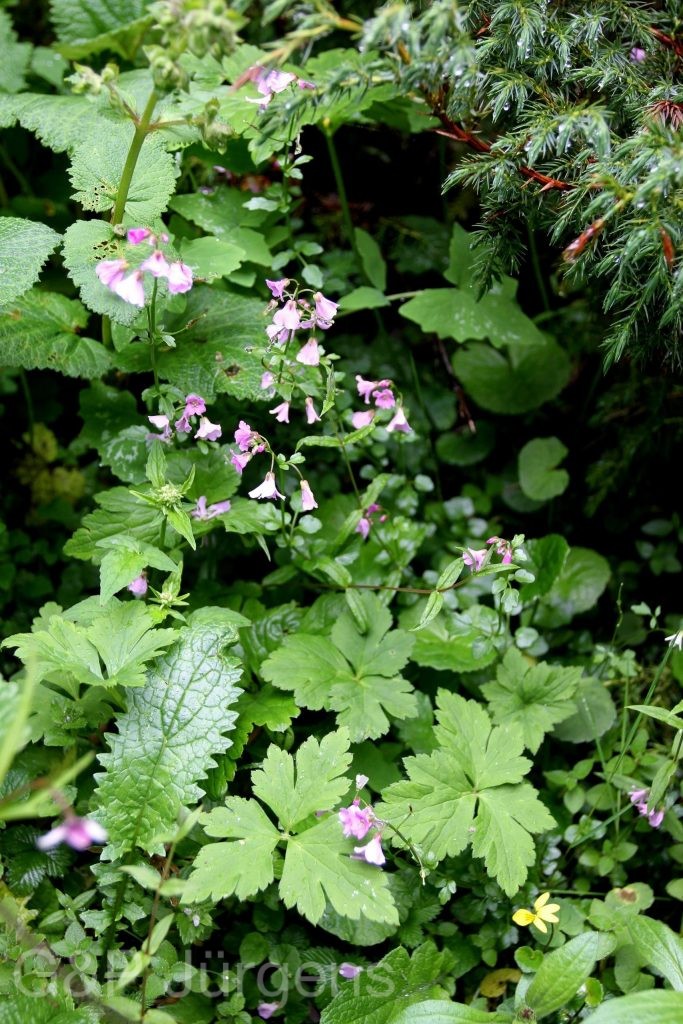
India Garhwal Kinkhola 3500m, June

Description

Arcyosperma primulifolium is a Himalayan crucifer of high-elevation forest and meadow margins, with GBIF recording 99 occurrences from India, Nepal, Pakistan and Bhutan. It occupies moist, shaded slopes, forest edges and damp turf in the upper temperate to subalpine zone, often among rocks and along the transition between birch-rhododendron forest and open alpine pasture. The image was taken at Kinkhola in Garhwal, India, at about 3500 m in June, when the plants flower as the high meadows green up after the spring thaw.

It is a perennial herb with a stout rootstock from which arise a rosette of long-petioled, lyrate to pinnatifid basal leaves; the lamina, with its rounded, crenate terminal lobe, recalls the foliage of a primrose, as the epithet primulifolium notes. The flowering stems are erect and bear smaller, less divided leaves below an elongating raceme. The flowers are white, with four sepals, four clawed petals and the tetradynamous stamens of the Brassicaceae. The fruit is a slender, somewhat flattened silique that distinguishes the monotypic genus; the seeds are arranged in the pod in the manner reflected by the generic name Arcyosperma.

Arcyosperma (Brassicaceae) is a monotypic genus segregated by O. E. Schulz, restricted to the Himalaya and allied within the family's diverse Asian montane crucifers. Its distinctive lyrate leaves and fruit characters set it apart from related genera such as Cardamine and Draba with which it co-occurs. Being a narrow-ranged montane endemic of a single species, it is of particular taxonomic and biogeographic interest, and like other high-Himalayan herbs its populations depend on intact subalpine forest and meadow habitats.

Author: O.E.Schulz · Sources: POWO (Kew), GBIF, Flora of Pakistan, Annotated Checklist of the Flowering Plants of Nepal, Jafri's Flora of West Pakistan (Brassicaceae), Schulz's treatment of Cruciferae in Engler's Das Pflanzenreich

(C.A.Mey.) B.L.Rob.

Bhutan Kupong 3250m, June

Description

Braya humilis (C.A.Mey.) B.L.Rob. is a widely distributed arctic-alpine crucifer with a circumpolar to Central Asian range, recorded by GBIF from Canada, the United States, Russia, Greenland, China, India, Nepal, Bhutan, Mongolia, Pakistan, Afghanistan and Scandinavia, with over 4200 occurrences. In the Himalaya it occupies high alpine pastures, stony slopes and moraines, as exemplified by the Bhutanese collection from Kupong at 3250 m in June, favouring calcareous, base-rich soils of the upper subalpine to alpine zone.

It is a small biennial or short-lived perennial herb with a stout taproot crowned by a leaf rosette and one to several ascending stems. The basal leaves are linear-oblanceolate, entire to remotely dentate and somewhat fleshy, bearing simple and forked trichomes typical of the genus; cauline leaves are few and reduced. The inflorescence is a compact, bracteate raceme that elongates in fruit, the small flowers with four white to pale lilac petals and the tetradynamous androecium of six stamens. The fruit is a short, terete to slightly flattened silique, often torulose, narrowed to a short persistent style and containing biseriate seeds.

Braya humilis is a polymorphic, taxonomically complex species within tribe Euclidieae, with numerous infraspecific taxa and regional segregates across its vast amphi-Beringian and montane Asian distribution. Its great ecological amplitude and association with cold, open, calcareous habitats make it a classic arctic-alpine disjunct, linking high-latitude tundra floras with the Himalayan and Central Asian mountains. Some peripheral arctic populations are of national conservation interest, though the species is secure overall.

Author: (C.A.Mey.) B.L.Rob. · Sources: POWO (Kew), GBIF, Flora of Bhutan Vol. 1, Flora of China Vol. 8, Flora of Pakistan, Warwick & Al-Shehbaz studies of tribe Euclidieae (Brassicaceae)

Hook.f. & Thomson

Nepal 2001 87 ergebnis ergebnis
East-Nepal Gupka Pokhari 2920m, April

Description

Cardamine elegantula is an Eastern Himalayan species ranging from eastern Nepal through Sikkim and the northern West Bengal hills into Bhutan, with GBIF recording 17 occurrences across BT, NP and IN. It is a plant of cool, humid temperate forest, occurring on shaded, moss-covered banks, in damp ravines and along streamsides where the soil remains moist through the growing season. The photographed population was found in East Nepal at Gupka Pokhari near 2920 m, flowering in April, which is characteristic of its early-season anthesis at montane elevations broadly between 2500 and 3500 m.

The species is a slender, glabrous perennial herb arising from a thin rhizome, with erect to ascending, sparingly branched stems. The leaves are pinnately compound: the cauline leaves bear several pairs of ovate to lanceolate, toothed lateral leaflets and a larger terminal leaflet, the whole foliage delicate in texture. Flowers are borne in lax terminal racemes; each has four free sepals and four white to pale pink, clawed petals arranged in the cruciform pattern of the Brassicaceae, with the characteristic tetradynamous androecium of six stamens. The fruit is a slender, linear silique that dehisces elastically along two valves to disperse the small seeds in a single row.

Within Cardamine, a large cosmopolitan genus of bittercresses, C. elegantula belongs to the perennial, rhizomatous Himalayan element distinguished by its graceful habit, pinnate leaves and slender siliques. As a moisture-demanding forest understorey herb it serves as an indicator of intact, undisturbed temperate woodland. It has not been formally assessed for conservation status; its restricted Eastern Himalayan range makes it potentially sensitive to forest clearance and habitat desiccation.

Author: Hook.f. & Thomson · Sources: POWO (Kew), GBIF, Flora of Bhutan, Annotated Checklist of the Flowering Plants of Nepal, Flora of China (Brassicaceae)

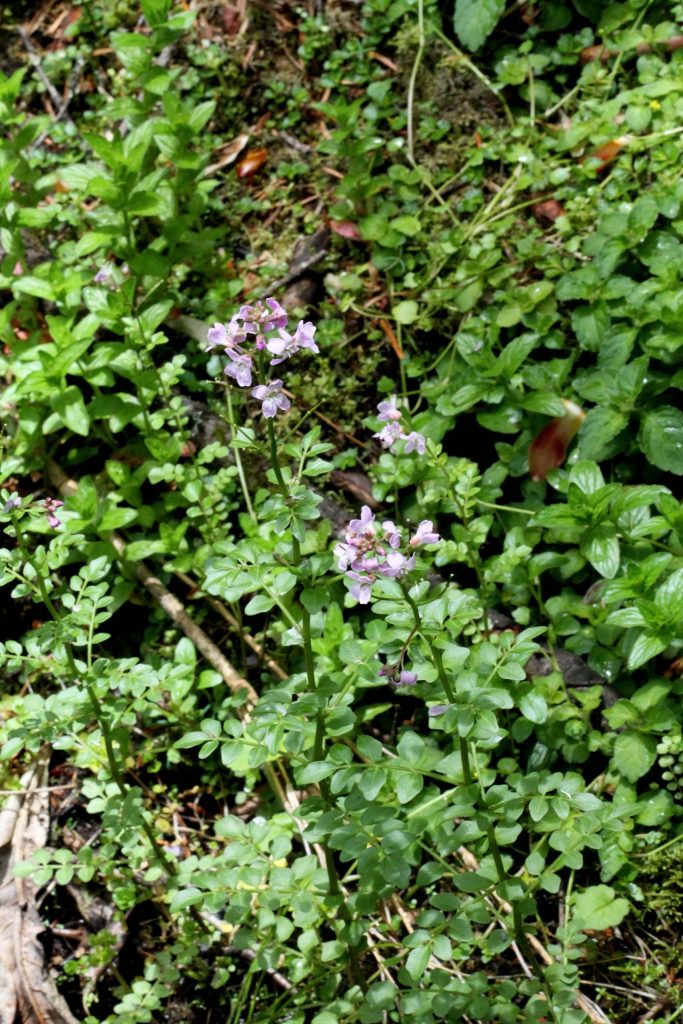
Hook.f. & Thomson

BhutanPG2011 103
Bhutan Chogcham, 3450m June
BhutanPG2011 685 01 01 scaled
Bhutan Luksor, 2900m July
BhutanPG2011 116 scaled
Bhutan Tsochenchen, 3500m June

Description

A perennial bittercress of the eastern Himalaya and adjacent mountains, recorded from China, Bhutan, India, Nepal and Myanmar, with around 577 GBIF occurrences. It is a plant of cool, wet ground, frequenting stream banks, seepages, marshy meadows, damp forest floors and shaded rocky places in the temperate to subalpine belt, mostly between about 2800 and 3800 m. The featured collections come from several Bhutanese sites in June and July, including Chogcham at 3450 m, Luksor at 2900 m and Tsochenchen at 3500 m, all moist, sheltered montane habitats.

The species grows from a slender rhizome, producing erect or ascending, glabrous to sparsely hairy stems. The leaves are pinnately compound, the lower with several pairs of stalked, ovate to lanceolate, toothed leaflets and a larger terminal leaflet; cauline leaves are similar but reduced upward. The inflorescence is a terminal raceme of small white to pale lilac flowers, each with four sepals and four clawed, spreading petals in the typical cruciform pattern, six tetradynamous stamens and a superior bilocular ovary. The fruit is a slender, linear, slightly flattened silique that dehisces elastically from the base, scattering the small seeds in a single row per locule.

Accepted by POWO and GBIF, C. griffithii belongs to a taxonomically intricate genus in which Himalayan species are distinguished by leaf division, petal size and habitat. Like many bittercresses it is closely tied to permanently moist microhabitats and the elastic silique aids local seed dispersal. It is widespread and often locally common in suitable damp ground across its range, and is not considered threatened, though it depends on intact montane wetlands and riparian zones.

Author: Hook.f. & Thomson · Sources: POWO (Kew), GBIF, Flora of Bhutan, Flora of China, Jafri monograph of Brassicaceae

O.E.Schulz

Nepal 99 539 ergebnis
West-Nepal Churta-Khola 4000m, June

Description

Cardamine loxostemonoides is a Himalayan and Sino-Himalayan bittercress recorded from Nepal, Pakistan, China, India and Bhutan, the South African and other anomalous entries among its roughly 156 occurrences best treated as database noise rather than native range. It is an alpine to subalpine herb of cool, moist habitats, growing along snowmelt rills, in damp meadows, beside streams and on seepage slopes where the soil stays saturated. The photographed plant from the Churta-Khola in West Nepal, at about 4000 m and flowering in June, is typical of its high-montane preference and its early-summer flowering coinciding with the surge of meltwater following snow retreat.

It is a perennial herb arising from a slender rhizome, with erect to ascending, often few-branched stems. The leaves are pinnately compound or pinnatisect with several pairs of lateral leaflets or segments, the terminal one frequently larger, the texture thin and the margins entire to lobed. The flowers are arranged in terminal racemes and show the regular four-petalled cruciform corolla of the family, white to pale pink or lilac, with six tetradynamous stamens. The fruit is a slender, linear, laterally compressed silique that dehisces elastically by two valves coiling from the base to fling the seeds, the style persisting as a short beak; the epithet alludes to a resemblance in stamen form to Loxostemon.

Cardamine is a large, cosmopolitan genus within Brassicaceae notable for frequent polyploidy and hybridisation, traits that complicate species delimitation in the Himalayan alpine flora. Like many relatives it favours moist, disturbed microsites and disperses by explosive silique dehiscence, allowing rapid colonisation of freshly exposed ground. The species is widespread across the high Himalaya and faces no specific conservation threat, although its dependence on reliable snowmelt moisture makes such hygrophilous alpine herbs potentially responsive to changes in precipitation and glacial regime.

Author: O.E.Schulz · Sources: POWO (Kew), GBIF, Flora of China, Flora of Pakistan, Flora of Bhutan, Al-Shehbaz revisionary studies of Cardamine (Brassicaceae)

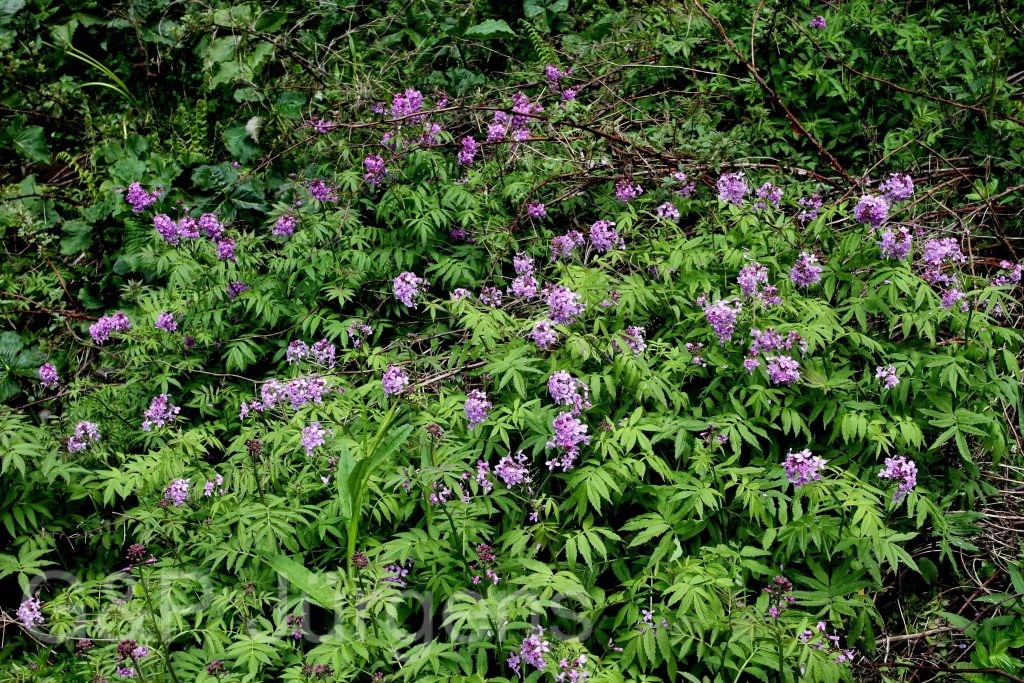
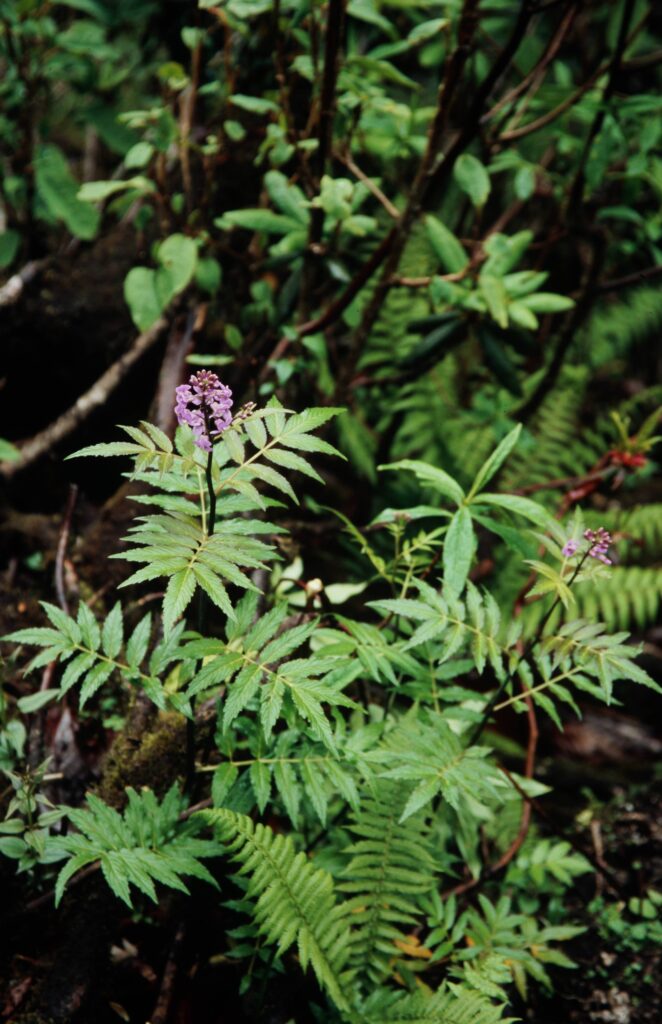
Willd.

Sikkim2011 373
Sikkim Lada-La 3800m, June
Sikkim 2006 356 ergebnis
India West-Bengal, Tamrong 2750m, May

Description

Cardamine macrophylla Willd. is a robust perennial crucifer with a broad distribution across temperate Asia, occurring in China, Russia, India, Nepal, Bhutan, Pakistan, Japan, Kazakhstan, Mongolia, Korea and elsewhere. In the Himalaya it is recorded from Sikkim at Lada-La near 3800 m, flowering in June, and from Tamrong in West Bengal at about 2750 m in May, spanning the temperate to subalpine zones. The species favours moist, shaded habitats: streamsides, wet meadows, forest margins, ravines and seepage slopes, generally between 2000 and 4000 m, on rich, humose soils. Its roughly 5068 GBIF records reflect a genuinely widespread and frequently collected species across its extensive range.

The plant arises from a creeping, scaly rhizome and produces erect, stout, leafy stems up to 70 cm or more. The leaves are pinnately compound with several pairs of large, lanceolate to ovate, serrate leaflets, the foliage notably ample for the genus, accounting for the epithet macrophylla. The flowers are borne in dense terminal corymbose racemes and are showy, with four spreading petals of pink, lilac to purplish hue and the usual tetradynamous stamens. The fruit is a long, linear, flattened silique that dehisces elastically to scatter the seeds in a single row.

Cardamine belongs to the tribe Cardamineae, a large and taxonomically complex genus in which polyploidy and hybridisation are widespread; C. macrophylla itself encompasses considerable morphological and cytological variation, with several infraspecific taxa and allied forms recognised across its range. Spreading both by seed and by rhizome, it can form extensive clonal stands in suitable wet ground. Widespread and ecologically tolerant, it is of no conservation concern, and the rhizome and young shoots are used locally as a wild vegetable.

Author: Willd. · Sources: POWO (Kew), GBIF, Flora of China, Flora of Nepal, Flora of Bhutan, Cardamine systematic revisions (Al-Shehbaz)

(Hook.f. & Thomson) Al-Shehbaz & G.Yang

Sikkim 2006 422 ergebnis
India West-Bengal, Kishong 2800m, May

Description

Cardamine pulchella is a delicate perennial herb of the Sino-Himalayan high mountains, recorded by GBIF from China, India, Nepal, Bhutan and Myanmar across about 147 occurrences. It inhabits cool, moist alpine and subalpine sites, growing on damp grassy slopes, beside rills and snowmelt flushes, and in open turf among rocks, generally from around 2800 to over 4500 m. The image from Kishong in West Bengal at about 2800 m, flowering in May, captures it near the lower edge of its range, where the early-season moisture of melting snow supports its slender, soft growth.

The plant arises from a slender creeping rhizome and produces low, often somewhat fleshy stems. The leaves are pinnately divided or compound, with a few rounded to oblong leaflets, the terminal leaflet frequently larger; both basal and cauline leaves are present, and the foliage is thin-textured and glabrous to sparsely hairy. The flowers are borne in a short few-flowered raceme and are relatively large for the genus, with four free sepals and four spreading petals that are white to pale lilac or pinkish-purple, conspicuous against the small stature of the plant. There are six tetradynamous stamens. The fruit is a slender linear silique that opens by two valves springing elastically from the persistent septum to scatter the seeds.

The species was transferred to its current placement by Al-Shehbaz and G. Yang, reflecting modern molecular and morphological reassessment of the alpine Asian Cardamine. It is part of a group of high-elevation crucifers adapted to short growing seasons and cold, wet substrates, completing flowering and fruiting rapidly after snowmelt. Though not assessed as threatened, such specialised alpine herbs are vulnerable to the upward compression of suitable habitat under climate warming, and to disturbance of fragile snowbed and flush communities.

Author: (Hook.f. & Thomson) Al-Shehbaz & G.Yang · Sources: POWO (Kew), GBIF, Flora of China, Flora of Bhutan, Al-Shehbaz revisions of Asian Brassicaceae, Annotated Checklist of the Flowering Plants of Nepal