
Franch.
Description
Cardamine yunnanensis is a temperate montane bittercress distributed through China, Nepal, India, Bhutan, Myanmar and Afghanistan, its 298 georeferenced occurrences indicating a fairly widespread Sino-Himalayan presence. It is a herb of cool, moist, shaded habitats, occupying forest floors, stream sides, damp banks and seepage areas within the temperate zone. The collection from Tolung in West Bengal, India, at 2500 m in May reflects its spring growth and flowering in moist broadleaved forest, when soils are kept reliably damp by snowmelt and early-season precipitation.
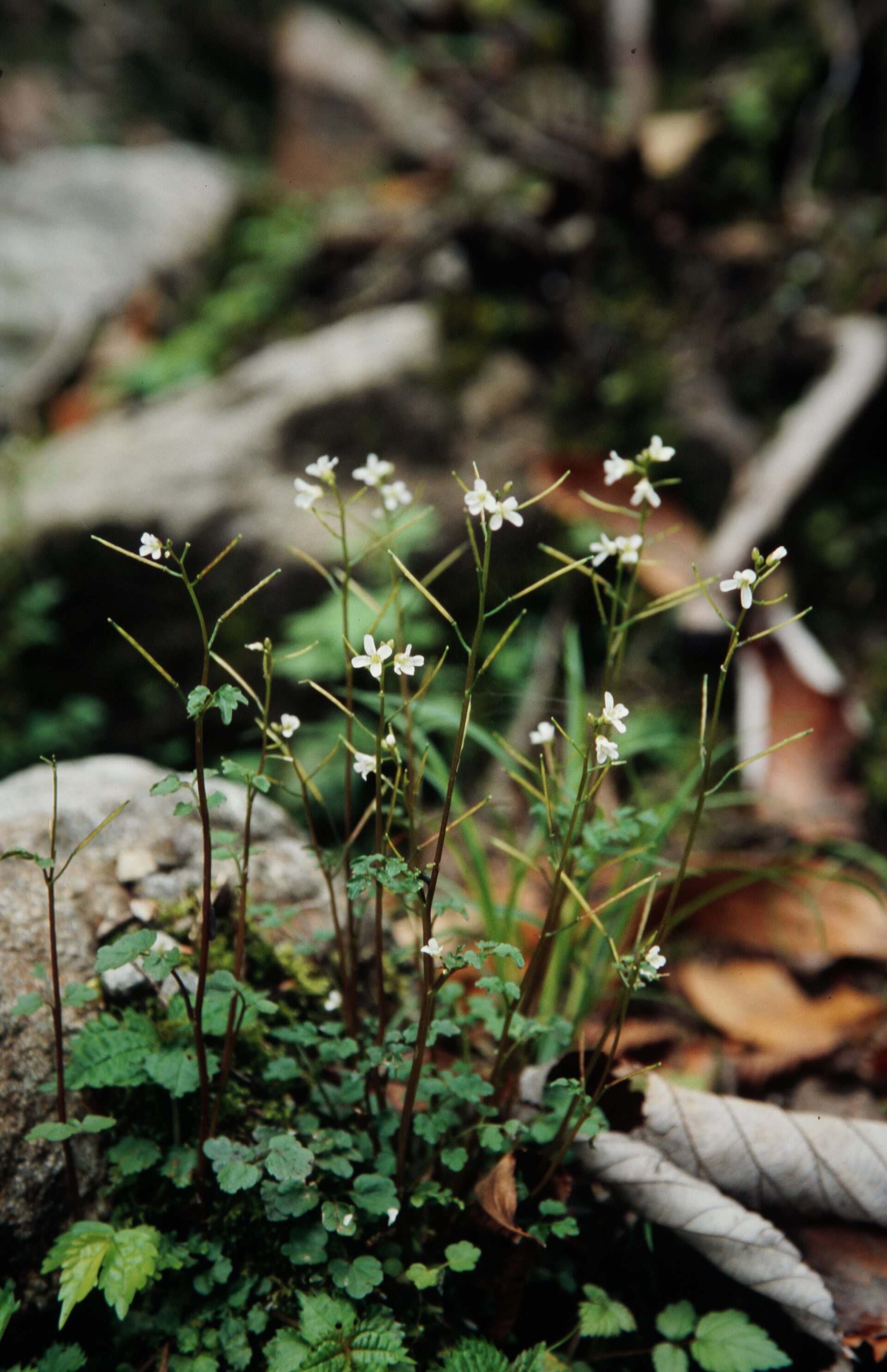
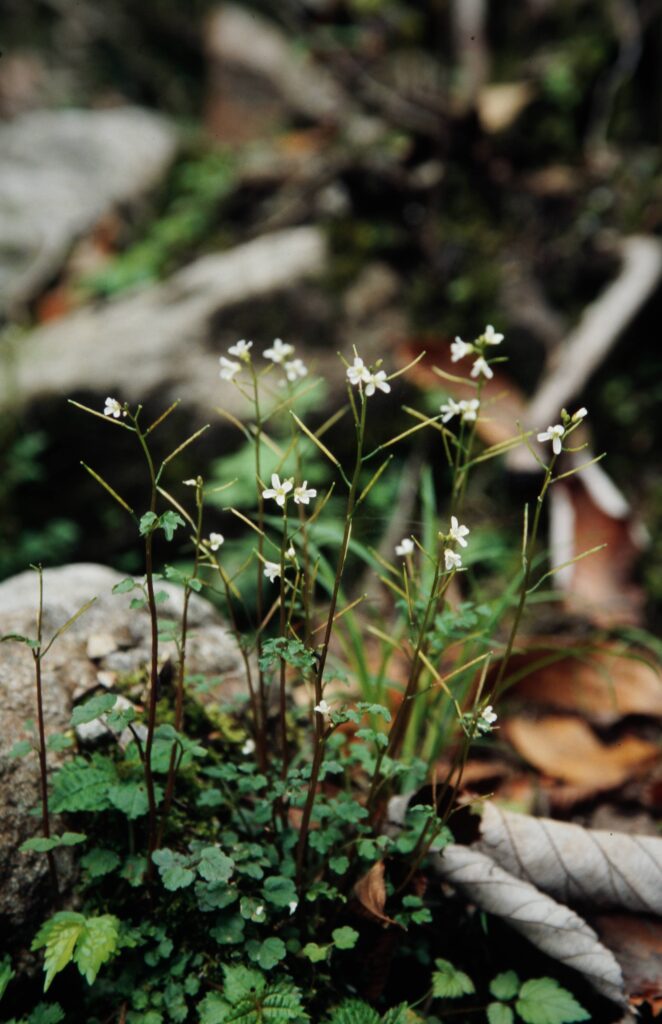
The plant is a slender annual or perennial herb with erect or ascending, often slightly fleshy stems arising from a thin rootstock. The leaves are usually pinnately compound or lobed, with a larger terminal leaflet and smaller lateral segments, the margins entire to toothed. The flowers are arranged in terminal racemes and follow the cruciferous plan, with four sepals, four white to pale lilac petals in a cross, and the tetradynamous androecium of six stamens. The diagnostic fruit is a slender, linear, laterally compressed silique that dehisces explosively, the valves coiling elastically to fling the small seeds away from the parent plant.
Cardamine is a large, cosmopolitan genus of the Brassicaceae characterised by its narrow siliques and frequently divided leaves, with a notable concentration of species in the Sino-Himalayan mountains. Many species are calcifuge moisture-lovers and several are used as wild greens. With a broad distribution spanning several countries and tolerance of disturbed damp ground, C. yunnanensis is secure and not considered threatened.
Author: Franch. · Sources: POWO (Kew), GBIF, Flora of China, Flora of Bhutan, Cardamine systematic and phylogenetic studies (Brassicaceae), Flowers of the Himalaya (Polunin & Stainton)