
(Hook.f. & Thomson) Al-Shehbaz
Description
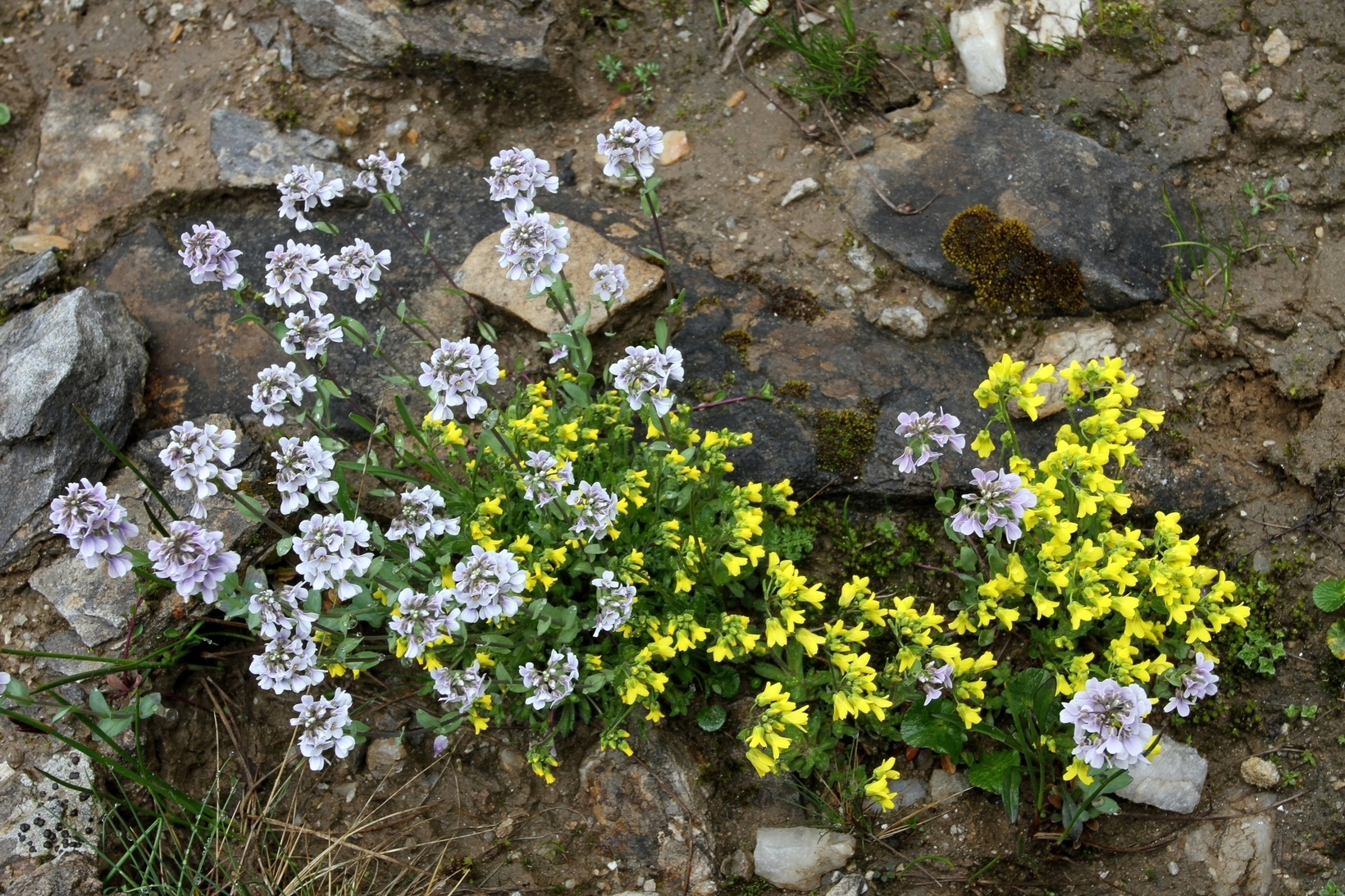
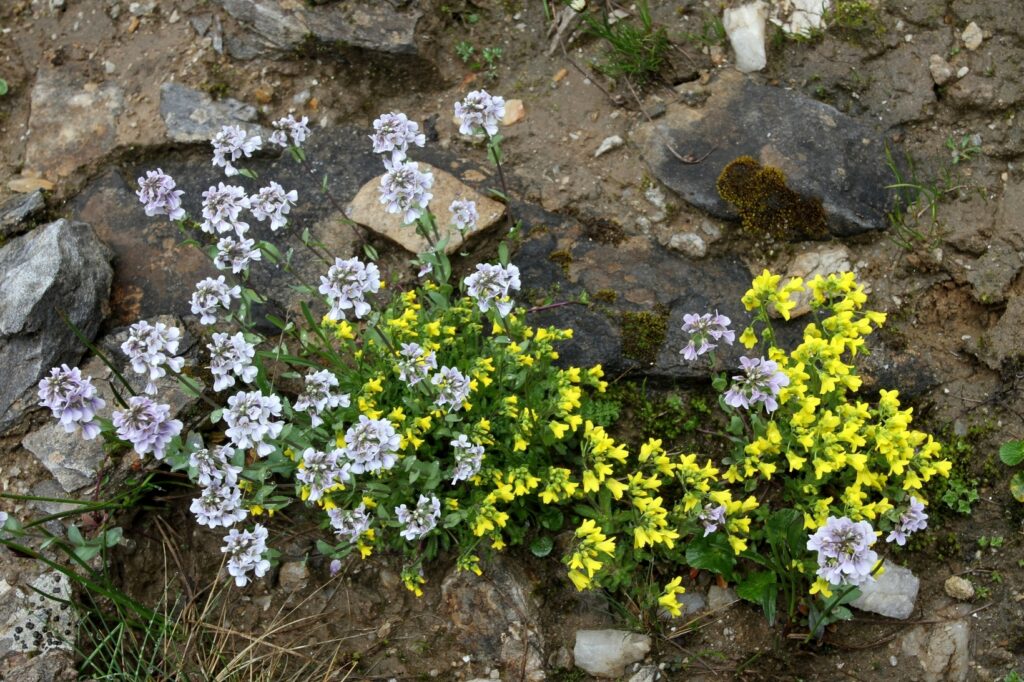
Noccaea andersonii is an alpine crucifer of the Himalaya, documented by GBIF (140 occurrences) from Nepal, India, Bhutan and southern Tibetan China. It is a plant of the upper alpine zone, growing in open stony pastures, scree, moist seepages and the margins of glacial lakes, generally between about 3800 and 4600 m. The cited collection from Paden-Tso in Bhutan at 4300 m in July typifies its preferred habitat: cold, well-drained mineral soils near tarns where it flowers during the brief post-monsoon summer, often associated with cushion plants and short alpine sedge turf.
The species is a low, glabrous, somewhat glaucous perennial herb arising from a slender caudex. Basal leaves are petiolate and form a loose rosette, while the cauline leaves are sessile and clasp the stem with sagittate-amplexicaul bases, a diagnostic feature of the genus. The inflorescence is a corymbose raceme of small flowers with four white to pale lilac petals borne above spreading sepals. The fruit is a flattened, obcordate to broadly elliptic silicle, narrowly winged toward the apex and notched at the tip, containing several smooth seeds in each loculus.
The binomial reflects the modern segregation of Noccaea from the broadly circumscribed Thlaspi, supported by the combination by Al-Shehbaz on molecular and fruit-anatomical grounds, with the perennial habit and amplexicaul leaves distinguishing it from annual Thlaspi proper. Ecologically it is a cold-adapted specialist of frost-churned alpine substrates. It is widespread across suitable habitat and not presently of conservation concern, though restricted to a narrow altitudinal band sensitive to climatic shifts.
Author: (Hook.f. & Thomson) Al-Shehbaz · Sources: POWO (Kew), GBIF, Flora of China Vol. 8, Flora of Bhutan Vol. 1, Flora of Nepal, Al-Shehbaz Brassicaceae systematic studies