
Monnet
Description
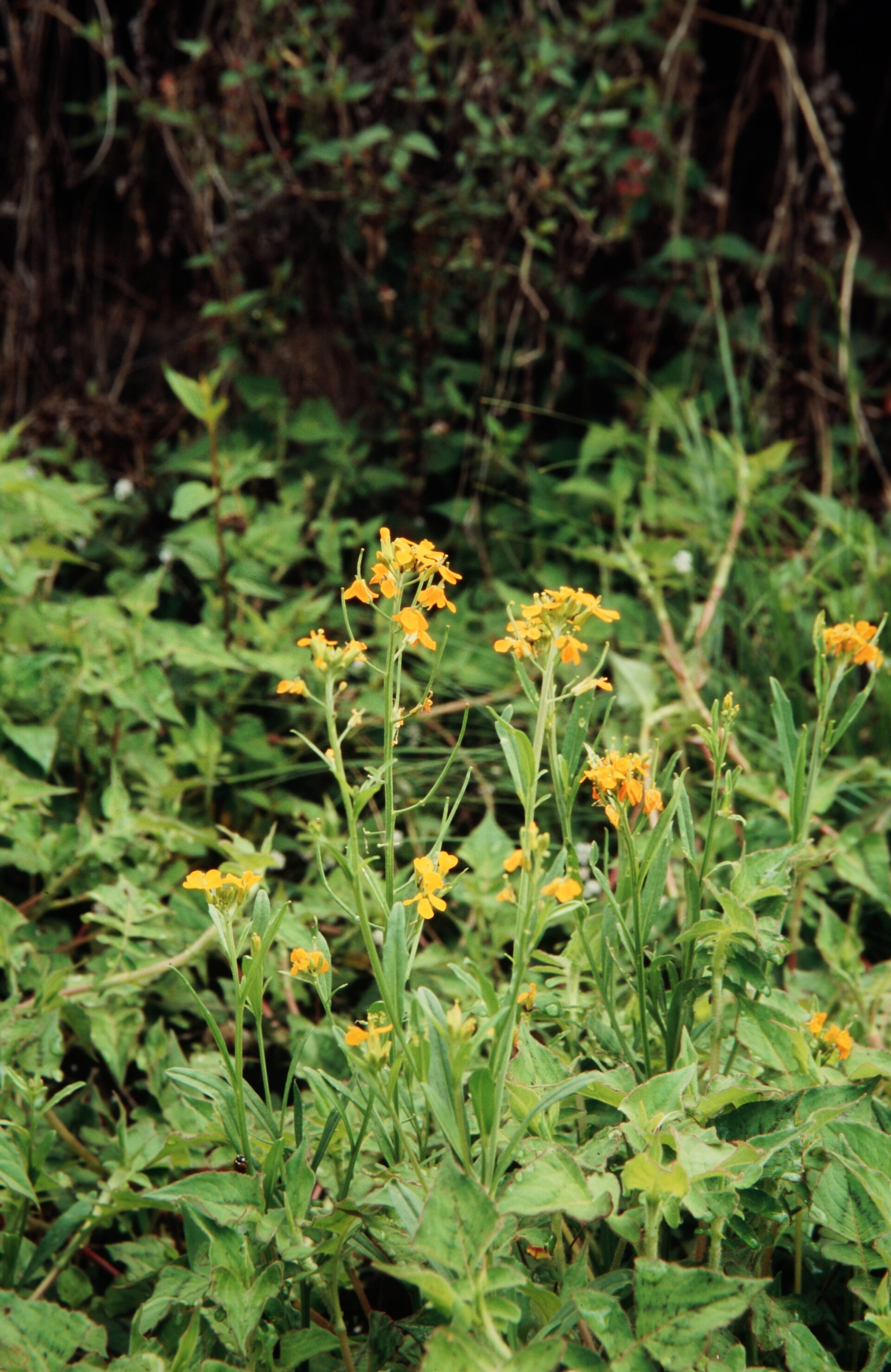
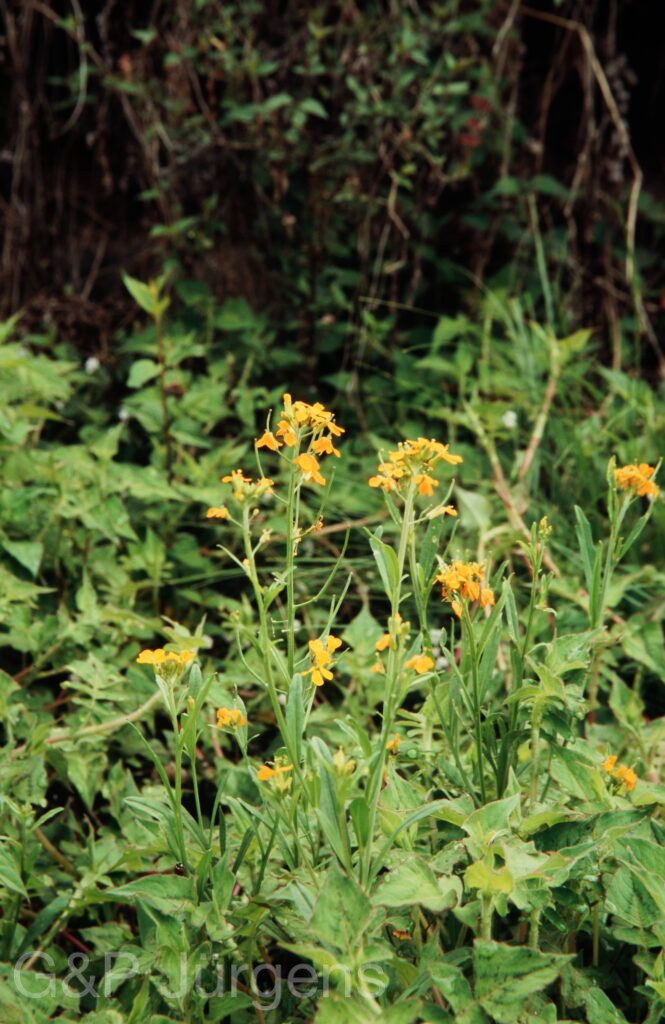
Erysimum benthamii is a Himalayan crucifer recorded from China, Nepal, Bhutan and India, with over 230 georeferenced occurrences spanning the central and eastern Himalaya. It favours open, sunny situations on dry banks, stony slopes, forest clearings and disturbed ground in the temperate and subalpine zones. The plant illustrated from Helambu at Bolgaon (about 2050 m) in Nepal in May reflects its typical mid-elevation habitat, where it flowers in spring on well-drained, often rocky or gravelly soils along trails and open hillsides.
It is an erect biennial or short-lived perennial herb covered, like most members of the genus, in appressed medifixed (malpighiaceous) two- to several-branched hairs that give the foliage a greyish cast. The stem is simple or branched above and bears narrowly lanceolate to linear, entire or remotely denticulate leaves. The flowers are arranged in elongating terminal racemes; the four sepals are erect, and the four clawed petals are bright yellow to orange-yellow in the cruciform arrangement typical of Brassicaceae. The fruit is a long, slender, four-angled silique held more or less erect on a short pedicel, splitting at maturity to release two rows of small seeds.
Erysimum is a large Holarctic genus whose Himalayan representatives are taxonomically intricate, distinguished by trichome branching, fruit shape and indumentum density; E. benthamii is set apart by these vegetative and silique characters. The presence of an indeterminate-country record (coded ZZ) reflects imprecise georeferencing rather than any disjunct range. Widespread and tolerant of disturbance, the species is of least conservation concern.
Author: Monnet · Sources: POWO (Kew), GBIF, Flora of Nepal, Flora of China, Flora of Bhutan, Polatschek's revisions of Erysimum