
Royle
Description
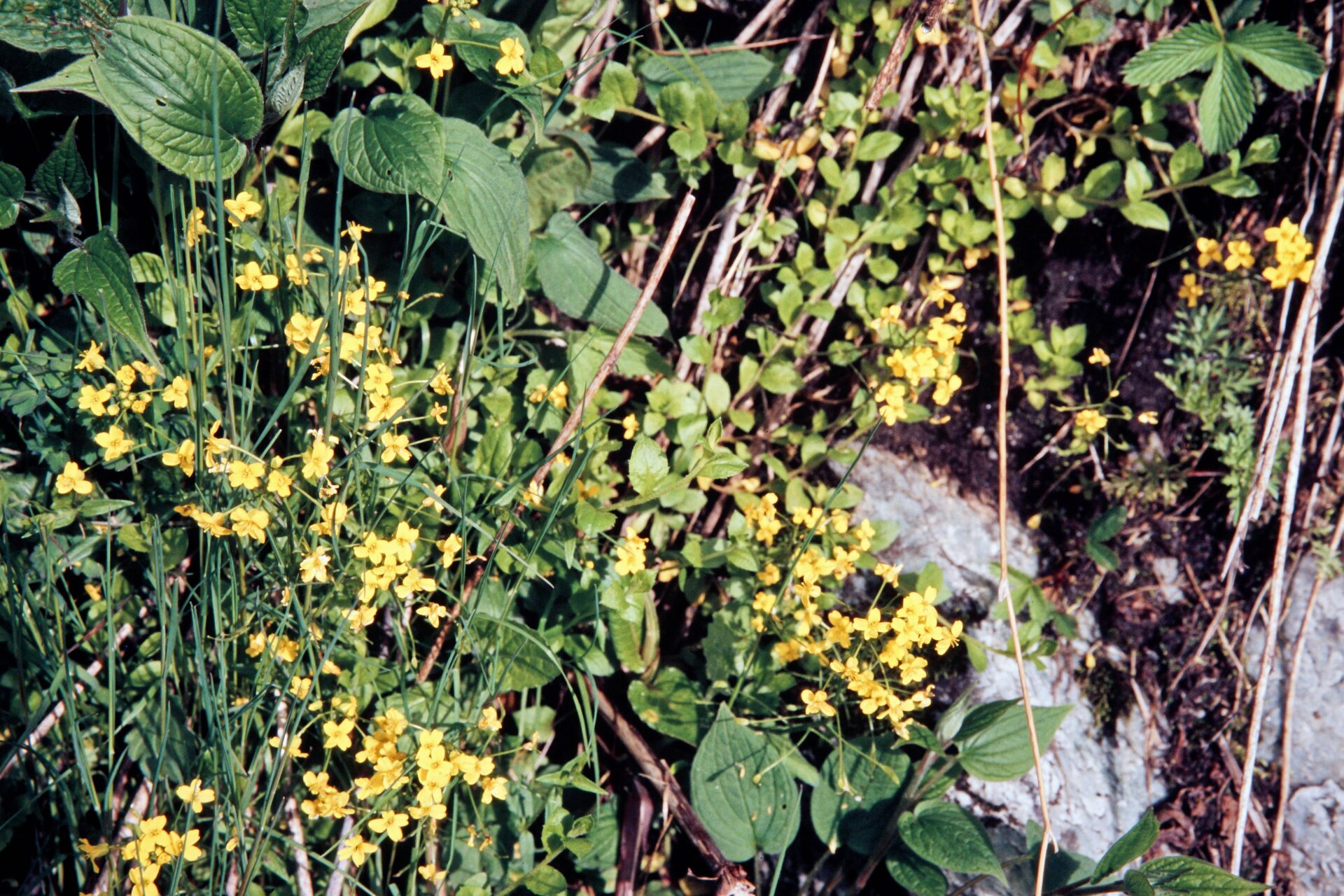
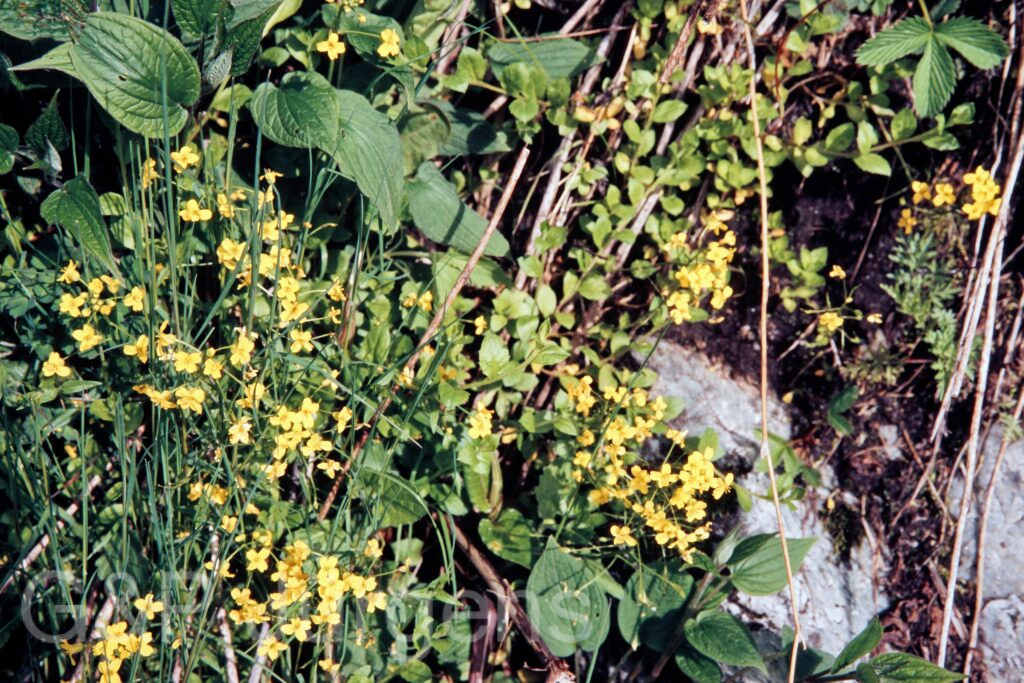
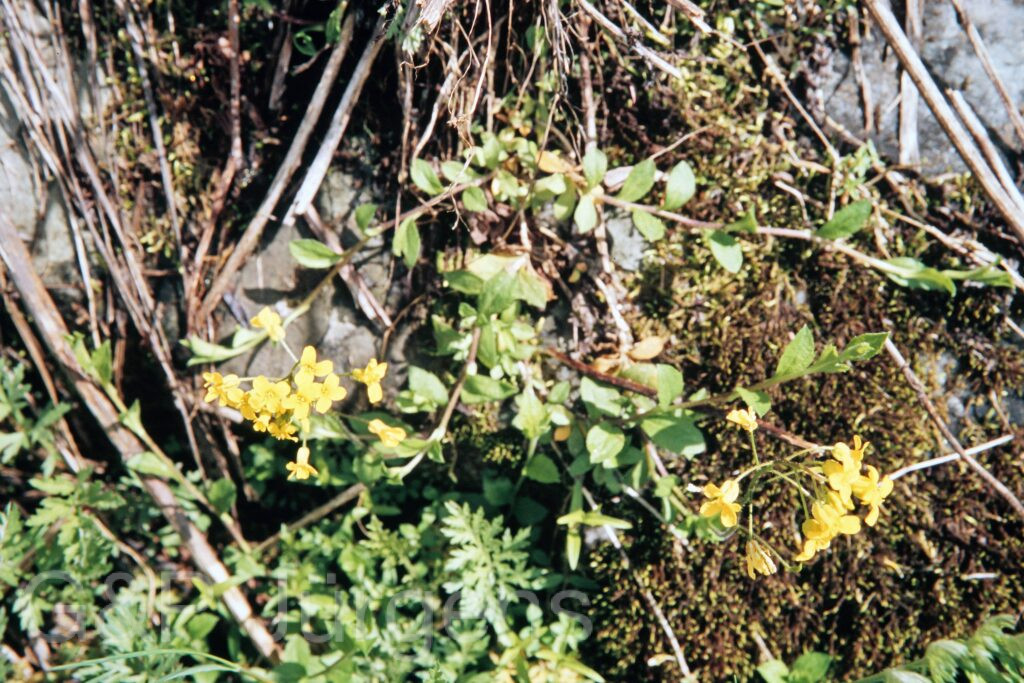
Draba radicans is a high-alpine crucifer of the Himalayan chain, with GBIF documenting 55 occurrences from Nepal, India and Bhutan. It is a plant of the upper subalpine to alpine zone, growing among rocks, screes, moist turf and the margins of snowmelt flushes where competition from taller vegetation is slight. The image was taken at Dohdi-Tal in Garhwal, India, at about 3400 m in June, when receding snow exposes the open stony slopes and the rosettes come into flower at the start of the brief alpine growing season.
It is a small perennial herb forming low rosettes or loose mats from a slender taproot and branching caudex, the specific epithet radicans alluding to its tendency to root and spread at the base. The leaves are mostly basal, oblanceolate to spathulate, entire or obscurely toothed, and clothed in simple, forked and stellate hairs characteristic of the genus. The flowering stems are short and often leafless or few-leaved, bearing a short raceme of small flowers with four yellow (fading whitish) petals, four sepals and the tetradynamous stamens of the family. The fruit is a flattened, oblong to elliptic silicula on a short pedicel, containing several small seeds.
Draba (Brassicaceae) is one of the largest genera of arctic and alpine plants, with numerous narrowly distributed Himalayan species whose delimitation rests on trichome type and fruit shape. D. radicans is part of the diverse Himalayan alpine Draba assemblage, an element sensitive to climatic warming and the upward retreat of snowbeds. Though not formally assessed, its restriction to cold high-elevation habitats makes such alpine specialists of conservation interest as indicators of mountain ecosystem change.
Author: Royle · Sources: POWO (Kew), GBIF, Flora of Pakistan, Annotated Checklist of the Flowering Plants of Nepal, Jafri's Flora of West Pakistan (Brassicaceae), Schulz monograph of Draba