
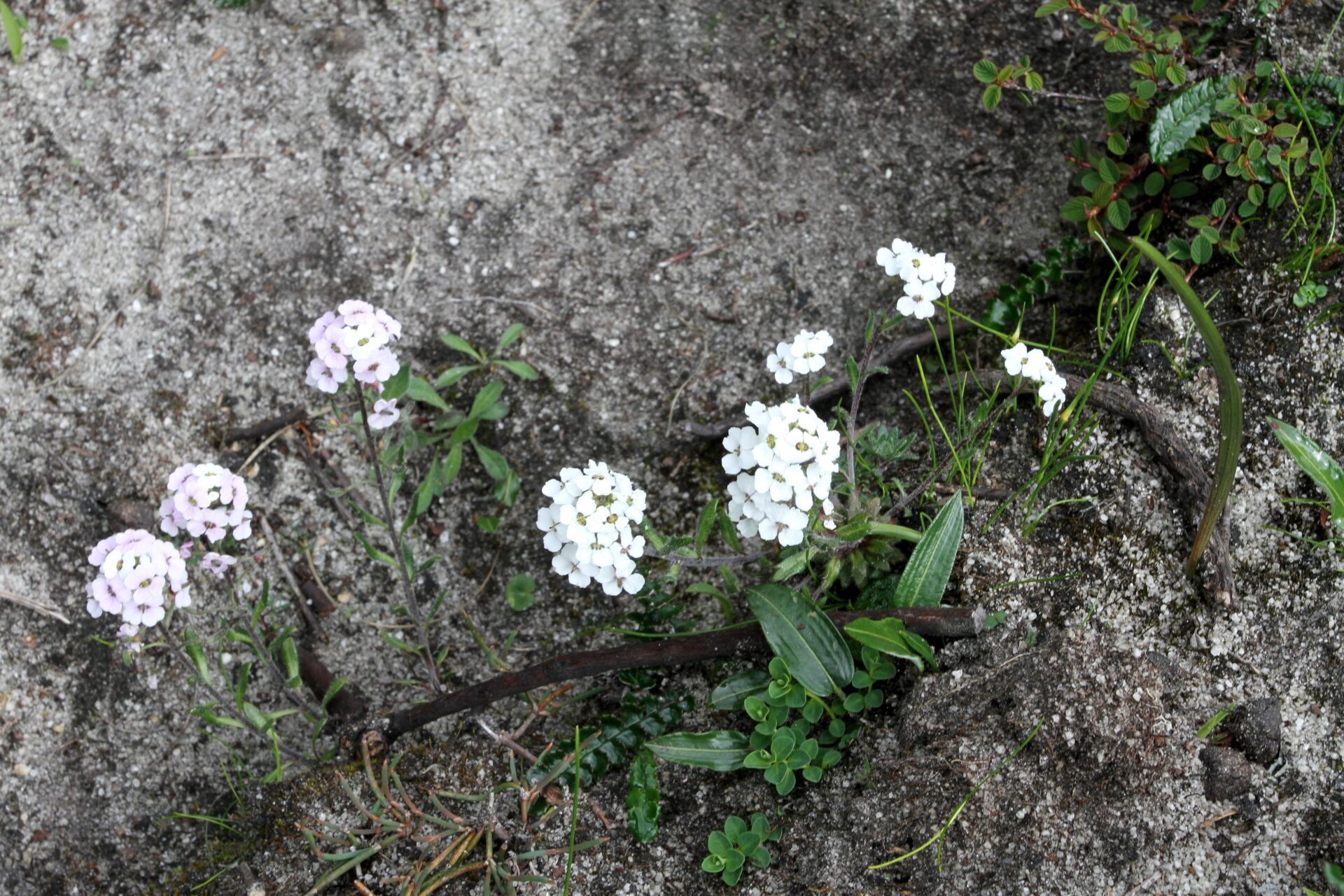
(C.A.Mey.) B.L.Rob.

Bhutan Kupong 3250m, June
Description
Braya humilis (C.A.Mey.) B.L.Rob. is a widely distributed arctic-alpine crucifer with a circumpolar to Central Asian range, recorded by GBIF from Canada, the United States, Russia, Greenland, China, India, Nepal, Bhutan, Mongolia, Pakistan, Afghanistan and Scandinavia, with over 4200 occurrences. In the Himalaya it occupies high alpine pastures, stony slopes and moraines, as exemplified by the Bhutanese collection from Kupong at 3250 m in June, favouring calcareous, base-rich soils of the upper subalpine to alpine zone.
It is a small biennial or short-lived perennial herb with a stout taproot crowned by a leaf rosette and one to several ascending stems. The basal leaves are linear-oblanceolate, entire to remotely dentate and somewhat fleshy, bearing simple and forked trichomes typical of the genus; cauline leaves are few and reduced. The inflorescence is a compact, bracteate raceme that elongates in fruit, the small flowers with four white to pale lilac petals and the tetradynamous androecium of six stamens. The fruit is a short, terete to slightly flattened silique, often torulose, narrowed to a short persistent style and containing biseriate seeds.
Braya humilis is a polymorphic, taxonomically complex species within tribe Euclidieae, with numerous infraspecific taxa and regional segregates across its vast amphi-Beringian and montane Asian distribution. Its great ecological amplitude and association with cold, open, calcareous habitats make it a classic arctic-alpine disjunct, linking high-latitude tundra floras with the Himalayan and Central Asian mountains. Some peripheral arctic populations are of national conservation interest, though the species is secure overall.
Author: (C.A.Mey.) B.L.Rob. · Sources: POWO (Kew), GBIF, Flora of Bhutan Vol. 1, Flora of China Vol. 8, Flora of Pakistan, Warwick & Al-Shehbaz studies of tribe Euclidieae (Brassicaceae)