Buch.-Ham. ex D.Don
Description
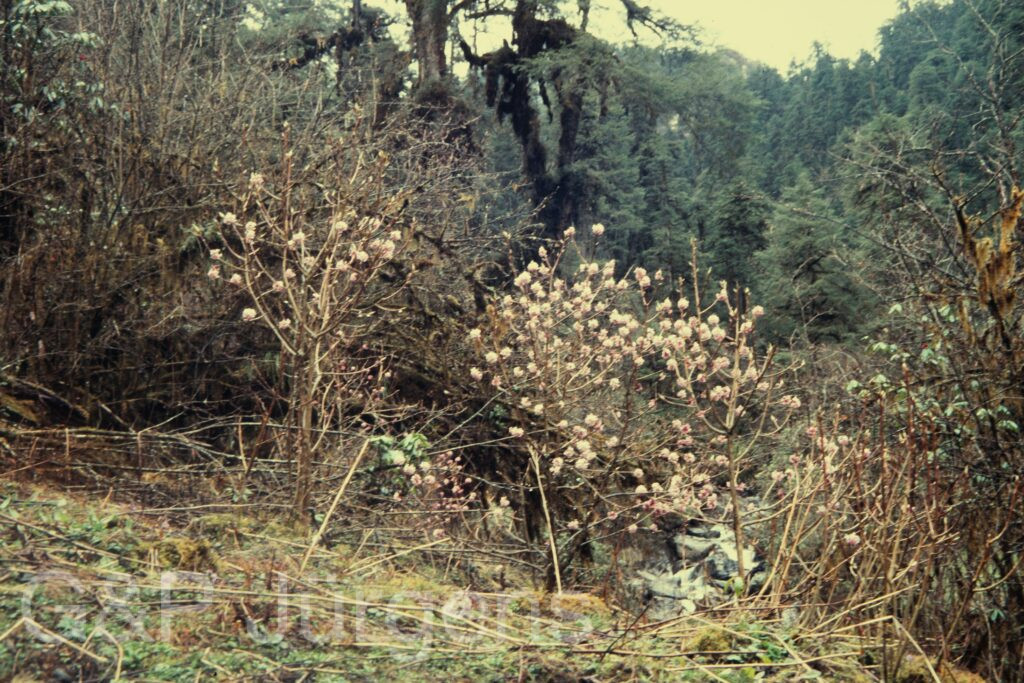
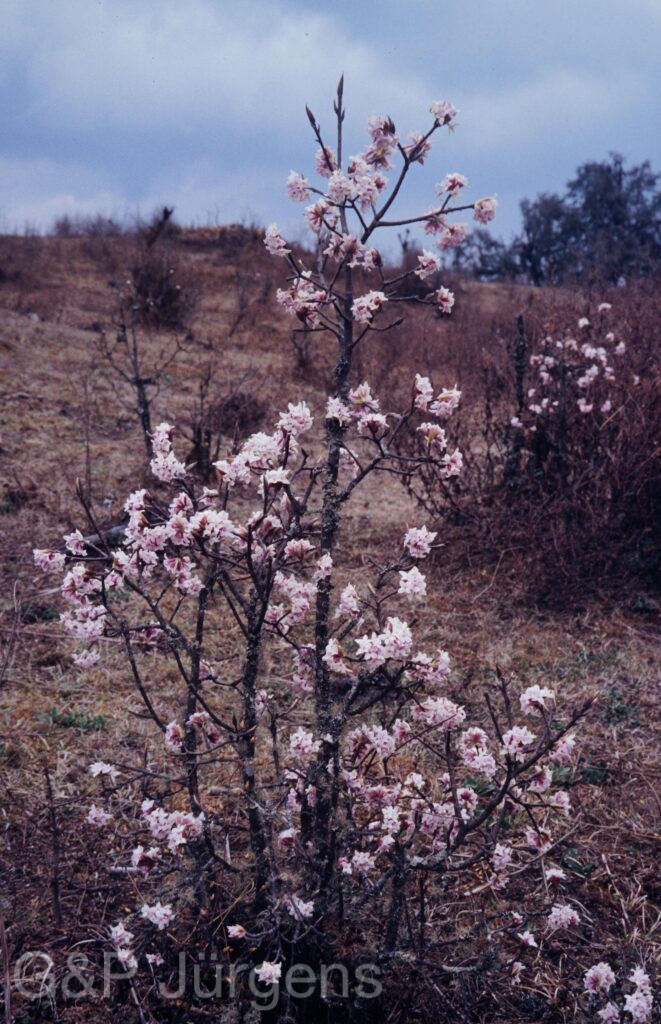
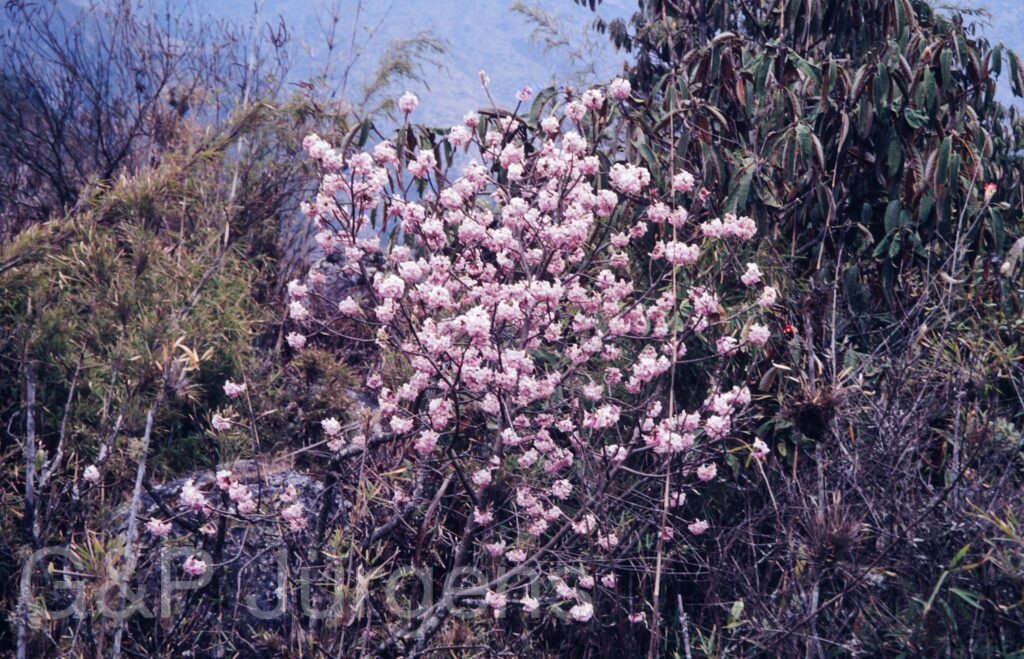
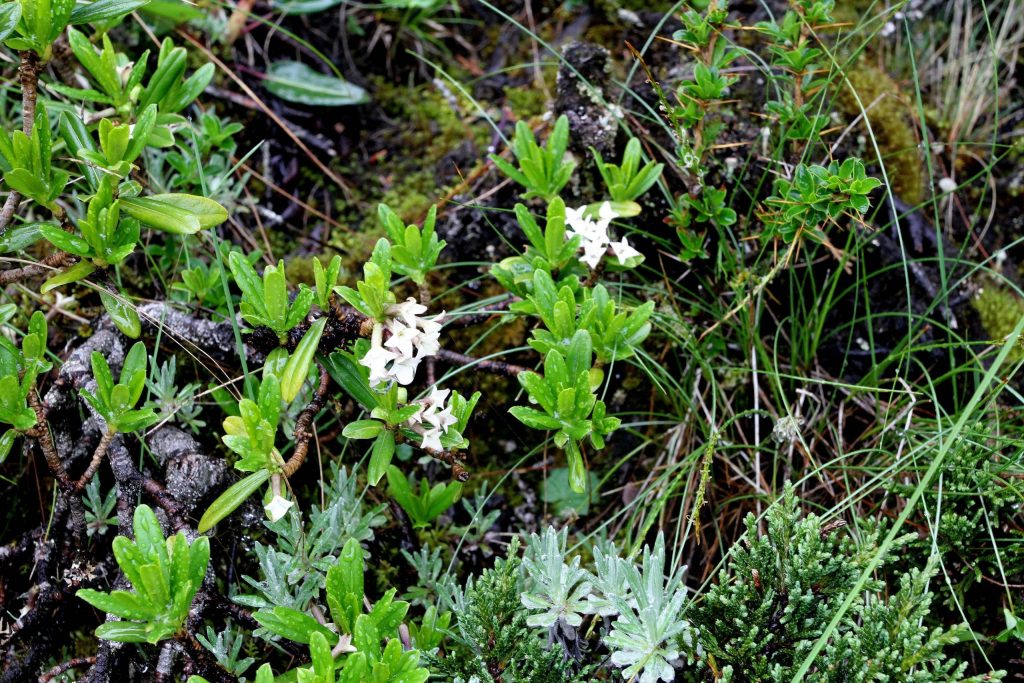
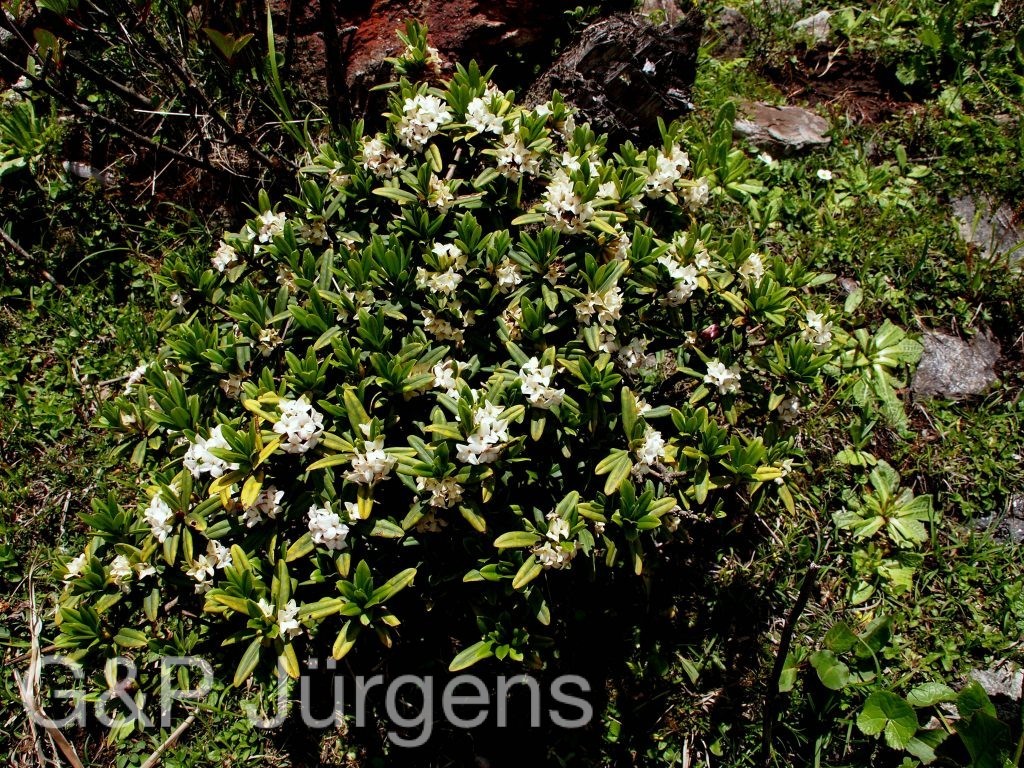
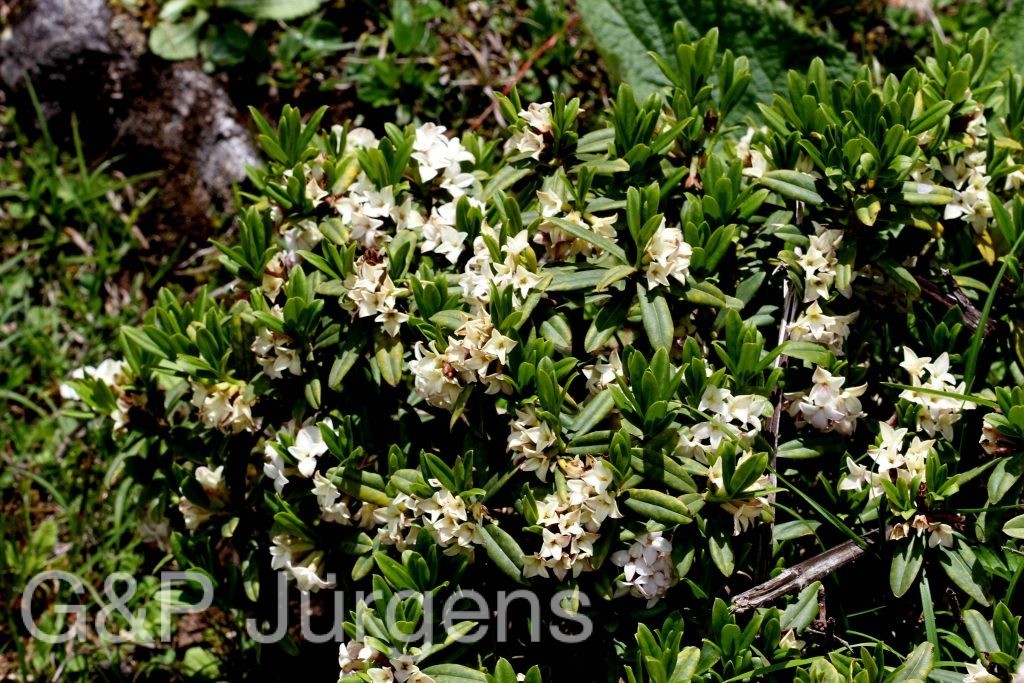
Daphne bholua is an evergreen to semi-deciduous shrub of the central and eastern Himalaya, distributed through Nepal, China, Bhutan and India, with around 758 georeferenced records; its appearance in numerous temperate countries reflects its extensive horticultural cultivation. In the wild it occupies temperate and subalpine forest, scrub and clearings, often in oak, rhododendron and conifer woodland and on open hillsides. The plant photographed in Sikkim's Vista valley at 3750 m, flowering in June, exemplifies its upper-elevation range, where it forms thickets on moist, well-drained slopes.
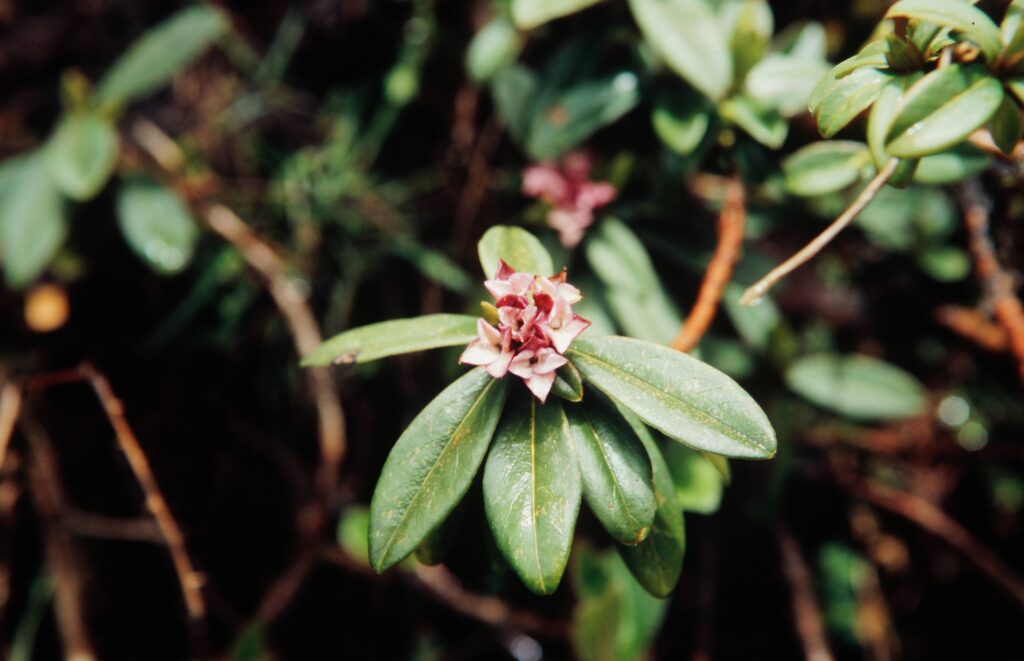
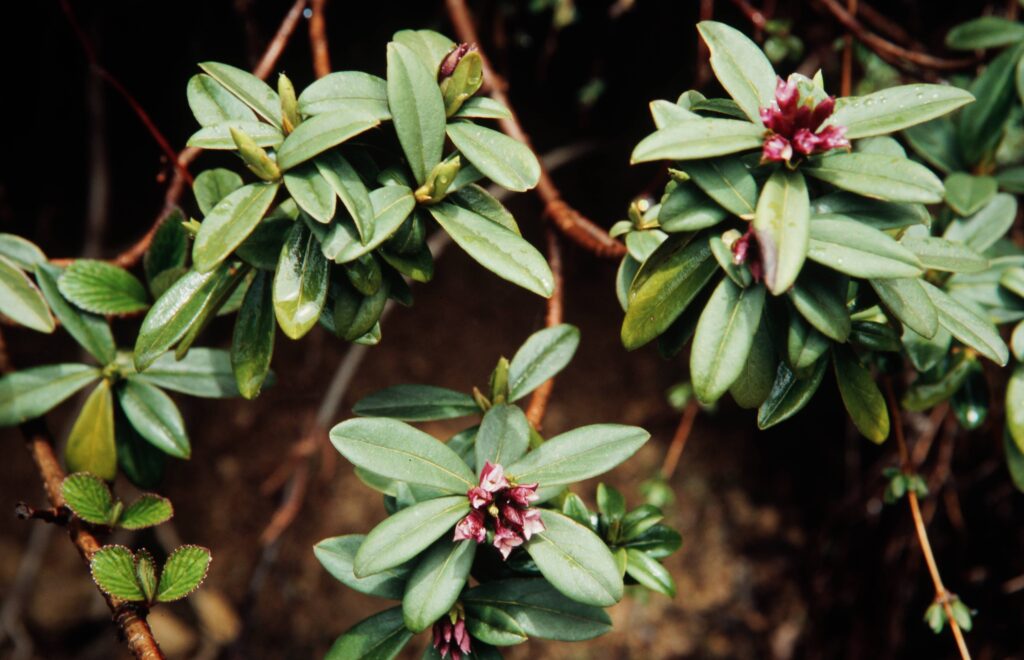
It grows as an erect shrub to about 2.5 m with tough, fibrous bark and densely leafy branches. The leaves are alternate, clustered toward the branch tips, oblong-lanceolate, leathery, glossy dark green above and entire-margined. The fragrant flowers are borne in dense terminal and subterminal clusters; each has no petals but a petaloid, salverform perianth tube, white within and flushed rose-purple outside, the four spreading lobes strongly scented. The fruit is a fleshy ovoid berry-like drupe, blackening when ripe.
Daphne bholua, described by Buchanan-Hamilton ex D. Don, is celebrated in horticulture for its intensely fragrant winter-to-spring flowers and has given rise to many cultivars. In its homeland the strong bast fibres of the bark are a principal source of traditional Nepali handmade paper (lokta). Like other Thymelaeaceae it contains acrid, toxic compounds. Although widespread and not formally threatened, intensive bark harvesting for paper-making places localised pressure on wild populations.
Author: Buch.-Ham. ex D.Don · Sources: POWO (Kew), GBIF, Flora of Bhutan, Annotated Checklist of the Flowering Plants of Nepal, Halda The Genus Daphne