
L.
Description
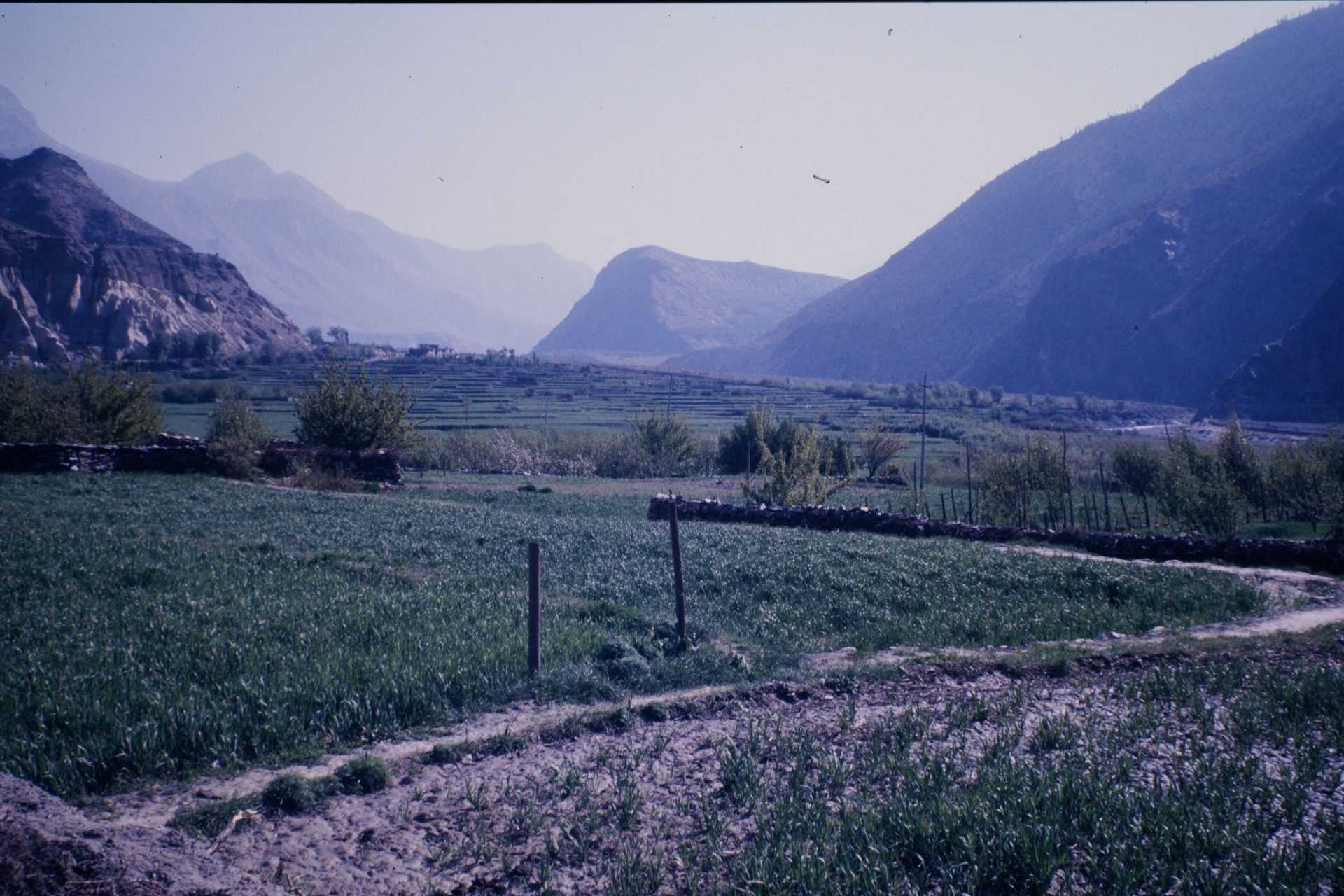
Stellera chamaejasme is a widespread perennial herb of the dry uplands of Central and East Asia, recorded by GBIF from China, Russia, Mongolia, Nepal, India, Bhutan, Kazakhstan, Korea, Iran and Turkey, among others, across some 3,400 georeferenced occurrences. It is characteristic of arid and semi-arid grasslands, alpine and subalpine meadows, sunny rocky slopes and overgrazed pastures on the Tibetan Plateau and throughout the trans-Himalaya, generally between about 2,600 and 4,500 m. The cited Nepalese records, from Bhatang at 2,915 m in April and from Kalomura in West Nepal at 3,600 m in June, span its lower temperate and upper subalpine occurrences and bracket its long spring-to-summer flowering season. It thrives on poor, dry soils where grazing has reduced competing vegetation.
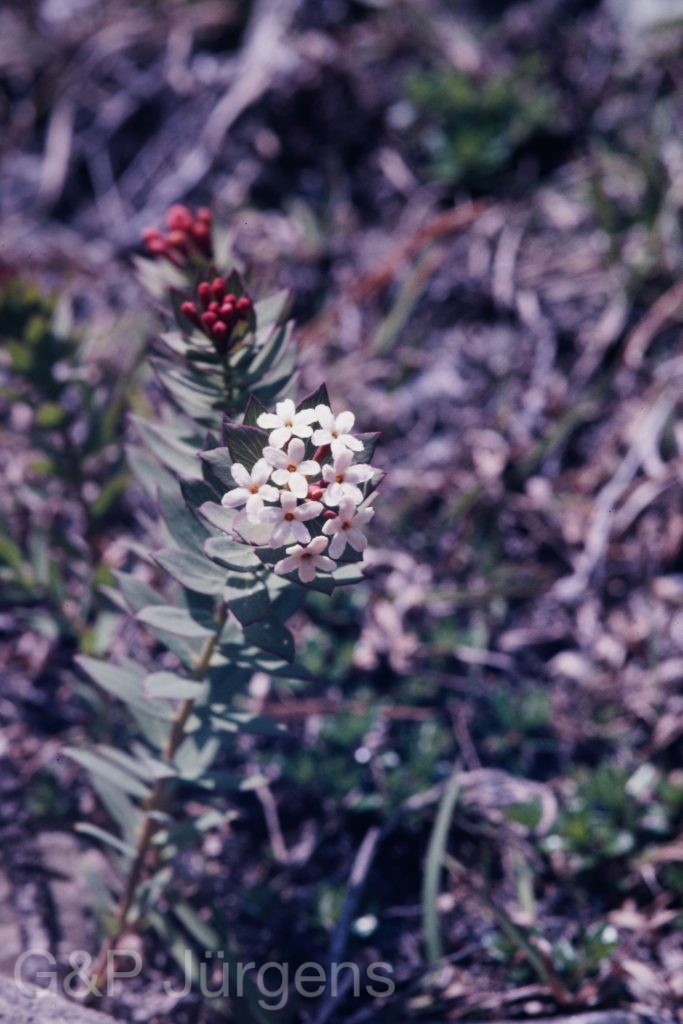
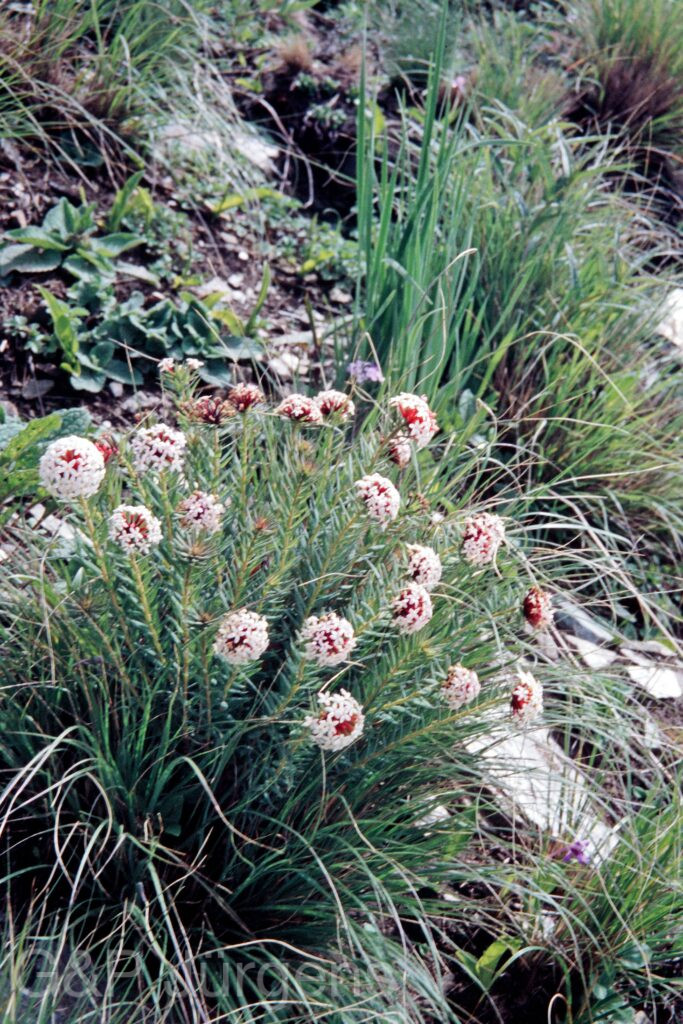
The plant grows from a thick, woody, deep-seated taproot and rootstock, producing numerous erect, slender, unbranched leafy stems in a dense tuft. The leaves are numerous, alternate, crowded, narrowly lanceolate to elliptic, sessile and entire. The flowers are borne in a dense terminal capitate head; each flower lacks petals but has a showy, petaloid, tubular calyx whose five spreading lobes are commonly white above and flushed rose-red to purplish in bud on the outside, producing a striking bicoloured head. There are typically ten stamens in two whorls within the calyx tube, and the fruit is a small dry achene-like nutlet enclosed in the persistent base of the perianth.
Stellera chamaejasme is the best-known species of its genus within Thymelaeaceae and is notorious as a toxic, unpalatable indicator of rangeland degradation; its expansion is regarded across Tibet and Mongolia as a sign of overgrazing, since livestock avoid the poisonous foliage and roots. The plant is rich in bioactive diterpenoids and lignans and has a long history in Tibetan and Chinese traditional medicine, while its tough bast fibres have been used in papermaking. Though abundant and in no way threatened, it is ecologically significant as both a grassland weed and a chemically defended species of considerable pharmacological interest.
Author: L. · Sources: POWO (Kew), GBIF, Flora of China Vol. 13, Flora of Bhutan Vol. 2, Flora of Nepal, Flora of Pakistan, Tan & Wang: revision of Asian Thymelaeaceae and the Stellera complex